
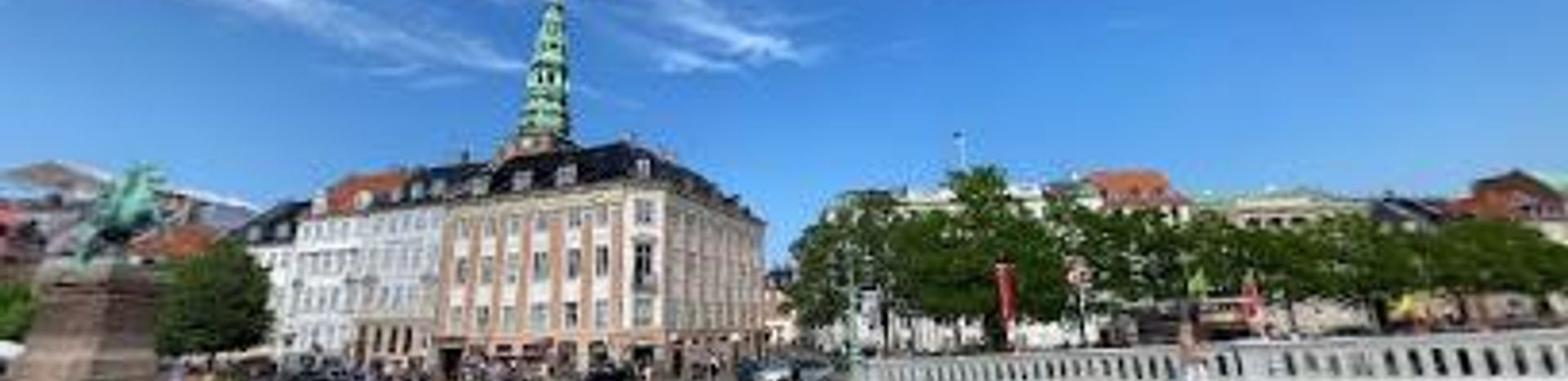
Højbro Bridge, Copenhagen
A historic iron arch bridging Copenhagen’s lively city centre and stately Slotsholmen, with hidden folklore sculptures stirring beneath its calm canal waters.
Højbro is a graceful 19th-century iron arch bridge in the historic heart of Copenhagen, linking the city centre at Højbro Plads with Slotsholmen and Christiansborg Palace across Slotsholmen Canal. Designed by prominent architect Vilhelm Dahlerup and opened in 1878, the steel bridge rests on solid granite plinths and carries cars, cyclists, and pedestrians between the shopping streets of Indre By and Denmark’s political core. Beneath its span, the atmospheric underwater sculpture “Agnete and the Merman” adds a touch of Danish folklore to the cityscape.
A brief summary to Højbro
- Copenhagen, Indre By, DK
- Duration: 0.5 to 1.5 hours
- Free
-
 Outdoor
- Mobile reception: 5 out of 5

Know before you go
Hi, I'm Eve. Here are a few practical things to know before exploring Højbro.
- Pause at mid-span to look down into the canal for the underwater bronze group “Agnete and the Merman”; it is easiest to spot when the water is relatively calm and light is good.
- Combine a stop on Højbro with a walk around nearby Højbro Plads and Gammel Strand for varied views of the bridge and classic Copenhagen streetscapes.
- Visit around golden hour on a clear day to capture warm light on Christiansborg Palace and reflections along Slotsholmen Canal.
- Watch out for bike traffic: the bridge is a busy commuter route, so keep to the pedestrian side when stopping for photos.
Do you manage this location?
Take control to get all the benefits, like improved information, better appearance, and stronger visibility across AI-powered discovery. Learn more
Activate your presenceGetting There
-
Metro and walking
From Nørreport Station, take the M1 or M2 metro one stop to Gammel Strand Station, then walk about 10 minutes on level pavements through the historic centre to reach Højbro. Metros run every few minutes throughout most of the day, and a single zone ticket within central Copenhagen typically costs around 20–25 DKK. This option is fully step-free on the metro, though some nearby streets are cobbled.
-
Bus and walking
Several city bus lines serve the area around Slotsholmen and Højbro Plads, with typical journey times of 10–20 minutes from central hubs such as Copenhagen Central Station depending on traffic. A standard city bus ticket usually costs about 20–25 DKK for the necessary zones. Buses have low-floor access, but expect short walks on mixed paving surfaces from the nearest stop to the bridge.
-
Cycling
Højbro lies on Copenhagen’s dense cycling network and is easily reached from most central districts in around 10–15 minutes by bike. Many hotels offer bikes, and city bike rentals or app-based schemes commonly charge from roughly 25–40 DKK per half hour. The bridge itself is busy with commuter cyclists, so riders should be comfortable in urban traffic, and pedestrians should keep clear of the cycle lanes.
-
Walking within the old town
If you are already exploring Indre By on foot, Højbro is an easy flat walk of 15–25 minutes from landmarks such as Rådhuspladsen or Kongens Nytorv, along pedestrian streets and historic lanes. Surfaces vary between smooth paving and cobblestones, which may be less comfortable for some wheelchairs or strollers, but the route is compact and well lit in the evening.
For the on-the-go comforts that matter to you
-
 Seating Areas
-
 Trash Bins
-
 Information Boards
-
 Restrooms
-
 Drink Options
-
 Food Options
Discover more about Højbro
An elegant gateway between city and seat of power
Højbro is far more than a functional crossing: it is a symbolic hinge between Copenhagen’s bustling shopping streets and the island of Slotsholmen, home to Christiansborg Palace and the country’s political institutions. Standing on the bridge, you straddle two faces of the Danish capital – mercantile city on one side, royal and governmental quarter on the other – with Slotsholmen Canal flowing quietly beneath.From here, views ripple out in every direction. Upstream, the façades of Gammel Strand and the old merchants’ houses hug the water. Downstream, the silhouettes of Christiansborg’s tower and nearby spires punctuate the skyline. Højbro’s relatively modest size makes it an intimate vantage point, yet its position at the centre of Indre By gives it a sense of constant movement and urban theatre.From medieval crossing to 19th‑century ironwork
A bridge has existed on this spot since the Middle Ages, when a simple wooden structure linked the early town to the castle on Slotsholmen. Over the centuries, the crossing was rebuilt several times as traffic, technology, and the city itself evolved. The present Højbro dates from 1878, when it was constructed in iron to a design by architect Vilhelm Dahlerup, a key figure in Copenhagen’s late 19th‑century building boom.Dahlerup’s work combined practicality with a flair for ornament, and Højbro reflects that balance. The steel arch spans the canal in a single, confident sweep, supported on sturdy granite plinths that step down to the water. In the 1960s, as car traffic increased, the bridge was widened to its current form, carefully retaining its historic character while accommodating modern demands.Details in metal and stone
At first glance, Højbro appears straightforward, but closer inspection reveals a layer of decoration typical of its era. The closed spandrel iron arch is articulated with panels and mouldings that catch the light, and the balustrades incorporate rhythmic patterns that echo along the length of the bridge. Discreet sculptural details give it personality, making the structure recognisable from passing tour boats and from the quays.Beneath your feet, the granite abutments anchor the bridge visually to the canal walls and to nearby quayside steps. This combination of dark metal and pale stone creates a subtle contrast against the greens and reds of surrounding roofs, making Højbro a natural focal line in photographs of Slotsholmen Canal.Folklore beneath the waterline
One of Højbro’s most distinctive features is not on the bridge at all, but below it. On the canal bed nearby stands the bronze group "Agnete and the Merman," an underwater sculpture by Danish artist Suste Bonnén. Figures of a merman and his children reach upwards through the dim green water, forever waiting for Agnete, the human mother who left them in an old Danish ballad.The artwork is easy to miss at first; you often need to lean over the railing and let your eyes adjust to see the shapes emerging from the depths. Once spotted, it adds an almost cinematic layer to the scene, blending mythology with the everyday traffic of commuter bikes, buses, and sightseeing boats sliding past above.Everyday bridge, continuous city life
Today Højbro carries a steady stream of pedestrians, cyclists, and vehicles between Højbro Plads and Christiansborg’s forecourts. Locals use it on their daily routes, while visitors pause to photograph the skyline or watch boats navigating the canal. Street musicians sometimes set up at the approaches, their sound drifting across the water and mingling with the hum of conversation from nearby cafés.Because it sits among several nearby crossings, Højbro is rarely quiet, yet it retains a human scale. You can linger without feeling in the way, watching the play of light on the water and the constant choreography of city life flowing back and forth between Copenhagen’s historic core and its island of power.Explore the best of what Højbro has to offer















More about North Zealand
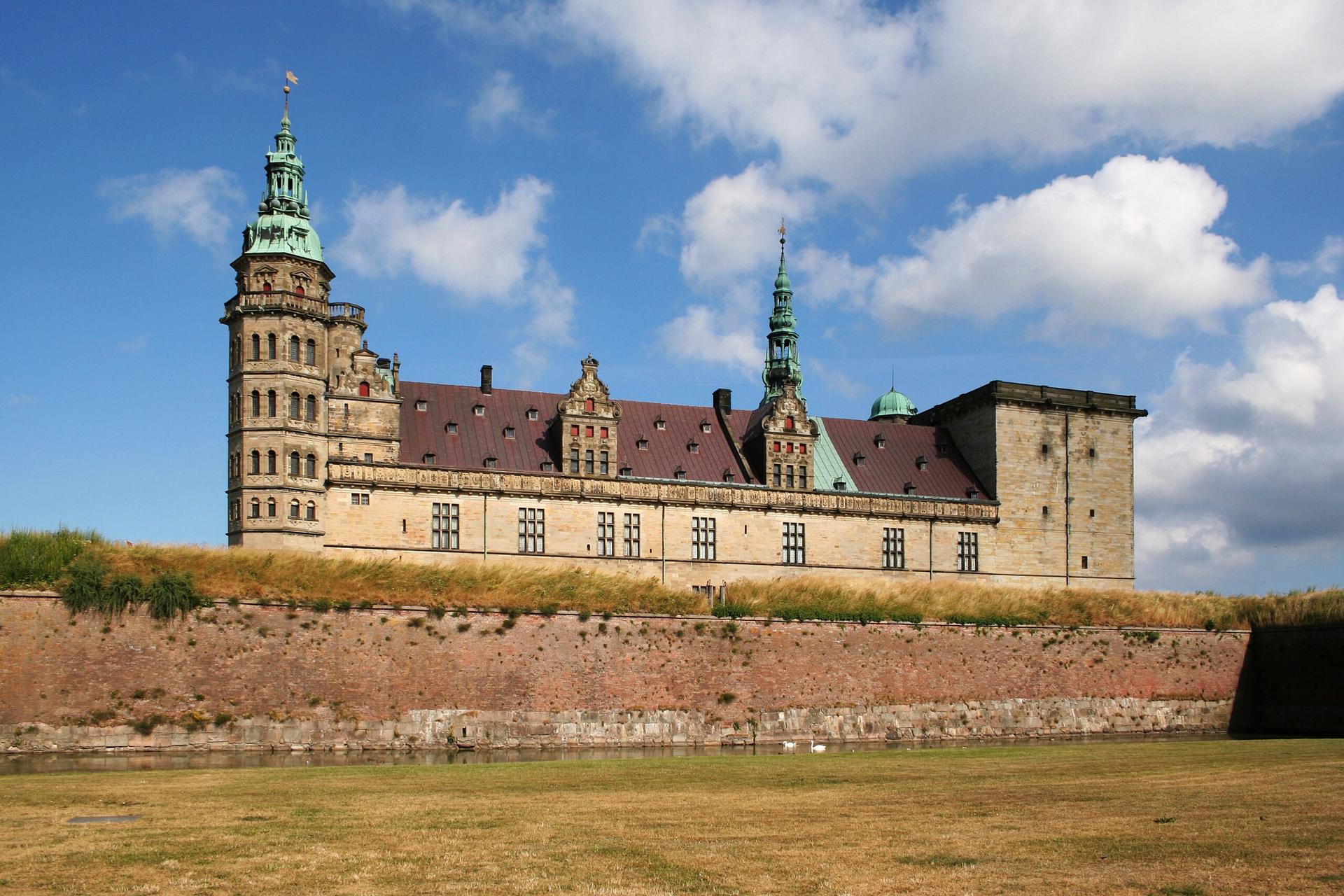
Explore North Zealand, Denmark's enchanting region of castles, beaches, and royal estates, perfect for history buffs, nature enthusiasts, and seaside lovers.
Tell me more about North Zealand