Bishop Absalon, Copenhagen Travel Guide
Free Guide: Commanding Højbro Plads from his rearing horse, Bishop Absalon’s statue fuses medieval legend, maritime trade and modern city life in the heart of Copenhagen.


A brief summary of Bishop Absalon
Commanding Højbro Plads from his rearing horse, Bishop Absalon’s statue fuses medieval legend, maritime trade and modern city life in the heart of Copenhagen.
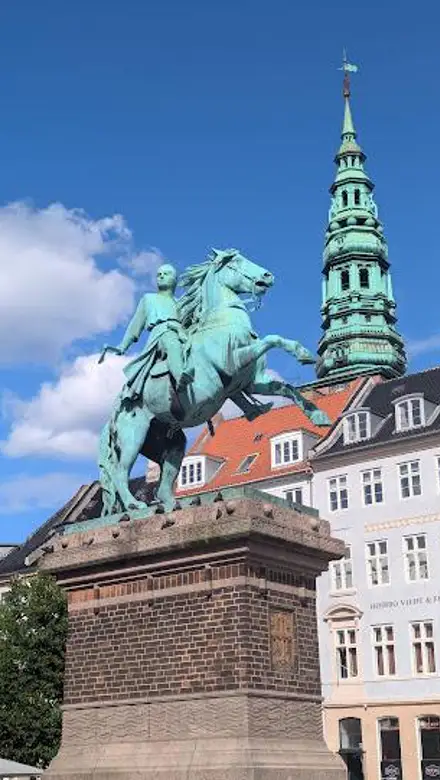
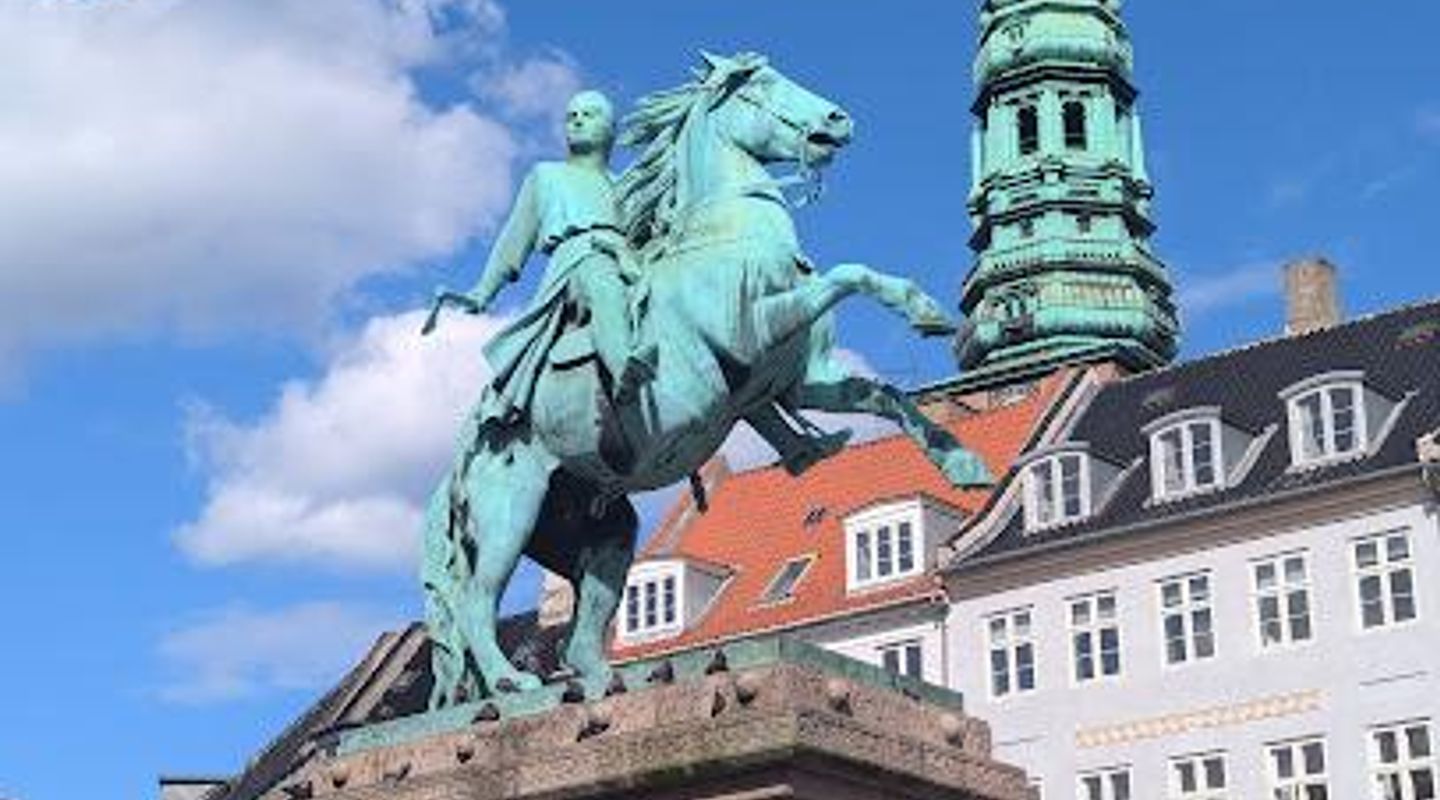
Rising above Copenhagen’s Højbro Plads, the equestrian statue of Bishop Absalon depicts the warrior-bishop credited as the city’s founder. Unveiled in 1902 to mark 700 years since his death, the bronze figure rears above a richly decorated plinth of brick and granite, adorned with herring and wave motifs that recall the medieval fishing village that became Copenhagen. Framed by neoclassical façades and close views of Christiansborg Palace and the canal, it’s a compact but symbolically powerful historic landmark.
On-site amenities
 Seating areas
 Trash bins
 Information boards
 Drink options
 Food options
 Restrooms
Opening hours
- Every dayOpen 24 hours
Opening hours as listed on the venue’s Google Business Profile. Hours can change for services and special events, so check with the venue before you go.
- Address
- Højbro Pl., 1200 København
- Website
Getting there
Metro from central Copenhagen
City bus to the vicinity
Bicycle from inner districts
On foot within the historic centre
Discover more about Bishop Absalon
A warrior-bishop above Copenhagen’s founding square
Standing at the heart of Højbro Plads, the bronze equestrian statue of Bishop Absalon captures the man traditionally credited with founding Copenhagen in 1167. Here he is not shown as a cloistered churchman but as a battle-hardened commander, reins tight in one hand, a heavy axe lifted in the other, his horse rearing above the cobbles. The statue was unveiled in 1902 to commemorate the 700th anniversary of Absalon’s death, a deliberate tribute to the city’s medieval origins.The monument anchors one of central Copenhagen’s most atmospheric squares. Around you rise pastel neoclassical townhouses rebuilt after the devastating fire of 1795, their orderly façades a contrast to the turbulent era Absalon knew. Just beyond the canal stands Christiansborg Palace on Slotsholmen, built on the site of the bishop’s original fortress. The statue is oriented toward that historic power base, physically linking this busy public space to the very birthplace of the city.
Symbolic details carved into brick, stone and bronze
Close up, the statue rewards slow looking. Absalon’s armour is rendered with crisp detail: chain mail, a crested helmet, and the folds of his cloak swept back as if by the Baltic wind. The horse’s muscles tense as it rears, giving the work a sense of movement that animates the square. The sculptor, Vilhelm Bissen, was one of the leading Danish artists of his generation, and his flair for heroic composition is on full display.The plinth beneath the horse is as meaningful as the rider. Its lower section is hewn from sturdy granite and shaped so people can sit along the edge. Above that, red brick recalls medieval Danish architecture. A frieze of herring and stylised waves encircles the base, a reminder that it was lucrative herring fishing in the Øresund that transformed a humble harbour into a prosperous town. Other carvings draw on Viking ornament and church symbolism, including a rosy cross and interlocking keys that reference Absalon’s role as Bishop of Roskilde.
A founder’s legacy in stone, water and trade
Absalon’s influence on Denmark extended far beyond this square. As royal adviser and later archbishop, he helped consolidate royal power and spearheaded campaigns that expanded Danish influence around the Baltic. Here, though, the focus is firmly on his role in shaping Copenhagen. From this vantage point you can imagine the small fortified settlement that once huddled near the present palace, protected by walls and dependent on sea-borne trade.The herring motifs on the pedestal allude to the medieval boom in salted fish exports, which enriched local merchants and justified the construction of stronger defences. That economic success set the stage for the city’s later growth into a royal and administrative capital. In a compact cluster of symbols—fish, waves, armour, axe—the monument compresses a long story of commerce, warfare and faith into a single vertical statement above the crowds.
Everyday life around a ceremonial monument
Although this is an imposing historic monument, it is also part of daily city life. Højbro Plads acts as a generous pause in the dense urban fabric, a place where office workers cut across the square, cyclists stream past, and street musicians set up near the trees. Seasonal events, including winter markets, often spill around the statue, so you may find Absalon presiding over twinkling lights and the smell of roasted almonds.Benches and the plinth’s granite ledge invite you to sit and take in the scene. Look one way and you see the spire of Christiansborg; turn slightly and the canal glints between façades. Because the statue stands slightly elevated yet open on all sides, you can walk a full circle around it, noticing how the sculpted details catch shifting light and how Absalon’s stern profile seems to follow the flow of the city that grew from his fortified harbour.
Photogenic angles and quiet moments in the square
For photographers, the monument is best captured in context. Framing the statue against the backdrop of Christiansborg or the canal emphasizes its link to the city’s origins. From a lower angle near the base, the horse’s raised forelegs and Absalon’s axe stand out dramatically against the sky. At dusk, when the surrounding buildings glow warmly and the square softens into evening, the bronze takes on a deeper patina and the sculpted waves and fish on the plinth emerge in gentle relief.Even a brief stop here can be rewarding. A few minutes spent reading the inscriptions, tracing the carved fish with your eyes and aligning the statue with its surroundings turns a simple city square into a compact lesson in Copenhagen’s story—from fishing village, to fortified harbour, to modern capital that still remembers its warrior-bishop founder.
Evendo Review Centre
 Google
Guest reviews
Best time to go
Quietest: Jan, Feb & Mar · before 8am
Busy times are Evendo estimates for a typical year, to help you plan. Actual crowds vary with events, school holidays and the weather.
Explore Bishop Absalon on the map
A handpicked selection of must-see spots near Bishop Absalon, mapped for you.
Get your free copy of our complete guide to Bishop Absalon, delivered straight to you.
Everything on this page, from opening hours and how to get there to Eve’s tips and the best time to go, in one PDF you can read offline, print or share.
Already have an account? Sign in
Your Bishop Absalon guide is ready.
We'll send it to · Not you? Sign out

Getting your guide ready…
We are putting together a fresh copy of the Bishop Absalon guide. This can take up to a minute.
This can take a few moments. If your browser asks, choose Allow so the download can start. You'll find the guide in your Downloads folder.
Nothing happened? Download it again
Sorry, the guide is taking longer than usual. Please try again in a minute, or get it by email instead.
Unlock the best of Bishop Absalon
Skip-the-line tickets, guided tours with entry, and walking tours of the area, booked in a few clicks.


Other nearby places you may find interesting
The closest places of the same kind, if this one is not quite what you had in mind.
-
City Hall Square Copenhagen's grand civic plaza where history, culture, and urban life converge in one iconic square.
-
Amalienborg Palace The octagonal heart of Danish monarchy where history, art, and royal tradition converge in perfect Rococo harmony.
-
 The Little Mermaid
Copenhagen’s most famous bronze figure, a small mermaid with a grand story, gazing from Langelinie’s harbour rocks toward the meeting of fairy tale and sea.
The Little Mermaid
Copenhagen’s most famous bronze figure, a small mermaid with a grand story, gazing from Langelinie’s harbour rocks toward the meeting of fairy tale and sea.
-
Frederiksholms Kanal Historic waterway encircling Denmark's political heart, where regal grandeur meets relaxed Nordic charm.
-
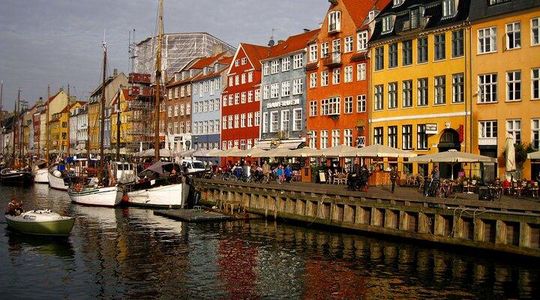
Nyhavn Copenhagen's iconic 17th-century harbor where colorful townhouses, maritime history, and vibrant waterfront culture converge.
Swipe for more places
More to explore near Bishop Absalon

 Best experiences near Bishop Absalon
 Best hotels near Bishop Absalon
 Best landmarks near Bishop Absalon
 Best attractions near Bishop Absalon
 Best shops near Bishop Absalon
 Best restaurants near Bishop Absalon
 Best bars near Bishop Absalon
Do you manage this location?
Take control to get all the benefits, like improved information, better appearance, and stronger visibility across AI-powered discovery.
Explore more

Explore more of Copenhagen
Discover Copenhagen: A perfect blend of history, modernity, and vibrant culture, where picturesque canals, stunning architecture, and world-class dining await you.
Explore Copenhagen
Explore more of Denmark
Discover Denmark: A perfect blend of history, modern design, and the cozy concept of hygge. Explore vibrant cities, serene landscapes, and world-class cuisine.
Explore Denmark