

Hornbæk Kirke, Hornbæk Travel Guide
Free Guide: Explore Hornbæk’s 1737 village church—whitewashed calm, Eckersberg’s 1838 altarpiece, and coastal history shaped by storms, sand drift, and seafaring life.


A brief summary of Hornbæk Kirke
Explore Hornbæk’s 1737 village church—whitewashed calm, Eckersberg’s 1838 altarpiece, and coastal history shaped by storms, sand drift, and seafaring life.
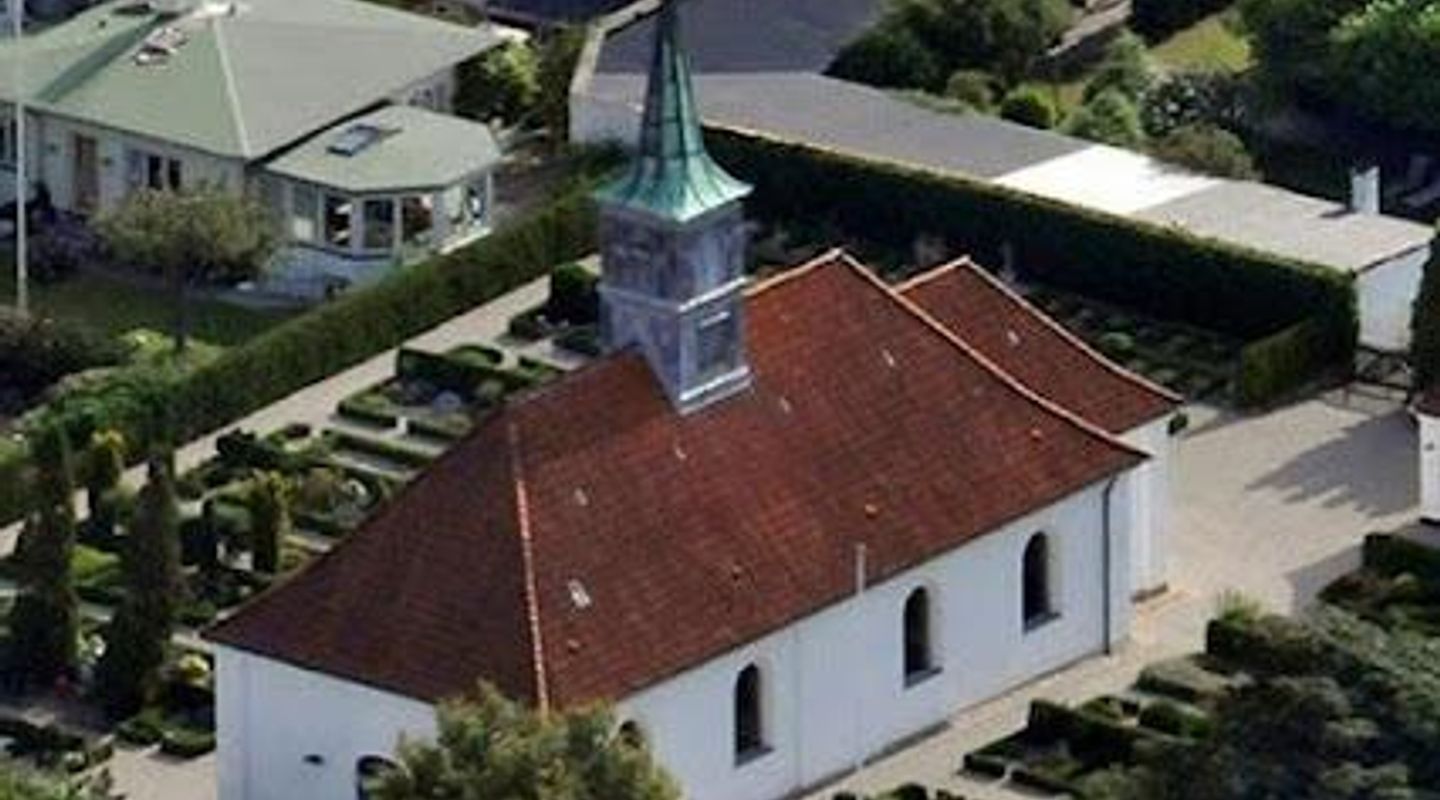
Tucked into Hornbæk’s old village streets, this whitewashed 18th‑century church feels like a calm pause between beach walks and harbor bustle. Built in 1737 after earlier churches succumbed to harsh coastal weather and drifting sand, it’s bright and airy inside, with big windows, pale walls and a painted wooden ceiling. Look for centuries-old furnishings—including a Romanesque granite font—and an Eckersberg altarpiece that anchors the space with Danish Golden Age clarity.
On-site amenities
 Information boards
 Seating areas
Opening hours
- Every day9 am–4 pm
Opening hours as listed on the venue’s Google Business Profile. Hours can change for services and special events, so check with the venue before you go.
- Address
- Kirkevej 6, 3100 Hornbæk
- Phone
- Website
Getting there
On foot (from town center)
Bicycle
Car / taxi
Discover more about Hornbæk Kirke
Where the old town meets the windbreak
Hornbæk Kirke sits quietly on Kirkevej in the oldest part of town, roughly between the station and the harbor—exactly where you’d expect a parish church to be: central, familiar, and woven into daily life. Yet the setting also tells a coastal story. Nearby woodland shelter (Hornbæk Plantage) softens the sea wind, and the church’s modest profile feels tuned to a village shaped by fishing, summer visitors, and a shoreline that never stops rearranging itself.
Three churches, one stubborn site
This is not Hornbæk’s first church. A timber-framed church was built here in 1588, but by 1671 it was already remembered as ruined by storms. A second timber-framed church followed (completed in 1671), only to deteriorate in the same hard climate. In 1735 the decision was made to build in brick, and the current church was raised in 1737 and inaugurated that October—an architectural vote for durability on Denmark’s north-facing coast.
Architecture: simple, solid, and village-scaled
The present building is a longhouse with a small roof-mounted bell turret (a tagrytter) rather than a grand tower, and a later sacristy added at the east end in 1883. The roof is hipped, dropping to all sides, and the exterior reads as a classic Danish village church—restrained and practical. Aside from the sacristy addition, the church has remained largely unchanged since it was built.
Light-filled interior and a Golden Age focal point
Inside, the church’s character is defined by generous windows, whitewashed walls, and a flat wooden ceiling painted in cool grey-blue tones that tie the room together. The altarpiece is a standout: painted in 1838 by C. W. Eckersberg, it depicts Christ and the Samaritan woman—a scene that suits the church’s atmosphere of clear light and quiet conversation. Around it, details reward a slower look: a pulpit made for the 1737 church with painted evangelists, and an older altarpiece painting (c. 1670) preserved on the north wall.
Churchyard traces: memory beyond the nave
Hornbæk’s church life stretches beyond the building into its burial grounds. In the town’s newer cemetery area, a memorial links Hornbæk to World War I history: in 1917 a camp at nearby Horserød received Russian prisoners of war, and 58 who died were buried here; their graves are now grass-covered, with a central monument raised in 1918. It’s a sober counterpoint to the beach-town mood—evidence of how even small coastal communities intersect with wider European events.
Evendo Review Centre
 Google
Guest reviews
Best time to go
Quietest: Jan, Feb & Mar · before 8am or at 5pm or at 6pm
Busy times are Evendo estimates for a typical year, to help you plan. Actual crowds vary with events, school holidays and the weather.
Explore Hornbæk Kirke on the map
A handpicked selection of must-see spots near Hornbæk Kirke, mapped for you.
Get your free copy of our complete guide to Hornbæk Kirke, delivered straight to you.
Everything on this page, from opening hours and how to get there to Eve’s tips and the best time to go, in one PDF you can read offline, print or share.
Already have an account? Sign in
Your Hornbæk Kirke guide is ready.
We'll send it to · Not you? Sign out

Getting your guide ready…
We are putting together a fresh copy of the Hornbæk Kirke guide. This can take up to a minute.
This can take a few moments. If your browser asks, choose Allow so the download can start. You'll find the guide in your Downloads folder.
Nothing happened? Download it again
Sorry, the guide is taking longer than usual. Please try again in a minute, or get it by email instead.
Other nearby places you may find interesting
The closest places of the same kind, if this one is not quite what you had in mind.

Swipe for more places
More to explore near Hornbæk Kirke

 Best experiences near Hornbæk Kirke
 Best hotels near Hornbæk Kirke
 Best landmarks near Hornbæk Kirke
 Best attractions near Hornbæk Kirke
 Best shops near Hornbæk Kirke
 Best restaurants near Hornbæk Kirke
 Best bars near Hornbæk Kirke
Do you manage this location?
Take control to get all the benefits, like improved information, better appearance, and stronger visibility across AI-powered discovery.
Explore more

Explore more of Hornbæk
Discover Hornbæk, Denmark's coastal jewel, with its sandy beaches, lush forests, and vibrant cultural scene, offering a serene and enriching getaway.
Explore Hornbæk
Explore more of Denmark
Discover Denmark: A perfect blend of history, modern design, and the cozy concept of hygge. Explore vibrant cities, serene landscapes, and world-class cuisine.
Explore Denmark
