

Cisterns in Søndermarken, Køge Travel Guide
Free Guide: A vast former reservoir hidden beneath Søndermarken, where dripping concrete caverns, stalactites and darkness frame powerful, site-specific contemporary art.


A brief summary of Cisterns in Søndermarken
A vast former reservoir hidden beneath Søndermarken, where dripping concrete caverns, stalactites and darkness frame powerful, site-specific contemporary art.
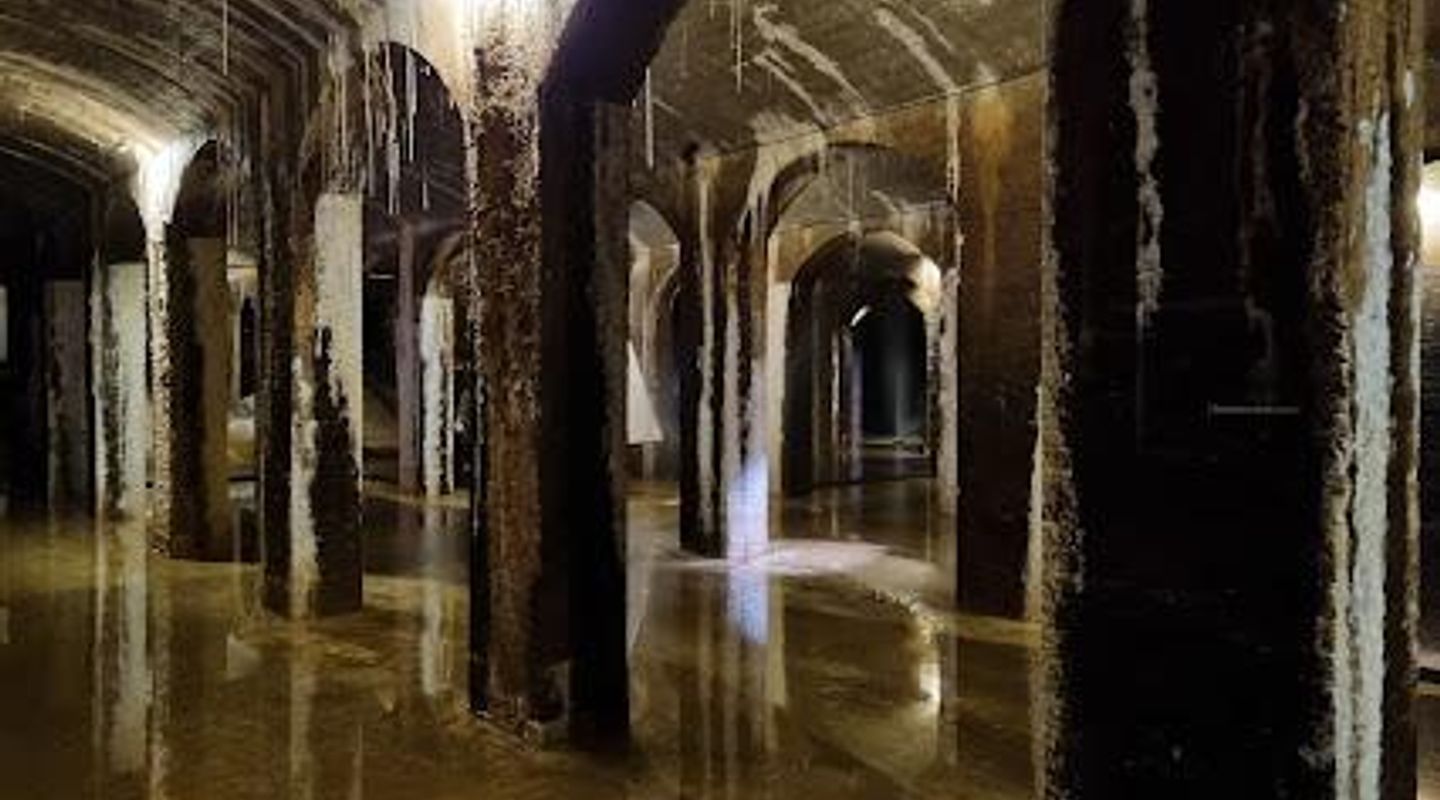
Hidden beneath the lawns of Søndermarken in Frederiksberg, Cisternerne is a vast former water reservoir transformed into a subterranean art space. Once holding 16 million liters of drinking water for Copenhagen, it is now a cool, dripping, columned underworld where a single large contemporary installation unfolds each season. Expect darkness, near-100% humidity, stalactites in the concrete vaults and immersive site-specific works that respond to this eerie, cathedral-like cavern.
On-site amenities
 Restrooms
 Drink options
 Food options
 Seating areas
 Trash bins
 Information boards
- Address
- Roskildevej 25A, 2000 Frederiksberg
- Phone
- Website
Getting there
Public transport from central Copenhagen
Metro plus short walk
Bicycle from inner Copenhagen
Taxi from central areas
Discover more about Cisterns in Søndermarken
From Lifeline Reservoir to Underground Art World
Cisternerne began life in the mid-19th century, when Copenhagen’s polluted water supply and a deadly cholera outbreak drove the city to create a modern reservoir system. Excavation under Frederiksberg Hill started in 1856, and within just a few years this immense brick cistern was holding up to 16 million liters of clean drinking water beneath Søndermarken’s lawns. For decades it was a crucial hidden infrastructure, quietly stabilising supply and even feeding nearby fountains.By 1933 new water systems had overtaken the old cisterns, and the reservoir was taken out of service. The water remained for decades, a dark, off-limits underworld, until it was fully drained in 1981. In 1996, as part of Copenhagen’s year as European City of Culture, the space opened to the public as an exhibition venue. Later it joined the Frederiksberg Museums and evolved into the contemporary art laboratory it is today.
A Dripstone Cave Beneath the City
Step below the glass pyramid entrance and you enter a space unlike anything else in Denmark. The three long chambers stretch out in semi-darkness, held up by rows of pillars that recall a flooded cathedral. Over time, water seeping through the concrete has created delicate stalactites and stalagmites, making Cisternerne the country’s only true dripstone cave. These mineral formations, simultaneously beautiful and fragile, are a reminder that nature is patiently reclaiming this piece of industrial engineering.The climate is part of the experience. Temperatures hover around 8–10°C year-round, and the humidity is close to 100%. Mist hangs in the air, surfaces glisten, and every footstep echoes off the vaults. Light is sparse and carefully controlled, so your eyes gradually adjust to a world defined by reflections, shadows and the sound of water dripping from the ceiling.
Immersive Art Tailored to the Cavern
Cisternerne hosts one major, site-specific exhibition at a time, typically running from spring to late autumn, with the space closed between shows for reconfiguration. Instead of traditional white-wall galleries, artists here are invited to embrace darkness, moisture and acoustics. Past projects have incorporated shallow pools, boats, mirrored corridors, soundscapes and sculptural light, turning a walk through the cistern into a full-body experience.Because the architecture is so dominant, each exhibition reads as a dialogue between art and place. Works often reference water, memory, geology or the passage of time, amplifying the sense that you are exploring a living organism rather than a static museum. It is common to feel disoriented for a moment, unsure where the artwork ends and the original structure begins.
The Park Above and the Palace Beyond
Above ground, Søndermarken offers a gentle contrast to the subterranean gloom. Lawns, avenues of trees and quiet paths form a green buffer between the cistern entrance and the surrounding city. Just across Roskildevej rises the Baroque silhouette of Frederiksberg Palace, and the nearby Copenhagen Zoo adds to the cluster of attractions in this corner of Frederiksberg.Many visitors choose to combine a visit to Cisternerne with time in the park, using the lawns as a place to decompress after the intense underground atmosphere. On clear days the glass pyramids catch the light, hinting at the hidden volume below without giving away its scale.
Planning Your Visit Inside the Reservoir
Cisternerne is a paid attraction with timed opening hours concentrated in the exhibition season, and it may close temporarily between installations. Inside, the floors can be wet and uneven, and the low light can be challenging, so sturdy, closed shoes and an extra layer are advisable even in summer. The moisture-sensitive environment means you should be prepared for some chill and damp, and photography often requires a steady hand or high sensitivity settings.There is step-free access, although the underground conditions may not suit everyone, and there is no dedicated accessible restroom on site. Mobile reception can be patchy once you descend, adding to the sense of stepping out of everyday life. Give yourself enough time not only to see the artworks but also to simply stand still, listen to the echoes and watch droplets fall through the dimness.
Evendo Review Centre
 Google
Guest reviews
Best time to go
Quietest: Jan, Feb & Dec · before 8am or at 10pm
Busy times are Evendo estimates for a typical year, to help you plan. Actual crowds vary with events, school holidays and the weather.
Explore Cisterns in Søndermarken on the map
A handpicked selection of must-see spots near Cisterns in Søndermarken, mapped for you.
Get your free copy of our complete guide to Cisterns in Søndermarken, delivered straight to you.
Everything on this page, from opening hours and how to get there to Eve’s tips and the best time to go, in one PDF you can read offline, print or share.
Already have an account? Sign in
Your Cisterns in Søndermarken guide is ready.
We'll send it to · Not you? Sign out

Getting your guide ready…
We are putting together a fresh copy of the Cisterns in Søndermarken guide. This can take up to a minute.
This can take a few moments. If your browser asks, choose Allow so the download can start. You'll find the guide in your Downloads folder.
Nothing happened? Download it again
Sorry, the guide is taking longer than usual. Please try again in a minute, or get it by email instead.
Unlock the best of Cisterns in Søndermarken
Skip-the-line tickets, guided tours with entry, and walking tours of the area, booked in a few clicks.


Other nearby places you may find interesting
The closest places of the same kind, if this one is not quite what you had in mind.
-
-
-
-
-


Swipe for more places
More to explore near Cisterns in Søndermarken
-
 Best experiences near Cisterns in Søndermarken
-
 Best hotels near Cisterns in Søndermarken
-
 Best landmarks near Cisterns in Søndermarken
-
 Best attractions near Cisterns in Søndermarken
-
 Best shops near Cisterns in Søndermarken
-
 Best restaurants near Cisterns in Søndermarken
-
 Best bars near Cisterns in Søndermarken


Do you manage this location?
Take control to get all the benefits, like improved information, better appearance, and stronger visibility across AI-powered discovery.
Explore more
Explore more of Køge
Explore Køge, Denmark's coastal gem, with its medieval charm, beautiful marina, and close proximity to the stunning Stevns Klint UNESCO World Heritage site.
Explore Køge
Explore more of Denmark
Discover Denmark: A perfect blend of history, modern design, and the cozy concept of hygge. Explore vibrant cities, serene landscapes, and world-class cuisine.
Explore Denmark
