

Danish Architecture Centre, Køge Travel Guide
Free Guide: Denmark’s national hub for architecture and urban life, blending exhibitions, city walks, family workshops and harbor views inside the bold BLOX building.


A brief summary of Danish Architecture Centre
Denmark’s national hub for architecture and urban life, blending exhibitions, city walks, family workshops and harbor views inside the bold BLOX building.
Housed in the striking BLOX complex on Copenhagen’s inner harbor, the Danish Architecture Center is Denmark’s national hub for architecture, design and urban culture. Inside, changing exhibitions such as “So Danish!” trace 1,000 years of Danish building and city-making, from Viking halls to cutting-edge sustainable design. Families find creative workshops and a 40‑meter indoor slide, while the rooftop café and terraces offer expansive views over canals, towers and the working waterfront.
On-site amenities
 Restrooms
 Drink options
 Drinking water
 Food options
 Seating areas
 Sheltered areas
 Trash bins
 Information boards
 Visitor centre
Opening hours
- Mon10 am–9 pm
- Tue10 am–6 pm
- Wed10 am–6 pm
- Thu10 am–9 pm
- Fri10 am–6 pm
- Sat10 am–6 pm
- Sun10 am–6 pm
Opening hours as listed on the venue’s Google Business Profile. Hours can change for services and special events, so check with the venue before you go.
- Address
- Bryghusgade 10, 1473 København
- Phone
- Website
Getting there
Metro from central Copenhagen
Bus to the waterfront
Bicycle from inner districts
Harbor bus or boat arrival
Discover more about Danish Architecture Centre
A harborside home for Danish design thinking
Perched on the edge of Copenhagen’s inner harbor in the sculptural BLOX building, the Danish Architecture Center (DAC) is where Denmark tells the story of its built environment. Light pours through glass facades, reflections ripple off the water, and the city’s skyline forms a constant backdrop to the exhibitions inside. This is less a traditional museum and more a living laboratory where architecture, urban planning and everyday life meet.DAC serves as the national architecture center, bringing together exhibitions, tours, talks and workshops under one roof. It sits within the city’s Cultural District, surrounded by historic warehouses, modern bridges and repurposed industrial structures that echo the themes explored indoors. Just walking up to the entrance, you move through one of Copenhagen’s boldest pieces of contemporary architecture before you even show your ticket.
From Viking longhouses to zero‑carbon cities
At the heart of DAC, the permanent exhibition “So Danish!” traces a millennium of Danish architecture. Here, models, drawings and films guide you from early wooden churches and fortified towns to the functionalist housing estates and experimental eco-districts that shape today’s Denmark. Clear storylines explain how design has supported democracy, the welfare state and a strong culture of cycling and public space.Themed galleries dig into hot topics such as climate adaptation, circular construction and resilient cities. You may find yourself studying a façade mock-up one moment and, the next, walking through an immersive installation that simulates future storm surges or rewilded cityscapes. International names like BIG, Dorte Mandrup and 3XN often appear in rotating shows, making DAC a window onto both Danish and global architectural innovation.
Hands-on discovery for curious minds and families
Where many cultural institutions keep visitors at arm’s length, DAC actively invites you to build, test and play. Weekends and school holidays usually bring lively family workshops, where children and adults co-create cities from LEGO bricks, cardboard and recycled materials. Activities are designed to explain complex ideas – density, climate solutions, social housing – in simple, tactile ways.One of the center’s most distinctive features is the DAC Slide, a 40‑meter indoor chute that spirals dramatically through the building. It turns circulation space into an experience, and underlines how playfulness can be part of serious design thinking. Elsewhere, kid-height exhibits, drawing stations and interactive screens keep younger visitors engaged while adults dive deeper into texts and plans.
Architecture in the city and views over the harbor
DAC insists that its most important collection lies outside its walls, in the streets, parks and waterfronts of Copenhagen. Guided city walks set out from the center to explore themes such as harbor transformation, bike bridges, social housing and green urbanism. These tours highlight how past planning decisions and recent experiments have made the city both livable and climate-conscious.Back inside, the DAC Café crowns the experience. Set high in the BLOX building, it opens onto three generous rooftop terraces with broad views of spires, modern landmarks and crisscrossing harbor traffic. Simple Nordic dishes, coffee and drinks are served in an atmosphere that blurs café, lookout and informal workspace. It is as much a vantage point for observing everyday urban life as it is a place to rest.
A green attraction shaping conversations on the future
Sustainability is woven through DAC’s operations and content. The center is certified as a green attraction and participates in global initiatives focused on responsible urban development. Exhibitions frequently spotlight reuse of materials, low-carbon construction and landscape-led design, encouraging visitors to consider the environmental footprint of buildings and infrastructure.Even a short visit introduces you to the values behind Danish architecture: human scale, daylight, public access to the waterfront and thoughtful integration of old and new. Whether you are an industry professional, a student or simply curious about how cities can respond to climate change while remaining beautiful and inclusive, DAC offers a compact yet rich introduction to the ideas shaping Copenhagen and beyond.
Evendo Review Centre
 Google
Guest reviews
Best time to go
Quietest: Jan, Feb & Mar · before 7am or from 10pm
Busy times are Evendo estimates for a typical year, to help you plan. Actual crowds vary with events, school holidays and the weather.
Explore Danish Architecture Centre on the map
A handpicked selection of must-see spots near Danish Architecture Centre, mapped for you.
Get your free copy of our complete guide to Danish Architecture Centre, delivered straight to you.
Everything on this page, from opening hours and how to get there to Eve’s tips and the best time to go, in one PDF you can read offline, print or share.
Already have an account? Sign in
Your Danish Architecture Centre guide is ready.
We'll send it to · Not you? Sign out

Getting your guide ready…
We are putting together a fresh copy of the Danish Architecture Centre guide. This can take up to a minute.
This can take a few moments. If your browser asks, choose Allow so the download can start. You'll find the guide in your Downloads folder.
Nothing happened? Download it again
Sorry, the guide is taking longer than usual. Please try again in a minute, or get it by email instead.
Unlock the best of Danish Architecture Centre
Skip-the-line tickets, guided tours with entry, and walking tours of the area, booked in a few clicks.


Other nearby places you may find interesting
The closest places of the same kind, if this one is not quite what you had in mind.
-
-
-
-
-


Swipe for more places
More to explore near Danish Architecture Centre
-
 Best experiences near Danish Architecture Centre
-
 Best hotels near Danish Architecture Centre
-
 Best landmarks near Danish Architecture Centre
-
 Best attractions near Danish Architecture Centre
-
 Best shops near Danish Architecture Centre
-
 Best restaurants near Danish Architecture Centre
-
 Best bars near Danish Architecture Centre


Do you manage this location?
Take control to get all the benefits, like improved information, better appearance, and stronger visibility across AI-powered discovery.
Explore more
Explore more of Køge
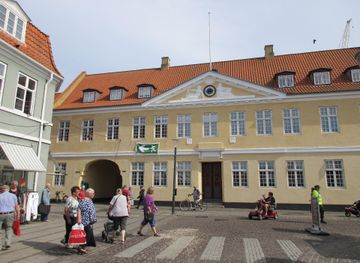
Explore Køge, Denmark's coastal gem, with its medieval charm, beautiful marina, and close proximity to the stunning Stevns Klint UNESCO World Heritage site.
Explore Køge
Explore more of Denmark
Discover Denmark: A perfect blend of history, modern design, and the cozy concept of hygge. Explore vibrant cities, serene landscapes, and world-class cuisine.
Explore Denmark
