Nyboder, Køge Travel Guide
Free Guide: Historic naval housing in Copenhagen’s heart, Nyboder’s ochre terraces and tiny Nyboder Mindestuer museum reveal four centuries of everyday life among Denmark’s seafaring families.


A brief summary of Nyboder
Historic naval housing in Copenhagen’s heart, Nyboder’s ochre terraces and tiny Nyboder Mindestuer museum reveal four centuries of everyday life among Denmark’s seafaring families.
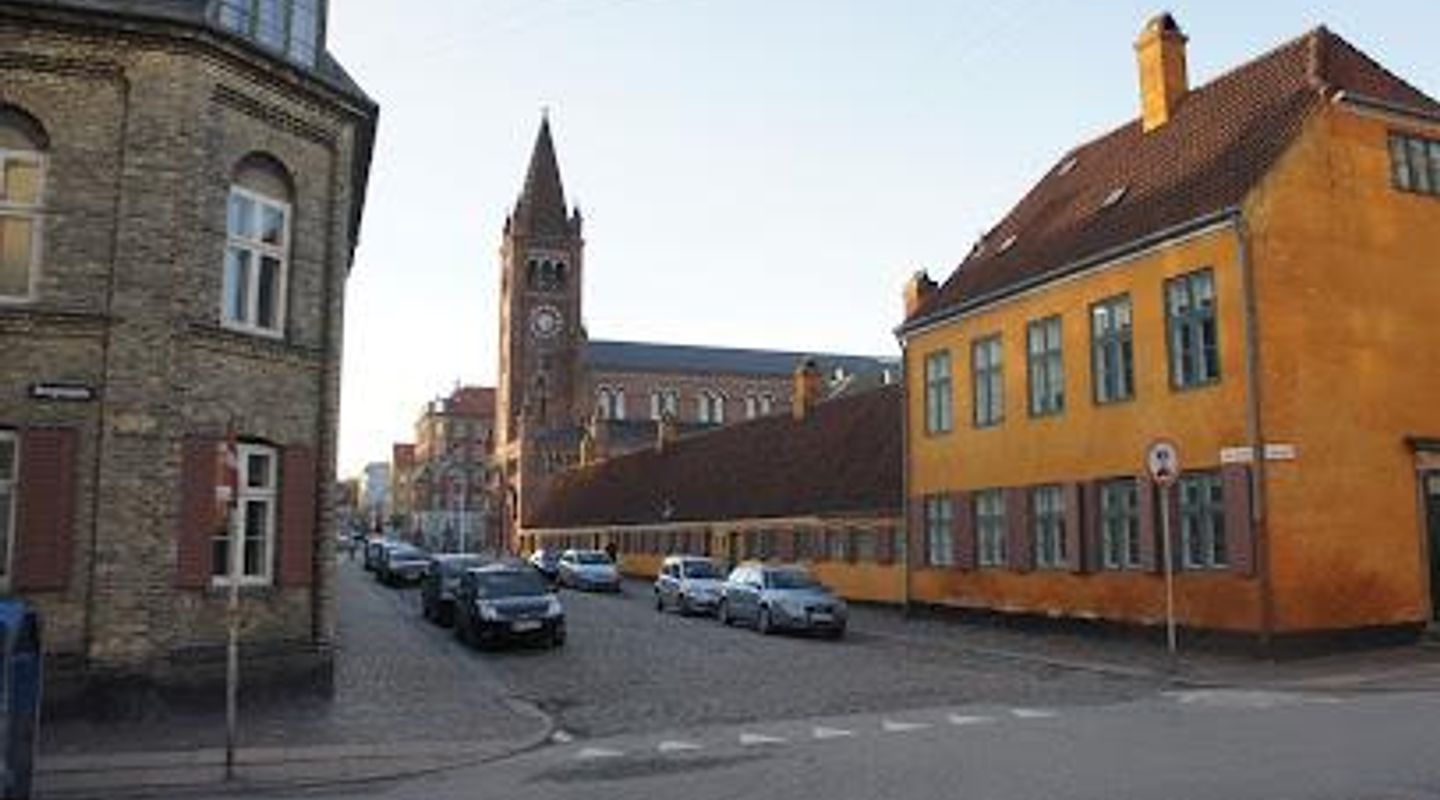
Nyboder, just north of Copenhagen’s historic center, is a remarkable 17th‑century naval housing district defined by endless rows of low, terraced houses painted in the distinctive “Nyboder yellow.” Commissioned by King Christian IV to house sailors of the Royal Danish Navy and their families, the quarter grew over centuries into a self‑contained community with its own schools, hospital and police. At Sankt Pauls Gade 24, the tiny Nyboder Mindestuer museum occupies one of the oldest surviving houses, offering an intimate look at everyday life in this tight‑knit maritime neighborhood.
On-site amenities
 Restrooms
 Drink options
 Drinking water
 Food options
 Seating areas
 Trash bins
 Information boards
Opening hours
- Mon–SatClosed
- Sun11 am–2 pm
Opening hours as listed on the venue’s Google Business Profile. Hours can change for services and special events, so check with the venue before you go.
- Address
- Sankt Pauls Gade 24, 1313 København K
- Website
Getting there
Metro and short walk from central Copenhagen
City bus within Copenhagen center
Bicycle from central districts
Taxi or ride‑hail within the city
Discover more about Nyboder
King Christian IV’s naval vision in brick and color
Nyboder began as a royal project in the 1630s, when King Christian IV set out to give his expanding Royal Danish Navy permanent, orderly housing just outside the fortified city. Laid out in long terraces, the development was designed by royal master builder Hans van Steenwinckel the Younger and later expanded in the 18th century as naval ranks swelled. What you see today is the result of that evolution: modest, rhythmic facades and simple gabled roofs repeating down the streets like a military formation frozen in architecture.The district’s famous “Nyboder yellow” – a warm, ochre tone – has become one of Copenhagen’s most recognizable colors. It was not the original scheme, but it is now inseparable from the area’s identity, catching soft northern light and glowing on bright days. Between the rows, former service yards and narrow passages hint at the semi‑communal life that once bound generations of sea‑going families together.
Nyboder Mindestuer: life inside a sailor’s home
At Sankt Pauls Gade 24, Nyboder Mindestuer occupies one of the earliest surviving single‑storey houses, now converted into intimate memorial rooms. Inside, period furnishings, personal objects and old photographs sketch out the routines of families who traded two decades of military service for a modest but secure home. Rooms are compact: a shared kitchen space, tight living quarters and multifunctional furniture reveal how every square meter was stretched to fit work, sleep and social life.Interpretive displays explain how households were allocated according to rank and family size, and how facilities such as kitchens and privies were shared between multiple families. The museum also touches on the social fabric of Nyboder, where deep family ties, intermarriage and naval careers often ran through several generations, creating a neighborhood that felt more like an extended clan than a typical city quarter.
A self‑contained community by the sea
Historically, Nyboder functioned almost as a town within the town. Enlisted men and their families had access to their own hospital, schools and a small local police force, reflecting both the privileges and obligations of naval life. Children grew up with the harbor and shipyards as their backdrop, and many followed parents and grandparents into service. Stories, songs and even fairy tales rooted in Nyboder helped cement its image as a place where maritime Denmark came home to roost.Conditions were not always idyllic. Periods of war, economic hardship and overcrowding left their mark, yet the neighborhood endured and adapted. Over time, housing standards improved and the worst of the early overcrowding gave way to more comfortable arrangements, while the sense of solidarity among residents remained a defining trait of the quarter.
Layers of architecture around Sankt Pauls Gade
Sankt Pauls Gade is especially rich in architectural contrasts. Along one side is the last surviving row of single‑storey Nyboder houses, including the museum; opposite stand the later “Grey Rows,” more spacious 19th‑century apartment terraces influenced by contemporary workers’ housing. Their slightly taller profiles and more elaborate details show how expectations of naval housing changed as the 1800s progressed.Nearby, red‑brick St Paul’s Church rises above the rooftops, anchoring the visual axis of the street and adding a Romanesque‑revival note to the ensemble. Together, the yellow rows, grey terraces and church tower encapsulate nearly three centuries of Copenhagen’s urban growth in a single, walkable slice of city.
Nyboder today: living heritage in the city center
Today, Nyboder still houses members of Denmark’s armed forces alongside civilians, keeping its ties to the navy alive. Despite its central location, the area retains an almost small‑town calm, with bicycles leaning against sun‑warmed walls and laundry occasionally strung in sheltered courtyards. The repetition of facades and the strict street grid give the neighborhood a cinematic quality, yet behind the uniform fronts are individual homes, each with its own stories.For visitors, Nyboder offers both a visually striking streetscape and a rare, preserved example of early social housing that has remained in continuous use for almost four centuries. A short stop at Nyboder Mindestuer, combined with a slow wander among the rows, turns this compact district into a vivid lesson in how military, urban and everyday histories intertwine in Copenhagen.
Evendo Review Centre
 Google
Guest reviews
Best time to go
Quietest: Jan, Feb & Mar · before 7am or from 9pm
Busy times are Evendo estimates for a typical year, to help you plan. Actual crowds vary with events, school holidays and the weather.
Explore Nyboder on the map
A handpicked selection of must-see spots near Nyboder, mapped for you.
Get your free copy of our complete guide to Nyboder, delivered straight to you.
Everything on this page, from opening hours and how to get there to Eve’s tips and the best time to go, in one PDF you can read offline, print or share.
Already have an account? Sign in
Your Nyboder guide is ready.
We'll send it to · Not you? Sign out

Getting your guide ready…
We are putting together a fresh copy of the Nyboder guide. This can take up to a minute.
This can take a few moments. If your browser asks, choose Allow so the download can start. You'll find the guide in your Downloads folder.
Nothing happened? Download it again
Sorry, the guide is taking longer than usual. Please try again in a minute, or get it by email instead.
Unlock the best of Nyboder
Skip-the-line tickets, guided tours with entry, and walking tours of the area, booked in a few clicks.
 Tour with entry
Self-Guided Tour In Copenhagen with 100 Captivating Audio Stories
from $3.17 Tour with entry
Copenhagen History Bike Tour
from $56.12 Tour with entry
Private hygge and happiness Copenhagen morning tour
from $60.24 Tour with entry
Danish Hygge and Culture Walking Tour in Copenhagen Old Town
from $63.70


Other nearby places you may find interesting
The closest places of the same kind, if this one is not quite what you had in mind.
-
Køge Miniby Step into Køge’s past at 1:10 scale, where hand-built model houses, harbour scenes and church spires recreate the market town of 1865 in a tranquil seaside garden.
-
Køge Museum Time‑travel through Køge’s past inside a 17th‑century merchant’s house where Viking treasures, buried secrets and a tranquil courtyard meet in one intimate museum.
-
Ølsemagle Revle A shifting sandbar of shallow lagoons, rich birdlife and wide sandy beaches, where Køge’s urban edge gives way to one of Zealand’s most evocative coastal nature reserves.
-
Solgårdsparken Romantic coastal park between Køge Bay and Tryggevælde River, where historic garden design, tranquil nature, play areas and reflective audio stories meet in one green retreat.
-
Vandkunsten - Stationspladsen A sculptural fountain anchoring Køge’s station square, where moving water, stone and light turn a busy transport hub into an inviting urban meeting place.
Swipe for more places
More to explore near Nyboder

 Best experiences near Nyboder
 Best hotels near Nyboder
 Best landmarks near Nyboder
 Best attractions near Nyboder
 Best shops near Nyboder
 Best restaurants near Nyboder
 Best bars near Nyboder
Do you manage this location?
Take control to get all the benefits, like improved information, better appearance, and stronger visibility across AI-powered discovery.
Explore more
Explore more of Køge
Explore Køge, Denmark's coastal gem, with its medieval charm, beautiful marina, and close proximity to the stunning Stevns Klint UNESCO World Heritage site.
Explore Køge
Explore more of Denmark
Discover Denmark: A perfect blend of history, modern design, and the cozy concept of hygge. Explore vibrant cities, serene landscapes, and world-class cuisine.
Explore Denmark