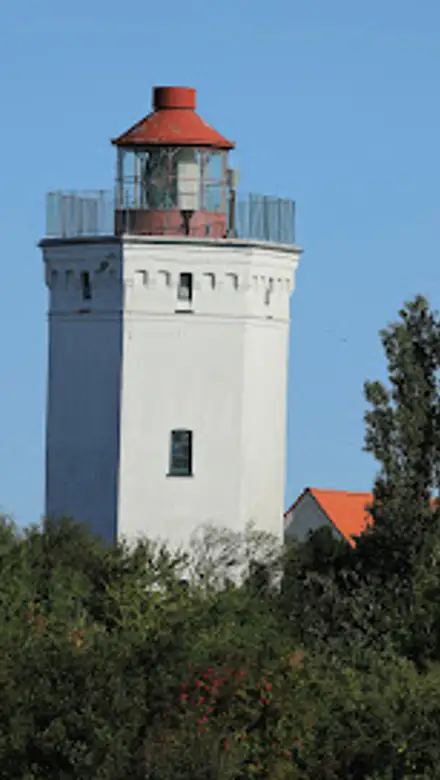
Gedser Lighthouse Travel Guide
Free Guide: Historic brick lighthouse at Denmark’s southern tip, where raw Baltic coastline, seabird migration and two centuries of maritime history meet in wide-open skies.


A brief summary of Gedser Lighthouse
Historic brick lighthouse at Denmark’s southern tip, where raw Baltic coastline, seabird migration and two centuries of maritime history meet in wide-open skies.
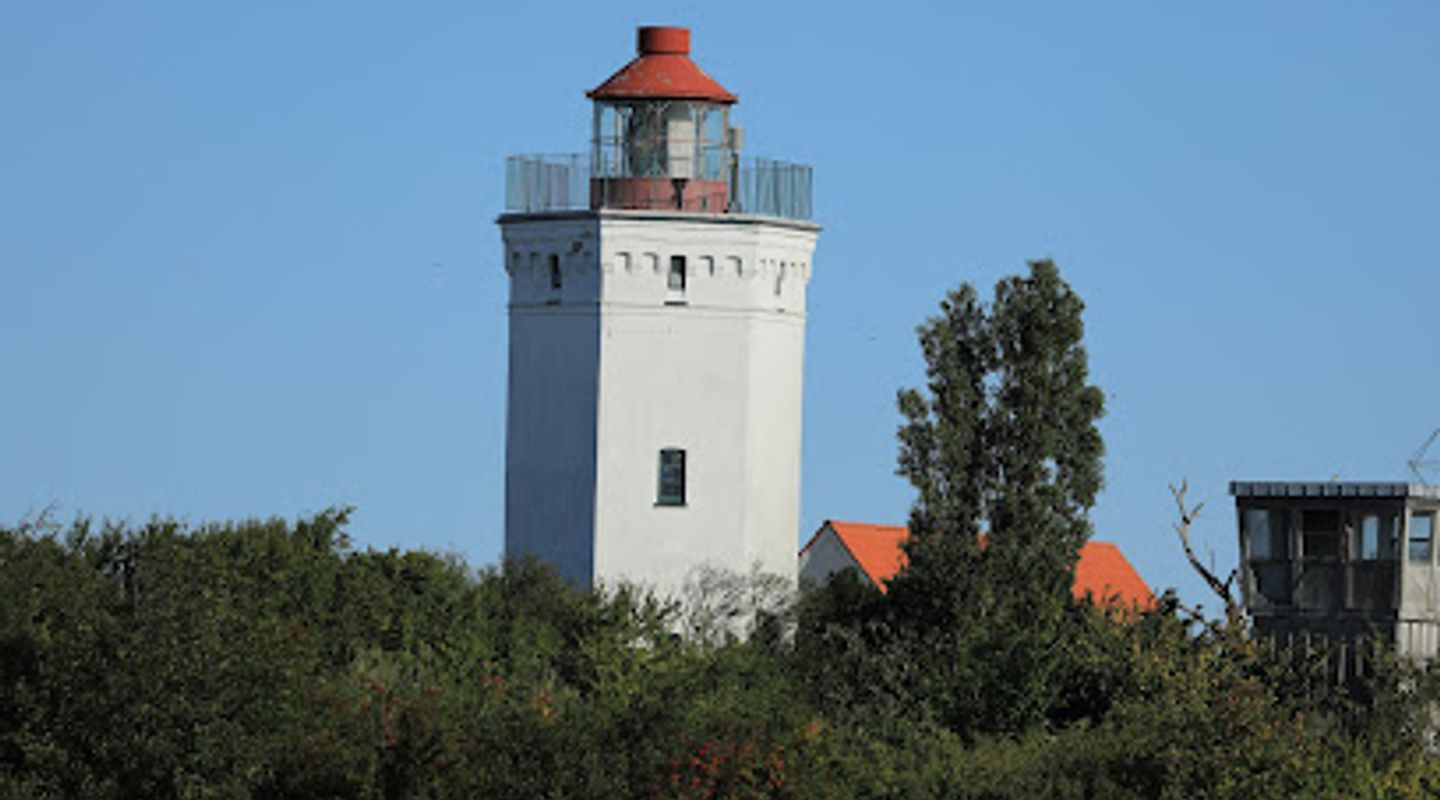
Standing at Denmark’s southern tip on Falster, Gedser Lighthouse is a 20 m brick tower from 1802 watching over the Baltic Sea. Surrounded by low dunes, sea views and migrating seabirds, it combines maritime history with raw coastal scenery. The area is popular with birdringers and nature lovers, and on clear days you can gaze across the water toward Germany while waves and wind shape the ever‑changing shoreline below.
On-site amenities
 Trash bins
 Information boards
- Address
- Gedser Fyrvej 2B, 4874 Gedser
Getting there
Bus from Nykøbing Falster
Car from Nykøbing Falster
Cycling from Gedser town
Discover more about Gedser Lighthouse
A brick beacon at Denmark’s southern edge
Gedser Lighthouse, or Gedser Fyr, rises from the windswept tip of Falster at Gedser Odde, marking the southernmost point of Denmark. Built in 1802 as a coal-fired tower, it quickly became a vital navigational mark for ships crossing the busy waters of the Baltic Sea and the Kadet Channel. Its sturdy brick shaft and white lantern stand solitary against open sky and sea, an instantly recognisable landmark as you approach along the coast.From its position above low coastal cliffs and shingle beaches, the lighthouse looks out toward Germany just across the water. In clear weather the horizon feels surprisingly close, underlining how this quiet corner of Denmark has long been a crossroads between Scandinavia and continental Europe. Today the light still serves as a seamark, even as the site has taken on a gentler role as a place for contemplation and coastal walks.
Two centuries of evolving maritime technology
The lighthouse has changed markedly since its early days as a coal beacon. In 1834 the simple fire was replaced by a mirror apparatus, concentrating the light into a more reliable signal for passing ships. The tower was heightened in 1851 and fitted with a fixed lens, improving range and visibility along the often misty Baltic approaches. Another major alteration came in 1905, when the tower was raised again and the optical system converted to a rotating lens powered by kerosene.These upgrades reflect the evolution of lighthouse engineering in the 19th and early 20th centuries, as seafaring grew busier and safer navigation became critical. Gedser Fyr witnessed the transition from sail to steam and later to modern shipping, standing through wars, shifting borders and the development of nearby ferry routes. Even today, its relatively modest scale belies its historical importance in guiding vessels between Denmark and Germany.
Wild coastline, migrating birds and big skies
Around the lighthouse, the landscape feels raw and elemental. Short grass, scrub and low dunes frame a shoreline shaped constantly by waves and erosion. Pebble and sand beaches stretch away in both directions, with sections of sea cliffs where the land drops sharply toward the Baltic. Wind is a frequent companion here, often carrying the tang of salt and the cries of seabirds.Gedser Odde is renowned as a migration hotspot, and birdlife is a defining feature of any visit. In season, you may encounter ornithologists and volunteers working at the nearby bird ringing station, quietly monitoring the stream of passerines, raptors and seabirds following this natural flyway. Flocks pass overhead, rest in the scrub or skim low over the water, turning the headland into a living observation post on nature’s long-distance journeys.
Experiencing the lighthouse up close
A visit to Gedser Lighthouse is as much about atmosphere as it is about architecture. Depending on current access arrangements, you may be able to explore the grounds around the tower and, on some occasions, step inside for a closer look at the interior. Even when the tower itself is closed, the immediate surroundings invite slow exploration: paths along the edge of the cliffs, sheltered spots among the dunes and open vantage points where you can watch ships, ferries and weather fronts moving across the sea.The simple forms of the tower photograph beautifully in all seasons, from bright summer evenings to heavy winter skies. Sunrise and sunset can be particularly striking, when low light casts long shadows across the grassy headland and the brickwork glows warm against the cool blues of sea and sky. With few buildings nearby, the sense of space is strong, and on quieter days the only sounds may be surf, wind and distant ship engines.
A quiet corner for reflection and coastal walks
Although Gedser Fyr has played a serious role in maritime safety, the modern visitor experience is peaceful and unhurried. The area lends itself to reflective walks along the shoreline, picnics above the cliffs and simply standing still to trace the curve of the Baltic horizon. The southernmost stone of Denmark lies a short distance along the coast, making the lighthouse a natural highlight in a broader exploration of this extremity of Scandinavia.For many, the appeal of Gedser Lighthouse lies in its combination of tangible history and unpolished coastal nature. It offers a glimpse into Denmark’s seafaring past while grounding you firmly in the present moment: watching clouds race overhead, counting passing birds, and feeling how exposed this narrow strip of land is between open sea and sky.
Evendo Review Centre
 Google
Guest reviews
Best time to go
Quietest: Jan, Feb & Dec · before 6am or from 9pm
Busy times are Evendo estimates for a typical year, to help you plan. Actual crowds vary with events, school holidays and the weather.
Explore Gedser Lighthouse on the map
A handpicked selection of must-see spots near Gedser Lighthouse, mapped for you.
Get your free copy of our complete guide to Gedser Lighthouse, delivered straight to you.
Everything on this page, from opening hours and how to get there to Eve’s tips and the best time to go, in one PDF you can read offline, print or share.
Already have an account? Sign in
Your Gedser Lighthouse guide is ready.
We'll send it to · Not you? Sign out

Getting your guide ready…
We are putting together a fresh copy of the Gedser Lighthouse guide. This can take up to a minute.
This can take a few moments. If your browser asks, choose Allow so the download can start. You'll find the guide in your Downloads folder.
Nothing happened? Download it again
Sorry, the guide is taking longer than usual. Please try again in a minute, or get it by email instead.
Other nearby places you may find interesting
The closest places of the same kind, if this one is not quite what you had in mind.
-
-
-
-
-


Swipe for more places
More to explore near Gedser Lighthouse

 Best experiences near Gedser Lighthouse
 Best hotels near Gedser Lighthouse
 Best landmarks near Gedser Lighthouse
 Best attractions near Gedser Lighthouse
 Best shops near Gedser Lighthouse
 Best restaurants near Gedser Lighthouse
 Best bars near Gedser Lighthouse
Do you manage this location?
Take control to get all the benefits, like improved information, better appearance, and stronger visibility across AI-powered discovery.
Explore more

Explore more of Lolland-Falster
Discover Lolland-Falster: Denmark's serene southern islands with stunning beaches, historic castles, and charming coastal towns offering a perfect blend of nature and culture.
Explore Lolland-Falster
Explore more of Denmark
Discover Denmark: A perfect blend of history, modern design, and the cozy concept of hygge. Explore vibrant cities, serene landscapes, and world-class cuisine.
Explore Denmark