

The Medieval Center Travel Guide
Free Guide: Step through the palisade into Sundkøbing, a painstakingly reconstructed 1400s Danish town where crafts, tournaments and war machines bring the Middle Ages to life.


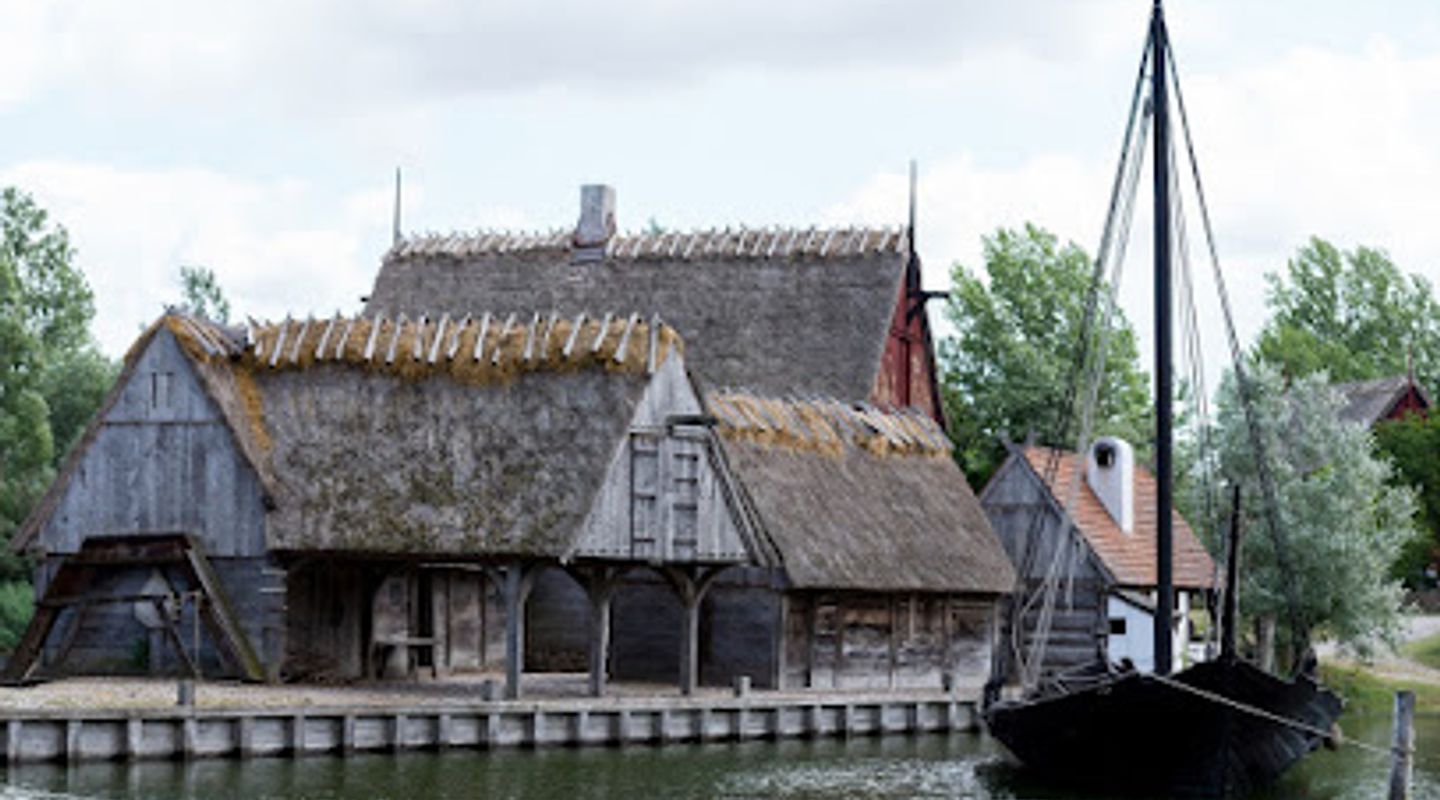
A brief summary of The Medieval Center
Step through the palisade into Sundkøbing, a painstakingly reconstructed 1400s Danish town where crafts, tournaments and war machines bring the Middle Ages to life.
The Medieval Center near Nykøbing Falster is a large open‑air living history museum that recreates a Danish market town around the year 1400. Costumed craftspeople, merchants and knights bring the fictional town of Sundkøbing to life with daily demonstrations of archery, jousting and cannon fire. You can wander cobbled lanes, step into timber-framed houses and workshops, and explore a hands‑on technology park featuring full‑scale medieval inventions. It is one of Denmark’s most engaging historical attractions for families and history lovers.
On-site amenities
 Restrooms
 Drink options
 Food options
 Seating areas
 Picnic areas
 Trash bins
 Information boards
 Visitor centre
Opening hours
- Mon10 am–4 pm
- Tue10 am–4 pm
- Wed10 am–5:30 pm
- Thu10 am–4 pm
- Fri10 am–4 pm
- Sat10 am–4 pm
- Sun10 am–4 pm
Opening hours as listed on the venue’s Google Business Profile. Hours can change for services and special events, so check with the venue before you go.
- Address
- Indgang, Ved Hamborgskoven 2, 4, 4800 Nykøbing Falster
- Phone
- Website
Getting there
Regional train and local bus
Car from Copenhagen and Zealand
Cycling from Nykøbing Falster
Coach tour or group transport
Discover more about The Medieval Center
A fifteenth‑century town brought back to life
Sitting on the edge of forest and water outside Nykøbing Falster, the Medieval Center immerses you in a reconstructed market town called Sundkøbing, set around the year 1400. Timber‑framed houses, narrow lanes and wooden bridges have been built using evidence from archaeological excavations and written sources, so that the streetscape feels convincingly late‑medieval rather than theme‑park fantasy. Chickens scratch in yards, smoke curls from open hearths and the smell of tar, leather and woodsmoke hangs in the air.The town is populated by craftspeople, merchants and townsfolk in period clothing who go about their daily routines. Instead of static glass cases, tools, pottery and textiles are out where they were meant to be used: in kitchens, workshops and stalls. This combination of reconstructed architecture and living interpretation creates an unusually complete portrait of a small Danish trading town at the end of the Middle Ages.
Living history, tournaments and war machines
Much of the drama at the Medieval Center plays out in the tournament field just beyond the town palisade. Here, armoured riders urge their horses into a gallop for jousting contests, lances shattering against shields in showers of splinters. Archers demonstrate longbows and crossbows, explaining how different weapons were used in siege and battle. At set times, staff operate the enormous trebuchet – billed as one of the world’s largest – hurling massive stones across the field with a deep, mechanical whoomph.Cannons and early gunpowder weapons add another layer of spectacle, with thick smoke and thunderous bangs rolling across the site. These shows are not just for thrills: they underline how warfare and technology were changing society in the 14th and 15th centuries, and how a small town like Sundkøbing might have defended itself in troubled times.
Crafts, daily life and experimental archaeology
Away from the battlefield, the quieter corners of Sundkøbing reveal the rhythms of everyday life. In low‑beamed workshops, you can watch blacksmiths forging iron, woodworkers shaping beams and wheels, or weavers working looms strung with wool and linen. Each trade is demonstrated with period‑appropriate tools, and the buildings are furnished in line with current research into medieval households and workshops.The Centre has long been a hub for experimental archaeology, using full‑scale reconstructions and long‑term experiments to test how buildings, ships, weapons and tools actually performed. This research underpins the way food is cooked, how animals are kept and even how waste is handled. For visitors, it means the sights, sounds and smells around you are grounded in scholarship while remaining engaging and accessible.
Hands‑on inventions and family‑friendly exploration
Beyond the town lies a technology park showcasing life‑size models of medieval inventions and ideas. Here you can try human‑powered cranes, see early clockwork principles in motion or explore designs inspired by famous engineers of the period. Many of these installations are interactive, inviting you to push, crank or balance your way to an understanding of pre‑industrial mechanics.Families will find plenty of informal play woven into the site, from simple games using wooden hoops and balls to archery experiences suitable for older children under staff supervision. A forest trail with themed storytelling elements introduces darker folklore from the era in a gentle, atmospheric way. Picnic areas and simple food outlets keep the mood relaxed, so it is easy to spend most of a day roaming between shows, demonstrations and quiet corners of the town.
Seasons, atmosphere and practical comforts
The Medieval Center operates a main season from spring to early autumn, with additional themed days in the autumn holidays and a cosy Christmas market. In bright weather the town feels bustling and open, with strong contrasts between sunlit streets and shady interiors; on overcast or windy days, low clouds and creaking timbers give the place a more sombre, late‑medieval character that suits the history. Many paths are unpaved and can be muddy after rain, which adds to the rustic feel but calls for sturdy footwear.Facilities are thoughtfully integrated so they do not intrude on the historic setting. There are restrooms, simple food options and a lunch area with tables and benches near the tournament field, and you are welcome to bring your own picnic. Information boards help orient you and outline the day’s programme, while staff are generally happy to explain details of costume, crafts or weaponry. With its mix of scholarship, spectacle and open air, the site works as both an engaging day out and a vivid introduction to medieval Denmark.
Evendo Review Centre
 Google
Guest reviews
Best time to go
Quietest: Jan, Feb & Mar · before 8am or from 7pm
Busy times are Evendo estimates for a typical year, to help you plan. Actual crowds vary with events, school holidays and the weather.
Explore The Medieval Center on the map
A handpicked selection of must-see spots near The Medieval Center, mapped for you.
Get your free copy of our complete guide to The Medieval Center, delivered straight to you.
Everything on this page, from opening hours and how to get there to Eve’s tips and the best time to go, in one PDF you can read offline, print or share.
Already have an account? Sign in
Your The Medieval Center guide is ready.
We'll send it to · Not you? Sign out

Getting your guide ready…
We are putting together a fresh copy of the The Medieval Center guide. This can take up to a minute.
This can take a few moments. If your browser asks, choose Allow so the download can start. You'll find the guide in your Downloads folder.
Nothing happened? Download it again
Sorry, the guide is taking longer than usual. Please try again in a minute, or get it by email instead.
Other nearby places you may find interesting
The closest places of the same kind, if this one is not quite what you had in mind.
-
Labyrint Lolland-Falster Lose yourself in a leafy forest maze where quiz clues, gentle trails and fresh Lolland-Falster air turn getting lost into an easygoing family adventure.
-
Evolution Museet World-class real dinosaur fossils and a 300-million-year journey through evolution, set inside Denmark’s Knuthenborg Safaripark on the island of Lolland.
-
Lupinmark A seasonal sea of lupins turning the Lolland farmland into a vivid carpet of color, perfect for a peaceful countryside pause and striking photographs.
-
Skelsnæs-pavillionen A restored 1822 forest pavilion on a lakeside promontory in Naturpark Maribosøerne, offering peaceful picnic shelter amid historic woods and bird‑rich waters.
-
Relic of the Castle Revshale Subtle grassy earthworks on Borgø Island where a forgotten royal fortress, fierce 13th‑century battles and the serene Maribo Lakes Nature Park meet.
Swipe for more places
More to explore near The Medieval Center

 Best experiences near The Medieval Center
 Best hotels near The Medieval Center
 Best landmarks near The Medieval Center
 Best attractions near The Medieval Center
 Best shops near The Medieval Center
 Best restaurants near The Medieval Center
 Best bars near The Medieval Center
Do you manage this location?
Take control to get all the benefits, like improved information, better appearance, and stronger visibility across AI-powered discovery.
Explore more
Explore more of Lolland
Discover Lolland, Denmark's tranquil island retreat, offering lush landscapes, historic sites, and delightful local cuisine for an unforgettable escape.
Explore Lolland
Explore more of Denmark
Discover Denmark: A perfect blend of history, modern design, and the cozy concept of hygge. Explore vibrant cities, serene landscapes, and world-class cuisine.
Explore Denmark
