Bro til Bendixminde (Børnenes Bro), Odder
A slender pedestrian bridge soaring over the Stampemølle valley, linking Odder’s west side with Bendixminde and turning an everyday school route into a scenic walk.
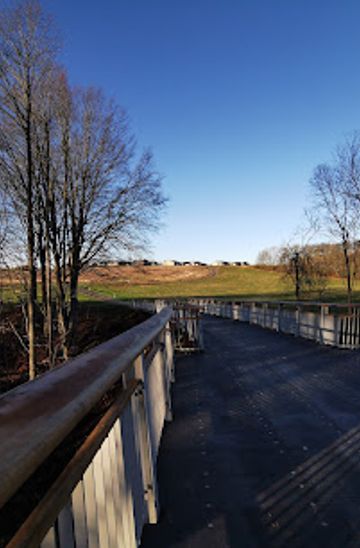
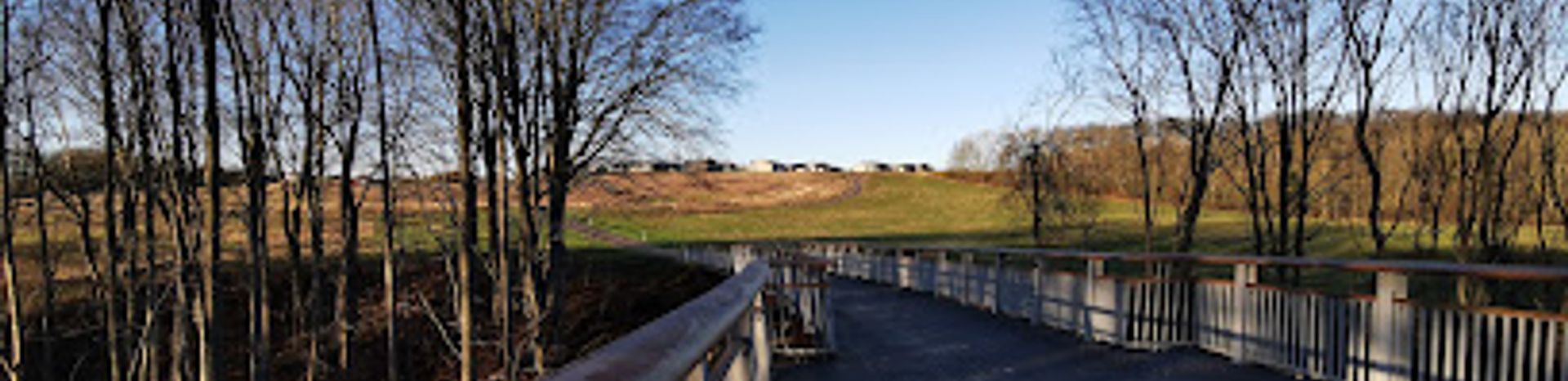
Bro til Bendixminde – often nicknamed Børnenes Bro – is a striking pedestrian and cycle bridge in western Odder, soaring over the green valley of Stampemøllebækken to link the established west side with the new Bendixminde neighborhood. Around 90 meters long and up to 10 meters above the valley floor, it creates a safe, car‑free school route and an appealing everyday walk, with gentle curves, open views over meadows and trees, and a close connection to the surrounding small woodland and stream landscape.
A brief summary to Bro til Bendixminde
- Vesterhåb 61, Odder, 8300, DK
- Duration: 0.5 to 1.5 hours
- Free
-
 Outdoor
- Mobile reception: 4 out of 5

Know before you go
Hi, I'm Eve. Here are a few practical things to know before exploring Bro til Bendixminde.
- Time your visit for early morning or late afternoon, when the light across the valley is soft and you are more likely to spot birdlife along the stream below.
- Combine the bridge with a circular walk through the Bendixminde area and nearby green spaces to appreciate how the structure connects older and newer parts of Odder.
- If you are cycling, slow down on the highest section to safely enjoy the views and give space to pedestrians and families with prams.
Do you manage this location?
Take control to get all the benefits, like improved information, better appearance, and stronger visibility across AI-powered discovery. Learn more
Activate your presenceOther nearby places you may find interesting

Getting There
-
Train and bicycle from Aarhus
From Aarhus, take the regional train to Odder Station, with a journey time of around 30–35 minutes and typical adult fares in the range of 40–70 DKK one way. From the station, cycle west through town towards the Bendixminde area; the ride usually takes about 10–15 minutes on mostly level, urban streets with dedicated cycle paths on key stretches. This option is convenient for those already traveling with a bicycle and keeps the entire trip car‑free.
-
Train and walking from central Odder
If you arrive by train to Odder Station, you can walk to Bro til Bendixminde in roughly 25–35 minutes, depending on pace. The route passes through built‑up residential streets and gentle inclines as you approach the valley. Surfaces are predominantly paved, with standard kerbs and crossings, so it is manageable for most walkers, though people using wheelchairs or pushing prams should allow extra time for gradients and waiting at traffic lights.
-
Car or taxi within the Odder area
Traveling by car within Odder, reaching the Bendixminde side of the bridge typically takes around 5–10 minutes from the town centre, depending on local traffic. Street parking is generally found in nearby residential roads, but spaces can be limited during weekday school hours. Taxis within Odder usually operate on metered fares; for short trips inside the town, expect prices in the range of 70–140 DKK, varying with distance and waiting time.
-
Regional bus and short walk
Regional and local buses serving western Odder provide an option for visitors without bikes. Journey times from central Odder to stops near Bendixminde are typically 10–20 minutes, depending on route and intermediate stops, with single tickets often costing around 20–35 DKK. From the nearest stop, plan on a 10–15 minute walk on pavements and local paths to reach the approaches to the bridge, suitable for most fitness levels.
For the on-the-go comforts that matter to you
-
 Seating Areas
-
 Trash Bins
-
 Information Boards
Discover more about Bro til Bendixminde
A sweeping bridge over the Stampemølle valley
Bro til Bendixminde is a long, elegant pedestrian and cycle bridge carrying you high above the green valley carved by Stampemøllebækken on the western edge of Odder. Its lightly curving deck stretches for roughly 90 meters, rising to about 10 meters above the lowest point of the valley, so you have the sensation of floating over the treetops while still staying close to the surrounding landscape. The bridge threads through a small belt of woodland, with glimpses of the stream below and open sky above.From its deck you can look one way towards the older streets of Odder’s west side and the other towards the developing Bendixminde district, where new homes gradually fill what was once open land. The structure feels both urban and rural at once: a piece of infrastructure that also works as a scenic balcony over meadows, shrubs and gently sloping banks.Connecting everyday life and a new neighborhood
The bridge was built to solve a simple but important challenge: how to link the established western part of Odder with the new Bendixminde housing area without forcing people to make long detours or mix with heavy traffic. By spanning the valley in one broad sweep, it creates a direct, car‑free corridor where children can reach school and residents can access town on foot or by bike.Its popular nickname, Børnenes Bro – the Children’s Bridge – reflects this role as one of Odder’s safest and most attractive school routes. The gentle gradients, wide deck and clear sightlines are designed with everyday users in mind. What could have been a purely functional crossing has been shaped into a place where the journey itself is part of the pleasure of living in the area.A calm place to pause and look around
Although it is part of the local traffic network, the bridge also works as a small destination in its own right. The surrounding trees filter city noise and you mainly hear the wind, birdsong and, on quiet days, the faint sound of water passing below. Many people slow down on the highest section to look along the valley, watch the light change over the fields or simply take a moment between home and town.At each end, paths curve away into nearby streets and green spaces, making the bridge a natural link in short evening walks and longer strolls around Bendixminde. The views change with the seasons: bright new leaves in spring, long grasses and wildflowers in summer, warm colors in autumn and open, wide skies in winter when the trees stand bare and the valley feels larger.Design that balances height and accessibility
Structurally, Bro til Bendixminde balances the need to pass high above the valley floor with an accessible route that people of all ages can use comfortably. Instead of steep ramps, the approaches stretch out the climb, creating a slow, almost imperceptible ascent. The deck is broad enough for cyclists and walkers to pass each other without stress, making it suitable for prams, wheelchairs and everyday cargo bikes.Discreet railings and simple detailing keep the focus on the landscape rather than on the construction itself. From a distance, the bridge reads as a fine line gliding across the valley, while up close you notice the rhythm of supports stepping down the slope. It is a contemporary piece of infrastructure, yet modest enough to sit easily among trees, grass and water.Part of a growing green network in Odder
As Bendixminde continues to develop, the bridge anchors a wider network of soft paths and green corridors in western Odder. It encourages short, non‑motorized trips between homes, schools and local services, and helps keep the valley itself free from road building. In this way, the structure supports a more sustainable pattern of movement while preserving the character of Stampemøllebækken’s small but important landscape.For visitors, Bro til Bendixminde offers a brief but memorable perspective on how a growing town can expand while still giving priority to walking, cycling and everyday contact with nature. For local residents, it is simply part of the daily rhythm: a graceful overpass that turns a practical crossing into a small scenic moment on the way from one side of Odder to the other.Explore the best of what Bro til Bendixminde has to offer













More about East Jutland
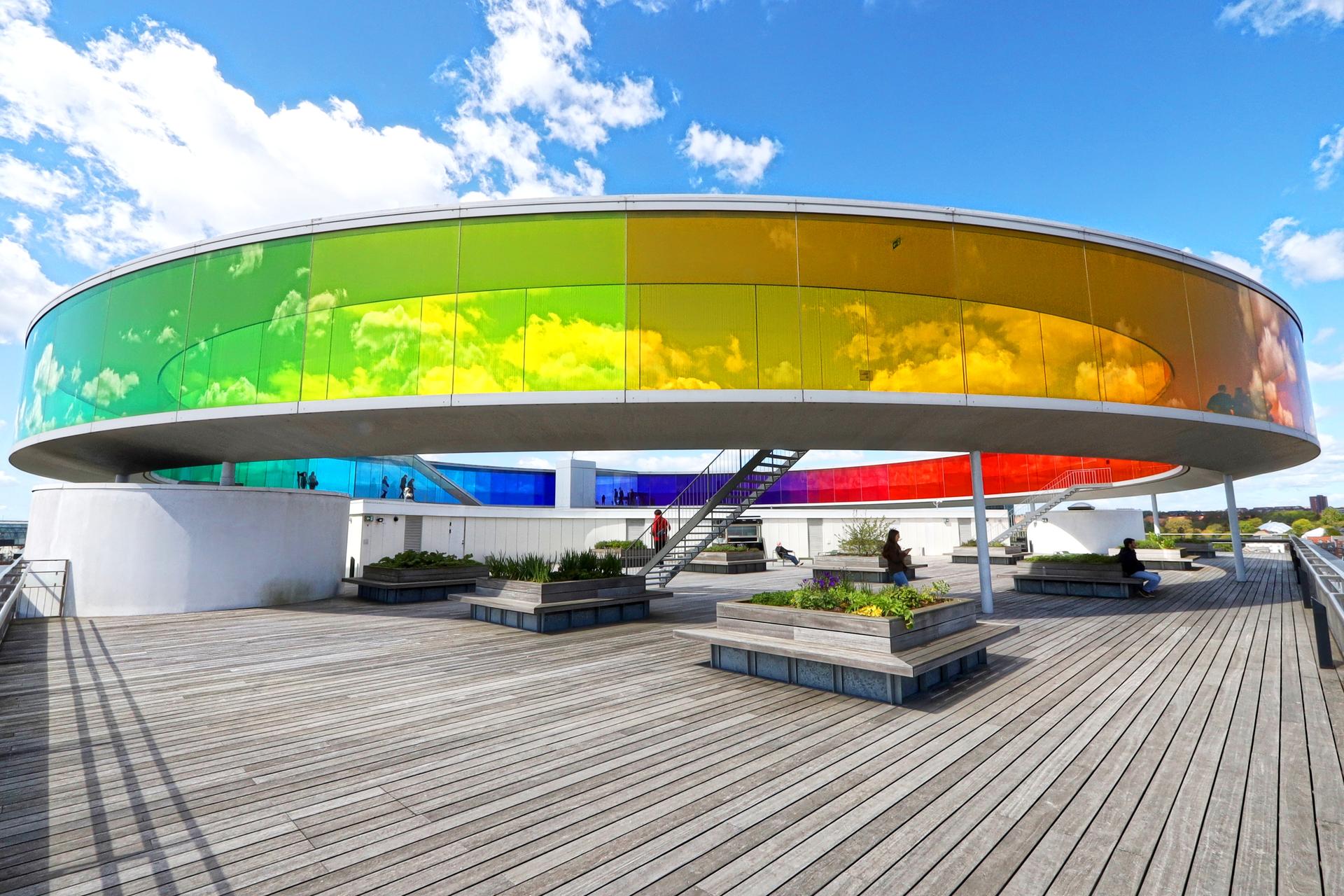
Discover East Jutland, Denmark's enchanting region blending vibrant cities, rich history, and stunning natural landscapes, perfect for every type of traveler.
Tell me more about East Jutland
A compact beech and oak forest on Aarhus’ southern edge, Kirkeskov offers a calm, everyday escape where city streets quickly give way to quiet paths and leafy glades.

Denmark's premier family beach with pristine sands, shallow waters, and excellent facilities just 25 km from Aarhus.