Amalienborg Palace Travel Guide
Free Guide: Copenhagen’s living royal residence: four rococo palaces, a ceremonial square and a museum that opens the doors to 150 years of Danish royal life.


A brief summary of Amalienborg Palace
Copenhagen’s living royal residence: four rococo palaces, a ceremonial square and a museum that opens the doors to 150 years of Danish royal life.
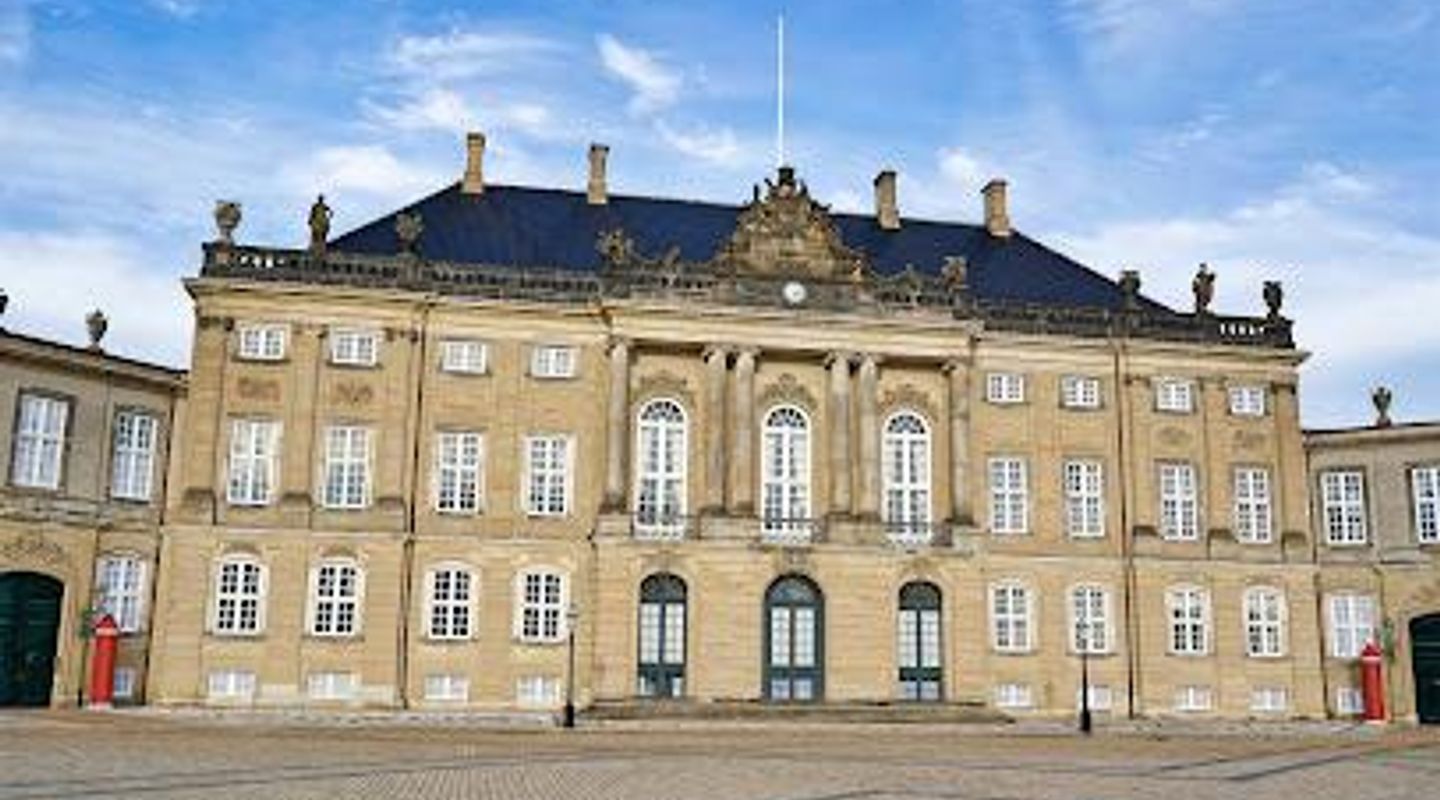
Amalienborg Palace is Copenhagen’s working royal residence and the ceremonial heart of Denmark’s monarchy. Four near-identical rococo palaces frame an elegant octagonal square, guarded by the Royal Life Guards and centred on an equestrian statue of King Frederik V. Visitors can explore the Amalienborg Museum inside Christian VIII’s Palace, with richly furnished royal interiors, glittering state rooms and a Fabergé chamber, and can witness the daily changing of the guard at noon.
On-site amenities
 Restrooms
 Drink options
 Drinking water
 Food options
 Seating areas
 Sheltered areas
 Trash bins
 Information boards
 Visitor centre
- Address
- Amalienborg Slotsplads, 1257 København K
- Phone
- Website
Getting there
Metro and short walk from central Copenhagen
Bus from inner city districts
Bicycle from the city centre
Discover more about Amalienborg Palace
A royal square at the heart of Copenhagen
Amalienborg Palace forms one of Europe’s most graceful palace squares: four almost identical rococo mansions surrounding an octagonal cobbled plaza, with the equestrian statue of King Frederik V at its centre. The symmetry is striking from every angle, with the façades’ pale sandstone, pilasters and delicate ornamentation set against the often steel-blue Copenhagen sky. The space feels both ceremonial and surprisingly human in scale.The square is also very much alive. The Royal Life Guards, in dark uniforms and bearskin hats, patrol the perimeter and perform the daily changing of the guard at noon, accompanied on some days by a marching band. The steady rhythm of boots on stone, the snap of rifle drill and the occasional trumpet fanfare underscore that this is not just a historic monument but the working front yard of Denmark’s monarchy.
From noble mansions to royal residence
Amalienborg’s story begins in the mid‑18th century, when the Frederiksstaden district was laid out to celebrate the 300th anniversary of the Oldenburg dynasty. Four grand townhouses were commissioned for prominent noble families, designed in refined rococo style with elegant façades and richly decorated interiors. Their arrangement around the square was a deliberate exercise in urban theatre, aligning the complex with the nearby Marble Church and the harbour.That original plan changed dramatically after a devastating fire destroyed Christiansborg Palace in 1794. The royal family quickly purchased the four mansions and converted them into a new principal residence. Over time each palace took the name of a monarch who lived there, and Amalienborg evolved into the central stage for royal life in Copenhagen, hosting receptions, state visits and significant constitutional moments.
Palaces within the palace
Today each of the four palaces has its own role. Christian VII’s Palace is reserved for major ceremonies and official functions, its interiors used for state banquets and formal receptions. Christian IX’s Palace has long been associated with the late Queen Margrethe II, while Frederik VIII’s Palace serves as the private home of King Frederik X, Queen Mary and their children, placing a contemporary royal family life behind those stately façades.Christian VIII’s Palace houses the Amalienborg Museum, where visitors can step into preserved royal apartments and state rooms. Here, panelled salons, heavy curtains and glittering chandeliers reveal changing tastes from the 19th century to the present. Personal objects, portraits and uniforms trace the story of Christian IX and Queen Louise and their descendants, whose marriages linked Denmark to royal houses across Europe.
Inside the Amalienborg Museum
The museum delves into 150 years of royal history, from the era when Christian IX was dubbed the “father‑in‑law of Europe” through to the 21st‑century monarchy. Rooms are arranged as lived‑in spaces rather than abstract displays: writing desks still laid out with papers, dining rooms set for formal meals, and private sitting rooms that hint at quieter family moments behind the ceremonial façade.A particular highlight is the Fabergé chamber, with one of the world’s notable collections of Russian jewellery and objets d’art, reflecting close historic ties between the Danish and Russian courts. In other galleries, uniforms, orders, photographs and film clips explore public duties, royal tours and the evolving symbolism of monarchy in a modern democracy.
An axis of architecture and water
Step back towards the centre of the square and you sense how precisely Amalienborg is placed within Copenhagen’s urban fabric. Look inland and the domed Marble Church rises at the end of a grand processional avenue; turn seaward and the line continues across the harbour to the modern Copenhagen Opera House. This carefully planned axis links baroque, rococo and contemporary architecture in a single vista.The square’s openness also makes it acutely sensitive to light and weather. On bright days the façades glow warmly and the statue’s bronze gleams; in winter, a dusting of snow turns the cobbles and roofs into a monochrome scene punctuated by the guards’ dark uniforms. Twilight often brings a softer mood, when interior lights flicker to life behind tall windows and the palace complex feels simultaneously intimate and imposing.
Experiencing Amalienborg today
A visit typically weaves together indoor and outdoor experiences. Many travellers time their day to be on the square before noon to watch the changing of the guard, then move into Christian VIII’s Palace for the museum. Inside, signage and displays are offered in multiple languages, and staff are on hand to explain protocol, symbolism and anecdotes from royal life. Temporary exhibitions occasionally focus on particular monarchs, fashions or diplomatic themes.Beyond the formal exhibits, simply lingering along the edge of the square rewards close observation: the subtle differences between the four façades, the regimented pace of guards on duty, and the interplay between palace life and the surrounding city streets. Amalienborg remains both a symbol of national continuity and a living neighbourhood landmark, bridging centuries of Danish history in a compact, walkable space.
Evendo Review Centre
 Google
Guest reviews
Best time to go
Quietest: Jan, Feb & Nov · before 6am or from 10pm
Busy times are Evendo estimates for a typical year, to help you plan. Actual crowds vary with events, school holidays and the weather.
Explore Amalienborg Palace on the map
A handpicked selection of must-see spots near Amalienborg Palace, mapped for you.
Get your free copy of our complete guide to Amalienborg Palace, delivered straight to you.
Everything on this page, from opening hours and how to get there to Eve’s tips and the best time to go, in one PDF you can read offline, print or share.
Already have an account? Sign in
Your Amalienborg Palace guide is ready.
We'll send it to · Not you? Sign out

Getting your guide ready…
We are putting together a fresh copy of the Amalienborg Palace guide. This can take up to a minute.
This can take a few moments. If your browser asks, choose Allow so the download can start. You'll find the guide in your Downloads folder.
Nothing happened? Download it again
Sorry, the guide is taking longer than usual. Please try again in a minute, or get it by email instead.
Unlock the best of Amalienborg Palace
Skip-the-line tickets, guided tours with entry, and walking tours of the area, booked in a few clicks.


Other nearby places you may find interesting
The closest places of the same kind, if this one is not quite what you had in mind.
-
-
-
-
-


Swipe for more places
More to explore near Amalienborg Palace

 Best experiences near Amalienborg Palace

 Best hotels near Amalienborg Palace

 Best landmarks near Amalienborg Palace

 Best attractions near Amalienborg Palace

 Best shops near Amalienborg Palace

 Best restaurants near Amalienborg Palace

 Best bars near Amalienborg Palace
Do you manage this location?
Take control to get all the benefits, like improved information, better appearance, and stronger visibility across AI-powered discovery.
Explore more

Explore more of North Zealand
Explore North Zealand, Denmark's enchanting region of castles, beaches, and royal estates, perfect for history buffs, nature enthusiasts, and seaside lovers.
Explore North Zealand
Explore more of Denmark
Discover Denmark: A perfect blend of history, modern design, and the cozy concept of hygge. Explore vibrant cities, serene landscapes, and world-class cuisine.
Explore Denmark