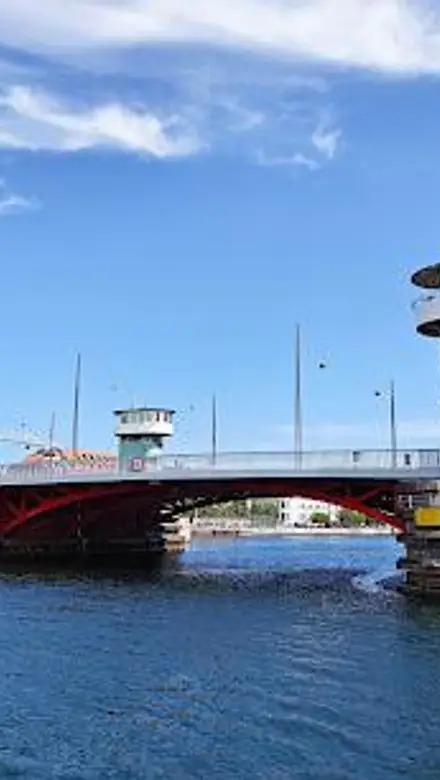
Knippelsbro Travel Guide
Free Guide: Copenhagen’s copper-towered bascule bridge, where four centuries of harbour crossings, functionalist design and everyday city life meet above the Inner Harbour.


A brief summary of Knippelsbro
Copenhagen’s copper-towered bascule bridge, where four centuries of harbour crossings, functionalist design and everyday city life meet above the Inner Harbour.
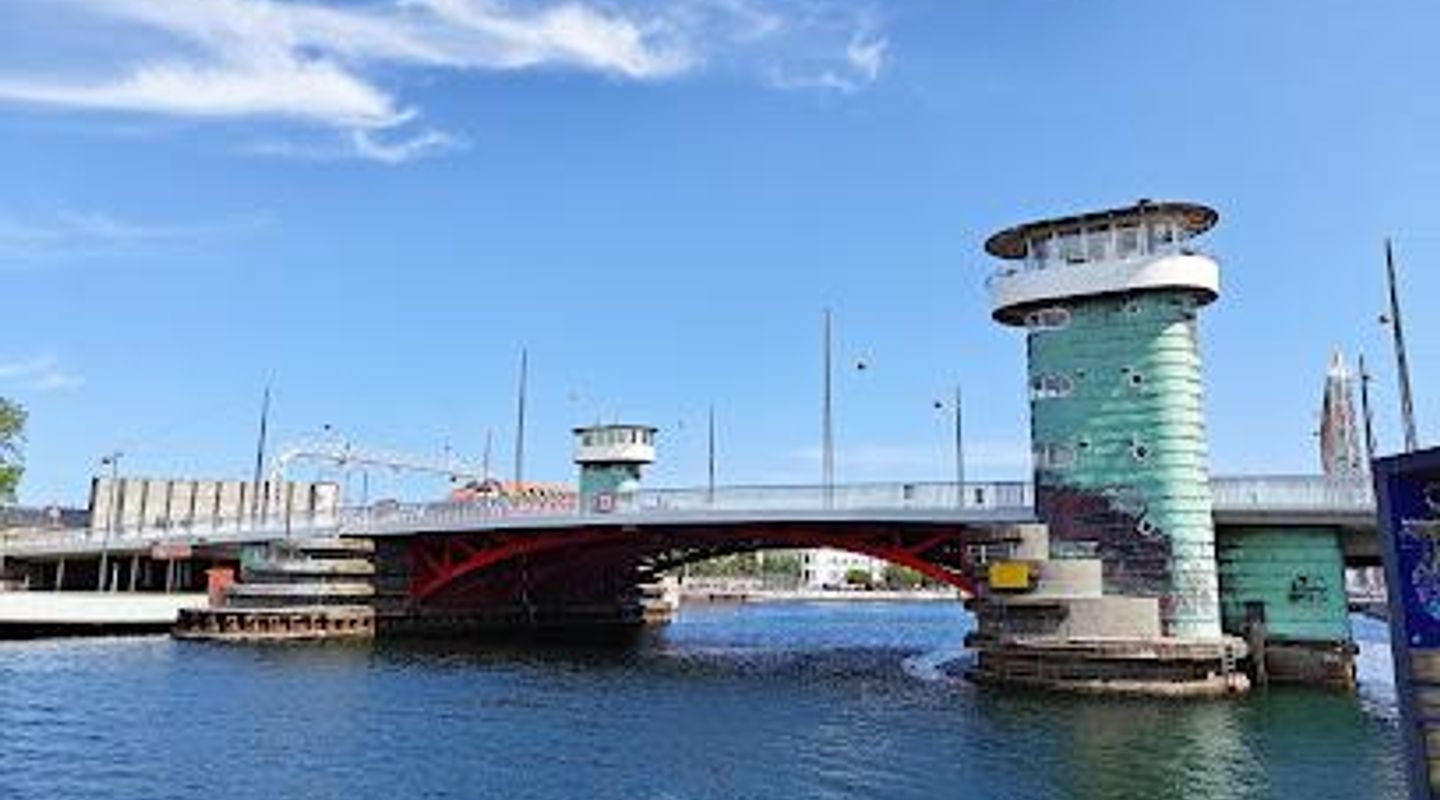
Knippelsbro is Copenhagen’s iconic green-towered bascule bridge linking historic Slotsholmen with canalside Christianshavn. First established here in the early 17th century and rebuilt several times, today’s 1937 functionalist structure carries cars, cyclists and pedestrians over the Inner Harbour. Its copper-clad towers, once home to bridge keepers and now partly reused as a cultural venue, frame classic views of the stock exchange spire, harbour traffic and the city’s low skyline, making the bridge a characterful everyday crossing and a quietly memorable stop on any waterside walk.
On-site amenities
 Restrooms
 Drink options
 Drinking water
 Food options
 Seating areas
 Trash bins
 Information boards
 Visitor centre
Opening hours
- Every dayOpen 24 hours
Opening hours as listed on the venue’s Google Business Profile. Hours can change for services and special events, so check with the venue before you go.
- Address
- Knippelsbro, 1409 København K
- Website
Getting there
Metro
Bus
Bicycle
Harbour Boat
Discover more about Knippelsbro
A working bridge at the heart of Copenhagen’s harbour
Knippelsbro stretches across Copenhagen’s Inner Harbour, linking the government quarter on Slotsholmen with the cobbled streets of Christianshavn. Standing here, you are on one of only a handful of road bridges that still carry vehicles, bikes and walkers over this central stretch of water, so there is a constant but gentle flow of city life passing by. The roadway is broad, with raised pavements and generous bike lanes reflecting Copenhagen’s cycling culture.Pause at the railings and you get a front-row view of the harbour as boats slip beneath the steel spans. On one side, the pointed spire of the old stock exchange rises above the rooftops; on the other, church towers and modern offices frame the canal-side streets. The bridge’s position makes it a natural hinge between the royal and administrative buildings on one bank and the more residential, maritime character of Christianshavn on the other.
Four centuries of crossings in one place
A bridge has occupied this spot since the early 1600s, when King Christian IV ordered a connection to his new merchant town of Christianshavn. Those first crossings were simple wooden structures, vital for moving people and goods across what was then a defensive harbour. Over the centuries, each version of the bridge reflected the needs of its time: ornate wooden gates in the 18th century, then iron and steel spans as industry and rail traffic grew in the 19th century.The current Knippelsbro is the fifth bridge on this site, opened in 1937 as Copenhagen modernised its harbour infrastructure. Its name recalls Hans Knip, a 17th‑century bridge keeper whose job was to manage traffic and tolls. Though none of the earlier bridges survive, the continuity of a crossing here has quietly shaped the development of both banks, helping transform Christianshavn from a fortified trading outpost into one of the city’s most characterful districts.
Functionalist design and distinctive copper towers
Architect Kaj Gottlob and collaborating engineers gave Knippelsbro a clean, functionalist profile. The main spans are a steel bascule design: two leaves that can pivot upwards to let taller ships pass. From the deck, the mechanics are discreet, but the straight lines, riveted details and solid concrete approaches all speak to early 20th‑century confidence in engineering.What most visitors remember, though, are the twin copper-clad towers rising from either side of the carriageway. Their pale green patina, a result of weathered copper, gives the bridge its unmistakable silhouette and has earned it a place on Denmark’s 200‑kroner banknote. Each tower is a compact vertical world of staircases and small rooms stacked over several levels. They once housed guard rooms, boiler spaces and the control rooms from which the bridge master watched the harbour and operated the bascule machinery.
From industrial infrastructure to cultural landmark
Knippelsbro remains a vital piece of infrastructure, but its role has expanded beyond pure functionality. As shipping patterns changed and control systems were modernised, the towers no longer needed a full-time crew. One has since been carefully restored and repurposed as a small cultural venue, hosting intimate events and giving occasional access to its upper levels.Even if you never go inside, you can sense this layered use in the scuffed doorways, porthole windows and hints of old signage. The bridge’s combination of working road, historical structure and cultural symbol captures a broader story about Copenhagen’s harbour, where industry, daily commuting and urban leisure now overlap along the same waterfront.
Experiencing the bridge on foot, by bike or from the water
For many people, encountering Knippelsbro is part of an everyday journey. Cyclists stream over in both directions, often pausing briefly at the crest for a quick look at the water. Pedestrians hug the balustrades, stopping to photograph the skyline or to watch a sailing boat time its approach with the bridge’s opening schedule. The deck rises just enough to give an elevated view, but you are never so high that the sounds of water and engines below are lost.From the harbour, the bridge takes on a different character. Passing underneath by boat, you see the heavy bascule leaves above you and the way the steel, concrete and copper come together. The towers read almost like ship superstructures, echoing the city’s maritime history. Whether approached from land or water, Knippelsbro feels both modest in scale and quietly monumental, a piece of infrastructure that has become part of Copenhagen’s visual identity.
Harbour light, changing weather and quiet details
The best way to appreciate Knippelsbro is to linger for a while and let the setting sink in. In the early morning, soft light picks out the rivets and railings while the city is still relatively calm. On clear afternoons the water can sparkle fiercely, and the green towers stand out sharply against the sky. Cloudy days flatten the colours but emphasise the geometry of the deck and the rhythm of passing traffic.Look closely at the details: the gentle curve of the roadway as it rises toward the centre; the wear on the paving stones where countless feet and tyre tracks have passed; the subtle vibration when a heavy vehicle crosses. All of this combines to make Knippelsbro more than a simple crossing. It is a vantage point, a piece of living history and a small but telling example of how Copenhagen blends practicality with understated design.
Evendo Review Centre
 Google
Guest reviews
Best time to go
Quietest: Jan, Feb & Mar · before 6am or from 11pm
Busy times are Evendo estimates for a typical year, to help you plan. Actual crowds vary with events, school holidays and the weather.
Explore Knippelsbro on the map
A handpicked selection of must-see spots near Knippelsbro, mapped for you.
Get your free copy of our complete guide to Knippelsbro, delivered straight to you.
Everything on this page, from opening hours and how to get there to Eve’s tips and the best time to go, in one PDF you can read offline, print or share.
Already have an account? Sign in
Your Knippelsbro guide is ready.
We'll send it to · Not you? Sign out

Getting your guide ready…
We are putting together a fresh copy of the Knippelsbro guide. This can take up to a minute.
This can take a few moments. If your browser asks, choose Allow so the download can start. You'll find the guide in your Downloads folder.
Nothing happened? Download it again
Sorry, the guide is taking longer than usual. Please try again in a minute, or get it by email instead.
Unlock the best of Knippelsbro
Skip-the-line tickets, guided tours with entry, and walking tours of the area, booked in a few clicks.

Other nearby places you may find interesting
The closest places of the same kind, if this one is not quite what you had in mind.
-
-
-
-
-


Swipe for more places
More to explore near Knippelsbro

 Best experiences near Knippelsbro

 Best hotels near Knippelsbro

 Best landmarks near Knippelsbro

 Best attractions near Knippelsbro

 Best shops near Knippelsbro

 Best restaurants near Knippelsbro

 Best bars near Knippelsbro
Do you manage this location?
Take control to get all the benefits, like improved information, better appearance, and stronger visibility across AI-powered discovery.
Explore more

Explore more of North Zealand
Explore North Zealand, Denmark's enchanting region of castles, beaches, and royal estates, perfect for history buffs, nature enthusiasts, and seaside lovers.
Explore North Zealand
Explore more of Denmark
Discover Denmark: A perfect blend of history, modern design, and the cozy concept of hygge. Explore vibrant cities, serene landscapes, and world-class cuisine.
Explore Denmark