

Ny Carlsberg Glyptotek, North Zealand Travel Guide
A brewer’s lavish gift to Copenhagen: a lush winter garden and world-class antiquities and art gathered in one exquisitely designed museum.
Ny Carlsberg Glyptotek is Copenhagen’s great temple of sculpture and painting, wrapped around a lush palm-filled winter garden just behind Tivoli. Founded in 1897 by brewer and art patron Carl Jacobsen, it combines world-class antiquities from Egypt, Greece and Rome with Danish Golden Age masters and French 19th-century icons such as Rodin, Degas and Gauguin. Soaring galleries, mosaicked floors and a rooftop terrace with city views make it as much an architectural experience as an art collection.
A brief summary to Ny Carlsberg Glyptotek
- Dantes Plads 7, Copenhagen, Indre By, 1556, DK
- Click to display
- Click to display
- Duration: 1.5 to 3 hours
- Mid ranged
-
 Indoor
- Mobile reception: 5 out of 5
- Tuesday 10 am-5 pm
- Wednesday 10 am-5 pm
- Thursday 10 am-9 pm
- Friday 10 am-5 pm
- Saturday 10 am-5 pm
- Sunday 10 am-5 pm

Know before you go
Hi, I'm Eve. Here are a few practical things to know before exploring Ny Carlsberg Glyptotek.
- Plan 2–3 hours to explore both antiquities and modern collections at a relaxed pace, with a break in the winter garden café.
- Visit on a Thursday if possible, when evening opening hours allow you to enjoy the galleries and winter garden with a softer, twilight atmosphere.
- Head up to the roof terrace in good weather for views over Copenhagen’s towers; check on arrival if it is open that day.
- Photography is generally allowed without flash; bring a camera or phone but be mindful of signage and staff instructions in sensitive areas.
- Large bags must typically be stored; use the lockers and travel with a small daypack if you prefer to keep belongings with you.
Do you manage this location?
Take control to get all the benefits, like improved information, better appearance, and stronger visibility across AI-powered discovery. Learn more about listing your business on Evendo
Activate your presenceOther nearby places you may find interesting
The closest places of the same kind, if this one is not quite what you had in mind.
Explore Ny Carlsberg Glyptotek on the Map
A handpicked selection of must-see spots near Ny Carlsberg Glyptotek, mapped for you.
Unlock the Best of Ny Carlsberg Glyptotek
Buy tickets
-
No tickets available
Book tours with entry


Getting There
-
Train + short walk from Copenhagen Central Station
From anywhere in the Copenhagen region, travel by S-train or regional train to Copenhagen Central Station; most lines serve this hub frequently throughout the day. From the station, it is an easy 5–10 minute walk on level pavements to the museum, suitable for most visitors and wheelchairs. A standard adult single ticket within the city zones typically costs around 20–30 DKK depending on distance, and trains run every few minutes in peak daytime hours.
-
Metro and bus from inner-city areas
If you are staying near a metro station such as Nørreport or Kongens Nytorv, take the M1, M2, M3 or M4 to Copenhagen Central Station or another nearby stop in the central zone, then connect to a city bus heading toward the Tivoli and City Hall area. The bus ride usually takes 5–10 minutes and runs several times an hour during the day. A combined metro and bus journey within the city typically falls in the 20–35 DKK range with standard tickets.
-
Bicycle from central Copenhagen
Copenhagen’s extensive cycle lanes make it straightforward to reach the museum by bike from most central neighbourhoods in about 5–20 minutes, depending on your starting point. City bikes and rental shops are widely available, with short-term rentals commonly starting around 75–125 DKK for a few hours. The terrain is flat, but be prepared for busy intersections near Tivoli and always follow local cycling rules and signals.
-
Taxi or rideshare within the city
From central districts such as Nyhavn, Østerbro or Vesterbro, a taxi ride to the museum usually takes 5–15 minutes outside rush hour. Fares within the city centre typically range from about 80–160 DKK depending on distance and traffic, with supplements in evenings and weekends. Drop-off is straightforward on the surrounding streets, but be aware that at very busy times around Tivoli the approach can slow due to congestion.
For the on-the-go comforts that matter to you
-
 Restrooms
-
 Drink Options
-
 Drinking Water
-
 Food Options
-
 Lockers
-
 Seating Areas
-
 Sheltered Areas
-
 Trash Bins
-
 Information Boards
-
 Visitor Center
Discover more about Ny Carlsberg Glyptotek
A brewer’s dream turned art palace
Ny Carlsberg Glyptotek began as the personal passion project of Carl Jacobsen, the visionary brewer behind Carlsberg and one of Denmark’s most important art patrons. In the late 19th century he donated his growing collection to the public and commissioned a museum worthy of it, opening the Glyptotek in 1897 on the edge of central Copenhagen. The name fuses Greek roots for “carving” and “storehouse”, signalling from the outset that sculpture would be at its heart.Over time the building has expanded into an elegant ensemble of wings and courtyards, each with its own character yet tied together by warm terracotta walls, classical details and abundant natural light. Walking its corridors, you sense both Jacobsen’s ambition and the meticulous curatorial vision that continues to shape the museum today.Ancient worlds under one roof
The lower levels lead you into the Department of Antiquities, where 3,500 years of Mediterranean and Near Eastern history unfold in stone, bronze and painted surfaces. Egyptian halls showcase sarcophagi, sculpted pharaohs and funerary objects that hint at complex beliefs about the afterlife, arranged with enough space to appreciate both craftsmanship and context.Beyond them, the Greek, Etruscan and Roman collections form an almost cinematic sequence of marble-lined galleries. Larger-than-life emperors, serene kouroi and delicately draped goddesses line the routes, while smaller cases reveal coins, reliefs and everyday objects from long-lost cities. It is an immersive way to trace how artistic ideas travelled and evolved around the ancient Mediterranean.Danish light and French modernity
Upstairs, the mood shifts to the luminous world of 19th- and early 20th-century painting and sculpture. The Danish rooms highlight the country’s Golden Age, with landscapes and interiors that capture the soft Nordic light, alongside portraits that fix Copenhagen’s bourgeoisie in meticulous detail. Sculptures by Danish masters echo the classical forms downstairs but with a more intimate, national voice.In adjoining spaces you enter France: impressionist canvases, symbolist experiments and bold colour from artists including Gauguin, whose works are a particular strength of the collection. Nearby, Degas’ bronze dancers and racehorses appear in an almost complete series, while Rodin’s expressive figures explore the possibilities of the human body in motion and repose. Together, these rooms map a moment when European art was rapidly redefining itself.The winter garden at the museum’s heart
At the centre of it all lies the 1906 winter garden, a soaring glass-roofed oasis filled with palm trees, citrus plants and a circular pool. White statues punctuate the greenery, and the sound of the central fountain softens the edges of the city beyond the walls. It is as much a social space as a contemplative one, encouraging you to pause between galleries.On one side, the café offers light lunches, cakes and coffee with views into the foliage, making it an inviting place to linger. Sunlight filtering through the dome changes the atmosphere through the day and across seasons, turning repeat visits into subtly different experiences.Architecture, rooftops and quiet corners
Beyond its collections, the museum rewards attention to its architectural details. Mosaic floors, carved balustrades and colour-rich wall schemes give each wing a distinct identity, while carefully placed skylights bathe sculptures in daylight. Temporary exhibitions are integrated into this fabric rather than isolated, often creating thought-provoking dialogues with the permanent displays.On fair-weather days, the rooftop terrace adds another dimension. From here you can look across Copenhagen’s skyline, picking out towers and spires while resting among sculptural elements that extend the museum’s language outdoors. Whether you come for antiquity, modern art or simply a beautiful indoor escape, Ny Carlsberg Glyptotek is designed to be explored at a measured pace, with plenty of alcoves and benches inviting you to sit and look a little longer.












Your all‑in‑one travel companion app
Explore expert travel guides, compare and book tours, experiences, hotels, and more—all from the palm of your hand. Download now for seamless trip planning wherever your wanderlust takes you.


Explore More of North Zealand
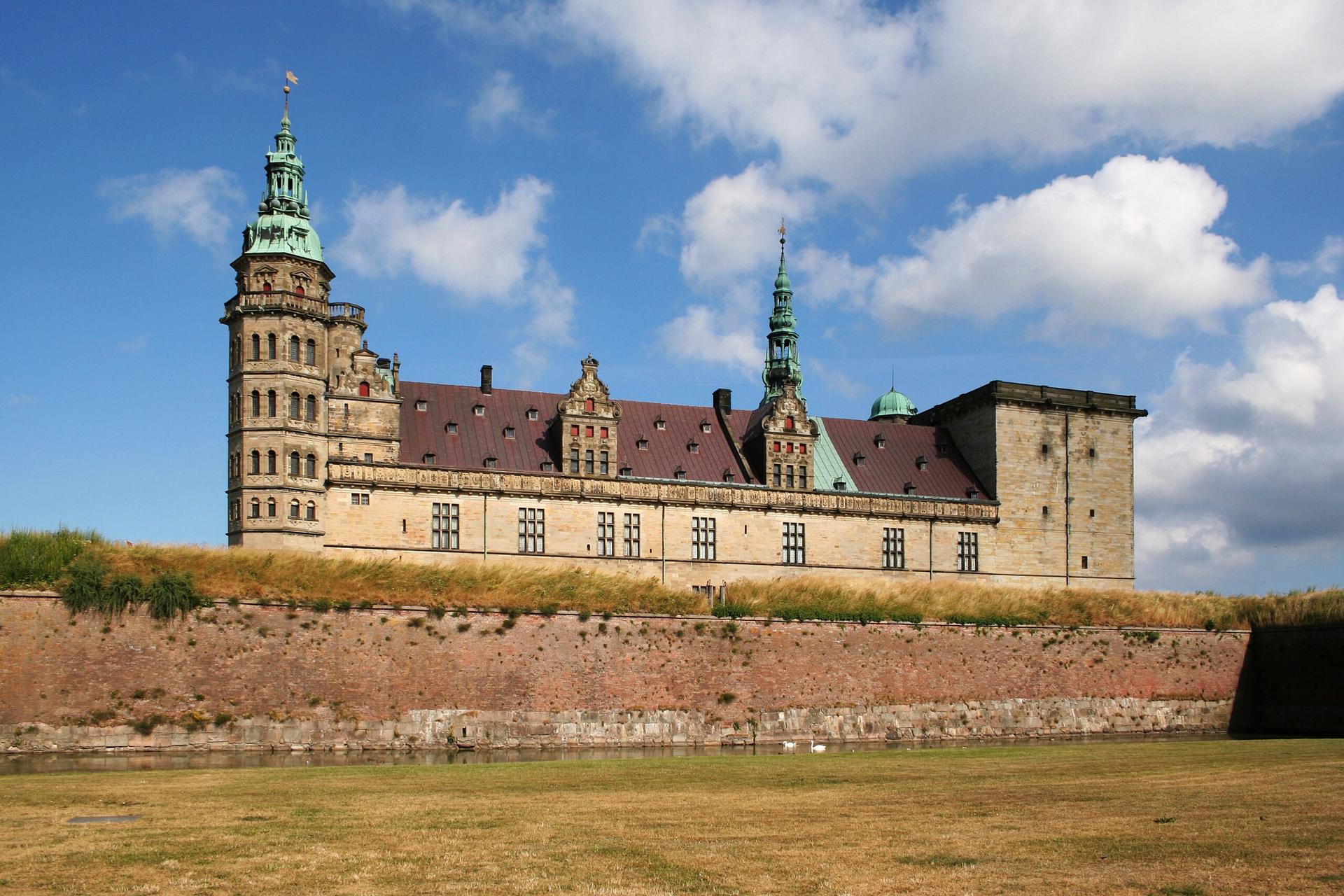
Looking beyond Ny Carlsberg Glyptotek? Discover North Zealand for broader travel guides, local hot-spots, and regional highlights.
Explore North Zealand
A compact oddities museum on Rådhuspladsen where shrunken heads, vortex tunnels and record‑breaking curiosities turn everyday Copenhagen into a world of wonders.
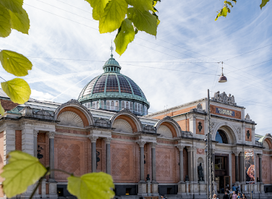
Explore Rosenborg Castle, Copenhagen's Renaissance masterpiece housing Denmark's Crown Jewels and royal treasures.
