Mindeparken Travel Guide
Free Guide: Aarhus’ sweeping memorial park where royal vistas, blooming cherry trees and a solemn World War I monument share the same tranquil green hillside.


A brief summary of Mindeparken
Aarhus’ sweeping memorial park where royal vistas, blooming cherry trees and a solemn World War I monument share the same tranquil green hillside.
Mindeparken is Aarhus’ great green memorial park, unfolding between Marselisborg Palace and Aarhus Bay. Established in the 1920s, it combines a solemn World War I monument with broad lawns, cherry groves, sculpture gardens and tree collections. Locals come here to walk, picnic, play and gaze out over the water, while the limestone memorial walls and annual ceremonies keep the memory of fallen Danish soldiers alive in a peaceful, contemplative setting.
On-site amenities
 Restrooms
 Drink options
 Drinking water
 Food options
 Seating areas
 Sheltered areas
 Picnic areas
 Trash bins
 Information boards
Opening hours
- Every dayOpen 24 hours
Opening hours as listed on the venue’s Google Business Profile. Hours can change for services and special events, so check with the venue before you go.
- Address
- 8000 Aarhus
Getting there
City bus from Aarhus city centre
Bicycle from central Aarhus
On foot from Aarhus central districts
Taxi or rideshare within Aarhus
Discover more about Mindeparken
From Royal Meadow to National Memorial
Mindeparken stretches out just below Marselisborg Palace, on gently sloping terrain that falls towards Aarhus Bay. Inaugurated in 1925, it was originally conceived as a gathering place for Danes returning from abroad, but the park’s role quickly evolved into something deeper. In 1934 a monumental World War I memorial was added, transforming the area into a national site of remembrance framed by a relaxed, open landscape.Today the park feels both ceremonial and casual. Wide lawns, mature trees and long sightlines to the palace and the sea give it a sense of grandeur, yet it is woven into everyday Aarhus life. Joggers pass beneath lime-tree avenues, families spread blankets on the grass and, a short stroll away, the white palace stands behind its own grounds, used as a summer residence by the Danish royal family.
The World War I Monument in Limestone and Silence
At the heart of Mindeparken lies the stone memorial dedicated to the thousands of Danes from Southern Jutland who died serving in the German army during the First World War. Designed in limestone from eastern France, it forms an open courtyard of pale walls engraved with 4,000-plus names, an austere composition that contrasts with the softness of the surrounding parkland.Stepping into the memorial space, the atmosphere tightens. The sounds of the park fall away, replaced by muted footsteps and the quiet reading of names. Each 11 November, a ceremony is held here, but even on an ordinary day the site invites a slow, reflective circuit along the inner walls. The choice of stone from a former battlefield underlines the connection between this tranquil corner of Aarhus and distant European front lines.
Lawns, Play Spaces and Everyday City Life
Beyond the monument, Mindeparken opens into an expansive green carpet. The large central lawn hosts everything from informal football games to open-air yoga sessions and cultural events. Towards the edges you find a playground, outdoor fitness equipment and petanque courts, turning the park into a natural extension of local backyards for residents of Aarhus C.Despite its memorial purpose, the park is anything but forbidding. It is common to see children racing between trees, groups of friends arranging picnics with views of the bay and couples strolling along the gently curving paths. The open design makes it easy to find either a quiet corner under a tree or a more sociable spot near the activity areas.
Cherry Blossoms, Sculpture Garden and Tree Collection
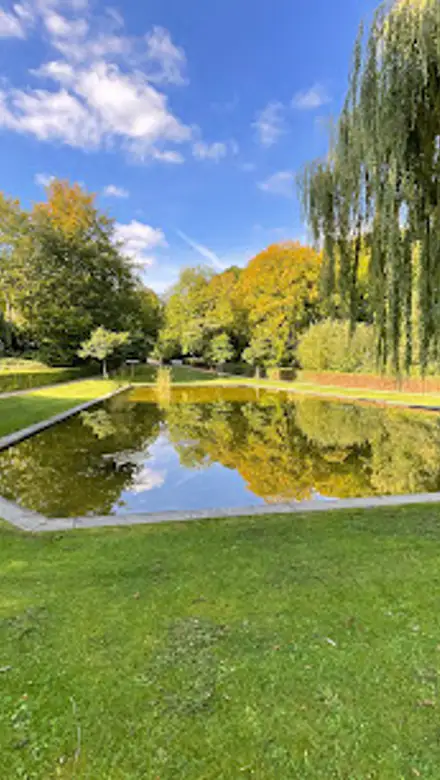
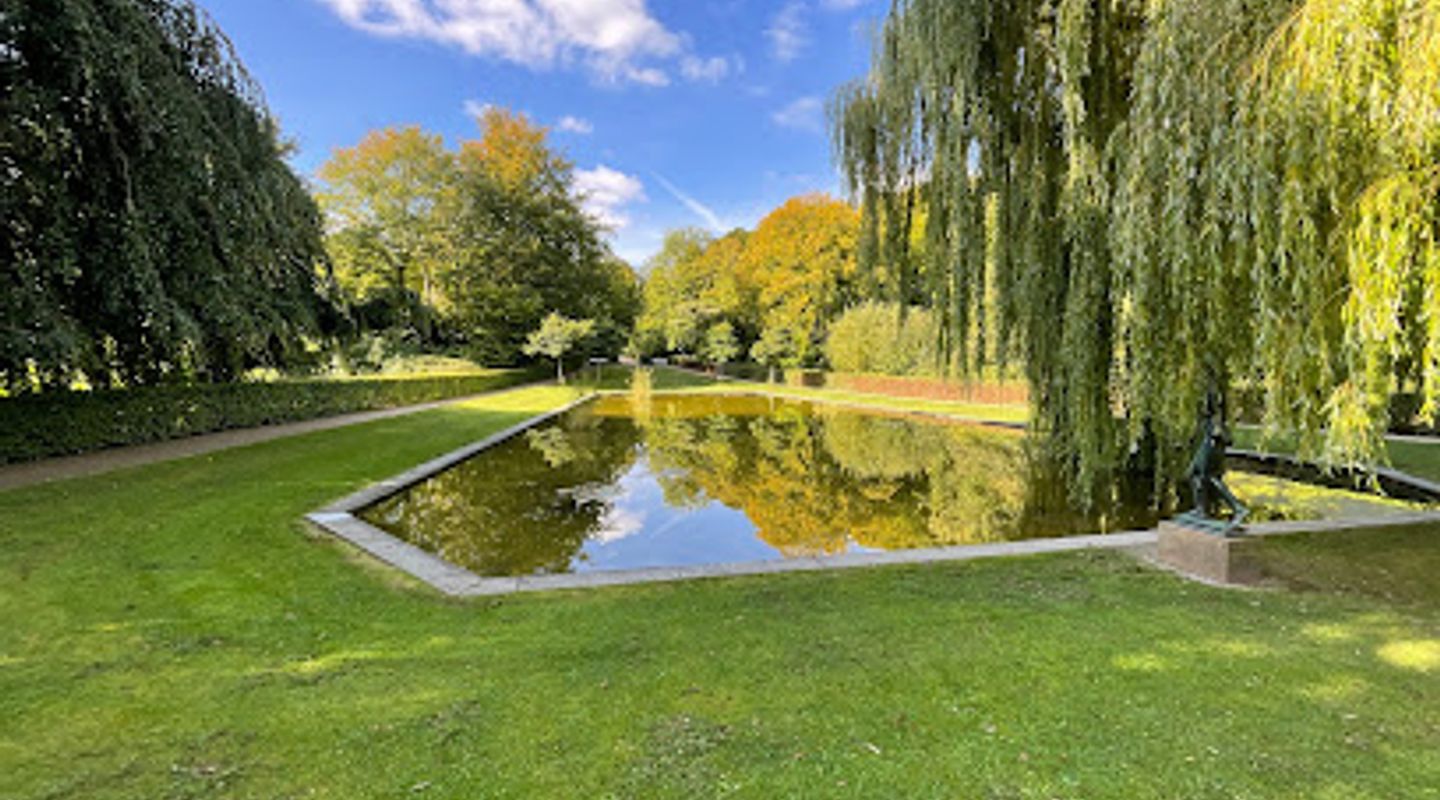
On the southern and western fringes the park becomes more intimate. A cherry grove explodes into pale pink during May and June, forming one of Aarhus’ most atmospheric spring walks as petals drift across the grass. Nearby, Rømerhaven blends sculpture, flower beds and a small mirror pond into a compact garden that rewards slow exploration and a keen eye for detail.Another corner holds Træsamlingen, a curated tree collection representing a variety of species. Here the mood shifts from open parkland to something closer to an arboretum, with winding paths, differing bark textures and seasonal changes in foliage providing a quiet, educational counterpoint to the play-oriented areas elsewhere.
Sea Views, Seasonal Moods and Historic Houses
Along the park’s eastern edge, the ground falls towards Aarhus Bay, opening up long views across the water. On clear days the horizon is sharp, the light off the sea constantly shifting from silvery grey to deep blue. The sound of waves from the nearby shore mixes with the rustle of leaves, especially noticeable if you stray towards the wooded margins.In the south of the park, the modest Donbæk Houses add a touch of rural history. Built in the 19th century for estate workers, they recall the days when this land was tied to Marselisborg Manor rather than the current palace. Together with the memorial, cherry groves and lookout points, they make Mindeparken a place where layers of Danish history, from farm life to royal ritual and wartime sacrifice, meet within one accessible city park.
Experiencing the Park Through the Day and Year
Mindeparken’s character shifts with light and season. Spring brings blossoms and fresh greens, summer stretches the evenings for long picnics and games, autumn paints the tree avenues in gold and copper, and winter can reduce the landscape to a quiet monochrome, with the limestone monument stark against bare branches. Throughout, the park remains open at all hours, free to enter and woven into the rhythms of Aarhus, whether you come for contemplation, exercise or simply a patch of grass with a view.
Evendo Review Centre
 Google
Guest reviews
Best time to go
Quietest: Jan, Feb & Mar · before 3am
Busy times are Evendo estimates for a typical year, to help you plan. Actual crowds vary with events, school holidays and the weather.
Explore Mindeparken on the map
A handpicked selection of must-see spots near Mindeparken, mapped for you.
Get your free copy of our complete guide to Mindeparken, delivered straight to you.
Everything on this page, from opening hours and how to get there to Eve’s tips and the best time to go, in one PDF you can read offline, print or share.
Already have an account? Sign in
Your Mindeparken guide is ready.
We'll send it to · Not you? Sign out

Getting your guide ready…
We are putting together a fresh copy of the Mindeparken guide. This can take up to a minute.
This can take a few moments. If your browser asks, choose Allow so the download can start. You'll find the guide in your Downloads folder.
Nothing happened? Download it again
Sorry, the guide is taking longer than usual. Please try again in a minute, or get it by email instead.
Other nearby places you may find interesting
The closest places of the same kind, if this one is not quite what you had in mind.
-
Tidselkorridoren A winding botanical art corridor celebrating Samsø's wildflowers and native plants.
-
Vesborg Fyr Historic lighthouse on Samsø’s southwestern tip, blending medieval ramparts, sweeping sea views and classic Danish coastal atmosphere in one compact headland.
-
Falkecenter Samsø ApS High‑speed falcons, soaring eagles and silent owls in a one‑hour open‑air show that brings the ancient art of falconry to life on the island of Samsø.
-
Ballebjerg Samsø’s highest hill, crowned by a 1920 watchtower and wrapped in wide Kattegat horizons, offering simple, far-reaching views over fields, sea and islands.
-
Samsø Labyrinten Lose yourself in the world’s largest labyrinth, where quiz questions guide you through 5.5 km of leafy paths, hidden goals, play areas and tranquil island nature.
Swipe for more places
More to explore near Mindeparken

 Best experiences near Mindeparken
 Best hotels near Mindeparken
 Best landmarks near Mindeparken
 Best attractions near Mindeparken
 Best shops near Mindeparken
 Best restaurants near Mindeparken
 Best bars near Mindeparken
Do you manage this location?
Take control to get all the benefits, like improved information, better appearance, and stronger visibility across AI-powered discovery.
Explore more
Explore more of Samsø
Samsø: Explore Denmark's eco-friendly island, rich in natural beauty, culinary delights, and cultural heritage.
Explore Samsø
Explore more of Denmark
Discover Denmark: A perfect blend of history, modern design, and the cozy concept of hygge. Explore vibrant cities, serene landscapes, and world-class cuisine.
Explore Denmark