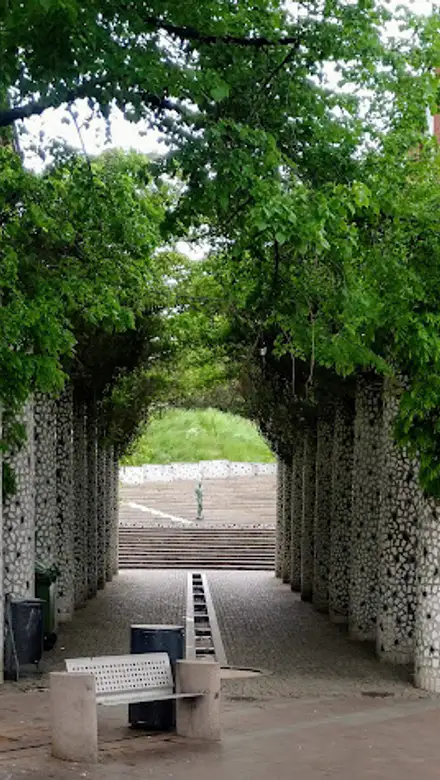
The Spanish stairs Travel Guide
Free Guide: A tiled, art-filled stairway linking Kolding’s old town to its castle hill, where everyday footsteps meet Lin Utzon’s playful Danish design.


A brief summary of The Spanish stairs
A tiled, art-filled stairway linking Kolding’s old town to its castle hill, where everyday footsteps meet Lin Utzon’s playful Danish design.
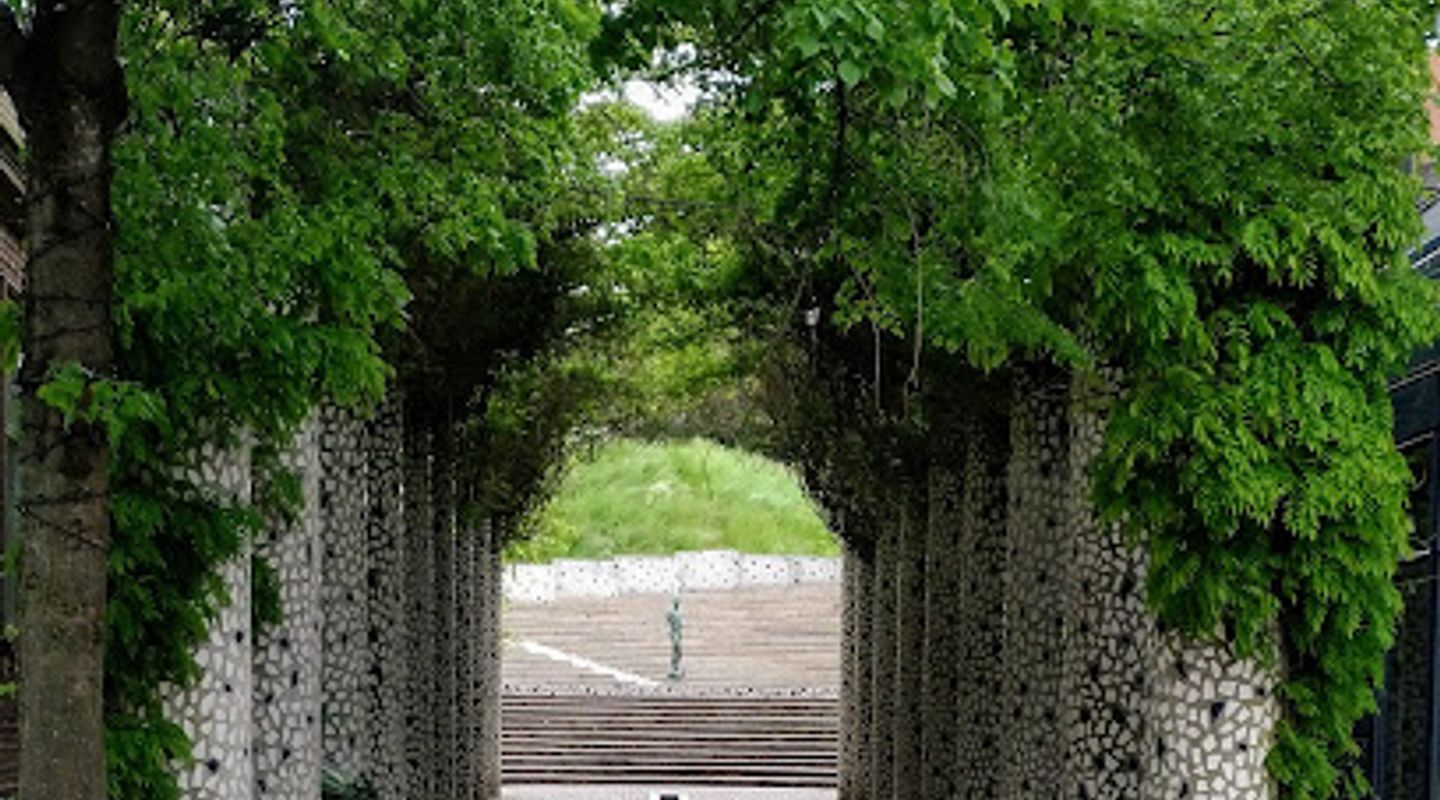
Tucked into Kolding’s historic center on Slotsstræde, The Spanish Stairs are a broad, terraced staircase linking the old town to Koldinghus Castle and the surrounding parkland. Clad in warm-toned tiles from the 1970s and later embellished with striking abstract decoration by Danish artist Lin Utzon, the steps blend everyday functionality with playful design. Locals use them as a casual meeting point, while visitors pause here to catch their breath, admire the view up to the castle and enjoy a quiet urban vantage point in the heart of the city.
On-site amenities
 Trash bins
 Information boards
 Seating areas
Opening hours
- Every dayOpen 24 hours
Opening hours as listed on the venue’s Google Business Profile. Hours can change for services and special events, so check with the venue before you go.
- Address
- Slotsstræde, 6000 Kolding
- Website
Getting there
Train and walking from Kolding Station
Local city bus and short walk
Car or taxi to central Kolding
Discover more about The Spanish stairs
A tiled stairway between town and castle
The Spanish Stairs sit on the slope between Kolding’s compact city center and the hill crowned by Koldinghus Castle. From street level on Slotsstræde, the staircase climbs in wide terraces, easing the ascent rather than forcing a steep, straight climb. The design invites you to stop along the way: platforms break up the rise, steps fan gently to one side, and the whole space feels more like a small urban plaza than a simple passage.The stairs take their nickname from their sun-warmed tiles and Mediterranean feel. When the coating was renewed in the early 1970s using patterned tiles, the visual effect immediately reminded people of grand southern European staircases. Over time, the stairway became a fixed part of the city’s mental map, not just as a shortcut to the castle, but as a characterful spot in its own right.
Lin Utzon’s artistic transformation
In the 1990s the stairs took on a new layer of identity when Danish artist Lin Utzon added a large-scale decorative scheme. Known for her light, rhythmic abstract motifs, she introduced flowing patterns that play across the surfaces of the stairway, catching the eye as you climb. Subtle curves and bold fields of color animate the tiles and walls, turning each landing into a changing composition.The decoration is more than ornament. It guides the gaze upward, accentuating the vertical journey toward the castle while softening the hard geometry of the steps. As you move, the patterns appear and disappear behind railings and edges, so the artwork only fully reveals itself through movement. The effect is part artwork, part architecture, firmly rooted in the city’s strong design heritage.
A small stage for city life
Beyond its visual appeal, the Spanish Stairs function as an everyday gathering place. People sit on the broad steps with takeaway coffee, children run up and down the terraces, and friends pause mid-ascent to chat. The landings provide informal seating with views down Slotsstræde and across to the surrounding streets, turning a circulation space into a tiny urban amphitheater.Because the staircase lies between major points of interest, it naturally becomes part of many walks through Kolding. You might arrive from the shopping streets below and emerge near the castle lawns above, with the stairs providing a moment of transition. The changing levels also create pockets of relative quiet, a brief pause from traffic noise and shop fronts just a few meters away.
Design details and changing light
Spend a little time here and small details start to stand out. The tactile quality of the tiles underfoot, the play between straight runs and angled flights, and the way railings frame narrow slices of the city all contribute to the atmosphere. The hard materials are softened by planters, nearby trees and glimpses of greenery higher up the hill.Light transforms the staircase through the day. In bright weather the tiles throw sharp shadows and the painted motifs seem to vibrate; in overcast conditions, colors appear more subdued and the steps feel sheltered and intimate. After rain, the glistening surfaces deepen in tone, and reflections pool in the joints, adding texture to photographs and quiet charm to a simple walk.
A compact stop on a wider Kolding walk
The Spanish Stairs rarely demand a long visit, but they add character to any exploration of central Kolding. They form a natural link in a sequence of sights: medieval streets, contemporary design spaces, the castle above, and the parks surrounding the lake. For those interested in urban design, the stairway offers a clear example of how a functional connection can be shaped into a place with its own identity.Whether you pause briefly on a landing to look back over the roofs, use the stairs as a quick shortcut or linger to study Lin Utzon’s work, this compact site neatly encapsulates Kolding’s blend of history, design awareness and everyday life lived at a human scale.
Evendo Review Centre
 Google
Guest reviews
Best time to go
Quietest: Jan, Feb & Mar · before 7am or at 9pm or at 10pm
Busy times are Evendo estimates for a typical year, to help you plan. Actual crowds vary with events, school holidays and the weather.
Explore The Spanish stairs on the map
A handpicked selection of must-see spots near The Spanish stairs, mapped for you.
Get your free copy of our complete guide to The Spanish stairs, delivered straight to you.
Everything on this page, from opening hours and how to get there to Eve’s tips and the best time to go, in one PDF you can read offline, print or share.
Already have an account? Sign in
Your The Spanish stairs guide is ready.
We'll send it to · Not you? Sign out

Getting your guide ready…
We are putting together a fresh copy of the The Spanish stairs guide. This can take up to a minute.
This can take a few moments. If your browser asks, choose Allow so the download can start. You'll find the guide in your Downloads folder.
Nothing happened? Download it again
Sorry, the guide is taking longer than usual. Please try again in a minute, or get it by email instead.
Other nearby places you may find interesting
The closest places of the same kind, if this one is not quite what you had in mind.
-
-
-
-
-


Swipe for more places
More to explore near The Spanish stairs

 Best experiences near The Spanish stairs
 Best hotels near The Spanish stairs
 Best landmarks near The Spanish stairs
 Best attractions near The Spanish stairs
 Best shops near The Spanish stairs
 Best restaurants near The Spanish stairs
 Best bars near The Spanish stairs
Do you manage this location?
Take control to get all the benefits, like improved information, better appearance, and stronger visibility across AI-powered discovery.
Explore more
Explore more of Sønderjylland
Sønderjylland: A Journey Through Denmark's Scenic Landscapes, Rich History, and Vibrant Traditions.
Explore Sønderjylland
Explore more of Denmark
Discover Denmark: A perfect blend of history, modern design, and the cozy concept of hygge. Explore vibrant cities, serene landscapes, and world-class cuisine.
Explore Denmark