

Stable Yard, Kolding Travel Guide
Free Guide: Historic whitewashed stables turned city museum, where royal horses, design heritage and Denmark’s only preserved Gestapo cell share one atmospheric courtyard.


A brief summary of Stable Yard
Historic whitewashed stables turned city museum, where royal horses, design heritage and Denmark’s only preserved Gestapo cell share one atmospheric courtyard.
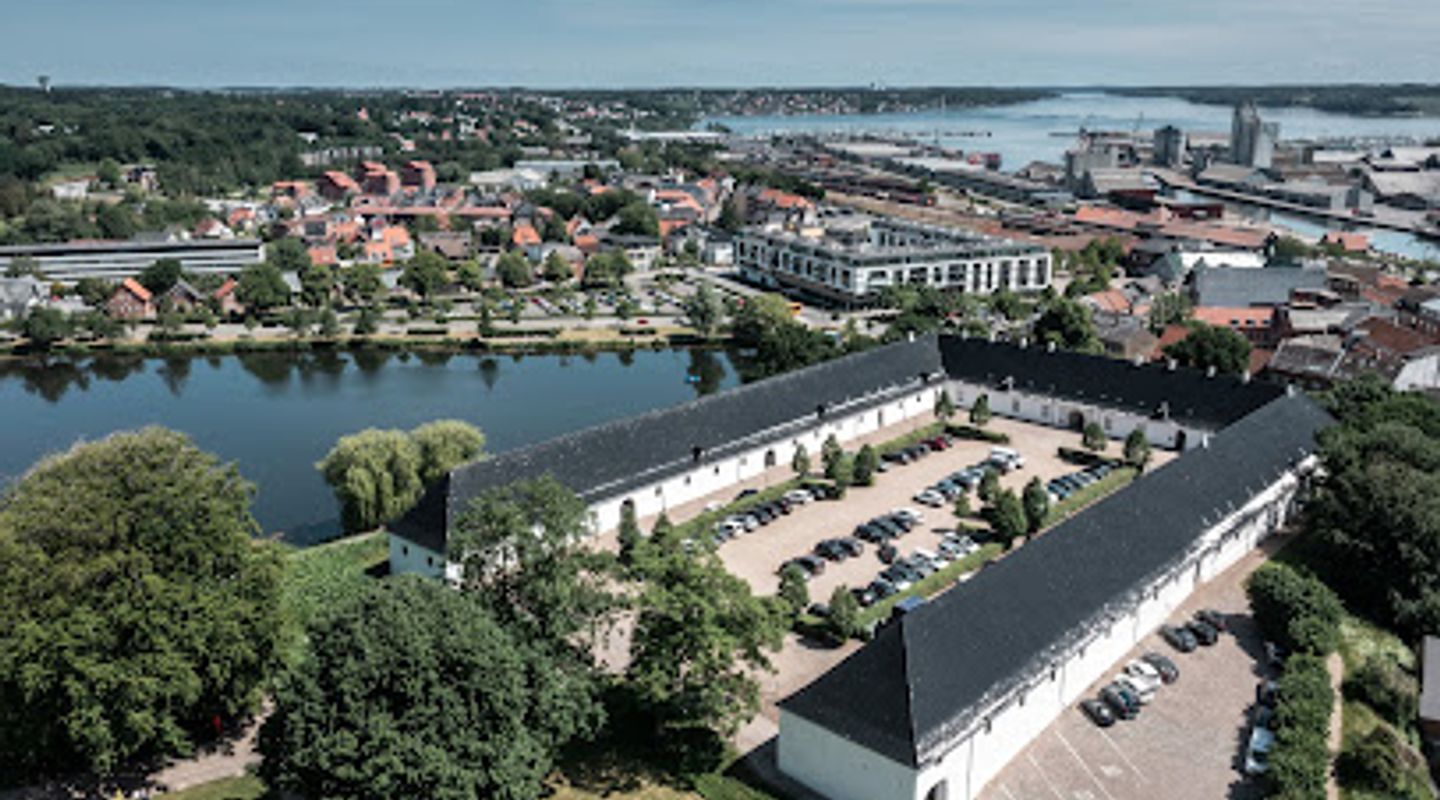
At the foot of Koldinghus castle, the white Stable Yard (Staldgården) is Museum Kolding’s atmospheric home for the city’s stories. Once royal stables and later Gestapo headquarters for South and Southern Jutland, today it houses evocative exhibitions on World War II, resistance history and local life. Highlights include Zelle II, Denmark’s only preserved Gestapo cell, presented with powerful light, sound and digital storytelling that bring the building’s dramatic past into sharp focus.
On-site amenities
 Restrooms
 Information boards
 Seating areas
 Trash bins
Opening hours
- Every day10 am–5 pm
Opening hours as listed on the venue’s Google Business Profile. Hours can change for services and special events, so check with the venue before you go.
- Address
- Staldgården 1, 6000 Kolding
- Phone
- Website
Getting there
On foot from central Kolding
Local bus within Kolding
Train to Kolding Station plus walk
Car or taxi within Kolding
Discover more about Stable Yard
From royal stables to city museum
Staldgården sits on the slope beneath Koldinghus, its long, whitewashed façades tracing a line between castle and town. The present buildings date largely from the 17th century, when they replaced earlier timber structures built to house the royal horses serving the castle above. For centuries this was a working stable yard, with cobbled surfaces underhoof, carts rattling in and out, and the smell of hay and leather hanging in the air.As Kolding developed into a regional centre, the Stable Yard’s role evolved with it. The complex has seen army remounts being trained, regiment horses quartered and supplies stored. Yet the basic form has remained remarkably intact: long wings around an inner courtyard, sturdy brickwork rendered in white, roofs pitched against the Danish weather, and heavy gateways framing glimpses of the castle on the hill.Today, instead of hooves and harness, you find exhibition rooms, digital installations and carefully curated displays. Museum Kolding uses the historic shell to tell stories that stretch across the city’s timeline, from craft traditions and industrial pioneers to the turbulent mid‑20th century.
World War II shadows and Zelle II
The darkest chapter in Staldgården’s history arrived during the German occupation. The complex became Gestapo headquarters for South and Southern Jutland, and part of the south wing was converted into a small prison block. Five cells were fitted out for interrogations and detention; only one, Zelle II, survives today.Zelle II is preserved almost exactly as it was left in 1945. The space is narrow and stark, its walls bearing the scratched names and markings of Danish resistance members held here. It is a rare, tangible trace of occupation‑era repression, and that authenticity gives the room a powerful, sobering presence.A contemporary digital installation layers sound, light and narration onto the untouched surfaces. Different story tracks focus on individual prisoners, local resistance networks and the machinery of occupation. Rather than filling the cell with objects, the interpretation relies on voice, echo and darkness, letting the original room remain the central “artefact”.
Made in Kolding and local craftsmanship
Beyond wartime history, the Stable Yard also opens doors onto Kolding’s creative side. Exhibitions explore local makers, with a particular focus on silversmith Holger Kyster and the city’s design heritage. Kyster’s elegant silver pieces, often created in collaboration with leading designers of the 20th century, are shown as both everyday objects and sculptural artworks.Displays trace how small workshops and ambitious entrepreneurs helped shape Kolding’s identity as a design‑conscious city. Objects, sketches and photographs reveal the working methods behind polished final pieces. This thread of craftsmanship links neatly to the building’s own sturdy construction: hand‑laid bricks, timber framing and carefully proportioned façades.Temporary exhibitions in the south wing broaden the lens further, drawing in themes from wider Danish history, art and culture. These changing shows mean the content within the old walls is never static, even as the architecture outside remains reassuringly familiar.
The courtyard and its castle neighbour
Step back into the central courtyard and the relationship between Stable Yard and Koldinghus becomes clear. The castle looms on the hill above, while the museum buildings stretch around you at a more human scale. The cobbles and simple architectural lines create a calm outdoor room that feels removed from the surrounding streets, despite being in the heart of the city.In good weather the courtyard offers a moment of pause between exhibitions: a place to sit on a low step, look up at the red‑brick ruins of Koldinghus and imagine horse‑drawn carriages clattering through the archway. The juxtaposition of castle and former stables underlines how tightly woven Kolding’s layers of power, defence and everyday labour have always been.From here, narrow lanes link directly to the compact city centre, while the hill behind rises steeply to the castle. The Stable Yard thus acts as both threshold and anchor, tying together museum, monument and modern town within a single, walkable space.
Experiencing atmosphere and reflection
A visit to Staldgården is as much about mood as about individual objects. Inside, the wartime sections are deliberately low‑lit and immersive, encouraging a slower pace and quiet reflection. Texts and media are offered in an accessible, contemporary format, but the physical fabric of the rooms—wooden doors, worn thresholds, deep window reveals—keeps the historical distance close.Elsewhere, brighter galleries spotlight shimmering silver, design pieces and thematic displays from Museum Kolding’s collections. Together they create a layered impression of a city shaped by both trauma and creativity. The setting in a former stable yard adds a tactile, almost cinematic quality: every corridor turn reveals a new angle on the past.Whether you stay briefly to experience Zelle II or take more time to explore changing exhibitions, the Stable Yard provides a concentrated encounter with Kolding’s stories in an intimate, historically charged environment.
Evendo Review Centre
 Google
Guest reviews
Best time to go
Quietest: Jan, Feb & Mar · before 7am or from 8pm
Busy times are Evendo estimates for a typical year, to help you plan. Actual crowds vary with events, school holidays and the weather.
Explore Stable Yard on the map
A handpicked selection of must-see spots near Stable Yard, mapped for you.
Get your free copy of our complete guide to Stable Yard, delivered straight to you.
Everything on this page, from opening hours and how to get there to Eve’s tips and the best time to go, in one PDF you can read offline, print or share.
Already have an account? Sign in
Your Stable Yard guide is ready.
We'll send it to · Not you? Sign out

Getting your guide ready…
We are putting together a fresh copy of the Stable Yard guide. This can take up to a minute.
This can take a few moments. If your browser asks, choose Allow so the download can start. You'll find the guide in your Downloads folder.
Nothing happened? Download it again
Sorry, the guide is taking longer than usual. Please try again in a minute, or get it by email instead.
Other nearby places you may find interesting
The closest places of the same kind, if this one is not quite what you had in mind.
-
-
-
-
-


Swipe for more places
More to explore near Stable Yard

 Best experiences near Stable Yard
 Best hotels near Stable Yard
 Best landmarks near Stable Yard
 Best attractions near Stable Yard
 Best shops near Stable Yard
 Best restaurants near Stable Yard
 Best bars near Stable Yard
Do you manage this location?
Take control to get all the benefits, like improved information, better appearance, and stronger visibility across AI-powered discovery.
Explore more

Explore more of Kolding
Discover Kolding, Denmark's blend of historical charm, natural beauty, and vibrant art scene, making it a must-visit destination for travelers seeking a unique experience.
Explore Kolding
Explore more of Denmark
Discover Denmark: A perfect blend of history, modern design, and the cozy concept of hygge. Explore vibrant cities, serene landscapes, and world-class cuisine.
Explore Denmark
