Anno Dom 1913 Travel Guide
Free Guide: A modest 1913 fountain on Vejle’s church square, quietly tying together local history, everyday life and the character of the city’s compact old centre.


A brief summary of Anno Dom 1913
A modest 1913 fountain on Vejle’s church square, quietly tying together local history, everyday life and the character of the city’s compact old centre.
Set on Vejle’s central Kirketorvet square, **Anno Dom 1913** is a modest historic fountain and urban monument that quietly recalls the city’s early 20th‑century growth. The sculpted basin, stonework and dated inscription anchor the church square in time, offering a small but distinctive glimpse of Vejle’s past amid shops, cafés and the nearby Sct. Nicolai Church. It is a quick yet atmospheric stop when exploring the compact city centre on foot.
On-site amenities
 Restrooms
 Drink options
 Drinking water
 Food options
 Seating areas
 Trash bins
 Information boards
 Visitor centre
Opening hours
- Every dayOpen 24 hours
Opening hours as listed on the venue’s Google Business Profile. Hours can change for services and special events, so check with the venue before you go.
- Address
- Kirketorvet 1, 7100 Vejle
Getting there
Train and short walk from Vejle Station
Local bus to Vejle city centre
Car arrival and city‑centre parking
Discover more about Anno Dom 1913
A quiet fountain on Vejle’s church square
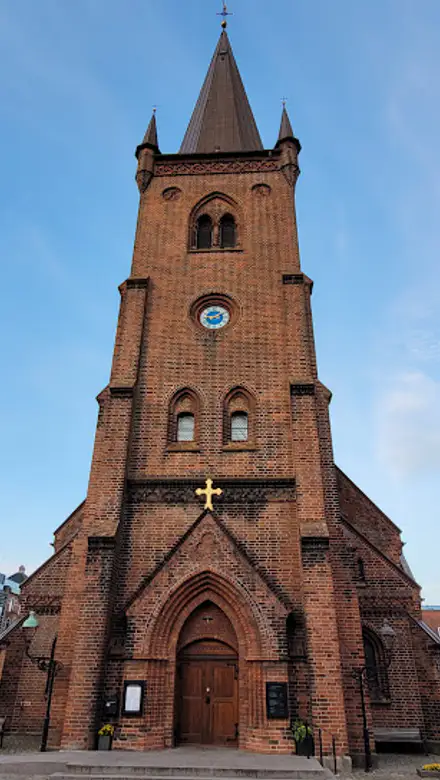
Anno Dom 1913 sits on Kirketorvet, the cobbled square in front of Sct. Nicolai Church, right in the historic heart of Vejle. At first glance it can seem like a simple town fountain, but the stone basin, central pillar and the clear "1913" inscription anchor the space in a very specific moment in the city’s story. Surrounded by façades from different eras, it works as a visual hinge between old church, town hall and the commercial streets that branch off the square.The fountain is modest in scale, more a local landmark than a grand showpiece. Its presence is felt through the gentle play of water, the patina on the stone and the way people naturally orbit around it on their way across the square. In a compact city centre where everything is close, this is one of those details that rewards a slower look.
Traces of early 20th‑century optimism
The date 1913 evokes a period when Danish provincial towns were expanding with new industry, rail connections and civic pride. Public works such as fountains and monuments were a tangible way to express that optimism. Anno Dom 1913 reflects this mood in its restrained, slightly formal design, which hints at late‑historicist and early modern tastes without belonging fully to either.Rather than elaborate sculptural figures, the focus is on simple geometry and solid craftsmanship. The fountain’s stone blocks and carved details were made to last, and the weathering of more than a century has softened their edges. Today, small traces of age – lichen on the stone, smoothing where hands have brushed past – are part of its appeal, signalling continuity in a city that has otherwise changed significantly since the days of horse‑drawn carts.
Everyday life flowing around the basin
Visiting Anno Dom 1913 is less about spectacle and more about observing the rhythms of everyday life. The fountain acts as a casual meeting point on Kirketorvet: a place where people pause with a coffee, check their phone or wait for friends before heading into nearby shops, restaurants or the church itself. On clear days, sunlight catches the water and throws small reflections onto the surrounding paving stones.Because the square is mostly level and open, you can walk all the way around the fountain to appreciate it from different angles. Look closely at how the water outlets are integrated into the stonework, and how the basin ties visually into the church and town hall architecture nearby. It is also an easy feature to photograph in context with the square, spire and sky, especially when the light is soft in the morning or late afternoon.
Linking Vejle’s landmarks in a compact stroll
One of the strengths of Anno Dom 1913 is how it connects with other sights only a short walk away. From the fountain you can see or quickly reach Sct. Nicolai Church, the town hall and the Oekolariet science centre, making Kirketorvet a natural hub in any exploration of central Vejle. The fountain serves as a handy mental reference point: turn around it and you effectively reorient yourself within the historic core.Because it is set in a pedestrian‑friendly zone with shops and cafés, the area feels lively during the day yet rarely overwhelming. You can easily combine a brief look at the fountain with a relaxed wander through side streets, a visit to nearby cultural institutions or a simple break on a bench to watch the square go by.
Small details for curious observers
Though Anno Dom 1913 is simple, there are details that reward close inspection. The lettering of the date, the proportions of the pedestal and basin, and the relationship between the fountain and the paving around it all reveal care in the original design. Try comparing the stone tones with those of neighbouring buildings, or framing the church tower behind the fountain in a photograph.In the evening, depending on ambient lighting from the square and surrounding buildings, the fountain can take on a more subdued character, with the sound of water standing out more clearly. Whether you stay for a few minutes or linger longer on Kirketorvet, Anno Dom 1913 offers a compact lesson in how a small piece of urban design can quietly carry over a century of local history.
Evendo Review Centre
 Google
Guest reviews
Best time to go
Quietest: Jan, Feb & Nov · before 7am or from 9pm
Busy times are Evendo estimates for a typical year, to help you plan. Actual crowds vary with events, school holidays and the weather.
Explore Anno Dom 1913 on the map
A handpicked selection of must-see spots near Anno Dom 1913, mapped for you.
Get your free copy of our complete guide to Anno Dom 1913, delivered straight to you.
Everything on this page, from opening hours and how to get there to Eve’s tips and the best time to go, in one PDF you can read offline, print or share.
Already have an account? Sign in
Your Anno Dom 1913 guide is ready.
We'll send it to · Not you? Sign out

Getting your guide ready…
We are putting together a fresh copy of the Anno Dom 1913 guide. This can take up to a minute.
This can take a few moments. If your browser asks, choose Allow so the download can start. You'll find the guide in your Downloads folder.
Nothing happened? Download it again
Sorry, the guide is taking longer than usual. Please try again in a minute, or get it by email instead.
Other nearby places you may find interesting
The closest places of the same kind, if this one is not quite what you had in mind.
-
-
-
-
-


Swipe for more places
More to explore near Anno Dom 1913

 Best experiences near Anno Dom 1913
 Best hotels near Anno Dom 1913
 Best landmarks near Anno Dom 1913
 Best attractions near Anno Dom 1913
 Best shops near Anno Dom 1913
 Best restaurants near Anno Dom 1913
 Best bars near Anno Dom 1913
Do you manage this location?
Take control to get all the benefits, like improved information, better appearance, and stronger visibility across AI-powered discovery.
Explore more

Explore more of West Jutland
Discover West Jutland: Denmark's scenic coastal region with vast beaches, historic towns, and rich cultural heritage, perfect for nature lovers and history enthusiasts.
Explore West Jutland
Explore more of Denmark
Discover Denmark: A perfect blend of history, modern design, and the cozy concept of hygge. Explore vibrant cities, serene landscapes, and world-class cuisine.
Explore Denmark