

Frederiksborg Castle Travel Guide
Free Guide: Denmark’s grand Renaissance water palace, where royal ceremony, national history and formal Baroque gardens meet above a mirror-like lake in Hillerød.


A brief summary of Frederiksborg Castle
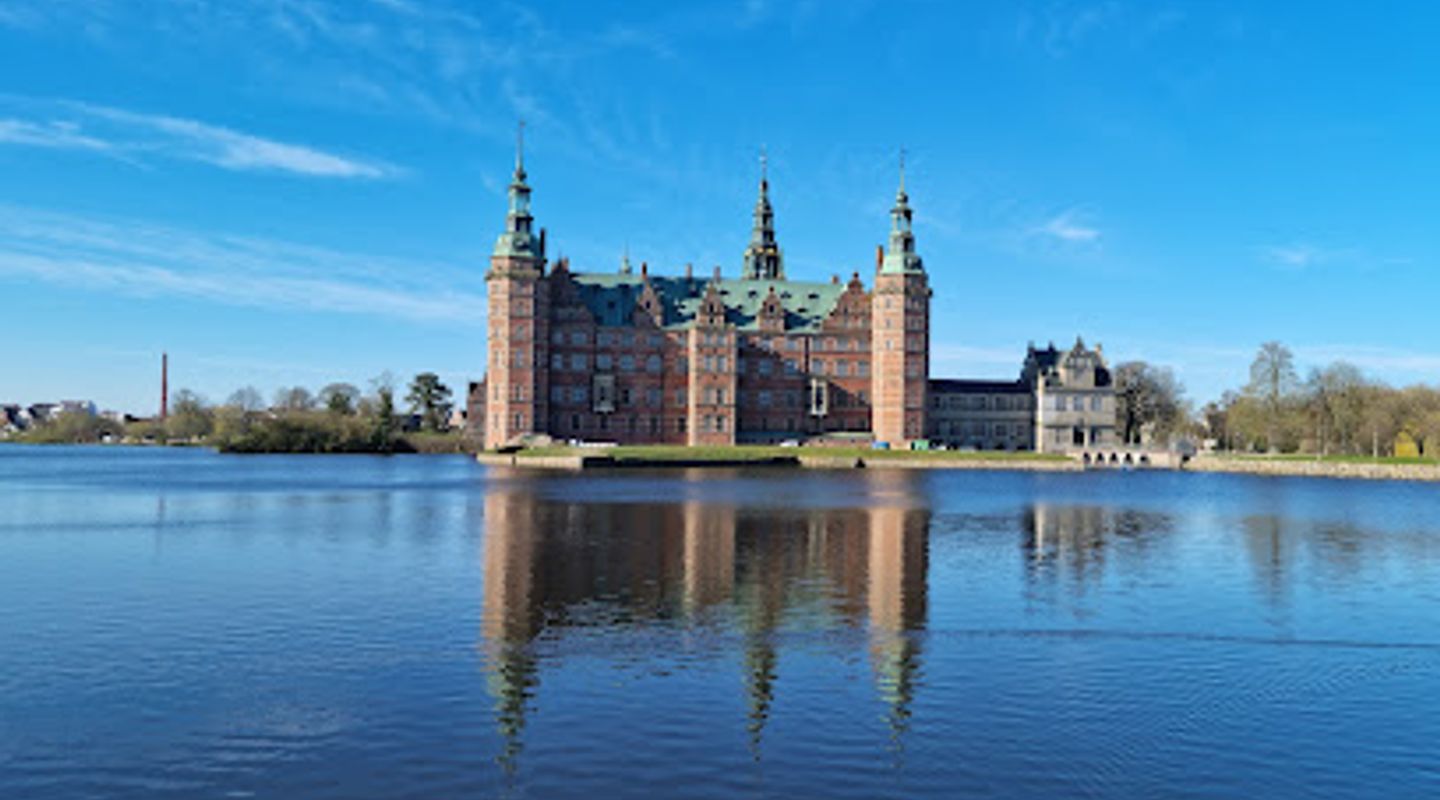
Denmark’s grand Renaissance water palace, where royal ceremony, national history and formal Baroque gardens meet above a mirror-like lake in Hillerød.
Rising from a mirror-still lake in Hillerød, Frederiksborg Castle is Denmark’s great Renaissance showpiece and home to the Museum of National History. Sprawling across three small islands, its copper spires, richly decorated interiors and vast portrait galleries chart the story of the Danish kingdom. Outside, formal Baroque parterres spill down towards the water, while a romantic landscape garden wraps the castle in woodland paths, cascades and sweeping views that make this an easy and rewarding day trip from Copenhagen.
On-site amenities
 Restrooms
 Drink options
 Food options
 Seating areas
 Sheltered areas
 Picnic areas
 Trash bins
 Information boards
 Visitor centre
Opening hours
- Every day10 am–5 pm
Opening hours as listed on the venue’s Google Business Profile. Hours can change for services and special events, so check with the venue before you go.
- Address
- Frederiksborg Slot 10, 3400 Hillerød
- Phone
- Website
Getting there
Train from central Copenhagen
Regional bus within North Zealand
Car or taxi from Copenhagen area
Discover more about Frederiksborg Castle
A Royal Palace on an Island Stage
Frederiksborg Castle occupies three tiny islands in the Castle Lake, its towers and gables perfectly reflected in the still water around it. Originally begun by Frederik II and dramatically expanded under Christian IV in the early 1600s, it was conceived as a statement of royal power in the flourishing days of the Danish Renaissance. Approaching the complex, you cross bridges and cobbled courtyards framed by red brick, sandstone ornament and green copper roofs that give the castle its unmistakable silhouette.From the outer courtyard, the ornate Neptune Fountain draws the eye, symbolising dominion over the seas. Beyond, the elaborate King’s Wing and its galleries reveal just how thoroughly the palace was designed as a ceremonial stage. Even before you step inside, the sense of scale and theatricality suggests that this was never just a residence, but a carefully engineered backdrop for royal ceremony and display.
Fire, Restoration and National Memory
In 1859 a devastating fire tore through Frederiksborg, destroying much of the interior and many original furnishings. The disaster might have ended the castle’s story, but brewer J. C. Jacobsen, founder of Carlsberg, funded an ambitious reconstruction. Carefully restored rooms, along with surviving elements salvaged from the ruins, were used to create a new purpose: Frederiksborg became Denmark’s Museum of National History.Today, grand halls and intimate chambers double as galleries, telling the story of the Danish state from the late Middle Ages to the present. Portraits of monarchs, politicians, artists and thinkers line the walls, while history paintings depict pivotal battles, reforms and social change. Moving through these rooms, you trace how the castle shifted from royal showcase to a national archive in bricks, paint and carved wood.
Inside the Chapel and State Rooms
One of the few interiors to survive the 1859 fire largely intact is the castle chapel, richly adorned with gilded galleries, coats of arms and intricate woodwork. For centuries it has been used for royal anointings, tying the building directly to the rituals of the Danish monarchy. Standing beneath its painted ceiling, you sense how closely church and crown were once intertwined.Elsewhere, the Great Hall dazzles with painted ceilings, chandeliers and elaborate stucco, while the Audience Chamber and Hall of Angels show off the high Baroque taste of later kings. Recreated apartments suggest how the royal household once lived here, their tiled stoves, textiles and furniture echoing the comforts and hierarchies of court life. The blend of authentic survivals and careful reconstruction makes the visit as much about atmosphere as about individual masterpieces.
Gardens of Geometry and Romance
Behind the castle, the formal Baroque Garden descends in terraces toward the lake, an 18th-century design recreated in the 1990s. Clipped hedges, royal monograms and a central cascade enforce strict geometries, turning the landscape itself into a piece of royal propaganda. From the top terrace, the long axes of the garden align perfectly with the castle, underlining its central role in the composition.Beyond this controlled world lies a contrasting romantic landscape garden. Winding paths slip into woodland, streams and small lakes appear between the trees, and an older retreat known as the Bathhouse Castle nestles beside the water. Together, these gardens offer both theatrical vistas and quieter corners, encouraging you to alternate between set-piece views of the castle and more private moments under the trees.
Experiencing a Day at Frederiksborg
A typical visit easily fills several hours, with time divided between the museum inside and the gardens outside. Many visitors choose to start indoors, following the chronological route through portraits and history paintings before emerging to explore the terraces and forest paths. Seasonal exhibitions add layers of contemporary interpretation, often highlighting particular themes from Danish history or specific artists.In the warmer months, a small ferry plies the waters of the Castle Lake, linking the town, castle and gardens and offering a different perspective on the architecture. On-site and nearby cafés serve regional produce from North Zealand, inviting you to pause with a view of towers and water. Whether you come for art, architecture, history or simply the setting, Frederiksborg rewards an unhurried pace and a willingness to look closely at the details that knit Denmark’s story together.
Evendo Review Centre
 Google
Guest reviews
Best time to go
Quietest: Jan, Feb & Mar · before 8am or at 8pm
Busy times are Evendo estimates for a typical year, to help you plan. Actual crowds vary with events, school holidays and the weather.
Explore Frederiksborg Castle on the map
A handpicked selection of must-see spots near Frederiksborg Castle, mapped for you.
Get your free copy of our complete guide to Frederiksborg Castle, delivered straight to you.
Everything on this page, from opening hours and how to get there to Eve’s tips and the best time to go, in one PDF you can read offline, print or share.
Already have an account? Sign in
Your Frederiksborg Castle guide is ready.
We'll send it to · Not you? Sign out

Getting your guide ready…
We are putting together a fresh copy of the Frederiksborg Castle guide. This can take up to a minute.
This can take a few moments. If your browser asks, choose Allow so the download can start. You'll find the guide in your Downloads folder.
Nothing happened? Download it again
Sorry, the guide is taking longer than usual. Please try again in a minute, or get it by email instead.
Unlock the best of Frederiksborg Castle
Skip-the-line tickets, guided tours with entry, and walking tours of the area, booked in a few clicks.



Other nearby places you may find interesting
The closest places of the same kind, if this one is not quite what you had in mind.
-
-
-
-
-


Swipe for more places
More to explore near Frederiksborg Castle

 Best experiences near Frederiksborg Castle
 Best hotels near Frederiksborg Castle
 Best landmarks near Frederiksborg Castle
 Best attractions near Frederiksborg Castle
 Best shops near Frederiksborg Castle
 Best restaurants near Frederiksborg Castle
 Best bars near Frederiksborg Castle
Do you manage this location?
Take control to get all the benefits, like improved information, better appearance, and stronger visibility across AI-powered discovery.
Explore more
Explore more of Zealand
Discover the charm of Zealand, Denmark's largest island, blending vibrant city life in Copenhagen with serene coastal beauty and rich cultural heritage.
Explore Zealand
Explore more of Denmark
Discover Denmark: A perfect blend of history, modern design, and the cozy concept of hygge. Explore vibrant cities, serene landscapes, and world-class cuisine.
Explore Denmark
