

Koldinghus Travel Guide
Free Guide: A 750-year-old royal fortress reborn: where medieval walls meet modern restoration artistry.


A brief summary of Koldinghus
A 750-year-old royal fortress reborn: where medieval walls meet modern restoration artistry.
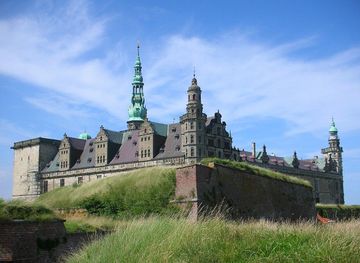
Koldinghus is a 750-year-old Danish royal castle in the heart of Kolding, transformed from medieval fortress to Renaissance palace to modern museum. Built in 1268 to guard Denmark's southern border, the castle served as a royal residence for centuries before a devastating 1808 fire reduced it to ruins. Today, following an award-winning restoration completed in 1991, it stands as a unique architectural blend of preserved medieval walls and contemporary design, housing exhibitions, interactive workshops, and cultural events.
On-site amenities
 Restrooms
 Drink options
 Food options
 Seating areas
 Sheltered areas
 Trash bins
 Information boards
 Visitor centre
Opening hours
- Every day10 am–5 pm
Opening hours as listed on the venue’s Google Business Profile. Hours can change for services and special events, so check with the venue before you go.
- Address
- Koldinghus 1, 6000 Kolding
- Phone
- Website
Getting there
Train from Copenhagen
Train from Aarhus
Car from Copenhagen
Local bus within Kolding
Discover more about Koldinghus
Seven Centuries of Royal Power and Transformation
Koldinghus was founded in 1268 by King Erik V as a strategic fortress to defend Denmark's southern border against the Duchy of Schleswig. Positioned on a commanding hill in the center of Kolding, the castle was protected by moats and ramparts, establishing itself as one of Denmark's most important royal strongholds. Over the following centuries, successive monarchs expanded and transformed the structure, each adding their architectural vision. The oldest surviving stone building, the north wing, was constructed by King Christopher III in the 1440s and remains one of Denmark's most significant medieval castle buildings.By the 16th century, as cannons rendered thick fortress walls less militarily essential, King Christian III reimagined Koldinghus as a royal residence rather than a military installation. He added the east and south wings between 1549 and 1553, creating a four-winged structure enclosing a central courtyard. King Christian IV further enhanced the castle's grandeur by constructing the magnificent Giants' Tower and an elaborate Renaissance chapel between 1598 and 1603. The castle became a favored residence of the royal family; Prince Frederick, the heir apparent, grew up within its walls, and King Christian III died here on January 1, 1559.
From Baroque Splendor to Romantic Ruin
In the early 18th century, King Frederik IV undertook extensive modernization, whitewashing the castle and transforming it into a Baroque palace between 1720 and 1726. This period represented the height of Koldinghus's elegance as a royal residence. However, the castle's fortunes changed dramatically in 1808 when Spanish auxiliary troops, stationed there during the Napoleonic Wars, accidentally set a fire that consumed much of the structure. The castle stood as a romantic ruin for nearly a century, becoming a popular landmark visited by figures including Hans Christian Andersen. Its weathered walls and dramatic silhouette captured the imagination of Romantic-era sensibilities, transforming catastrophe into cultural mystique.
Visionary Restoration and Contemporary Architecture
Restoration efforts began in earnest in 1867, with systematic work continuing through the late 19th and 20th centuries. The Great Tower was reconstructed in brick during the 1930s to prevent collapse. However, the most significant restoration occurred between 1972 and 1991 under architects Inger and Johannes Exner, who won the prestigious EUROPA NOSTRA award for their work. Rather than attempting to recreate a pristine royal castle, the architects chose to preserve the ruin as a historical document. They inserted modern laminated wooden columns and steel structures to support the roof and floors while leaving the original medieval and Renaissance walls largely untouched. This innovative approach created outstanding architectural spaces ideal for museum purposes while maintaining the castle's character as a ruin that witnessed over 750 years of Danish history.
Museum Collections and Interactive Experiences
Today, Koldinghus functions as a dynamic cultural institution managed by The Royal Danish Collection. The museum houses permanent exhibitions alongside rotating displays of international standing, showcasing everything from historical artifacts to contemporary art. A highlight is the Flora Danica porcelain collection, representing Danish royal craftsmanship. The castle offers interactive experiences including the Royal Dressing Workshop, where visitors can try on historical costumes, and the Royal Workshop featuring activities such as Renaissance dancing, fencing demonstrations, and mead tasting. These hands-on programs make the castle's history tangible and engaging for visitors of all ages.
Architectural Significance and Visitor Experience
The castle's architectural layers tell the story of Danish royal taste across four centuries. Visitors can trace the evolution from Gothic fortress to Renaissance palace to Baroque residence, with each wing reflecting its era's aesthetic and functional priorities. The Giants' Tower, Christian IV's most ambitious addition, offers breathtaking views across Kolding and the surrounding landscape. The castle chapel, rebuilt in the early 17th century, showcases the refined religious architecture of Denmark's Golden Age. The Madkælderen restaurant provides refreshment within the castle grounds, allowing visitors to linger and absorb the atmosphere. The location itself—elevated above the town on the castle bank—reinforces the original intention of Koldinghus as a symbol of royal authority and territorial control.
Evendo Review Centre
 Google
Guest reviews
Best time to go
Quietest: Jan, Feb & Nov · before 9am or from 5pm
Busy times are Evendo estimates for a typical year, to help you plan. Actual crowds vary with events, school holidays and the weather.
Explore Koldinghus on the map
A handpicked selection of must-see spots near Koldinghus, mapped for you.
Get your free copy of our complete guide to Koldinghus, delivered straight to you.
Everything on this page, from opening hours and how to get there to Eve’s tips and the best time to go, in one PDF you can read offline, print or share.
Already have an account? Sign in
Your Koldinghus guide is ready.
We'll send it to · Not you? Sign out

Getting your guide ready…
We are putting together a fresh copy of the Koldinghus guide. This can take up to a minute.
This can take a few moments. If your browser asks, choose Allow so the download can start. You'll find the guide in your Downloads folder.
Nothing happened? Download it again
Sorry, the guide is taking longer than usual. Please try again in a minute, or get it by email instead.
Other nearby places you may find interesting
The closest places of the same kind, if this one is not quite what you had in mind.
-
-
-
-
-


Swipe for more places
More to explore near Koldinghus

 Best experiences near Koldinghus
 Best hotels near Koldinghus
 Best landmarks near Koldinghus
 Best attractions near Koldinghus
 Best shops near Koldinghus
 Best restaurants near Koldinghus
 Best bars near Koldinghus
Do you manage this location?
Take control to get all the benefits, like improved information, better appearance, and stronger visibility across AI-powered discovery.
Explore more
Explore more of Zealand
Discover the charm of Zealand, Denmark's largest island, blending vibrant city life in Copenhagen with serene coastal beauty and rich cultural heritage.
Explore Zealand
Explore more of Denmark
Discover Denmark: A perfect blend of history, modern design, and the cozy concept of hygge. Explore vibrant cities, serene landscapes, and world-class cuisine.
Explore Denmark
