

Free Samana Travel Guide & Mobile App
Plan your Samana trip with Evendo. Get free guides to top attractions, restaurants, hotels, and bars. Web access or download the mobile app.


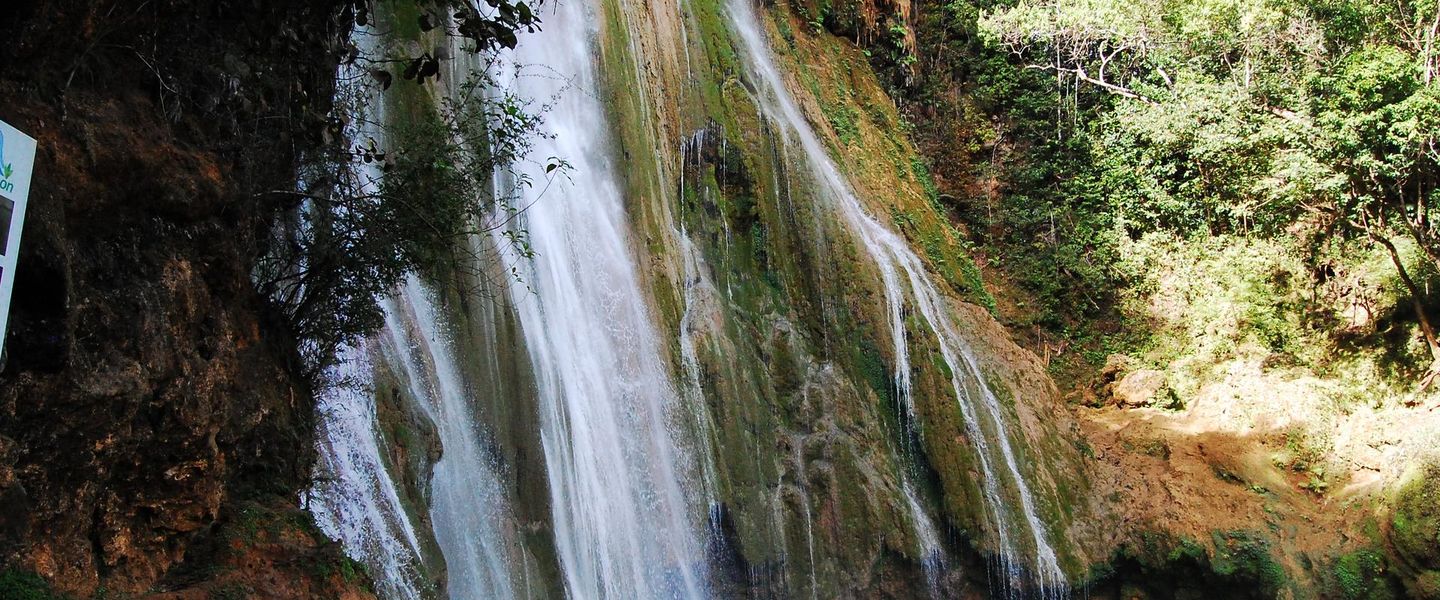


Samaná, Dominican Republic, combines whale watching, bay cruises, beaches, Caribbean history, tropical landscapes and richly layered local culture.
A Peninsula Shaped by the Sea
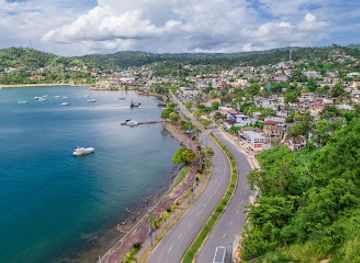
Samaná stands on the southern shore of Samaná Bay in the north-east of the Dominican Republic, where steep green hills descend towards one of the Caribbean's most celebrated marine landscapes. The town's waterfront curves along the bay, while the surrounding province extends towards palm-fringed beaches, forested mountains, waterfalls and protected coastal habitats. From January to March, humpback whales gather in the bay, making seasonal marine excursions one of the area's defining experiences.Read more about Samana
Town, Bay and Cultural Memory
Gateway to the Wider Peninsula
When is the best time to visit Samana?
Best: February–April · 29–30°C| Month | High (°C) | Rainfall (mm) |
|---|---|---|
| January | 29 | 88 |
| February (best) | 29 | 83 |
| March (best) | 30 | 71 |
| April (best) | 30 | 81 |
| May | 30 | 125 |
| June | 30 | 137 |
| July | 30 | 148 |
| August | 30 | 152 |
| September | 30 | 158 |
| October | 30 | 164 |
| November | 30 | 147 |
| December | 30 | 106 |
Getting to and around Samana
How to get there
Transportation
Best attractions in Samana
Samaná's principal attractions begin along the waterfront, where the Malecón faces the broad bay and the town's distinctive footbridges lead towards small offshore islets. The bridges offer changing views of fishing boats, hills and the busy marine landscape, while the central streets and Pueblo Arriba provide a feel for local neighbourhood life. The church of Santa Bárbara adds a historic and religious focus near the town centre. Seasonal whale-watching excursions reveal the bay's importance as a breeding ground for humpback whales, generally between January and March. Beyond the urban area, organised boat trips can explore Cayo Levantado and the limestone islands and mangroves of Los Haitises National Park. El Limón Waterfall, Las Galeras and Playa Rincón are further afield on the peninsula, not attractions within Samaná itself, but they broaden the range from coastal sightseeing to forest, swimming and beach landscapes.
-
Playa Cayo Levantado
Explore Playa Cayo Levantado, a stunning beach in Samana, Dominican Republic, featuring white sands, crystal-clear waters, and lush tropical scenery.
-
Javo Beach La Playita
Discover the tranquil beauty of Javo Beach La Playita, a serene paradise in Las Galeras, perfect for relaxation and adventure.
-
Playa Las Ballenas
Discover the crystal-clear waters and soft sands of Playa Las Ballenas, a stunning public beach in Las Terrenas, Dominican Republic.
-
Los Haitises National Park
Discover the enchanting beauty and rich biodiversity of Los Haitises National Park, a national treasure in the Dominican Republic that captivates every nature lover.


Best landmarks in Samana
Samaná's most recognisable landmarks are closely tied to its waterfront and layered settlement history. The church of Santa Bárbara provides a civic and religious reference point in the town, while the Malecón frames the bay and reflects the importance of maritime life to the community. The footbridges across the small islets offshore have become a distinctive element of the townscape, linking the central waterfront with broad views over Samaná Bay rather than serving simply as a transport route. The surrounding hills form a natural landmark, rising behind streets shaped by the peninsula's tropical climate and colonial-era coastal settlement. Beyond town, the waters of the bay are themselves a living landmark, associated with seasonal humpback whales and the environmental heritage that has increasingly shaped Samaná's public identity.
-
Tourist attraction
Samaná Boardwalk
Explore the scenic Samaná Boardwalk, a vibrant waterfront destination with stunning views, local cuisine, and a lively atmosphere perfect for all travelers.
8 min drive · 2.5 km from city centre
-
Resort hotel
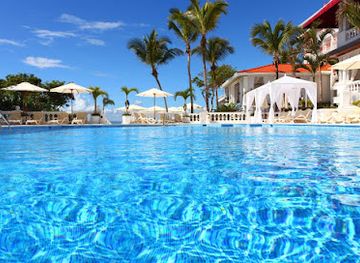
Bahia Principe Grand Cayacoa
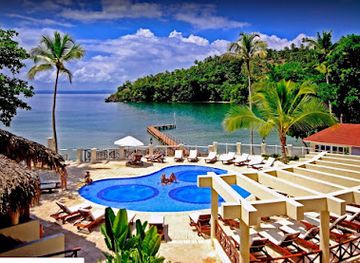
Experience luxury and natural beauty at Bahia Principe Grand Cayacoa, a premier resort hotel in the heart of Samaná, Dominican Republic.
9 min drive · 3.0 km from city centre
-
Beach
Playa Cayo Levantado
Experience the idyllic Playa Cayo Levantado, a tropical paradise in Samana Bay, known for its pristine beaches and vibrant marine life.
20 min drive · 6.6 km from city centre
-
Resort hotel
Bahia Principe Grand Samana
Experience luxury and adventure at Bahia Principe Grand Samana, a stunning resort hotel in the heart of the Dominican Republic.
18 min drive · 6.0 km from city centre
Explore Samana on the map
Plan your Samana trip on one map. See where the top attractions, landmarks, restaurants, bars and hotels are, find what's near where you're staying, and book hotels and experiences in a few clicks.
Best hotels in Samana
Best restaurants in Samana
Samaná's food reflects its position between the Caribbean Sea, the Atlantic coast and a lush agricultural interior. Fresh fish, lobster where legally and seasonally appropriate, prawns and other seafood appear in simple grilled dishes, stews and soups, while coconut is a defining ingredient in sauces and rice preparations. Pescado con coco is particularly associated with the peninsula's coastal cooking, and local kitchens also serve Dominican staples such as mangú, tostones, moro de guandules and sancocho. Small restaurants around the town centre and Malecón offer informal meals alongside cafés, bakeries and juice counters, while markets provide a glimpse of local fruit, vegetables and provisions. Haitian, African-Caribbean and broader Dominican influences are part of Samaná's culinary history, giving the food culture a character that extends beyond resort menus.
-
Restaurant
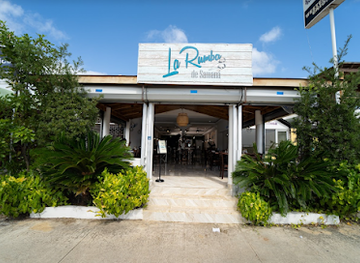
La Rumba de Samana
Experience authentic Dominican flavors at La Rumba de Samana—where vibrant cuisine meets stunning coastal views.
7 min drive · 2.2 km from city centre
-
Restaurant
SANTA BAHÍA KITCHEN & BAR
Discover the vibrant culinary scene at Santa Bahía Kitchen & Bar in Samaná – where local flavors meet international flair.
8 min drive · 2.6 km from city centre
-
Restaurant
Tierra y Mar
Experience authentic Italian and fresh seafood delights at Tierra y Mar in Samaná - where every bite tells a story.
7 min drive · 2.4 km from city centre
-
Mediterranean
Taberna Mediterranea Spanish Tavern & Restaurant
Savor authentic Spanish cuisine at Taberna Mediterranea in Samaná - a true taste of the Mediterranean with stunning views.
6 min drive · 2.1 km from city centre
Best bars in Samana
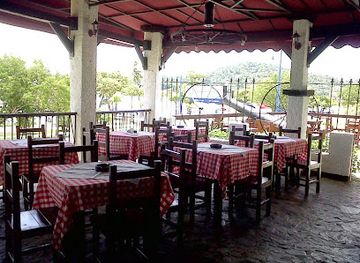
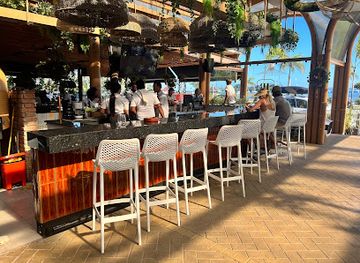
Samaná's evening scene is concentrated rather than sprawling, with the Malecón and central streets providing the main setting for open-air bars, casual drinks and music after sunset. Merengue, bachata and other Dominican rhythms are heard in local social spaces, while some venues favour conversation, rum-based drinks and views across the bay over late-night clubbing. Visitors may find dancing and livelier entertainment at selected bars, particularly during busy periods, but the town should not be approached as a major nightclub destination. Restaurants and waterfront businesses often form part of the evening circuit, and cultural or musical events may offer a more local experience than a dedicated club. As elsewhere in the Dominican Republic, check transport arrangements before staying out late and use care on quieter roads beyond the centre.
-
SANTA BAHÍA KITCHEN & BAR
Discover the vibrant flavors and warm hospitality at Santa Bahía Kitchen & Bar in Samaná, your culinary oasis for local and international delights.
-
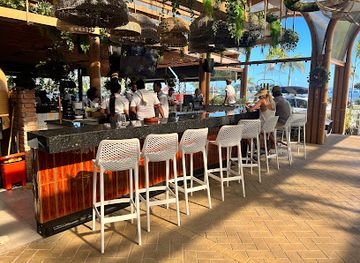
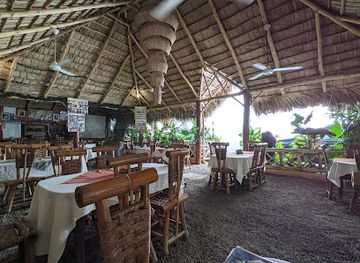
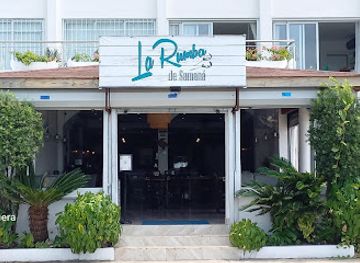
La Rumba de Samana
Discover the rich flavors and vibrant atmosphere of La Rumba de Samana, a culinary gem in the heart of Samaná, Dominican Republic.
-
Tierra y Mar
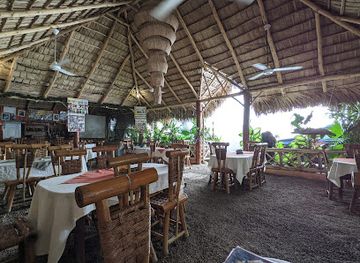
Discover the culinary delights of Tierra y Mar, a seafood and Italian restaurant offering a unique taste of Samana's vibrant flavors.
-
Taberna Mediterranea Spanish Tavern & Restaurant
Experience the essence of Mediterranean cuisine at Taberna Mediterranea, where every dish tells a story of flavor and tradition.
Best nightclubs in Samana
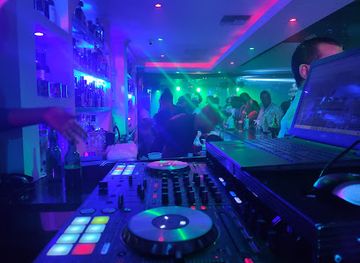
Samaná's evening scene is concentrated rather than sprawling, with the Malecón and central streets providing the main setting for open-air bars, casual drinks and music after sunset. Merengue, bachata and other Dominican rhythms are heard in local social spaces, while some venues favour conversation, rum-based drinks and views across the bay over late-night clubbing. Visitors may find dancing and livelier entertainment at selected bars, particularly during busy periods, but the town should not be approached as a major nightclub destination. Restaurants and waterfront businesses often form part of the evening circuit, and cultural or musical events may offer a more local experience than a dedicated club. As elsewhere in the Dominican Republic, check transport arrangements before staying out late and use care on quieter roads beyond the centre.
-
Night club
Babylon Disco
Dive into the excitement of Babylon Disco in Las Terrenas, where electrifying music and vibrant atmosphere create the perfect nighttime escape.
46 min drive · 26 km from city centre
-
Night club
NAOMI Nightclub - Plaza Pueblo Principe
Discover the pulsating nightlife of Samaná at NAOMI Nightclub, where vibrant music and dancing create unforgettable memories.
8 min drive · 2.7 km from city centre
-
Disco club
Disco Cielito
Discover the rhythm of Samaná's nightlife at Disco Cielito, a vibrant disco club where music, dance, and tropical vibes come alive.
6 min drive · 1.9 km from city centre
-
Bar
Alta Gama Drinks
Discover the essence of nightlife at Alta Gama Drinks, where vibrant cocktails and a lively atmosphere create unforgettable memories in Samaná.
7 min drive · 2.3 km from city centre
Best shops in Samana
Shopping in Samaná is modest and locally oriented, with small shops, market stalls and independent businesses concentrated around the centre and near the waterfront. The Mercado Público and surrounding commercial streets are useful for fruit, provisions, clothing and everyday Dominican goods, while artisan stalls may offer paintings, jewellery, carved items and beach-oriented souvenirs. Amber and larimar are widely sold in the Dominican Republic, but buyers should compare quality, ask about provenance and be cautious of unverified claims. Cocoa, coffee, rum, coconut products and locally made food items can provide more characteristic gifts than generic resort merchandise. Samaná is not primarily a destination for large shopping centres or international luxury retail; its appeal lies in informal browsing and in seeing how trade connects the town with the wider agricultural and coastal peninsula.
-
Shopping mall
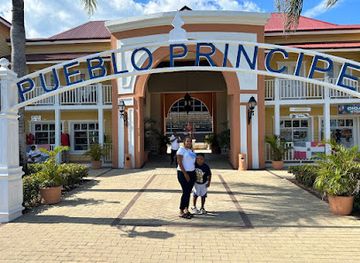
Pueblo Principe
Discover the essence of Samana at Pueblo Principe, a shopping mall that blends local culture with a diverse shopping experience.
8 min drive · 2.6 km from city centre
-
Shopping mall
Puerto Plaza Hotel & Shops
Explore Puerto Plaza Hotel & Shops for a unique shopping and dining experience in the heart of Las Terrenas, with stunning ocean views and local charm.
46 min drive · 26 km from city centre
-
Supermarket
Bodega y Surtidora Samaná
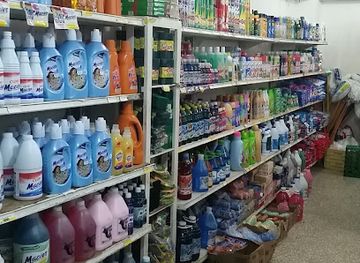
Explore local flavors and essential goods at Bodega y Surtidora Samaná, the premier supermarket and shopping destination in Samaná, Dominican Republic.
8 min drive · 2.7 km from city centre
-
Supermarket
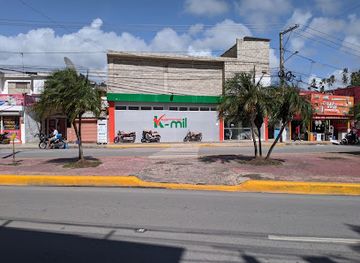
Supermercado K-mil
Discover the flavors of the Dominican Republic at Supermercado K-mil, Samaná's vibrant supermarket for local and international products.
9 min drive · 2.9 km from city centre
Get your free copy of our complete guide to Samana, delivered straight to you.
Everything on this page, from attractions and restaurants to essentials and local phrases, in one PDF you can read offline, print or share.
Already have an account? Sign in
Your Samana guide is ready.
We'll send it to · Not you? Sign out

Getting your guide ready…
We are putting together a fresh copy of the Samana guide. This can take up to a minute.
This can take a few moments. If your browser asks, choose Allow so the download can start. You'll find the guide in your Downloads folder.
Nothing happened? Download it again
Sorry, the guide is taking longer than usual. Please try again in a minute, or get it by email instead.
Samana essentials
Currency and Payment
Safety
Emergency Situations
Do's and Don'ts
Local Tips
From Eve
Local phrases worth knowing
You don't need to get them perfect. A few words go a long way, and locals appreciate the effort.
Basics
| English | Local | Say it |
|---|---|---|
| Hello | Hola | [oh-lah] |
| Goodbye | Adiós | [ah-dee-ohs] |
| Yes | Sí | [see] |
| No | No | [noh] |
| Please/You're welcome | Por favor/De nada | [por fah-vor/deh nah-dah] |
| Thank you | Gracias | [grah-see-ahs] |
| Excuse me/Sorry | Perdón/Lo siento | [pair-dohn/loh see-ehn-toh] |
| How are you? | ¿Cómo estás? | [koh-moh ehs-tahs] |
| Fine. And you? | Bien. ¿Y tú? | [bee-ehn. ee too] |
| Do you speak English? | ¿Hablas inglés? | [ah-blahs een-glays] |
| I don't understand | No entiendo | [noh ehn-tyen-doh] |
Eating & Drinking
| English | Local | Say it |
|---|---|---|
| I'd like to see the menu, please | Me gustaría ver el menú, por favor | [meh goos-tah-ree-ah vehr ehl meh-noo, por fah-vor] |
| I don't eat meat | No como carne | [noh koh-moh kahr-neh] |
| Cheers! | ¡Salud! | [sah-lood] |
| I would like to pay, please | Me gustaría pagar, por favor | [meh goos-tah-ree-ah pah-gar, por fah-vor] |
Emergencies
| English | Local | Say it |
|---|---|---|
| Help! | ¡Ayuda! | [ah-yoo-dah] |
| Go away! | ¡Vete! | [veh-teh] |
| Call the Police! | ¡Llama a la Policía! | [yah-mah ah lah poh-lee-see-ah] |
| Call a doctor! | ¡Llama a un médico! | [yah-mah ah oon meh-dee-koh] |
| I'm lost | Estoy perdido | [ehs-toy pair-dee-doh] |
| I'm ill | Estoy enfermo | [ehs-toy ehn-fehr-moh] |
Shopping
| English | Local | Say it |
|---|---|---|
| I'd like to buy... | Me gustaría comprar... | [meh goos-tah-ree-ah kohm-prahr] |
| I'm just looking | Sólo estoy mirando | [soh-loh ehs-toy meer-ahn-doh] |
| How much is it? | ¿Cuánto cuesta? | [kwan-toh kwehs-tah] |
| That's too expensive | Eso es demasiado caro | [eh-soh ehs deh-mah-see-ah-doh kah-roh] |
| Can you lower the price? | ¿Puedes bajar el precio? | [pweh-dehs bah-har ehl preh-see-oh] |
Time & Numbers
| English | Local | Say it |
|---|---|---|
| What time is it? | ¿Qué hora es? | [keh oh-rah ehs] |
| It's one o'clock | Es la una | [ehs lah oo-nah] |
| Half past (10) | La mitad de (10) | [lah mee-tahd deh (10)] |
| Morning | Mañana | [mah-nyah-nah] |
| Afternoon | Tarde | [tahr-deh] |
| Evening | Noche | [noh-cheh] |
| Yesterday | Ayer | [ah-yehr] |
| Today | Hoy | [oy] |
| Tomorrow | Mañana | [mah-nyah-nah] |
| 1 | Uno | [oo-noh] |
| 2 | Dos | [dohs] |
| 3 | Tres | [trehs] |
| 4 | Cuatro | [kwah-troh] |
| 5 | Cinco | [seen-koh] |
| 6 | Seis | [seys] |
| 7 | Siete | [syeh-teh] |
| 8 | Ocho | [oh-choh] |
| 9 | Nueve | [nweh-veh] |
| 10 | Diez | [dyehs] |
Transport & Directions
| English | Local | Say it |
|---|---|---|
| Where's a/the...? | ¿Dónde está...? | [dohn-deh ehs-tah] |
| What's the address? | ¿Cuál es la dirección? | [kwal ehs lah dee-rehk-syohn] |
| Can you show me (on the map)? | ¿Puedes mostrarme (en el mapa)? | [pweh-dehs mohs-trar-meh (ehn ehl mah-pah)] |
| When's the next (bus)? | ¿Cuándo es el próximo (autobús)? | [kwan-doh ehs ehl prohk-see-moh (ow-toh-boos)] |
| A ticket (to ....) | Un boleto (a ...) | [oon boh-leh-toh (ah)] |
History of Samana
Taíno Shores and European Arrival
Before European colonisation, the Samaná peninsula and its bay were inhabited by Taíno communities whose settlements relied on fishing, hunting, cultivation and coastal exchange. Christopher Columbus reached the bay during his first voyage in 1493, and the region subsequently entered the contested colonial world of Hispaniola. Spanish control was uneven in this remote, forested area, where the coast, mangroves and mountains made permanent settlement difficult. The bay's strategic position nevertheless attracted European attention, while disease, forced labour and colonial disruption profoundly affected indigenous society. The landscape around Samaná still provides the essential geographical context for understanding the area's early history: access to the sea was easier than movement through the interior.
Spanish Settlement at Samaná
In the eighteenth century, the Spanish Crown sought to strengthen control over the north-eastern coast in response to French activity elsewhere on Hispaniola and to discourage foreign settlement. Santa Bárbara de Samaná was established in 1756, developing as a modest coastal community rather than a large colonial city. Its importance came from the bay's anchorage, maritime access and position on the peninsula. Spanish, African and later French-speaking influences met in the area, while agriculture, fishing and coastal trade supported local life. The town's church and waterfront setting belong to this long process of settlement, although much of the original colonial fabric has been altered or lost through storms, rebuilding and modern expansion.
A Borderland of Rival Powers
Samaná's history reflects the shifting political fortunes of Hispaniola. French influence expanded in the western part of the island, while Spain retained the eastern colony, and the whole island was later affected by the Haitian Revolution and the changing control of Santo Domingo. During the nineteenth century, Samaná remained strategically sensitive because its deep bay could serve naval and commercial interests. Foreign powers, Dominican governments and local communities all recognised its value, but proposed leases and political arrangements were repeatedly contested. These pressures helped give the town a cosmopolitan, frontier character, with maritime connections and cultural influences that differed from those of many inland Dominican settlements.
Haitian and African-American Communities
In the 1820s, Haitian president Jean-Pierre Boyer encouraged groups of free African Americans from the United States to settle in Hispaniola, and several communities established themselves around Samaná. Often known locally as the Samaná Americans, these settlers brought Protestant traditions, English-language influences and distinctive family histories to the peninsula. Their descendants became part of the region's social fabric alongside Dominican and Haitian communities. The legacy can be seen in local religious and cultural traditions, including the continued historical importance of Protestant congregations. Samaná's identity therefore developed through migration as much as through colonial administration, and its cultural memory cannot be reduced to a single national or European narrative.
Modern Tourism and Environmental Awareness
During the twentieth century, Samaná remained more isolated than the principal urban centres of the Dominican Republic, with fishing, agriculture and coastal commerce central to the local economy. Improved roads and the development of the Samaná region's airports and tourism infrastructure gradually brought wider access. The bay's humpback whales became an important focus of conservation and seasonal tourism, while protected areas such as Los Haitises National Park highlighted the value of mangroves, limestone formations and marine habitats. Contemporary Samaná consequently balances visitor activity with environmental concerns. Boat traffic, coastal development and wildlife protection remain important questions in a region whose appeal depends on the health of its ecosystems.
Samana in Photos
Browse through our photo collection highlighting the charm and character of the destination.
Cities near Samana
The closest cities to Samana, if you have time for more than one stop.
-

-

-
-
-


Swipe for more cities

