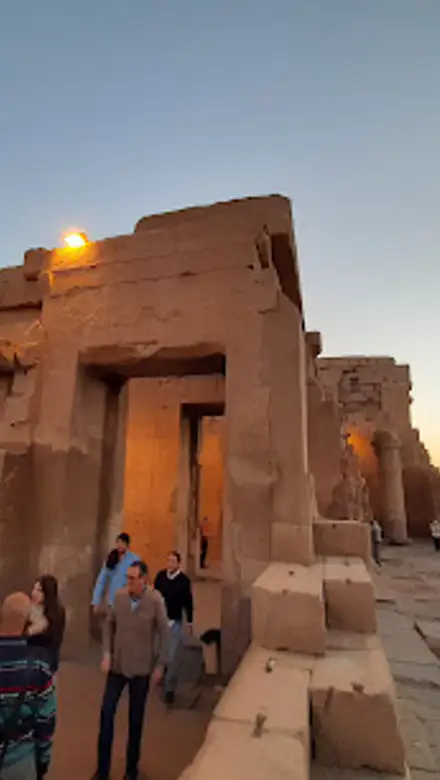
Kom Ombo Temple Travel Guide
Free Guide: Explore the unique dual temple of Kom Ombo, dedicated to Sobek and Haroeris, and discover ancient Egyptian religious traditions along the Nile.


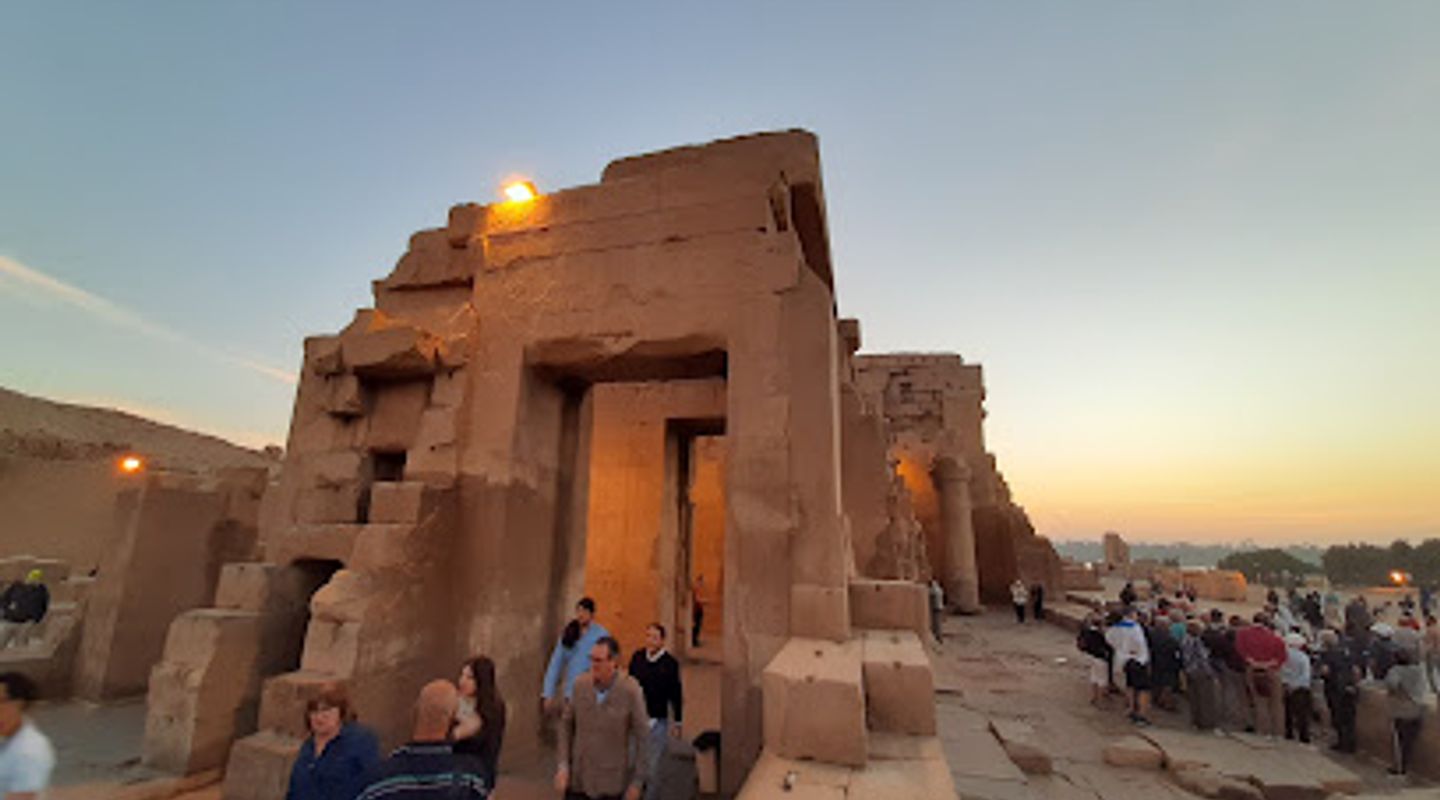
A brief summary of Kom Ombo Temple
Explore the unique dual temple of Kom Ombo, dedicated to Sobek and Haroeris, and discover ancient Egyptian religious traditions along the Nile.
The Kom Ombo Temple, dating back to the Ptolemaic dynasty (180-47 BC), presents a unique double design dedicated to two distinct deities: Sobek, the crocodile god of fertility, and Haroeris (Horus the Elder), the falcon-headed god of the sky. This symmetrical temple complex offers insights into ancient Egyptian religious beliefs and architectural practices, complete with a fascinating Crocodile Museum.
Opening hours
- Every day7 am–9 pm
Opening hours as listed on the venue’s Google Business Profile. Hours can change for services and special events, so check with the venue before you go.
- Address
- Nagoa Ash Shatb, Markaz Kom Ombo, Aswan Governorate 1281301
Getting there
Taxi/Tuk-Tuk
Walking
Nile Cruise
Discover more about Kom Ombo Temple
Overview
Located on the east bank of the Nile River, about 45 kilometers north of Aswan, the Temple of Kom Ombo is an extraordinary example of ancient Egyptian architecture and religious syncretism. Constructed during the Ptolemaic dynasty (180–47 BC), with later additions during the Roman period, this unique temple is dedicated to two principal deities: Sobek, the crocodile god associated with fertility and the creator of the world, and Haroeris, the falcon-headed god of the sky and protector of the pharaohs.The temple's design reflects its dual dedication, featuring a symmetrical layout with two entrances, two parallel axial passages, two hypostyle halls, and two sanctuaries. This division allowed for separate worship and rituals for each god, maintaining a balance between their distinct mythologies and cultic practices. The southern half of the temple is dedicated to Sobek, along with his wife Hathor and their son Khonsu, while the northern part is dedicated to Haroeris, his wife Tasenetnofret, and their son Panebtawy.Visitors can explore the intricate hieroglyphs and reliefs that adorn the temple walls, depicting scenes from Egyptian mythology, religious ceremonies, and daily life. The temple is also renowned for its depictions of surgical instruments, offering a glimpse into the advanced medical knowledge of the time. Additionally, the complex includes a sacred well and a Crocodile Museum, which houses a collection of mummified crocodiles, highlighting the importance of the crocodile cult in ancient Egypt.Despite damage from floods, earthquakes, and later repurposing as a church, the Temple of Kom Ombo remains a captivating site that showcases the rich history and religious complexity of ancient Egypt.
Evendo Review Centre
 Google
Guest reviews
Explore Kom Ombo Temple on the map
A handpicked selection of must-see spots near Kom Ombo Temple, mapped for you.
Get your free copy of our complete guide to Kom Ombo Temple, delivered straight to you.
Everything on this page, from opening hours and how to get there to Eve’s tips and the best time to go, in one PDF you can read offline, print or share.
Already have an account? Sign in
Your Kom Ombo Temple guide is ready.
We'll send it to · Not you? Sign out

Getting your guide ready…
We are putting together a fresh copy of the Kom Ombo Temple guide. This can take up to a minute.
This can take a few moments. If your browser asks, choose Allow so the download can start. You'll find the guide in your Downloads folder.
Nothing happened? Download it again
Sorry, the guide is taking longer than usual. Please try again in a minute, or get it by email instead.
Unlock the best of Kom Ombo Temple
Skip-the-line tickets, guided tours with entry, and walking tours of the area, booked in a few clicks.



Other nearby places you may find interesting
The closest places of the same kind, if this one is not quite what you had in mind.
-
-
-

-
-


Swipe for more places
More to explore near Kom Ombo Temple

 Best experiences near Kom Ombo Temple
 Best hotels near Kom Ombo Temple
 Best landmarks near Kom Ombo Temple
 Best attractions near Kom Ombo Temple
 Best shops near Kom Ombo Temple
 Best restaurants near Kom Ombo Temple
 Best bars near Kom Ombo Temple
Do you manage this location?
Take control to get all the benefits, like improved information, better appearance, and stronger visibility across AI-powered discovery.
Explore more

Explore more of Nubia
Discover the ancient wonders, vibrant culture, and natural beauty of Nubia, Egypt's hidden gem, where history and hospitality create a truly unique experience.
Explore Nubia
Explore more of Egypt
Discover Egypt: From the timeless pyramids to the vibrant Red Sea, experience a land where ancient wonders meet modern adventures.
Explore Egypt