

San Marco (Jacksonville) Travel Guide - Free
Explore San Marco in Jacksonville with Evendo's free guide. Find the best shops, historic streets, restaurants, and gems on web or mobile.


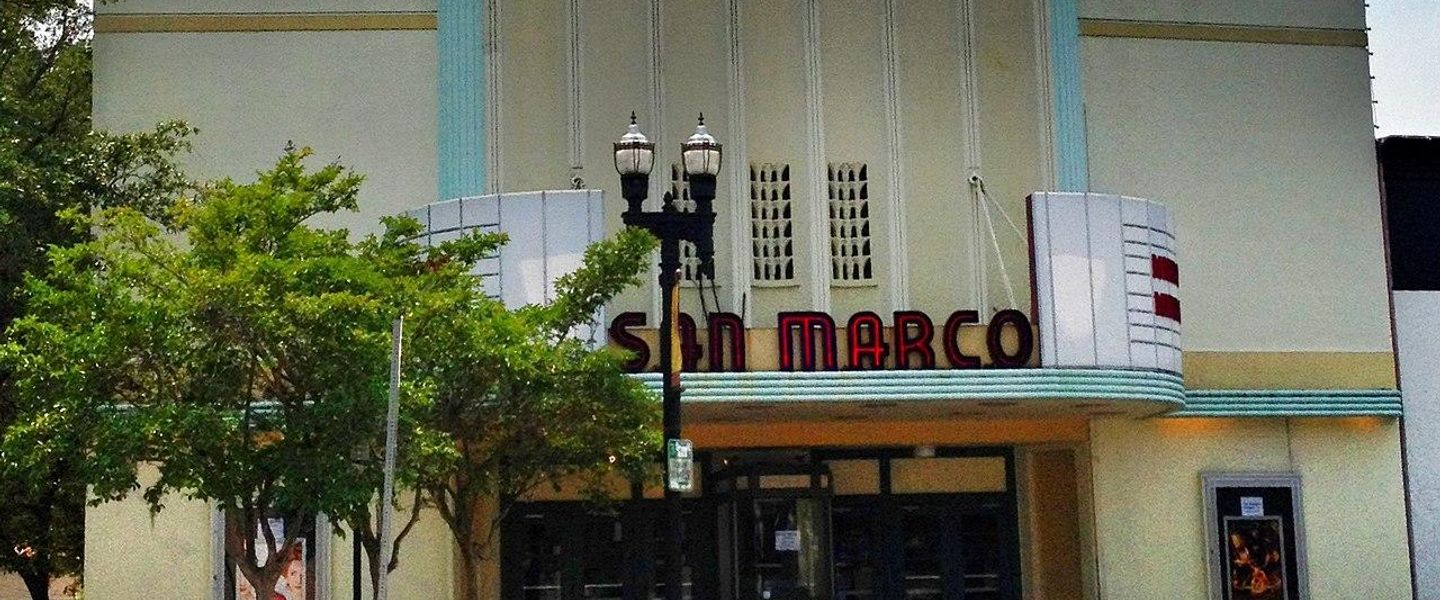


San Marco in Jacksonville pairs Mediterranean-inspired streets, Balis Park, riverfront walks, independent shops, galleries, restaurants and lively evenings.
A Neighbourhood Shaped by the River
San Marco occupies the southern side of the St Johns River, just across the water from downtown Jacksonville, and is commonly understood as the historic commercial and residential district centred on San Marco Square. Its identity is closely tied to the former city of South Jacksonville, whose growth transformed this riverside area from a relatively quiet settlement into one of the city’s most recognisable urban neighbourhoods. Today, the district combines early twentieth-century homes, Mediterranean-inspired commercial architecture, mature trees and a compact dining and shopping centre.Read more about San Marco
Architecture and Public Life
Food, Culture and Evening Atmosphere
Best attractions in San Marco
San Marco Square is the neighbourhood’s principal attraction, bringing together a landscaped roundabout, Balis Park, Mediterranean-influenced buildings, cafés, restaurants, independent retailers and the San Marco Theatre. The square is best appreciated as a piece of urban design as well as a commercial centre, with its compact arrangement encouraging a leisurely walk between buildings and public space. Residential streets extending from the square provide a quieter look at San Marco’s bungalows, revival-style houses and mature vegetation. Towards the St Johns River, River Road offers views across the water to downtown Jacksonville and connects the district with the riverside setting around Treaty Oak, a venerable live oak associated with the Southbank area. The theatre’s historic façade and the contrast between the square’s designed centre and the informal waterfront give visitors two different ways to read San Marco’s local character.
-
Park
Balis Park
Discover the tranquility of Balis Park in Jacksonville, Florida, where nature and recreation blend seamlessly for an unforgettable outdoor experience.
4 min walk · 0.3 km from neighbourhood centre

Best landmarks in San Marco
San Marco Square is the neighbourhood’s defining landmark, not because of a single monument but because its circular plan, landscaped centre and Mediterranean-influenced buildings express the ambitions of early twentieth-century South Jacksonville. Balis Park forms the square’s green heart, while the San Marco Theatre, opened in 1938, provides one of its most recognisable historic façades and an enduring link with local entertainment. The Acosta Bridge, just north of the neighbourhood across the St Johns River, is an important nearby transport landmark and helps explain San Marco’s connection with downtown, although it should not be confused with a structure inside the square itself. Along the waterfront, Treaty Oak is a notable natural landmark associated with the Southbank area. San Marco’s older homes, churches and tree-lined streets complete a landscape whose significance lies in its coherent neighbourhood scale.
-
Association / Organization
San Marco Preservation Society
Explore the historic charm and vibrant community of San Marco Preservation Society, a hub for cultural heritage and local history in Jacksonville, Florida.
13 min walk · 1.0 km from neighbourhood centre

Explore San Marco on the map
A handpicked selection of must-see spots in San Marco, mapped for you.
Best hotels in San Marco
Best restaurants in San Marco
San Marco has one of Jacksonville’s most concentrated neighbourhood dining scenes, centred on the square and extending along San Marco Boulevard, Hendricks Avenue and nearby streets. The choice ranges from Italian and Mediterranean cooking to contemporary American menus, seafood, cafés, bakeries and relaxed places suited to a drink with dinner. Established names associated with the district include Taverna, Matthews Restaurant, bb’s and Town Hall, although businesses and operating arrangements can change. The area’s food culture reflects San Marco’s role as both a historic residential district and a destination for visitors from across Jacksonville: older storefronts and low-rise commercial buildings accommodate independent restaurants alongside more contemporary dining rooms. Balis Park and the square make outdoor dining and people-watching part of the experience, while the surrounding residential blocks offer a quieter setting for smaller cafés and specialist food businesses.
-
Barbecue
The Bearded Pig
Experience authentic Southern barbecue at The Bearded Pig in Jacksonville – where every bite tells a story.
14 min walk · 1.1 km from neighbourhood centre
-
Breakfast
Maple Street Biscuit Company
Experience the best of Southern breakfast at Maple Street Biscuit Company in Jacksonville - where every biscuit tells a story.
4 min walk · 0.3 km from neighbourhood centre
-
Restaurant
European Street Cafe
Experience authentic German flavors in Jacksonville at European Street Cafe - where every meal feels like a trip to Europe.
9 min walk · 0.7 km from neighbourhood centre
-
Italian
Taverna
Discover Taverna: A delightful Italian restaurant offering exquisite cuisine, handcrafted cocktails, and an inviting atmosphere in Jacksonville's San Marco neighborhood.
4 min walk · 0.3 km from neighbourhood centre


Best bars in San Marco
San Marco’s evening life is concentrated around restaurants, cocktail bars, breweries and informal drinking spots rather than large nightclubs. The square and the blocks along San Marco Boulevard provide the main after-dark focus, with venues such as Grape and Grain Exchange and Sidecar associated with the neighbourhood’s bar scene; Aardwolf Brewing Company is another recognised nearby destination for craft beer. The atmosphere generally moves from dinner and conversation to drinks, with the San Marco Theatre adding a longstanding cinematic option rather than a conventional late-night club. Riverfront areas are quieter and more residential in character after dark. Because homes stand close to many commercial streets, visitors should leave bars quietly, use marked crossings and check directly with venues for current hours, events and admission arrangements.
-
Bar
The Grape & Grain Exchange
Discover Jacksonville's vibrant bar scene at The Grape & Grain Exchange, offering an exquisite selection of wines, craft beers, and artisanal spirits.
4 min walk · 0.3 km from neighbourhood centre
-
Caribbean
Pink Salt Restaurant and Wine Bar
Experience the essence of Caribbean dining at Pink Salt Restaurant and Wine Bar, where vibrant flavors meet a charming ambiance in Jacksonville.
14 min walk · 1.2 km from neighbourhood centre
-
American
Town Hall Restaurant Jacksonville
Discover the flavors of America at Town Hall Restaurant, a cozy haven in Jacksonville offering exquisite brunch, charcuterie, and handcrafted cocktails.
4 min walk · 0.3 km from neighbourhood centre
-
Cocktail bar
Sidecar
Discover Sidecar in Jacksonville, FL — a cocktail bar blending creativity and flavor in a lively ambiance, perfect for any occasion.
14 min walk · 1.1 km from neighbourhood centre


Best nightclubs in San Marco
San Marco’s evening life is concentrated around restaurants, cocktail bars, breweries and informal drinking spots rather than large nightclubs. The square and the blocks along San Marco Boulevard provide the main after-dark focus, with venues such as Grape and Grain Exchange and Sidecar associated with the neighbourhood’s bar scene; Aardwolf Brewing Company is another recognised nearby destination for craft beer. The atmosphere generally moves from dinner and conversation to drinks, with the San Marco Theatre adding a longstanding cinematic option rather than a conventional late-night club. Riverfront areas are quieter and more residential in character after dark. Because homes stand close to many commercial streets, visitors should leave bars quietly, use marked crossings and check directly with venues for current hours, events and admission arrangements.
-
Bar
The Grape & Grain Exchange
Discover Jacksonville's finest wines, craft beers, and premium spirits at The Grape & Grain Exchange, where every sip tells a story.
4 min walk · 0.3 km from neighbourhood centre
-
Caribbean
Pink Salt Restaurant and Wine Bar
Explore the vibrant flavors of Caribbean cuisine at Pink Salt Restaurant and Wine Bar, a culinary gem in Jacksonville offering delightful dishes and fine wines.
14 min walk · 1.2 km from neighbourhood centre
-
Cocktail bar
Sidecar
Experience the best cocktails in Jacksonville at Sidecar, where creativity meets a vibrant atmosphere.
14 min walk · 1.1 km from neighbourhood centre
-
Cocktail bar
Locals'
Experience the vibrant nightlife at Locals', Jacksonville's favorite cocktail bar, known for its unique drinks and fun atmosphere.
16 min walk · 1.3 km from neighbourhood centre


Best shops in San Marco
Shopping in San Marco is concentrated around San Marco Square and the adjoining commercial stretches rather than organised as a large retail district. Independent boutiques, gift shops, salons, galleries and specialist businesses occupy low-rise storefronts, giving the area a more local scale than Jacksonville’s major suburban shopping centres. San Marco Bookstore is a long-established point of interest for readers, while the square’s small retailers make browsing easy to combine with coffee or lunch. The surrounding streets also contain practical businesses serving local residents, so the retail offer is mixed rather than exclusively visitor-oriented. Merchandise and stock vary between independent shops, but visitors can expect books, homewares, clothing, gifts and locally minded creative products more readily than a traditional open-air market. The architecture and compact layout are part of the shopping experience, particularly around Balis Park and the theatre.
-
Antique store
Rusted: A Vintage Market
Discover unique antiques and vintage treasures at Rusted: A Vintage Market in Jacksonville, FL – a must-visit for collectors and enthusiasts alike.
12 min walk · 1.0 km from neighbourhood centre
-
Toy store
Heyday!
Discover a world of imagination at Heyday!, Jacksonville's premier toy store for unique toys, baby gear, and children's fashion.
4 min walk · 0.4 km from neighbourhood centre
-
Boutique
Meow and Barks Boutique
Discover unique fashion and pet accessories at Meow and Barks Boutique, Jacksonville's premier shopping destination for trendy styles.
12 min walk · 1.0 km from neighbourhood centre
-
Boutique
Lilly Grace Boutique
Discover fashion-forward clothing and unique accessories at Lilly Grace Boutique in Jacksonville, Florida - your ultimate shopping destination.
6 min walk · 0.5 km from neighbourhood centre


San Marco essentials
Getting There
Getting Around
Safety
Emergency Situations
Do's and Don'ts
Local Tips

From Eve
Local phrases worth knowing
You don't need to get them perfect. A few words go a long way, and locals appreciate the effort.
Basics
| English | Local | Say it |
|---|---|---|
| Hello | Howdy | [hah-dee] |
| Goodbye | See ya later | [see yuh lay-tur] |
| Yes | Yup | [yuhp] |
| No | Nah | [nah] |
| Please/You're welcome | Please and thank you | [pleez and thank yuh] |
| Thank you | Thanks a bunch | [thanks uh bunch] |
| Excuse me/Sorry | Pardon me | [par-dun me] |
| How are you? | How ya doin'? | [how yuh doin] |
| Fine. And you? | Doin' good. How 'bout you? | [doin good. how bout yuh] |
| Do you speak English? | Ya speak English? | [yah speak ing-lish] |
| I don't understand | I ain't catchin' on | [i aint catch-in on] |
Eating & Drinking
| English | Local | Say it |
|---|---|---|
| I'd like to see the menu, please | Can I check out the menu? | [can eye chek out the menu] |
| I don't eat meat | I'm meat-free | [im meat-free] |
| Cheers! | Cheers! | [cheers] |
| I would like to pay, please | I'll settle up now, please | [ill settle up now please] |
Emergencies
| English | Local | Say it |
|---|---|---|
| Help! | I need a hand! | [i need a hand] |
| Go away! | Beat it! | [beat it] |
| Call the Police! | Ring the cops! | [ring the cops] |
| Call a doctor! | Get me a doc! | [get me a doc] |
| I'm lost | I'm all turned around | [im all turned around] |
| I'm ill | I'm under the weather | [im under the weather] |
Shopping
| English | Local | Say it |
|---|---|---|
| I'd like to buy... | I'm lookin' to purchase... | [im lookin to purchase] |
| I'm just looking | Just browsin' | [just browsin] |
| How much is it? | What's the damage? | [whats the dam-ij] |
| That's too expensive | That's a bit steep | [thats a bit steep] |
| Can you lower the price? | Can ya do me a deal? | [can yuh do me a deal] |
Time & Numbers
| English | Local | Say it |
|---|---|---|
| What time is it? | What's the time? | [whats the time] |
| It's one o'clock | It's one | [its one] |
| Half past (10) | Half past ten | [half past ten] |
| Morning | Mornin' | [mornin] |
| Afternoon | Afternoon | [afternoon] |
| Evening | Evenin' | [evenin] |
| Yesterday | Yesterday | [yesterday] |
| Today | Today | [today] |
| Tomorrow | Tomorrow | [tomorrow] |
| 1 | One | [wun] |
| 2 | Two | [too] |
| 3 | Three | [three] |
| 4 | Four | [four] |
| 5 | Five | [five] |
| 6 | Six | [six] |
| 7 | Seven | [seven] |
| 8 | Eight | [ate] |
| 9 | Nine | [nine] |
| 10 | Ten | [ten] |
Transport & Directions
| English | Local | Say it |
|---|---|---|
| Where's a/the...? | Where's the... at? | [wheres the at] |
| What's the address? | Where's it located? | [wheres it low-kay-ted] |
| Can you show me (on the map)? | Can ya point it out (on the map)? | [can ya point it out on the map] |
| When's the next (bus)? | When's the next (bus) comin'? | [whens the next bus comin] |
| A ticket (to ....) | A ticket (to ....) | [a ticket to] |
History of San Marco
The South Jacksonville Settlement
The area now known as San Marco developed on the south bank of the St Johns River in what became the separate municipality of South Jacksonville. Its position opposite Jacksonville made ferry crossings and river transport important to local movement, while the surrounding land remained less intensively urbanised than the north bank. South Jacksonville was incorporated as a municipality in 1907, giving the growing settlement its own civic identity during a period when Jacksonville was expanding beyond its historic core. The district’s later name and architectural character came with planned residential and commercial development rather than with the colonial-era origins sometimes associated with Jacksonville more broadly.
Bridges and Suburban Expansion
Improved connections across the St Johns River helped shift the south bank from a separate riverside community towards an integrated Jacksonville neighbourhood. The Acosta Bridge, opened in 1921, provided a fixed road connection between South Jacksonville and downtown, replacing reliance on ferries for many journeys. Electric streetcar links and expanding roads also supported residential growth, allowing development around the present San Marco area to serve people working elsewhere in the city. Houses, shops and civic facilities appeared in a period when Jacksonville’s urban middle-class suburbs were spreading along the river and its major transport corridors.
The Making of San Marco Square
San Marco Square emerged as the commercial and visual centre of the neighbourhood during the 1920s. Its buildings adopted Mediterranean and Italianate references, including stuccoed façades, arcades and decorative details that distinguished the planned district from more utilitarian roadside development. The square’s layout and surrounding businesses created a recognisable village-like centre for South Jacksonville, while nearby residential streets filled with bungalows and revival-style houses. The San Marco Theatre, opened in 1938, became another enduring cultural institution in the district and remains part of the square’s architectural and social identity.
Annexation and a Changing Urban Role
Jacksonville annexed South Jacksonville in 1932, bringing the municipality into the larger city and ending its separate civic status. San Marco nevertheless retained a strong local identity through its square, historic housing and relationship with the river. Later twentieth-century road building, suburban expansion and changing retail patterns altered the way residents travelled and shopped, but the district’s central commercial streets continued to support restaurants, specialist shops and cultural venues. Preservation activity and interest in the area’s early architecture helped maintain its character as Jacksonville redeveloped other parts of the Southbank and central riverfront.
San Marco in Photos
Browse through our photo collection highlighting the charm and character of the destination.
Neighbourhoods near San Marco
The closest neighbourhoods to San Marco, if you have time for more than one stop.
-

-

-


Swipe for more neighbourhoods
Explore more
Explore more of Jacksonville
Jacksonville, Florida blends Atlantic beaches, riverfront landmarks, nature preserves, Southern flavours and cultural attractions across a sprawling city.
Explore Jacksonville