
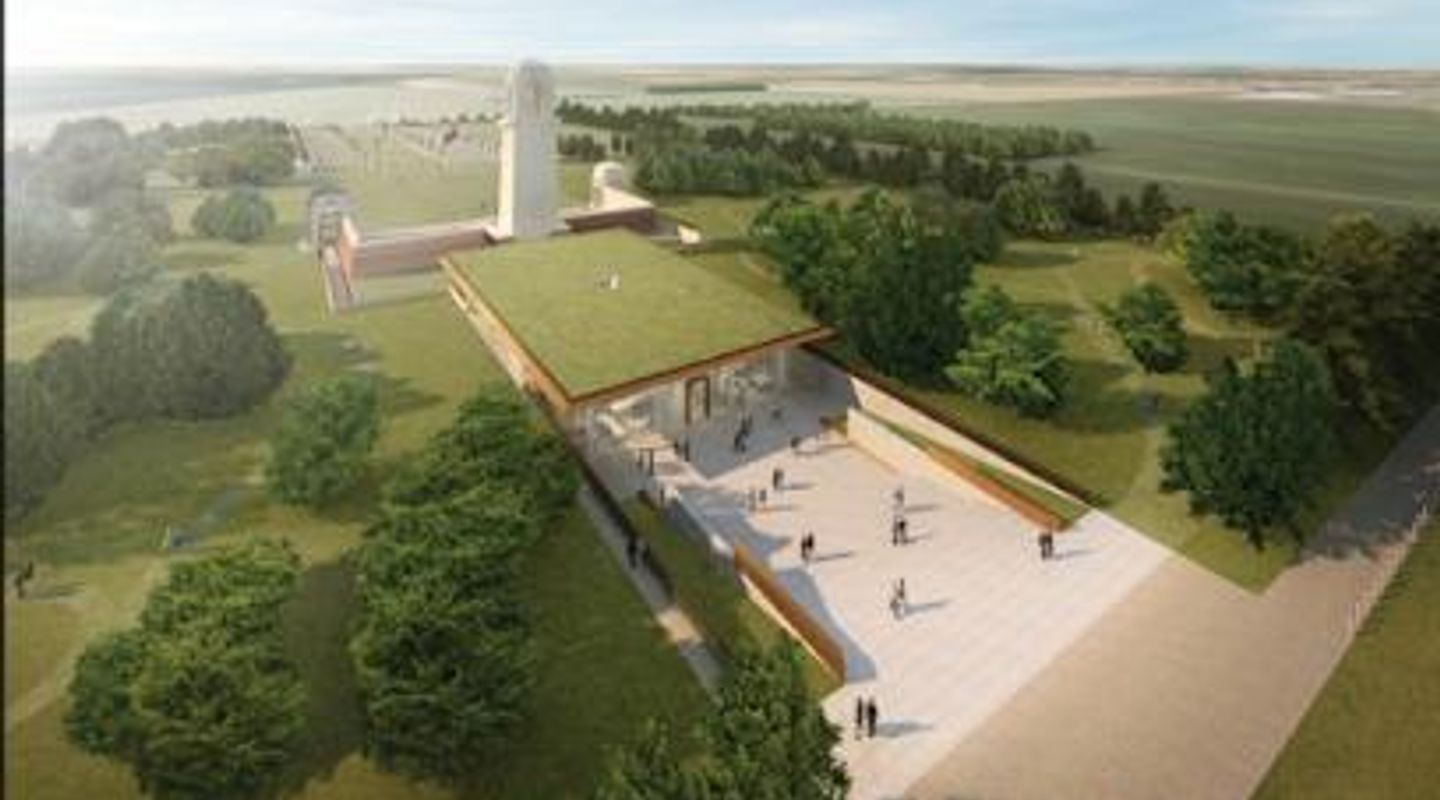
Sir John Monash Centre, Picardy Travel Guide
Discover the compelling story of Australia's involvement on the Western Front during World War I at the Sir John Monash Centre, a state-of-the-art tribute near Villers-Bretonneux.
The Sir John Monash Centre, located near Villers-Bretonneux, France, offers a deeply moving and immersive experience exploring Australia's involvement in the First World War on the Western Front. Named after General Sir John Monash, the centre uses personal stories, interactive displays, and a state-of-the-art 360-degree theatre to bring to life the experiences of Australian soldiers. Situated adjacent to the Villers-Bretonneux Military Cemetery and the Australian National Memorial, the centre serves as a poignant reminder of the sacrifices made and provides a crucial link in the Australian Remembrance Trail. Visitors are encouraged to download the SJMC app to enhance their understanding of the site and its historical significance. Entry is free, making it accessible to all who wish to pay their respects and learn about this important chapter in Australian history. Allow at least 1.5 to 2 hours to fully appreciate the centre's offerings.
A brief summary to Sir John Monash Centre
- Route de Villers Bretonneux, Fouilloy, 80800, FR
- Click to display
- Click to display
- Monday 10 am-5 pm
- Tuesday 10 am-5 pm
- Wednesday 10 am-5 pm
- Thursday 10 am-5 pm
- Friday 10 am-5 pm
- Saturday 10 am-5 pm
- Sunday 10 am-5 pm

Know before you go
Hi, I'm Eve. Here are a few practical things to know before exploring Sir John Monash Centre.
- Download the Sir John Monash Centre app before your visit to enhance your experience with interactive content and virtual tours.
- Allow at least 1.5 to 2 hours to fully explore the centre and its exhibits, including the 360-degree theatre.
- Consider purchasing earphones at the centre for €3 to fully immerse yourself in the audio-visual presentations.
- Visit the adjacent Villers-Bretonneux Military Cemetery and the Australian National Memorial to pay your respects to the fallen soldiers.
- Check the centre's opening hours, as they vary depending on the time of year (March to October and November to February).
Do you manage this location?
Take control to get all the benefits, like improved information, better appearance, and stronger visibility across AI-powered discovery. Learn more about listing your business on Evendo
Activate your presenceOther nearby places you may find interesting
The closest places of the same kind, if this one is not quite what you had in mind.
Explore Sir John Monash Centre on the Map
A handpicked selection of must-see spots near Sir John Monash Centre, mapped for you.
Unlock the Best of Sir John Monash Centre
Buy tickets
-
No tickets available
Book tours with entry


Book tours without entry
-
No tours available
Getting There
-
Driving
If driving from Amiens, take the D929 towards Villers-Bretonneux. Continue on the D23 in the direction of Fouilloy. The Sir John Monash Centre is located on Route de Villers-Bretonneux, behind the Australian National Memorial. Free parking is available on site. The drive is approximately 20 minutes. Note that a disabled access car park is located closer to the Centre; use the intercom at the boom gate for access if needed.
-
Public Transport
From Amiens, take a train to Villers-Bretonneux. From the Villers-Bretonneux train station, you can either call a taxi (approximately €15-€20) or walk the 3km to the Centre. The walk takes you via Rue d'Aubigny, passing the Victoria School and Franco-Australian Museum. Alternatively, take a train from Amiens to Longueau, then a taxi to the Australian National Memorial (approximately €35-€40).
-
Taxi/Ride-Share
From Amiens city center, a taxi or ride-share to the Sir John Monash Centre will cost approximately €35-€40 and take around 20 minutes, depending on traffic. Be sure to specify 'Sir John Monash Centre, Fouilloy' as your destination. Note that there are no taxi ranks at the Australian National Memorial, so pre-booking a return journey is advisable.
Discover more about Sir John Monash Centre













Your all‑in‑one travel companion app
Explore expert travel guides, compare and book tours, experiences, hotels, and more—all from the palm of your hand. Download now for seamless trip planning wherever your wanderlust takes you.


Explore More of Picardy
Looking beyond Sir John Monash Centre? Discover Picardy for broader travel guides, local hot-spots, and regional highlights.
Explore Picardy
Experience the charm of Amiens at Place Parmentier, where the spirit of 'La fête sur l'eau' comes alive with markets, boat tours, and celebrations of the city's unique waterways and heritage.

Discover the peaceful charm of Écluse n°14 de Corbie, a historic canal lock offering a serene escape in the French countryside.
