Statue de Jeanne d'Arc, Caen Travel Guide
Free Guide: Discover the Statue of Joan of Arc in Caen, a symbol of French resilience and a testament to history, offering a serene memorial park setting for reflection and appreciation.


A brief summary of Statue de Jeanne d'Arc
Discover the Statue of Joan of Arc in Caen, a symbol of French resilience and a testament to history, offering a serene memorial park setting for reflection and appreciation.
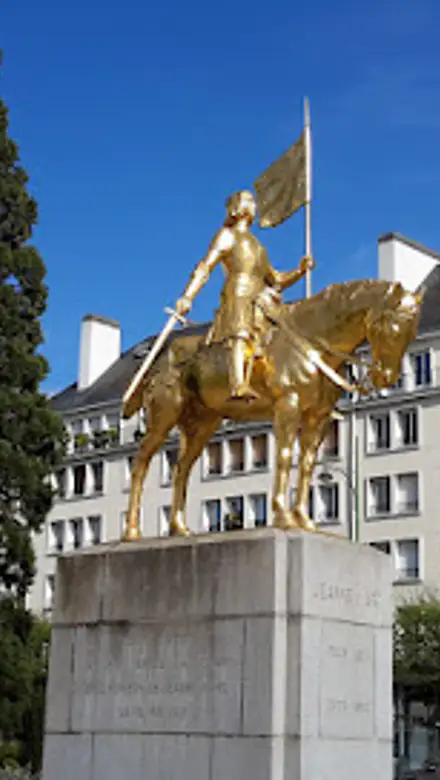
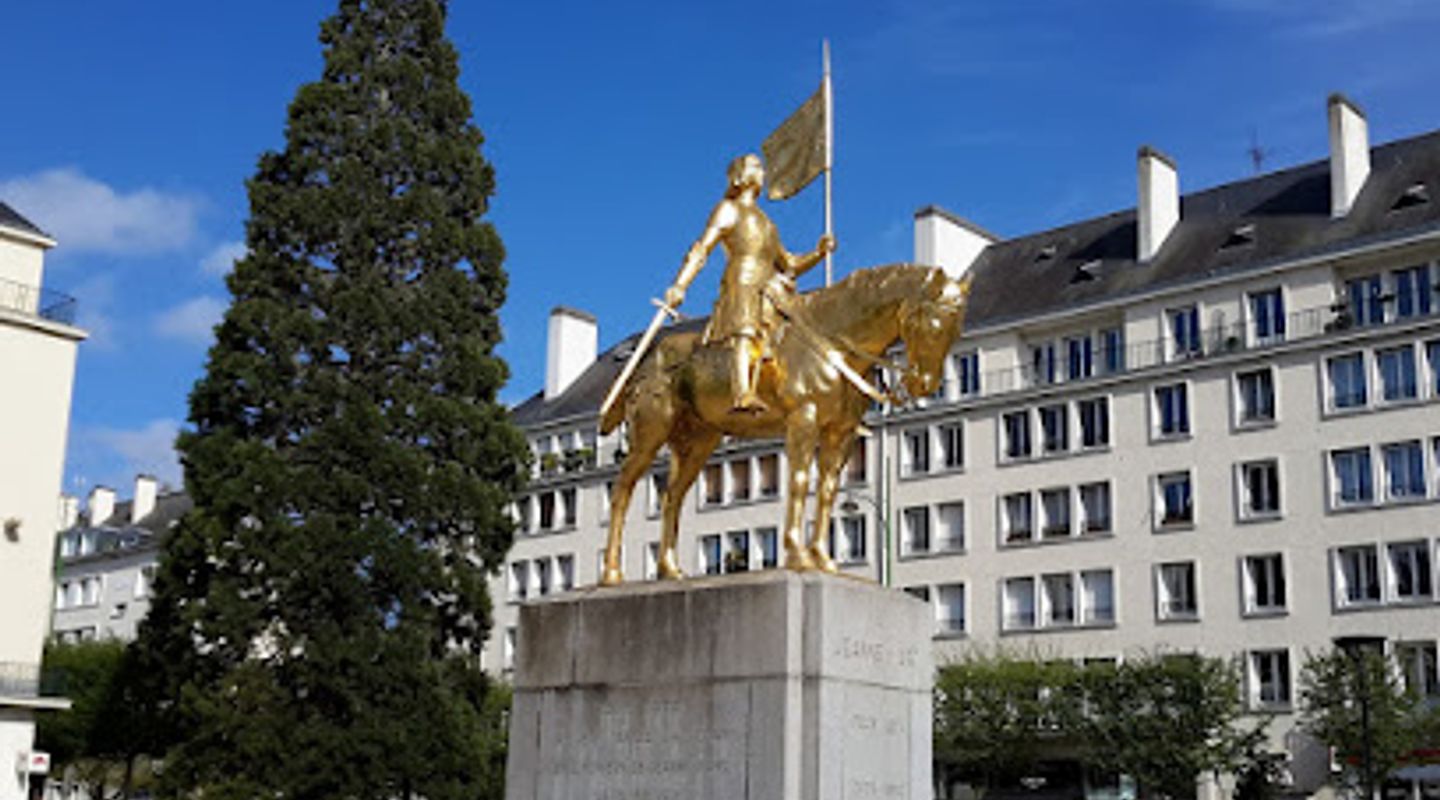
The Statue of Joan of Arc in Caen stands as a powerful tribute to the French heroine. Originally erected in Oran, Algeria, in 1931 to commemorate the centennial of French occupation, it was repatriated to France in 1962 following Algeria's independence. The statue found its new home in Caen in 1964 and was gilded in 2002, adding to its splendor. Located on Place de la Résistance, the equestrian statue depicts Joan of Arc in full armor, embodying courage and determination. The surrounding area provides a serene memorial park setting, inviting reflection on French history and heritage. With its historical significance and artistic merit, the statue offers a compelling point of interest for visitors exploring Caen, a city rich in history and culture. It serves as a reminder of France's enduring spirit and the legacy of Joan of Arc.
Opening hours
- Every dayOpen 24 hours
Opening hours as listed on the venue’s Google Business Profile. Hours can change for services and special events, so check with the venue before you go.
- Address
- 15 Pl. de la Résistance, 14000 Caen
- Phone
- Website
Getting there
Walking
Public Transport
Taxi/Ride-Share
Driving
Discover more about Statue de Jeanne d'Arc
Overview
The Statue of Joan of Arc in Caen is more than just a monument; it's a symbol of French resilience, a testament to a complex history, and a striking work of art. Standing proudly on Place de la Résistance, this equestrian statue captures the essence of Joan of Arc, the Maid of Orléans, a national heroine of France. The statue's journey is as compelling as the figure it represents. Originally commissioned for Oran, Algeria, in 1931, it marked the centennial of French rule in the region. Sculpted by Joseph Ebstein, the statue was a symbol of French presence and power in North Africa. However, with Algeria's independence in 1962, the statue's significance shifted dramatically. It was repatriated to France, a poignant reminder of a colonial past and the changing tides of history. In 1964, the statue found a new home in Caen, a city with its own rich and often turbulent history. Caen, heavily bombarded during World War II, had risen from the ashes to become a symbol of resilience and rebirth. The statue's arrival added another layer to the city's narrative, linking it to a broader story of French identity and perseverance. The statue itself is a remarkable piece of art. Joan of Arc is depicted astride a horse, clad in full armor, her gaze fixed firmly ahead. The details of her armor, the determined expression on her face, and the powerful stance of the horse all contribute to an image of unwavering courage and conviction. The gilding, added in 2002, enhances the statue's visual impact, making it a gleaming focal point in the square. Place de la Résistance provides a fitting setting for the statue. The square, a memorial park, offers a space for quiet contemplation and reflection. It's a place where visitors can pause to consider the historical significance of Joan of Arc, her role in French history, and the statue's own journey from Algeria to France. Joan of Arc, born a peasant girl in eastern France, claimed divine visions that instructed her to liberate her country from English domination. She persuaded the Dauphin Charles to send her to the siege of Orléans, where she inspired the French troops to a decisive victory. Her leadership and unwavering faith led to several important victories, paving the way for Charles VII's coronation. Captured by Burgundian forces and sold to the English, she was tried for heresy and burned at the stake in 1431 at the young age of 19. Twenty-five years later, her conviction was overturned, and she was eventually canonized as a saint in 1920, becoming one of France's patron saints. The Statue of Joan of Arc in Caen serves as a powerful reminder of her legacy. It's a symbol of courage, faith, and national pride. For visitors to Caen, the statue offers a unique opportunity to connect with French history and culture. It's a place to reflect on the past, appreciate the present, and consider the enduring values that Joan of Arc embodied. Beyond the statue itself, Caen offers a wealth of historical and cultural attractions. The Caen Memorial, a museum dedicated to peace, is renowned as one of the best World War II museums in France. It focuses on reconciliation and explores the history of modern wars and acts of warfare, with a particular emphasis on World War II. The city is also home to the Abbaye aux Hommes (Men's Abbey), the final resting place of William the Conqueror, and the Château de Caen, one of the largest medieval complexes in Europe. Exploring Caen provides a deeper understanding of Normandy's rich history and its significance in European history. From the D-Day landing beaches to the charming towns and villages, the region offers a diverse range of experiences for visitors. The Statue of Joan of Arc stands as a starting point for discovering the many facets of Caen and its surrounding area, inviting travelers to delve into the past and appreciate the enduring spirit of Normandy.
Evendo Review Centre
 Google
Guest reviews
Explore Statue de Jeanne d'Arc on the map
A handpicked selection of must-see spots near Statue de Jeanne d'Arc, mapped for you.
Get your free copy of our complete guide to Statue de Jeanne d'Arc, delivered straight to you.
Everything on this page, from opening hours and how to get there to Eve’s tips and the best time to go, in one PDF you can read offline, print or share.
Already have an account? Sign in
Your Statue de Jeanne d'Arc guide is ready.
We'll send it to · Not you? Sign out

Getting your guide ready…
We are putting together a fresh copy of the Statue de Jeanne d'Arc guide. This can take up to a minute.
This can take a few moments. If your browser asks, choose Allow so the download can start. You'll find the guide in your Downloads folder.
Nothing happened? Download it again
Sorry, the guide is taking longer than usual. Please try again in a minute, or get it by email instead.
Other nearby places you may find interesting
The closest places of the same kind, if this one is not quite what you had in mind.
-
-
-
-
-


Swipe for more places
More to explore near Statue de Jeanne d'Arc

 Best experiences near Statue de Jeanne d'Arc
 Best hotels near Statue de Jeanne d'Arc
 Best landmarks near Statue de Jeanne d'Arc
 Best attractions near Statue de Jeanne d'Arc
 Best shops near Statue de Jeanne d'Arc
 Best restaurants near Statue de Jeanne d'Arc
 Best bars near Statue de Jeanne d'Arc
Do you manage this location?
Take control to get all the benefits, like improved information, better appearance, and stronger visibility across AI-powered discovery.
Explore more

Explore more of Caen
Discover Caen: A city where history meets modern vibrancy. From medieval abbeys to bustling markets, explore the rich heritage and vibrant culture of Normandy's hidden gem.
Explore Caen
Explore more of France
Explore France: A land of romance, history, and unparalleled beauty, from the iconic streets of Paris to the serene landscapes of Provence and the luxury of the French Riviera.
Explore France