

La Croisette (Cannes) Travel Guide - Free
Explore La Croisette in Cannes with Evendo's free guide. Find the best shops, historic streets, restaurants, and gems on web or mobile.


La Croisette in Cannes pairs Mediterranean promenades, Belle Époque hotels, Palais des Festivals glamour, beaches, luxury shopping and sunset strolls.
The Boulevard and the Bay
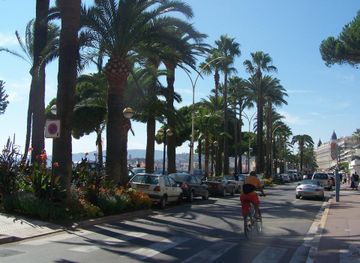
La Croisette is Cannes’s celebrated waterfront district, stretching along the curve of the Baie de Cannes from the Old Port towards Port Pierre Canto. Its defining feature is the broad Boulevard de la Croisette, where a palm-lined promenade separates the Mediterranean from grand hotels, private beaches, restaurants and designer boutiques. The view takes in the Lerins Islands offshore, while the Esterel hills appear beyond the western end of the bay. Although closely associated with film premieres and celebrity culture, the area is also a public seafront used daily for walking, swimming, cycling and watching the changing light across the water.Read more about La Croisette
Hotels, Festivals and Architecture
Everyday Seafront Life
Best attractions in La Croisette
The main attraction of La Croisette is the waterfront itself: a broad palm-lined promenade with open views across the Baie de Cannes to the Lerins Islands and the hills beyond the city. The Palais des Festivals et des Congrès provides the district’s most recognisable event setting, while the beaches offer a choice between public stretches and private clubs attached to the major hotels. The boulevard’s sequence of grand façades, landscaped areas, jetties and marina views makes it rewarding to explore at walking pace rather than as a single photo stop. Inland, Rue d’Antibes adds a busy commercial counterpoint, with cafés, shops and everyday Cannes life close to the seafront. Towards Port Canto, the atmosphere becomes more spacious and yacht-marina oriented, providing a quieter continuation of the promenade without leaving the Croisette’s distinctive coastal setting.
-
Tourist attraction
Musée des explorations du monde
Discover a world of art and history atop Cannes' historic Le Suquet, with panoramic views, diverse collections, and captivating exhibitions for an unforgettable cultural experience.
13 min walk · 1.0 km from neighbourhood centre
-
Tourist attraction
Cannes Walk Of Fame
Stroll the Chemin des Étoiles on Cannes' Boulevard de la Croisette and discover the handprints of film legends, a tribute to the city's iconic film festival and its glamorous allure.
6 min walk · 0.5 km from neighbourhood centre
-
Tourist attraction
La Croisette - Cannes
Experience the epitome of French Riviera glamour on La Croisette, Cannes' legendary promenade, where luxury boutiques meet sun-kissed beaches and cinematic history unfolds along the Mediterranean.
9 min walk · 0.7 km from neighbourhood centre
-
Tourist attraction
Petit Train de Cannes
Discover Cannes' iconic landmarks and hidden gems with a relaxing ride on the Petit Train, offering History, Croisette, and Big Tour options with multilingual audio guides.
13 min walk · 1.0 km from neighbourhood centre


Best landmarks in La Croisette
The Palais des Festivals et des Congrès is La Croisette’s central contemporary landmark and the home of the Festival de Cannes, its broad steps becoming a global image of cinema and red-carpet culture. The boulevard’s grand hotels, including the Carlton Cannes, the Martinez and the Majestic, represent successive phases of Cannes’s resort architecture and the international hospitality industry that developed along the shore. Palm-lined landscaping, historic façades and the long sea wall form an important urban ensemble even where individual buildings have changed. At the eastern end, Port Canto and its marina mark the Croisette’s transition from central resort frontage to a more open harbour landscape. Together these places show how the district’s identity rests on the combination of public seafront, luxury hotels, international events and maritime geography rather than on one isolated monument.
-
Exhibition and trade centre
Palace of Festivals and Congresses of Cannes
Home to the Cannes Film Festival, this iconic venue hosts world-class events and offers stunning views of the French Riviera.
6 min walk · 0.5 km from neighbourhood centre
-
Tourist attraction
Cannes Walk Of Fame
Walk in the footsteps of cinema legends on Cannes' *Chemin des Étoiles*, a tribute to the stars of the silver screen outside the Palais des Festivals.
6 min walk · 0.5 km from neighbourhood centre
-
Promenade
La Croisette - Cannes
Experience the glamour of Cannes on La Croisette, a legendary promenade with luxury boutiques, stunning views, and the famous Palais des Festivals.
9 min walk · 0.7 km from neighbourhood centre
-
Observation deck
Le Suquet, old quarter of Cannes
Discover the soul of Cannes in Le Suquet: a historic hilltop neighborhood with cobbled streets, stunning views, and authentic Provençal charm.
12 min walk · 1.0 km from neighbourhood centre


Explore La Croisette on the map
A handpicked selection of must-see spots in La Croisette, mapped for you.
Best hotels in La Croisette
Best restaurants in La Croisette
Dining on La Croisette is shaped by its position between the Mediterranean and Cannes’s international resort hotels. The seafront offers hotel restaurants, beach-club dining, cafés and polished venues where seafood, Provençal ingredients and Riviera-style dishes sit alongside international menus. Prices and formality vary considerably, so visitors will find a different experience in a grand hotel dining room from that of a casual meal near the inland streets. Rue d’Antibes and the lanes around central Cannes broaden the choice beyond the waterfront, with bakeries, cafés and independent restaurants serving local residents as well as visitors. Menus often reflect the region through ingredients such as fish, shellfish, olive oil, vegetables and herbs, although the district is not limited to Provençal cooking. During congresses and the film festival, reservations and crowd levels can change quickly, particularly around the Palais des Festivals.
-
Restaurant
La Mandala - Restaurant - Plage - Croisette Cannes
Discover La Mandala on Cannes' Croisette: A culinary haven blending French and Mediterranean flavors in a vibrant setting.
10 min walk · 0.8 km from neighbourhood centre
-
Restaurant
La Môme Plage
Indulge in exquisite Mediterranean flavors at La Môme Plage while enjoying breathtaking views along Cannes' stunning coastline.
6 min walk · 0.5 km from neighbourhood centre
-
Restaurant
Restaurant Le Vesuvio - Cannes
Experience exquisite Mediterranean cuisine at Restaurant Le Vesuvio on Cannes' iconic Croisette.
12 min walk · 0.9 km from neighbourhood centre
-
Restaurant
La Plage Du Festival
Experience exquisite dining at La Plage Du Festival in Cannes - where culinary artistry meets stunning coastal views.
8 min walk · 0.6 km from neighbourhood centre


Best bars in La Croisette
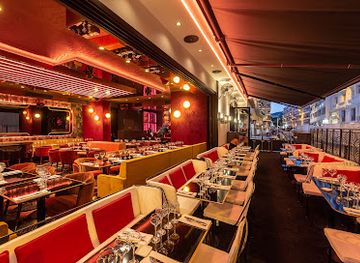
After dark, La Croisette is defined more by hotel bars, beach-club lounges, restaurant terraces and event receptions than by a dense concentration of nightclubs. The Palais des Festivals brings a changing programme of premieres, congress gatherings and private functions, while the major hotels provide some of the district’s most established evening meeting places. Along the waterfront, lighting, sea views and late dining create a more polished atmosphere than the informal bar streets found elsewhere in Cannes. The area around Rue d’Antibes and the centre offers additional cafés and bars within a short walk, although their exact character changes with the season. During the Festival de Cannes and major trade events, access may be controlled and venues can be busy with accredited guests, so the public promenade often provides the simplest way to experience the evening energy.
-
Bar
La Mandala - Restaurant - Plage - Croisette Cannes
Experience the perfect blend of French and Mediterranean cuisine at La Mandala, a vibrant restaurant on Cannes' iconic Croisette, offering stunning sea views.
10 min walk · 0.8 km from neighbourhood centre
-
Restaurant
Le Speakeasy Cannes
Experience the vibrant fusion of flavors and rhythms at Le Speakeasy Cannes, where dining meets nightlife in a stunning setting.
12 min walk · 0.9 km from neighbourhood centre
-
Cocktail bar
La Belle Epoque
Experience the best of Cannes nightlife at La Belle Epoque, a stylish cocktail bar offering exquisite drinks and delectable tapas in a chic ambiance.
4 min walk · 0.3 km from neighbourhood centre
-
Cocktail bar
Harry's Bar Cannes
Experience the elegance of Harry's Bar in Cannes, where exquisite cocktails and stunning views of the French Riviera await you.
5 min drive · 1.8 km from neighbourhood centre


Best nightclubs in La Croisette
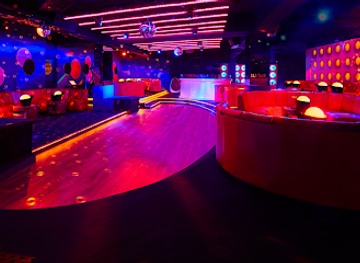
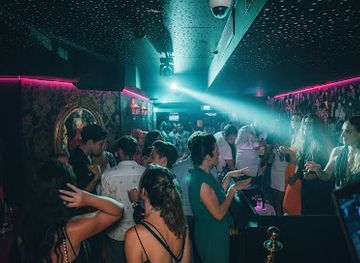
After dark, La Croisette is defined more by hotel bars, beach-club lounges, restaurant terraces and event receptions than by a dense concentration of nightclubs. The Palais des Festivals brings a changing programme of premieres, congress gatherings and private functions, while the major hotels provide some of the district’s most established evening meeting places. Along the waterfront, lighting, sea views and late dining create a more polished atmosphere than the informal bar streets found elsewhere in Cannes. The area around Rue d’Antibes and the centre offers additional cafés and bars within a short walk, although their exact character changes with the season. During the Festival de Cannes and major trade events, access may be controlled and venues can be busy with accredited guests, so the public promenade often provides the simplest way to experience the evening energy.
-
Night club
Le Speakeasy Cannes
Discover the ultimate nightlife experience at Le Speakeasy Cannes, where exquisite dining meets vibrant entertainment in a stylish ambiance.
12 min walk · 0.9 km from neighbourhood centre
-
Night club
Bisous Bisous Club
Discover the vibrant nightlife of Cannes at Bisous Bisous Club, where dancing and exquisite cocktails create an unforgettable evening.
7 min walk · 0.5 km from neighbourhood centre
-
Night club
Club - Au Son des Guitares
Discover the electrifying nightlife of Cannes at Au Son des Guitares, where the music never stops and the dance floor awaits.
4 min walk · 0.3 km from neighbourhood centre
-
Night club
NAYA
Experience the vibrant nightlife of Cannes at NAYA, where music and dance come alive in a chic and electrifying atmosphere.
4 min walk · 0.3 km from neighbourhood centre

Best shops in La Croisette
Shopping on La Croisette is concentrated around luxury fashion, jewellery, watches, beauty and resort accessories, particularly along the central boulevard and the streets immediately inland. The grand hotels and high-end boutiques give this part of Cannes an international retail profile, while Rue d’Antibes provides a broader commercial environment with fashion chains, independent shops, cafés and practical everyday services. The distinction is useful: the Croisette is primarily a showcase for prestigious brands and polished window displays, whereas the inland streets feel more integrated into the city’s ordinary shopping life. Seasonal resort goods, sunglasses, swimwear and Riviera-inspired clothing are prominent, but visitors should not expect a traditional food market or craft quarter on the boulevard itself. Retail activity becomes less concentrated towards Port Canto, where the marina and waterfront outlook take precedence over continuous commercial frontage.
-
Department store
Galeries Lafayette Cannes
Discover the elegance of Galeries Lafayette Cannes, a luxury shopping destination offering the finest in fashion, beauty, and lifestyle products.
4 min walk · 0.3 km from neighbourhood centre
-
Clothing store
CHANEL CANNES
Discover the epitome of luxury shopping at CHANEL Cannes, where elegance meets exceptional craftsmanship in fashion and accessories.
5 min walk · 0.4 km from neighbourhood centre
-
Clothing store
Dior
Experience luxury fashion at Dior in Cannes, where haute couture meets the stunning backdrop of the French Riviera.
5 min walk · 0.4 km from neighbourhood centre
-
Clothing store
BALENCIAGA
Experience luxury fashion at Balenciaga in Cannes, where elegance meets contemporary design on the iconic Boulevard de la Croisette.
6 min walk · 0.5 km from neighbourhood centre


La Croisette essentials
Getting There
Getting Around
Safety
Emergency Situations
Do's and Don'ts
Local Tips

From Eve
Local phrases worth knowing
You don't need to get them perfect. A few words go a long way, and locals appreciate the effort.
Basics
| English | Local | Say it |
|---|---|---|
| Hello | Bonjour | [bohn-zhoor] |
| Goodbye | Au revoir | [oh ruh-vwahr] |
| Yes | Oui | [wee] |
| No | Non | [nohn] |
| Please/You're welcome | S'il vous plaît | [seel voo pleh] |
| Thank you | Merci | [mehr-see] |
| Excuse me/Sorry | Excusez-moi | [ehk-skew-zay mwah] |
| How are you? | Comment ça va? | [koh-mohn sah vah] |
| Fine. And you? | Bien. Et vous? | [byahn. Ay voo] |
| Do you speak English? | Parlez-vous anglais? | [par-lay voo ahn-glay] |
| I don't understand | Je ne comprends pas | [zhuh nuh kohm-prahnd pah] |
Eating & Drinking
| English | Local | Say it |
|---|---|---|
| I'd like to see the menu, please | Je voudrais voir la carte, s'il vous plaît | [zhuh voo-dray vwahr lah kart, seel voo pleh] |
| I don't eat meat | Je ne mange pas de viande | [zhuh nuh mahnj pah duh vyand] |
| Cheers! | Santé! | [sahn-tay] |
| I would like to pay, please | Je voudrais payer, s'il vous plaît | [zhuh voo-dray pay-ay, seel voo pleh] |
Emergencies
| English | Local | Say it |
|---|---|---|
| Help! | À l'aide! | [ah layd] |
| Go away! | Allez-vous-en! | [al-lay voo zahn] |
| Call the Police! | Appelez la police! | [ah-play lah poh-lees] |
| Call a doctor! | Appelez un médecin! | [ah-play uh mayd-sahn] |
| I'm lost | Je suis perdu | [zhuh swee pair-doo] |
| I'm ill | Je suis malade | [zhuh swee mah-lahd] |
Shopping
| English | Local | Say it |
|---|---|---|
| I'd like to buy... | Je voudrais acheter... | [zhuh voo-dray ash-tay...] |
| I'm just looking | Je regarde juste | [zhuh ruh-gard zhust] |
| How much is it? | Combien ça coûte? | [kohm-byen sah koot] |
| That's too expensive | C'est trop cher | [say troh shair] |
| Can you lower the price? | Pouvez-vous baisser le prix? | [poo-vay voo beh-say luh pree] |
Time & Numbers
| English | Local | Say it |
|---|---|---|
| What time is it? | Quelle heure est-il? | [kehl uhr ay teel] |
| It's one o'clock | Il est une heure | [eel ay oon uhr] |
| Half past (10) | Dix heures et demi | [dees uhr ay dem-ee] |
| Morning | Matin | [mah-tahn] |
| Afternoon | Après-midi | [ah-pray mee-dee] |
| Evening | Soir | [swahr] |
| Yesterday | Hier | [yehr] |
| Today | Aujourd'hui | [oh-zhoor-dwee] |
| Tomorrow | Demain | [duh-man] |
| 1 | Un | [uhn] |
| 2 | Deux | [duh] |
| 3 | Trois | [trwah] |
| 4 | Quatre | [kat] |
| 5 | Cinq | [sank] |
| 6 | Six | [sees] |
| 7 | Sept | [set] |
| 8 | Huit | [wheet] |
| 9 | Neuf | [nuf] |
| 10 | Dix | [dees] |
Transport & Directions
| English | Local | Say it |
|---|---|---|
| Where's a/the...? | Où est... | [oo ay...] |
| What's the address? | Quelle est l'adresse? | [kehl ay lah-dress] |
| Can you show me (on the map)? | Pouvez-vous me montrer (sur la carte)? | [poo-vay voo muh mohn-tray (soor lah kart)] |
| When's the next (bus)? | Quand est le prochain (bus)? | [kahnd ay luh proh-shahn (boos)] |
| A ticket (to ....) | Un billet (pour ....) | [uhn bee-yay (poor)] |
History of La Croisette
From Coastal Track to Promenade
Before its transformation into a resort boulevard, the Croisette was a coastal route leading towards the small cross, or croisette, associated with the headland at the eastern end of the bay. Cannes’s early visitors used the shoreline and surrounding paths for sea views, while the area remained far less built up than the town around the old port. The movement from rural margins to public promenade reflected the nineteenth-century growth of Cannes as an international winter destination. As visitors arrived from Britain and northern Europe, investment gradually turned the waterfront into a formal urban landscape of roads, gardens, bathing facilities and resort residences.
The Resort Boulevard Emerges
During the second half of the nineteenth century, the seafront was progressively laid out as the Promenade de la Croisette and then developed with hotels, villas and landscaped public spaces. The new boulevard connected the older town near the harbour with the eastern shore and gave affluent visitors a place to promenade beside the Mediterranean. Large resort hotels and residences established the architectural and social character still associated with the district. The building of the railway to Cannes in the 1860s strengthened the town’s accessibility, helping turn the Croisette from a coastal edge into the principal showcase of the growing resort.
Hotels and Modern Resort Life
The early twentieth century brought further hotel construction and a more international scale of resort life. Buildings such as the Carlton, opened in 1913, expressed the grand hotel culture of the Belle Époque, while the boulevard became a setting for seasonal social life, public bathing and increasingly sophisticated tourism. Wartime disruption affected Cannes, as it did the wider French Riviera, but the Croisette retained its role as the town’s principal waterfront address. Successive renovations and new construction introduced modern buildings alongside older façades, creating the mixture of historic resort architecture and later commercial development visible today.
The Festival Establishes a New Identity
The first Festival de Cannes was held in 1946, and the event soon became closely associated with the Palais des Festivals and the Croisette. The original Palais stood near the waterfront before the current Palais des Festivals et des Congrès opened in 1982 at the western end of the boulevard. Film screenings, premieres and press activity gave the district a global cultural profile, adding an international media calendar to its established identity as a luxury resort. The Croisette thereafter operated simultaneously as a public promenade, a hotel district and one of Europe’s most recognisable settings for major film and business events.
A Contemporary Waterfront
In recent decades, La Croisette has continued to evolve through hotel restorations, beach improvements, retail change and public-realm projects intended to manage heavy seasonal use. Its identity remains dependent on several overlapping functions: the Festival de Cannes, international congresses, luxury hospitality, everyday seaside recreation and the marina landscape towards Port Canto. The district can therefore feel intensely event-driven at certain times and comparatively relaxed at others. Its contemporary significance lies less in a single architectural period than in the way a nineteenth-century resort promenade continues to accommodate global cultural events, local public life and Mediterranean leisure.
La Croisette in Photos
Browse through our photo collection highlighting the charm and character of the destination.
Neighbourhoods near La Croisette
The closest neighbourhoods to La Croisette, if you have time for more than one stop.
-

-


Swipe for more neighbourhoods
Explore more
Explore more of Cannes
Cannes, France blends Riviera beaches, film history, Old Town streets, Provençal markets and island escapes with elegant Mediterranean sightseeing.
Explore Cannes