

Pont du Gard Travel Guide
Free Guide: Marvel at the Pont du Gard, an ancient Roman aqueduct bridge and UNESCO World Heritage site near Nîmes, France. A testament to Roman engineering.


A brief summary of Pont du Gard
Marvel at the Pont du Gard, an ancient Roman aqueduct bridge and UNESCO World Heritage site near Nîmes, France. A testament to Roman engineering.
The Pont du Gard is an ancient Roman aqueduct bridge constructed in the 1st century AD to carry water to the city of Nîmes. A UNESCO World Heritage site, this architectural marvel stands as a testament to Roman engineering prowess.
Opening hours
- Every day8 am–12 am
Opening hours as listed on the venue’s Google Business Profile. Hours can change for services and special events, so check with the venue before you go.
- Address
- 30210 Vers-Pont-du-Gard
- Phone
- Website
Getting there
Public Transport
Car
Discover more about Pont du Gard
Overview
The Pont du Gard, a magnificent Roman aqueduct bridge, stands as a lasting symbol of Roman engineering and architectural skill. Constructed in the 1st century AD, around 19 BCE, this impressive structure was built to carry water over 50 km to the Roman colony of Nemausus, now Nîmes, France. The aqueduct ensured a reliable water supply of 30,000 to 40,000 cubic meters daily for the city's inhabitants, baths, fountains, and gardens.Rising to a height of 48 meters (160 feet), the Pont du Gard is the highest Roman aqueduct bridge and a true engineering feat. The bridge consists of three tiers of arches, with the longest tier measuring 275 meters. The first tier has 6 arches, the second has 11 arches, and the third, which carries the water conduit (specus), has 35 smaller arches. The structure was built without mortar, showcasing the precision of Roman construction.For centuries, the Pont du Gard has attracted visitors drawn to its historical significance and architectural beauty. It became a popular stop for travelers and a symbol of French national pride. In 1985, UNESCO recognized its outstanding universal value by adding it to the list of World Heritage Sites. Today, visitors can explore the bridge, walk along the riverbanks, and discover the remains of the Roman structure. The site also offers a museum, cinema, and children's play area, providing an immersive experience into the history and engineering of this ancient marvel.
Evendo Review Centre
 Google
Guest reviews
Explore Pont du Gard on the map
A handpicked selection of must-see spots near Pont du Gard, mapped for you.
Get your free copy of our complete guide to Pont du Gard, delivered straight to you.
Everything on this page, from opening hours and how to get there to Eve’s tips and the best time to go, in one PDF you can read offline, print or share.
Already have an account? Sign in
Your Pont du Gard guide is ready.
We'll send it to · Not you? Sign out

Getting your guide ready…
We are putting together a fresh copy of the Pont du Gard guide. This can take up to a minute.
This can take a few moments. If your browser asks, choose Allow so the download can start. You'll find the guide in your Downloads folder.
Nothing happened? Download it again
Sorry, the guide is taking longer than usual. Please try again in a minute, or get it by email instead.
Unlock the best of Pont du Gard
Skip-the-line tickets, guided tours with entry, and walking tours of the area, booked in a few clicks.
 Tour with entry
Saint Remy, les Baux de Provence & Pont du Gard from Avignon
from $94.87 Tour with entry
Tour of Avignon, St Remy, Les Baux et Pont du Gard from Avignon
from $158.82 Tour with entry
Visit Provence in one day from Avignon
from $169.48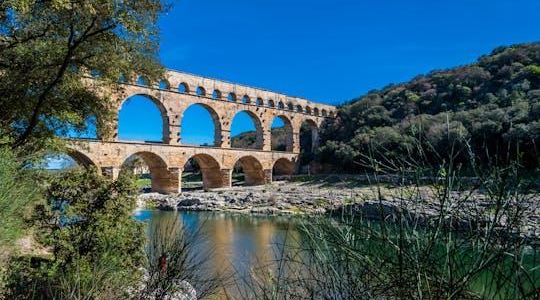 Tour with entry
Roman sites and historic places in Provence
from $169.48


Other nearby places you may find interesting
The closest places of the same kind, if this one is not quite what you had in mind.
-
-
-
-
-


Swipe for more places
More to explore near Pont du Gard

 Best experiences near Pont du Gard
 Best hotels near Pont du Gard
 Best landmarks near Pont du Gard
 Best attractions near Pont du Gard
 Best shops near Pont du Gard
 Best restaurants near Pont du Gard
 Best bars near Pont du Gard
Do you manage this location?
Take control to get all the benefits, like improved information, better appearance, and stronger visibility across AI-powered discovery.
Explore more

Explore more of Languedoc-Roussillon
Discover Languedoc-Roussillon: where Mediterranean beaches, historic treasures, and exquisite wines create an unforgettable French escape.
Explore Languedoc-Roussillon
Explore more of France
Explore France: A land of romance, history, and unparalleled beauty, from the iconic streets of Paris to the serene landscapes of Provence and the luxury of the French Riviera.
Explore France
