

Arles Arena Travel Guide
Free Guide: Step back in time at the Arles Arena, a remarkably preserved Roman amphitheater hosting bullfights and concerts, offering a unique blend of history and entertainment in the heart of Provence.


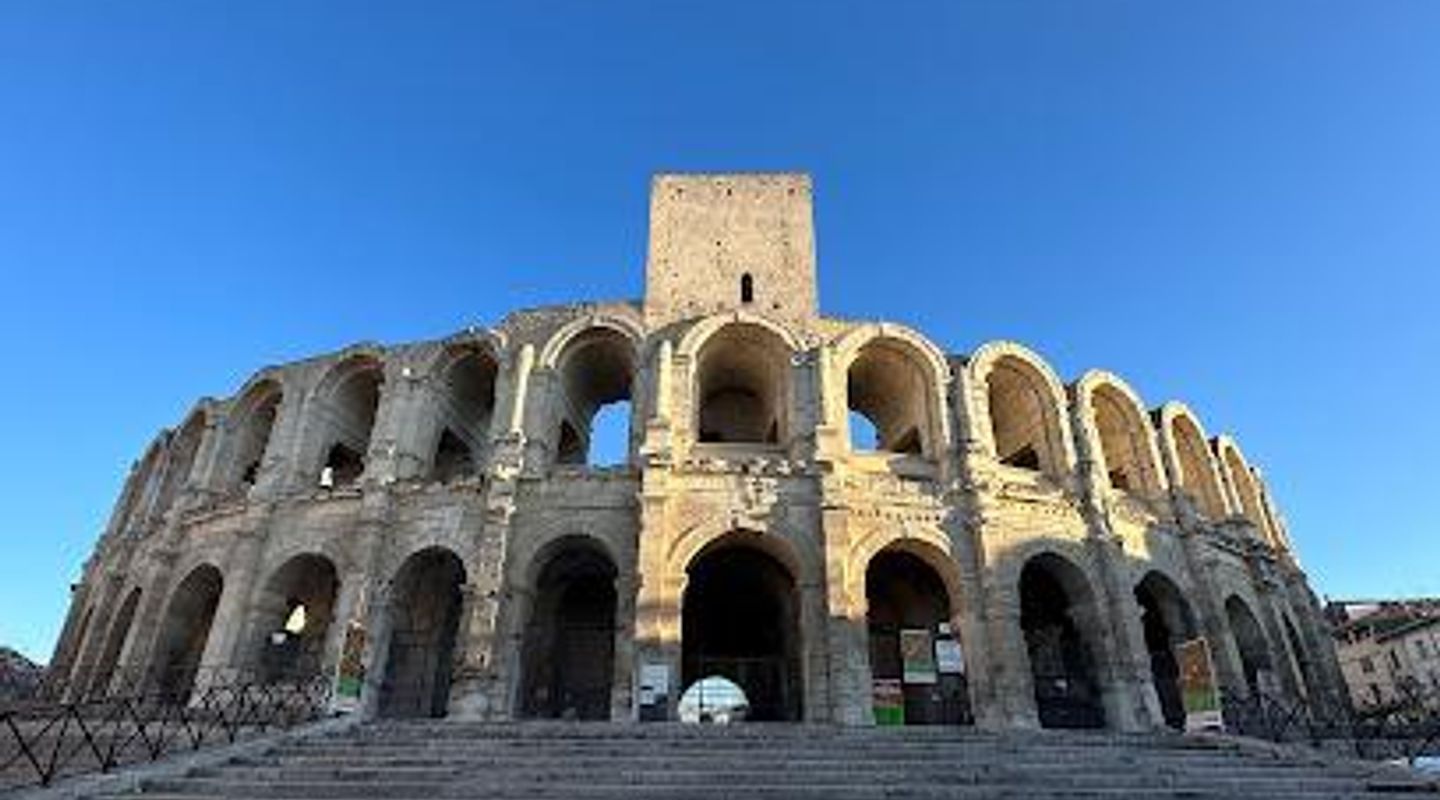
A brief summary of Arles Arena
Step back in time at the Arles Arena, a remarkably preserved Roman amphitheater hosting bullfights and concerts, offering a unique blend of history and entertainment in the heart of Provence.
The Arles Arena, or Arènes d'Arles, is a remarkably preserved Roman amphitheater that stands as a testament to Arles' rich history. Built around 90 AD, this impressive structure once hosted over 20,000 spectators for gladiatorial contests and public spectacles. Today, it continues to host events, including bullfights and concerts, offering a unique blend of ancient history and modern entertainment. Its well-preserved architecture and historical significance make it a must-see attraction for anyone visiting Arles, providing a tangible link to the Roman Empire's influence in the region. Explore the arena's corridors and imagine the roar of the crowds, or attend a contemporary event to experience its enduring vibrancy. The Arles Arena is more than just a historical site; it's a living monument that connects the past with the present.
Opening hours
- Every day10:30 am–4:30 pm
Opening hours as listed on the venue’s Google Business Profile. Hours can change for services and special events, so check with the venue before you go.
- Address
- 1 Rdpt des Arènes, 13200 Arles
- Phone
- Website
Getting there
Walking
Public Transport
Taxi/Ride-Share
Driving
Discover more about Arles Arena
Overview
The Arles Arena, known locally as Les Arènes d'Arles, is an iconic symbol of the city's Roman heritage and one of the best-preserved Roman amphitheaters in the world. Constructed around 90 AD, during the reign of Emperor Domitian, it reflects the grandeur and engineering prowess of the Roman Empire. Inspired by the Colosseum in Rome, the Arles Arena was designed to accommodate over 20,000 spectators who gathered to witness gladiatorial combats, animal hunts, and public executions. The arena's architecture is a marvel in itself. Measuring 136 meters in length and 109 meters in width, its elliptical structure features two tiers of arcades, comprising 60 arches each. These arches, constructed from local limestone, provide both structural support and aesthetic appeal. The design incorporates a complex system of staircases, corridors, and galleries that facilitated the efficient movement of large crowds. The arena's central space, the sand-covered area where the spectacles took place, is surrounded by tiered seating, offering excellent views from every vantage point. During the 5th century, with the decline of the Roman Empire, the arena underwent a transformation. It was converted into a fortified settlement, providing refuge for the local population during turbulent times. Over 200 houses, along with two chapels, were built within its walls, turning the arena into a self-contained village. The four towers that still stand atop the structure today were added during this period, enhancing its defensive capabilities. This residential use continued for centuries, altering the arena's original purpose but preserving its structure through the ages. In the 19th century, a movement to restore the arena to its former glory began, spearheaded by the writer Prosper Mérimée. The process of expropriating the houses within the arena started in 1826 and was completed by 1830. The first event held after the restoration was a bull race, celebrating the capture of Algiers, marking the arena's return to its original function as a venue for public spectacles. In 1840, the arena was classified as a historical monument, ensuring its preservation for future generations. It was later recognized as a UNESCO World Heritage Site in 1981, as part of the Arles, Roman and Romanesque Monuments group. Today, the Arles Arena continues to be a vibrant part of the city's cultural life. It hosts a variety of events, including bullfights, theatrical performances, and concerts, drawing both locals and tourists alike. The bullfights, particularly during the Feria d'Arles, are a significant part of the region's tradition, showcasing the skills of the matadors and the bravery of the bulls. The arena also serves as a stunning backdrop for musical performances, with its ancient stones resonating with the sounds of contemporary artists. Visiting the Arles Arena offers a unique opportunity to step back in time and experience the grandeur of the Roman Empire. Walking through its corridors, one can almost hear the echoes of the past, the cheers of the crowds, and the clash of gladiators. The arena provides a tangible connection to history, allowing visitors to imagine what life was like in Roman Gaul. Climbing to the top of the arena provides panoramic views of Arles, with its terracotta rooftops and winding streets, offering a breathtaking perspective of the city. The Arles Arena is more than just a historical monument; it is a living, breathing part of Arles' identity. It stands as a symbol of the city's resilience, its ability to adapt and transform while preserving its rich heritage. Whether you are a history enthusiast, a culture seeker, or simply a traveler looking for a unique experience, the Arles Arena is a destination that will leave a lasting impression. Its enduring presence is a testament to the power of human ingenuity and the enduring appeal of the past. Accessibility to the Arles Amphitheater is somewhat challenging for individuals with reduced mobility, with only a small section being accessible and the terrain being uneven. However, efforts are continuously being made to improve accessibility and ensure that as many visitors as possible can enjoy this remarkable site. The arena is open year-round, with varying hours depending on the season, allowing visitors to experience its magic at any time of the year. A visit to the Arles Arena is an unforgettable journey through time, offering a glimpse into the heart of Roman history and the soul of Provence. The arena's location in the heart of Arles makes it easily accessible to visitors. It is surrounded by charming cafes, restaurants, and shops, allowing for a seamless integration into a day of exploration. The nearby Place de la République, with its impressive architecture and vibrant atmosphere, is a perfect complement to a visit to the arena. Together, they form the core of Arles' historical center, offering a rich and immersive experience for all who venture there. The Arles Arena is not just a monument to the past; it is a vibrant part of the present and a legacy for the future. Its enduring presence in the heart of Arles is a testament to the city's rich history and its commitment to preserving its cultural heritage. Whether you are attending a bullfight, a concert, or simply exploring its ancient stones, the Arles Arena is an experience that will stay with you long after you leave.
Evendo Review Centre
 Google
Guest reviews
Explore Arles Arena on the map
A handpicked selection of must-see spots near Arles Arena, mapped for you.
Get your free copy of our complete guide to Arles Arena, delivered straight to you.
Everything on this page, from opening hours and how to get there to Eve’s tips and the best time to go, in one PDF you can read offline, print or share.
Already have an account? Sign in
Your Arles Arena guide is ready.
We'll send it to · Not you? Sign out

Getting your guide ready…
We are putting together a fresh copy of the Arles Arena guide. This can take up to a minute.
This can take a few moments. If your browser asks, choose Allow so the download can start. You'll find the guide in your Downloads folder.
Nothing happened? Download it again
Sorry, the guide is taking longer than usual. Please try again in a minute, or get it by email instead.
Unlock the best of Arles Arena
Skip-the-line tickets, guided tours with entry, and walking tours of the area, booked in a few clicks.
 Tour with entry
Arles Walking Tour with Audioguide on your Smartphone
from $10.65 Tour with entry
Arles Vincent Van Gogh Self Guided Walking Tour with an APP
from $12.34 Tour with entry
Private Guided Tour of Arles Roman Monuments and Van Gogh Trail
from $426.54 Tour with entry
Arles Private Historic Walking Tour
from $479.86


Other nearby places you may find interesting
The closest places of the same kind, if this one is not quite what you had in mind.
-
-
-
-
-


Swipe for more places
More to explore near Arles Arena

 Best experiences near Arles Arena

 Best hotels near Arles Arena

 Best landmarks near Arles Arena

 Best attractions near Arles Arena

 Best shops near Arles Arena

 Best restaurants near Arles Arena

 Best bars near Arles Arena
Do you manage this location?
Take control to get all the benefits, like improved information, better appearance, and stronger visibility across AI-powered discovery.
Explore more
Explore more of Languedoc
Discover Languedoc, a stunning region in Southern France, filled with medieval castles, vibrant vineyards, pristine beaches, and rich cultural heritage.
Explore Languedoc
Explore more of France
Explore France: A land of romance, history, and unparalleled beauty, from the iconic streets of Paris to the serene landscapes of Provence and the luxury of the French Riviera.
Explore France
