

Pont du Gard Travel Guide
Free Guide: Marvel at the Pont du Gard, an iconic Roman aqueduct bridge, a UNESCO World Heritage site showcasing ancient engineering and offering a blend of history, culture, and natural beauty in southern France.


A brief summary of Pont du Gard
Marvel at the Pont du Gard, an iconic Roman aqueduct bridge, a UNESCO World Heritage site showcasing ancient engineering and offering a blend of history, culture, and natural beauty in southern France.
The Pont du Gard, a magnificent Roman aqueduct bridge near Vers-Pont-du-Gard, France, is a testament to ancient engineering prowess and architectural brilliance. Built in the 1st century AD, this UNESCO World Heritage site stands as the highest Roman aqueduct bridge in the world, a vital component of the 50-kilometer aqueduct that supplied water to the Roman colony of Nemausus (Nîmes). Its three tiers of arches, constructed without mortar, rise 48 meters above the Gardon River, a breathtaking sight that has captivated visitors for centuries. Beyond its historical significance, the Pont du Gard offers a multifaceted experience, inviting exploration of its museum, scenic walking trails, and the refreshing waters of the Gardon, making it a must-see destination for history buffs and nature enthusiasts alike. The site is pedestrian-friendly, encouraging visitors to wear comfortable shoes to explore the natural and cultural surroundings.
Opening hours
- Every day8 am–12 am
Opening hours as listed on the venue’s Google Business Profile. Hours can change for services and special events, so check with the venue before you go.
- Address
- 30210 Vers-Pont-du-Gard
- Phone
- Website
Getting there
Walking
Public Transport
Taxi/Ride-Share
Driving
Discover more about Pont du Gard
Overview
The Pont du Gard, an awe-inspiring Roman aqueduct bridge, graces the landscape near Vers-Pont-du-Gard in southern France. This UNESCO World Heritage site is not merely a bridge; it's a symbol of Roman ingenuity, a feat of engineering that has stood the test of time for two millennia. Constructed in the 1st century AD, the Pont du Gard was a crucial element of a sophisticated aqueduct system designed to transport fresh water over 50 kilometers from the springs near Uzès to the thriving Roman city of Nemausus, now known as Nîmes. Imagine a bustling Roman city, its population expanding, demanding a reliable water source for its citizens, bathhouses, fountains, and gardens. The Nemausus spring alone could no longer meet these needs. Thus, the Romans embarked on an ambitious project: to build an aqueduct that would traverse the challenging terrain and deliver a constant flow of water to Nîmes. The Gardon River presented a significant obstacle, and the solution was the Pont du Gard. The bridge soars to a height of 48 meters (155 feet), a three-tiered structure of massive stone blocks meticulously fitted together without the use of mortar. This architectural marvel comprises three levels of arches, with the longest level stretching 275 meters. The aqueduct itself, a channel measuring approximately 1.8 meters high and 1.2 meters wide, sits atop the third level. The precision of the Roman engineers is astounding; the entire aqueduct system, spanning 50 kilometers, has a gradient of only 17 meters, ensuring a consistent and controlled flow of water. The Pont du Gard's construction is a testament to Roman engineering prowess and a public utilities project meant to show the superiority of Roman urban civilization. It is estimated that it took only five years to complete this remarkable structure, a relatively short period considering the scale and complexity of the project. The aqueduct supplied Nîmes with approximately 200,000 cubic meters (44 million gallons) of water per day, a volume sufficient to meet the needs of a large city. The aqueduct remained in use for centuries, providing Nîmes with a vital water supply until the 6th century. Over time, mineral deposits and debris accumulated within the channel, gradually reducing the flow of water. After the fall of the Roman Empire, the aqueduct fell into disuse, but the Pont du Gard itself remained largely intact. In the Middle Ages, the Pont du Gard served as a toll bridge, with local lords and bishops responsible for its upkeep and collecting tolls from travelers crossing the river. Some of its stones were looted over time, and the bridge suffered damage in the 17th century. However, the Pont du Gard's inherent strength and durability allowed it to withstand the ravages of time and human interference. In the 18th century, a road bridge was added alongside the first level of the aqueduct, providing a more convenient means of crossing the Gardon River. This addition allowed for continued use of the site while preserving the ancient structure. Today, the Pont du Gard is a major tourist destination, attracting visitors from around the globe. The site offers a variety of activities and attractions, including a museum that explores the history of the aqueduct and Roman civilization, a cinema that screens documentaries about the Pont du Gard, and the Ludo area, a play space designed for children. Visitors can also explore the surrounding landscape via scenic walking trails, swim in the Gardon River, or simply marvel at the grandeur of the aqueduct from various vantage points. The Pont du Gard has survived several severe floods over the centuries, a testament to its robust construction. In 1958, the entire lower tier was submerged by a massive flood, and subsequent floods in 1998 and 2002 caused further damage to the surrounding area. Despite these challenges, the Pont du Gard continues to stand tall, a symbol of human resilience and engineering brilliance. The Pont du Gard was added to UNESCO's list of World Heritage Sites in 1985, recognized for its exceptional preservation, historical importance, and architectural ingenuity. The UNESCO designation highlights the bridge's significance as a testament to human creative genius and its role in preserving cultural traditions. Visiting the Pont du Gard is an immersive experience that transports you back in time to the Roman era. As you stand in the shadow of this magnificent structure, you can't help but marvel at the vision and skill of the Roman engineers who conceived and built it. The Pont du Gard is more than just a bridge; it's a symbol of human achievement, a reminder of the enduring power of innovation and ingenuity. The site is open year-round, with varying hours depending on the season. Comfortable walking shoes are recommended, as the site involves walking on uneven terrain. In the summer months, be sure to bring sunscreen, a hat, and plenty of water, as temperatures can be high. Whether you're a history buff, an architecture enthusiast, or simply looking for a breathtaking sight, the Pont du Gard is sure to leave a lasting impression.
Evendo Review Centre
 Google
Guest reviews
Explore Pont du Gard on the map
A handpicked selection of must-see spots near Pont du Gard, mapped for you.
Get your free copy of our complete guide to Pont du Gard, delivered straight to you.
Everything on this page, from opening hours and how to get there to Eve’s tips and the best time to go, in one PDF you can read offline, print or share.
Already have an account? Sign in
Your Pont du Gard guide is ready.
We'll send it to · Not you? Sign out

Getting your guide ready…
We are putting together a fresh copy of the Pont du Gard guide. This can take up to a minute.
This can take a few moments. If your browser asks, choose Allow so the download can start. You'll find the guide in your Downloads folder.
Nothing happened? Download it again
Sorry, the guide is taking longer than usual. Please try again in a minute, or get it by email instead.
Unlock the best of Pont du Gard
Skip-the-line tickets, guided tours with entry, and walking tours of the area, booked in a few clicks.
 Tour with entry
Saint Remy, les Baux de Provence & Pont du Gard from Avignon
from $95.04 Tour with entry
Tour of Avignon, St Remy, Les Baux et Pont du Gard from Avignon
from $159.11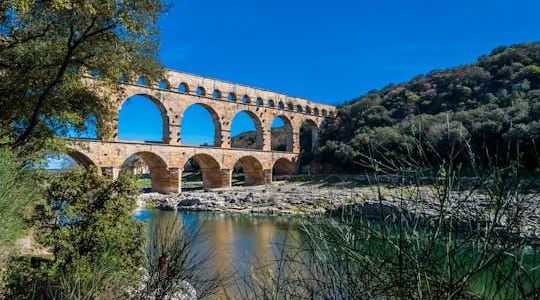 Tour with entry
Roman sites and historic places in Provence
from $169.78 Tour with entry
Visit Provence in one day from Avignon
from $169.78


Other nearby places you may find interesting
The closest places of the same kind, if this one is not quite what you had in mind.
-
-
-
-
-


Swipe for more places
More to explore near Pont du Gard

 Best experiences near Pont du Gard

 Best hotels near Pont du Gard

 Best landmarks near Pont du Gard

 Best attractions near Pont du Gard

 Best shops near Pont du Gard

 Best restaurants near Pont du Gard

 Best bars near Pont du Gard
Do you manage this location?
Take control to get all the benefits, like improved information, better appearance, and stronger visibility across AI-powered discovery.
Explore more
Explore more of Languedoc
Discover Languedoc, a stunning region in Southern France, filled with medieval castles, vibrant vineyards, pristine beaches, and rich cultural heritage.
Explore Languedoc
Explore more of France
Explore France: A land of romance, history, and unparalleled beauty, from the iconic streets of Paris to the serene landscapes of Provence and the luxury of the French Riviera.
Explore France
