

Centre Ville (Lille) Travel Guide - Free
Explore Centre Ville in Lille with Evendo's free guide. Find the best shops, historic streets, restaurants, and gems on web or mobile.


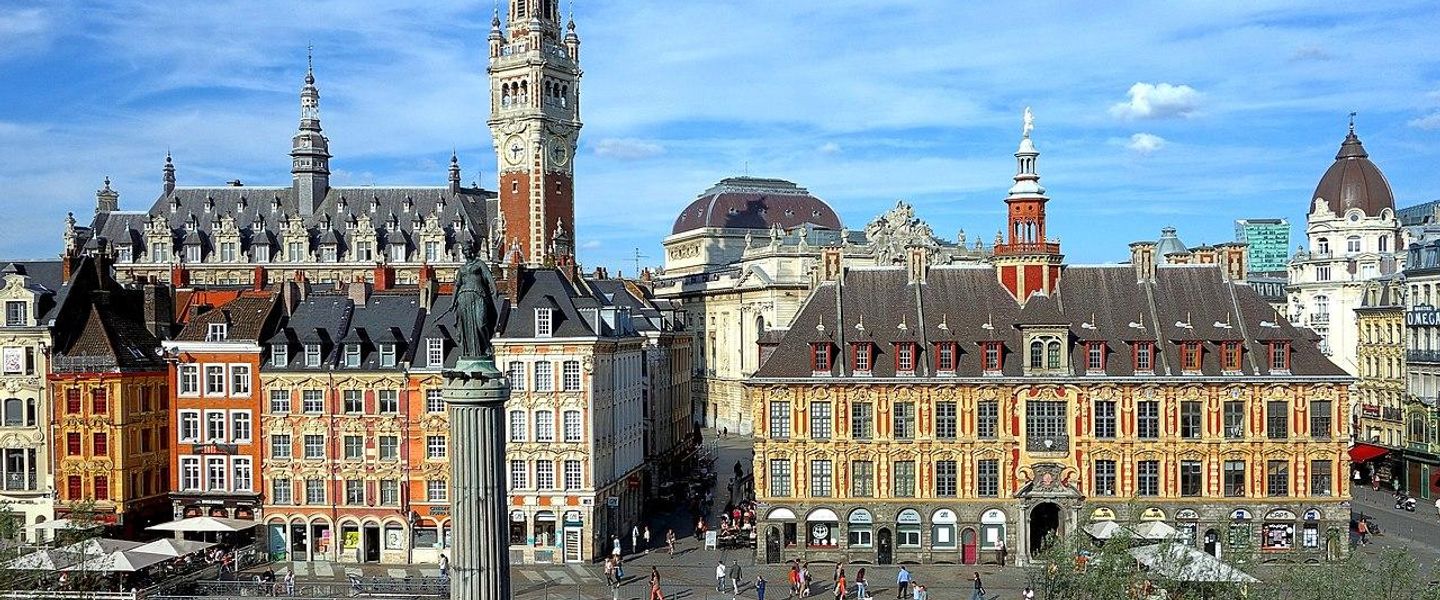


Centre Ville Lille brings together Grand’Place, Flemish architecture, major museums, shopping streets, cafés and easy walks through historic central France.
Historic Centre and City Life
Centre Ville is Lille’s practical and ceremonial core, extending around the Grand’Place, Place Rihour, Place de la République and the shopping streets leading towards the main railway stations. It is not identical to Vieux Lille, the historic quarter immediately to the north, although the two areas meet naturally along the Grand’Place and the approaches to the old town. Here, Lille’s layered identity is visible in Flemish façades, French civic architecture, nineteenth-century commercial streets and the polished contemporary district around Lille-Europe.Read more about Centre Ville
Architecture, Museums and Public Spaces
Everyday Lille
Explore Centre Ville on the map
A handpicked selection of must-see spots in Centre Ville, mapped for you.
Best hotels in Centre Ville
Centre Ville essentials
Getting There
Getting Around
Safety
Emergency Situations
Do's and Don'ts
Local Tips

From Eve
Local phrases worth knowing
You don't need to get them perfect. A few words go a long way, and locals appreciate the effort.
Basics
| English | Local | Say it |
|---|---|---|
| Hello | Bonjour | [bohn-zhoor] |
| Goodbye | Au revoir | [oh ruh-vwahr] |
| Yes | Oui | [wee] |
| No | Non | [nohn] |
| Please/You're welcome | S'il vous plaît/De rien | [see voo pleh / duh ryehn] |
| Thank you | Merci | [mehr-see] |
| Excuse me/Sorry | Excusez-moi/Désolé | [ehk-skew-zay mwah / day-zoh-lay] |
| How are you? | Comment ça va? | [koh-mohn sah vah] |
| Fine. And you? | Bien. Et vous? | [byen. ay voo] |
| Do you speak English? | Parlez-vous anglais? | [pahr-lay voo ahn-glay] |
| I don't understand | Je ne comprends pas | [zhuh nuh kohm-prahnd pah] |
Eating & Drinking
| English | Local | Say it |
|---|---|---|
| I'd like to see the menu, please | Je voudrais voir le menu, s'il vous plaît | [zhuh voo-dray vwahr luh meh-noo, see voo pleh] |
| I don't eat meat | Je ne mange pas de viande | [zhuh nuh mahnj pah duh vyand] |
| Cheers! | Santé! | [sahn-tay] |
| I would like to pay, please | Je voudrais payer, s'il vous plaît | [zhuh voo-dray pay-ay, see voo pleh] |
Emergencies
| English | Local | Say it |
|---|---|---|
| Help! | Au secours! | [oh suh-koor] |
| Go away! | Allez-vous en! | [ah-lay vooz ahn] |
| Call the Police! | Appelez la police! | [ah-pleh la poh-lees] |
| Call a doctor! | Appelez un médecin! | [ah-pleh uh may-deh-sahn] |
| I'm lost | Je suis perdu(e) | [zhuh swee pair-doo] |
| I'm ill | Je suis malade | [zhuh swee mah-lahd] |
Shopping
| English | Local | Say it |
|---|---|---|
| I'd like to buy... | Je voudrais acheter... | [zhuh voo-dray ah-shuh-tay] |
| I'm just looking | Je regarde juste | [zhuh ruh-gard zhuhst] |
| How much is it? | Combien ça coûte? | [kohm-byen sah koot] |
| That's too expensive | C'est trop cher | [say troh shay] |
| Can you lower the price? | Pouvez-vous baisser le prix? | [poo-veh voo bay-say luh pree] |
Time & Numbers
| English | Local | Say it |
|---|---|---|
| What time is it? | Quelle heure est-il? | [kel uhr ay teel] |
| It's one o'clock | Il est une heure | [eel ay oon uhr] |
| Half past (10) | Dix heures et demie | [dees uhr ay duh-mee] |
| Morning | Matin | [mah-tan] |
| Afternoon | Après-midi | [ah-pray mee-dee] |
| Evening | Soir | [swahr] |
| Yesterday | Hier | [yehr] |
| Today | Aujourd'hui | [oh-zhoor-dwee] |
| Tomorrow | Demain | [duh-man] |
| 1 | Un | [uhn] |
| 2 | Deux | [duh] |
| 3 | Trois | [twah] |
| 4 | Quatre | [kah-truh] |
| 5 | Cinq | [sank] |
| 6 | Six | [sees] |
| 7 | Sept | [set] |
| 8 | Huit | [weet] |
| 9 | Neuf | [nuf] |
| 10 | Dix | [dees] |
Transport & Directions
| English | Local | Say it |
|---|---|---|
| Where's a/the...? | Où est...? | [oo ay] |
| What's the address? | Quelle est l'adresse? | [kel ay lad-rehs] |
| Can you show me (on the map)? | Pouvez-vous me montrer (sur la carte)? | [poo-veh voo muh mohn-tray (soor lah kart)] |
| When's the next (bus)? | Quand est le prochain (bus)? | [kahn ay luh proh-shahn (boos)] |
| A ticket (to ....) | Un billet (pour ....) | [uhn bee-yay (poor)] |
History of Centre Ville
A Medieval Market Settlement
Lille’s central area grew around the medieval settlement established between waterways and routes linking Flanders with the French-speaking south. The Grand’Place, historically associated with markets and civic life, became the principal open space of the town, while streets leading towards the surrounding gates connected merchants, artisans and travellers. Lille’s name is generally linked to an island-like site in the marshy Deûle landscape, although the exact early form of the settlement developed over time. The central quarter’s importance came from this combination of trade, administration and access: it was the place where commercial activity, religious foundations and municipal authority met.
Flemish Rule and Civic Grandeur
For much of the Middle Ages and early modern period, Lille belonged to successive political territories of Flanders, Burgundy and the Habsburg Netherlands before becoming part of France in the seventeenth century. The central streets and squares preserve the visual language of that history, particularly in the brick, stone and ornament of buildings around the Grand’Place and the Vieille Bourse. The Palais Rihour, begun in the fifteenth century for the Burgundian rulers, is one of the most tangible reminders of Lille’s princely connections. French administration later reshaped the city, but the commercial centre retained a strongly Flemish architectural character.
Industrial Expansion and New Streets
Lille’s industrial growth during the nineteenth century brought population increase, commercial investment and major changes to the central city. New roads, public buildings, railway connections and department stores strengthened Centre Ville’s role as the metropolitan shopping and transport hub. The arrival of railways created the setting for Lille-Flandres station and the streets leading from it, while the construction of the Palais des Beaux-Arts reflected the nineteenth-century ambition to make art and civic culture central to urban life. Alongside grand façades and formal squares, the city’s expanding economy depended on workers, manufacturers and merchants whose activities extended well beyond the central district.
War, Reconstruction and European Connections
Lille was occupied during the Second World War, and the central area experienced the disruption, shortages and political pressures that affected the city as a whole. Post-war planning brought new traffic arrangements, altered commercial patterns and efforts to modernise ageing buildings. From the late twentieth century, Centre Ville was also reshaped by pedestrianisation, renewed public spaces and the development of Euralille beside Lille-Europe station. Opened in the 1990s, that project connected the historic centre with high-speed rail and contemporary retail and office architecture, giving Lille a stronger European transport role while leaving the older squares and streets as the cultural heart of the city.
Centre Ville in Photos
Browse through our photo collection highlighting the charm and character of the destination.
Neighbourhoods near Centre Ville
The closest neighbourhoods to Centre Ville, if you have time for more than one stop.
-
-


Swipe for more neighbourhoods
Explore more

Explore more of Lille
Lille, France blends Flemish architecture, grand squares, museums, celebrated cuisine and lively northern culture beside historic European rail routes.
Explore Lille