

Charles III - Centre Ville (Nancy) Travel Guide - Free
Explore Charles III - Centre Ville in Nancy with Evendo's free guide. Find the best shops, historic streets, restaurants, and gems on web or mobile.


Charles III - Centre Ville in Nancy blends Place Stanislas, Art Nouveau heritage, market halls, museums, cafés and easy walks through historic Lorraine.
A Central Quarter Between Squares and Markets
Charles III - Centre Ville occupies the practical and ceremonial centre of Nancy, linking the medieval Ville Vieille with the nineteenth-century streets extending south and east. Its character is shaped by the grand axis of Place Stanislas, the spacious Place de la Carrière and Place d’Alliance, but also by the everyday commerce of Marché Central and the pedestrian streets around Rue Saint-Jean and Rue Saint-Georges. This is where Nancy’s famous architectural heritage meets the routines of city life: shopping, commuting, café terraces, market errands and evening dining all share the same streets.Read more about Charles III - Centre Ville
Architecture in Close Conversation
Everyday Nancy
Best attractions in Charles III - Centre Ville
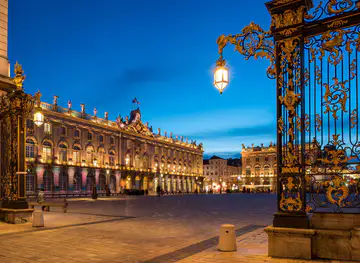
The principal attraction is the UNESCO-listed ensemble formed by Place Stanislas, Place de la Carrière and Place d’Alliance, where gilded gates, classical façades and long formal perspectives create Nancy’s most memorable urban setting. From there, visitors can follow the pedestrian centre towards Marché Central, whose covered stalls introduce regional produce, cheeses, baked goods and prepared foods in a distinctly everyday setting. The streets around Place Charles III and Rue Saint-Jean are useful for observing the city’s commercial life, while the nearby Musée des Beaux-Arts occupies one of the pavilions on Place Stanislas. The cathedral, Saint-Sébastien church and the approaches to the Ville Vieille add religious and architectural variety. Art Nouveau details appear across central façades and shopfronts, rewarding slow walks rather than a single landmark-focused itinerary.
-
City park
Parc de la Pépinière
Experience the tranquility and beauty of Parc de la Pépinière, a stunning city park in Nancy with gardens, recreational activities, and family-friendly fun.
6 min walk · 0.5 km from neighbourhood centre
-
Park
Parc Charles III
Experience the serene beauty of Parc Charles III, a tranquil park in Nancy, France, perfect for relaxation, strolls, and family fun amidst nature.
8 min walk · 0.7 km from neighbourhood centre
-
Museum
Palace of the Dukes of Lorraine - Lorraine Museum
Explore the Palace of the Dukes of Lorraine - a treasure trove of art and history in the heart of Nancy, France.
7 min walk · 0.5 km from neighbourhood centre


Best landmarks in Charles III - Centre Ville
Place Stanislas is the defining landmark of Charles III - Centre Ville: its eighteenth-century composition, monumental buildings, fountains and gilded gates express the political ambition of Stanislas Leszczynski’s redevelopment of Nancy. Place de la Carrière extends the formal axis towards the Old Town, while the smaller Place d’Alliance provides a more intimate example of the same period’s planned urban design. The Musée des Beaux-Arts occupies one of Place Stanislas’s pavilions, linking the square to Nancy’s cultural institutions. In the commercial centre, Saint-Sébastien church, the cathedral area and the covered Marché Central represent different layers of civic and religious life. Around them, nineteenth- and early twentieth-century façades preserve the commercial growth that turned the historic core into a modern regional centre.
-
Landmark
Place Stanislas
Discover the elegance of Place Stanislas, a UNESCO World Heritage site in Nancy, where history, architecture, and vibrant culture converge.
1 min walk · 0.1 km from neighbourhood centre
-
Cultural landmark
Place de la Carrière
Explore the historical beauty of Place de la Carrière, a cultural landmark in Nancy known for its stunning architecture and vibrant atmosphere.
3 min walk · 0.3 km from neighbourhood centre
-
Memorial
Porte Désilles
Discover the poignant history and striking architecture of Porte Désilles, a memorial in Nancy honoring the courage of its soldiers.
11 min walk · 0.9 km from neighbourhood centre
-
Park
Parc Charles III
Experience the tranquil beauty of Parc Charles III, a must-visit park in Nancy, perfect for relaxation, picnics, and cultural events.
8 min walk · 0.7 km from neighbourhood centre


Explore Charles III - Centre Ville on the map
A handpicked selection of must-see spots in Charles III - Centre Ville, mapped for you.
Best hotels in Charles III - Centre Ville
Best restaurants in Charles III - Centre Ville
Dining in Charles III - Centre Ville ranges from market produce and quick lunches to formal meals in historic surroundings. Marché Central is the most useful place to encounter the ingredients and food habits of the region, with stalls and nearby businesses supplying cheese, charcuterie, bread, pastries and prepared dishes; selection and opening patterns vary. Rue Saint-Jean, Rue des Ponts and the streets around Place Stanislas provide a concentration of cafés, brasseries and restaurants, while the area around Place Charles III has a more practical shopping-centre rhythm alongside independent eateries. Lorraine specialities such as quiche lorraine, pâté lorrain and mirabelle-based products may appear on menus, although the central scene also includes cuisines from across France and abroad. The best distinction is between dining in a ceremonial square and eating amid the market’s everyday commerce.
-
French
Les Fils à Maman Nancy
Experience the heartwarming flavors of French cuisine at Les Fils à Maman Nancy – where nostalgia meets culinary creativity.
3 min walk · 0.3 km from neighbourhood centre
-
Restaurant
Le bouche à oreille
Discover authentic French cuisine and artisanal cheeses at Le Bouche à Oreille in Nancy – a gastronomic gem waiting to be explored.
5 min walk · 0.4 km from neighbourhood centre
-
Restaurant
La _ Maison dans le Parc
Discover La Maison dans le Parc - Nancy's premier destination for exceptional French cuisine in an elegant setting.
2 min walk · 0.1 km from neighbourhood centre
-
French
La Gentilhommière
Experience exquisite French cuisine at La Gentilhommière in Nancy – where every dish is a masterpiece crafted for your enjoyment.
3 min walk · 0.2 km from neighbourhood centre


Best bars in Charles III - Centre Ville
Evenings in Charles III - Centre Ville are concentrated around cafés, wine bars, brasseries and restaurants rather than a large nightclub district. Place Stanislas becomes atmospheric after the daytime traffic subsides, while the streets leading towards Rue Saint-Jean and the station provide the greatest choice of places for a drink or late meal. The area’s cultural venues and central theatres can contribute to an evening itinerary, although performances and schedules change. Student and local social life is also visible in the wider central streets, particularly around the shopping and university-facing parts of the city. Noise can carry across the formal squares and narrow streets, so visitors should respect residents and check current arrangements rather than assume that every venue remains open late.
-
Bar
Les Berthom
Discover the best local beers, ciders, and tapas at Les Berthom, a vibrant bar in Nancy offering a unique taste of French nightlife.
2 min walk · 0.1 km from neighbourhood centre
-
Beer hall
Le Ch'timi
Discover the vibrant charm of Le Ch'timi, a must-visit beer hall and café in Nancy, offering delicious local brews and a lively atmosphere.
6 min walk · 0.5 km from neighbourhood centre
-
Pub
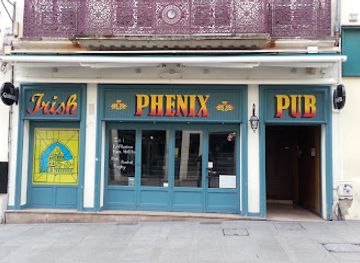
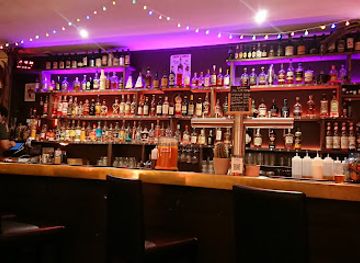
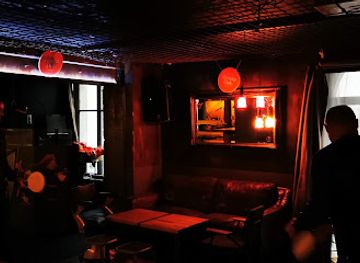
Pub Le Phenix
Discover the lively charm of Pub Le Phenix in Nancy, a must-visit pub offering a delightful selection of drinks and a vibrant atmosphere.
2 min walk · 0.2 km from neighbourhood centre
-
Hotel
Best Western Plus Crystal, Hôtel, Bar & Spa
Experience luxury and comfort at Best Western Plus Crystal in Nancy, where modern amenities meet timeless elegance.
7 min walk · 0.6 km from neighbourhood centre


Best nightclubs in Charles III - Centre Ville
Evenings in Charles III - Centre Ville are concentrated around cafés, wine bars, brasseries and restaurants rather than a large nightclub district. Place Stanislas becomes atmospheric after the daytime traffic subsides, while the streets leading towards Rue Saint-Jean and the station provide the greatest choice of places for a drink or late meal. The area’s cultural venues and central theatres can contribute to an evening itinerary, although performances and schedules change. Student and local social life is also visible in the wider central streets, particularly around the shopping and university-facing parts of the city. Noise can carry across the formal squares and narrow streets, so visitors should respect residents and check current arrangements rather than assume that every venue remains open late.
-
Bar
Les Berthom
Discover Les Berthom, a vibrant bar in Nancy, France, offering a diverse selection of beers, cocktails, and mouthwatering tapas in a lively atmosphere.
2 min walk · 0.1 km from neighbourhood centre
-
Pub
Pub Le Phenix
Discover the vibrant nightlife at Pub Le Phenix, a lively pub in Nancy offering an extensive drink selection and a friendly atmosphere.
2 min walk · 0.2 km from neighbourhood centre
-
Cocktail bar
Rhumerie La Plantation
Experience the lively ambiance of Rhumerie La Plantation, where exquisite cocktails, local art, and live music come together for an unforgettable night out in Nancy.
9 min walk · 0.8 km from neighbourhood centre
-
Bar
The Electric Sheep
Discover the vibrant nightlife at The Electric Sheep, a must-visit bar in the heart of Nancy, offering an eclectic ambiance and an extensive drink menu.
4 min walk · 0.4 km from neighbourhood centre

Best shops in Charles III - Centre Ville
Shopping is one of the quarter’s strongest everyday activities. Marché Central provides the clearest local focus, with food stalls and specialist vendors offering produce, bakery goods, cheese, charcuterie and other ingredients associated with regional shopping traditions. Rue Saint-Jean and Rue Saint-Georges form important central retail corridors, mixing national names with cafés, pharmacies, bakeries and smaller businesses, while the streets around Place Charles III connect market life with mainstream shopping and everyday services. Visitors interested in architecture should look above the shopfronts for decorative stonework, ironwork and occasional Art Nouveau details. The central quarter is better suited to food shopping, fashion, books, gifts and city-centre retail than to a single specialist craft market; stock, businesses and trading patterns naturally change over time.
-
Shopping mall
Centre Commercial Saint Sébastien
Discover the vibrant Centre Commercial Saint Sébastien in Nancy, France – a premier shopping destination with diverse stores, dining, and festive charm.
8 min walk · 0.6 km from neighbourhood centre
-
Department store
FNAC Nancy
Explore FNAC Nancy, a premier department store in France offering books, tech, and unique local events, perfect for every tourist's shopping adventure.
9 min walk · 0.7 km from neighbourhood centre
-
Shopping mall
Les Allées - Nancy Lobau
Discover the vibrant shopping experience at Les Allées - Nancy, where retail therapy meets delightful dining and entertainment options.
5 min drive · 1.7 km from neighbourhood centre
-
Market
Place Charles III
Experience the vibrant atmosphere of Place Charles III in Nancy, a market square filled with local flavors, historic charm, and cultural richness.
6 min walk · 0.5 km from neighbourhood centre


Charles III - Centre Ville essentials
Getting There
Getting Around
Safety
Emergency Situations
Do's and Don'ts
Local Tips

From Eve
Local phrases worth knowing
You don't need to get them perfect. A few words go a long way, and locals appreciate the effort.
Basics
| English | Local | Say it |
|---|---|---|
| Hello | Bonjour | [bon-zhoor] |
| Goodbye | Au revoir | [oh ruh-vwahr] |
| Yes | Oui | [wee] |
| No | Non | [noh] |
| Please/You're welcome | S'il vous plaît/De rien | [seel voo pleh/duh ryen] |
| Thank you | Merci | [mehr-see] |
| Excuse me/Sorry | Excusez-moi/Désolé | [ex-kew-zay mwah/day-zoh-lay] |
| How are you? | Comment ça va? | [koh-mohn sah vah] |
| Fine. And you? | Bien. Et vous? | [byen. ay voo] |
| Do you speak English? | Parlez-vous anglais? | [par-lay voo ahn-glay] |
| I don't understand | Je ne comprends pas | [zhuh nuh kohm-prahnd pah] |
Eating & Drinking
| English | Local | Say it |
|---|---|---|
| I'd like to see the menu, please | Je voudrais voir la carte, s'il vous plaît | [zhuh voo-dray vwahr lah kart, seel voo pleh] |
| I don't eat meat | Je ne mange pas de viande | [zhuh nuh mahnj pah duh vyand] |
| Cheers! | Santé! | [sahn-tay] |
| I would like to pay, please | Je voudrais payer, s'il vous plaît | [zhuh voo-dray pay-ay, seel voo pleh] |
Emergencies
| English | Local | Say it |
|---|---|---|
| Help! | Au secours! | [oh suh-koor] |
| Go away! | Allez-vous en! | [ah-lay voo zahn] |
| Call the Police! | Appelez la police! | [ah-pay-lay lah poh-lees] |
| Call a doctor! | Appelez un médecin! | [ah-pay-lay uh may-day-sahn] |
| I'm lost | Je suis perdu(e) | [zhuh swee pair-doo] |
| I'm ill | Je suis malade | [zhuh swee mah-lahd] |
Shopping
| English | Local | Say it |
|---|---|---|
| I'd like to buy... | Je voudrais acheter... | [zhuh voo-dray zheh-tay] |
| I'm just looking | Je regarde juste | [zhuh ruh-gard zhewst] |
| How much is it? | Combien ça coûte? | [kohm-byen sah koot] |
| That's too expensive | C'est trop cher | [say troh shair] |
| Can you lower the price? | Pouvez-vous baisser le prix? | [poo-veh voo beh-say luh pree] |
Time & Numbers
| English | Local | Say it |
|---|---|---|
| What time is it? | Quelle heure est-il? | [kell ur ay-teel] |
| It's one o'clock | Il est une heure | [eel ay oon ur] |
| Half past (10) | Dix heures et demie | [dees ur ay duh-mee] |
| Morning | Matin | [mah-tahn] |
| Afternoon | Après-midi | [ah-pray mee-dee] |
| Evening | Soir | [swahr] |
| Yesterday | Hier | [yehr] |
| Today | Aujourd'hui | [oh-zhoor dew-ee] |
| Tomorrow | Demain | [duh-mahn] |
| 1 | Un | [uhn] |
| 2 | Deux | [duh] |
| 3 | Trois | [twah] |
| 4 | Quatre | [kat-ruh] |
| 5 | Cinq | [sank] |
| 6 | Six | [sees] |
| 7 | Sept | [set] |
| 8 | Huit | [wheat] |
| 9 | Neuf | [nuhf] |
| 10 | Dix | [dees] |
Transport & Directions
| English | Local | Say it |
|---|---|---|
| Where's a/the...? | Où est...? | [oo eh] |
| What's the address? | Quelle est l'adresse? | [kell ay la-dress] |
| Can you show me (on the map)? | Pouvez-vous me montrer (sur la carte)? | [poo-veh voo muh mohn-tray (soor lah kart)] |
| When's the next (bus)? | Quand est le prochain (bus)? | [kawn ay luh proh-shan (boos)] |
| A ticket (to ....) | Un billet (pour ...) | [uhn bee-yay (poor)] |
History of Charles III - Centre Ville
A Ducal Capital Takes Shape
Nancy’s central area developed around the seat of the dukes of Lorraine, whose medieval town grew north of the later Charles III district. The lower-lying land to the south and east was gradually urbanised as the city expanded beyond its older walls. The name Charles III refers to Charles III, Duke of Lorraine, whose reign from 1545 to 1608 was associated with the planned development of the Ville Neuve, a new urban quarter laid out beside the medieval town. Its regular streets created a lasting framework for the central city, even though later rebuilding and traffic changes altered parts of the original pattern.
The Royal Squares of Stanislas
The most consequential transformation came in the eighteenth century under Stanislas Leszczynski, former king of Poland and duke of Lorraine. From 1752 to 1756, the spaces now known as Place Stanislas, Place de la Carrière and Place d’Alliance were reshaped into a monumental urban composition linking the Old Town with the newer city. Architect Emmanuel Héré designed the principal buildings, while Jean Lamour created the celebrated gilded iron gates and railings. The ensemble gave Nancy a ceremonial centre that also improved movement and visual connections across the city. It remains the defining historical structure of Charles III - Centre Ville and the wider central district.
Commerce, Railways and the Modern Centre
During the nineteenth century, Nancy expanded rapidly as a regional administrative, commercial and educational centre. New streets, shops and public institutions filled the central area, while the railway station to the west strengthened links with Paris, Strasbourg and other cities. The Marché Central became an important point of everyday exchange, complementing the established shopping streets and specialist food businesses. Urban growth also brought more substantial apartment and commercial buildings, creating the mixed nineteenth-century streetscape visible around Rue Saint-Jean, Rue Saint-Georges and Place Charles III. The centre consequently became both a historic setting and a working commercial quarter rather than a preserved monument district.
Art Nouveau and Heritage Protection
Nancy became a major centre of Art Nouveau around the turn of the twentieth century, encouraged by artists, craftspeople and industrial patrons associated with the École de Nancy. Although the movement’s most celebrated domestic interiors and villas are spread across the city, central commercial streets retain examples of its decorative language in façades, shopfronts, stained glass and metalwork. After periods of twentieth-century alteration, Nancy’s eighteenth-century ensemble received renewed international recognition when Place Stanislas, Place de la Carrière and Place d’Alliance were inscribed as part of the UNESCO World Heritage property in 1983. Conservation and pedestrian improvements have since reinforced the central quarter’s role as both a lived-in city centre and a heritage destination.
Charles III - Centre Ville in Photos
Browse through our photo collection highlighting the charm and character of the destination.
Neighbourhoods near Charles III - Centre Ville
The closest neighbourhoods to Charles III - Centre Ville, if you have time for more than one stop.
-
-

-

-


Swipe for more neighbourhoods
Explore more

Explore more of Nancy
Nancy, France pairs Place Stanislas, Art Nouveau treasures, ducal history, museums and Lorraine cuisine with elegant streets, lively cafés and easy walking.
Explore Nancy