Underground Printing House Museum, Tbilisi Travel Guide
Free Guide: Discover Tbilisi's secret Underground Printing House Museum, a relic of Soviet history and early 20th-century revolutionary activity.


A brief summary of Underground Printing House Museum
Discover Tbilisi's secret Underground Printing House Museum, a relic of Soviet history and early 20th-century revolutionary activity.
The Underground Printing House Museum in Tbilisi offers a unique look into the clandestine operations of early 20th-century revolutionaries. Operating from 1903 to 1906, this secret printing house, concealed beneath an ordinary house, churned out propaganda to undermine Tsarist rule, playing a significant role in Georgia's Soviet history.
Opening hours
- Mon10 am–6 pm
- Tue10 am–6 pm
- Wed10 am–6 pm
- Thu10 am–6 pm
- Fri10 am–6 pm
- SatClosed
- SunClosed
Opening hours as listed on the venue’s Google Business Profile. Hours can change for services and special events, so check with the venue before you go.
- Address
- 7-9 ავლიპი ზურაბაშვილის ქუჩა, Tbilisi
Getting there
Public Transport
Taxi
Walking
Discover more about Underground Printing House Museum
Overview
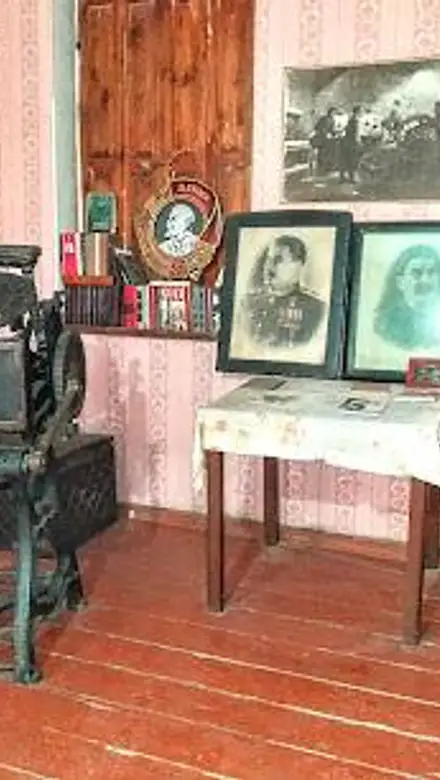
Hidden in Tbilisi's Avlabari district, the Underground Printing House Museum unveils a fascinating chapter of Georgia's revolutionary history. From 1903 to 1906, this clandestine location served as a hub for Mensheviks and Bolsheviks, printing and distributing illegal newspapers and proclamations in Georgian, Russian, and Armenian. The printing house was ingeniously designed with a dual layout: appearing as a normal residential house above ground, while concealing a labyrinth of hidden basements and secret entrances below. A high-speed printing machine, smuggled from Baku, was assembled in the covert basement, producing a constant flow of revolutionary materials. The operation was so secretive that construction workers were rotated to prevent anyone from knowing the full layout.In 1904, a young Josef Jughashvili, later known as Josef Stalin, frequented the printing house to write and publish his revolutionary articles. The house also served as a secret meeting place for young communists. An ingenious warning system, featuring a concealed bell, alerted revolutionaries to impending danger.In March 1906, the building became a fortress and bomb-making laboratory. However, on April 15, 1906, police discovered the secret tunnel in a well, leading to the house being burned and revolutionaries arrested. The printing house was restored in 1937 and opened as a museum. After a period of neglect following the Soviet Union's collapse, the museum was handed over to the National Library and declared a national cultural heritage monument in 2019.Today, the museum displays artifacts, photographs, and letters from the revolutionary period, offering visitors a glimpse into a past filled with intrigue and defiance.
Evendo Review Centre
 Google
Guest reviews
Explore Underground Printing House Museum on the map
A handpicked selection of must-see spots near Underground Printing House Museum, mapped for you.
Get your free copy of our complete guide to Underground Printing House Museum, delivered straight to you.
Everything on this page, from opening hours and how to get there to Eve’s tips and the best time to go, in one PDF you can read offline, print or share.
Already have an account? Sign in
Your Underground Printing House Museum guide is ready.
We'll send it to · Not you? Sign out

Getting your guide ready…
We are putting together a fresh copy of the Underground Printing House Museum guide. This can take up to a minute.
This can take a few moments. If your browser asks, choose Allow so the download can start. You'll find the guide in your Downloads folder.
Nothing happened? Download it again
Sorry, the guide is taking longer than usual. Please try again in a minute, or get it by email instead.
Unlock the best of Underground Printing House Museum
Skip-the-line tickets, guided tours with entry, and walking tours of the area, booked in a few clicks.


Other nearby places you may find interesting
The closest places of the same kind, if this one is not quite what you had in mind.
-
-
-
-
-


Swipe for more places
More to explore near Underground Printing House Museum
-
 Best experiences near Underground Printing House Museum
-
 Best hotels near Underground Printing House Museum
-
 Best landmarks near Underground Printing House Museum
-
 Best attractions near Underground Printing House Museum
-
 Best shops near Underground Printing House Museum
-
 Best restaurants near Underground Printing House Museum
-
 Best bars near Underground Printing House Museum


Do you manage this location?
Take control to get all the benefits, like improved information, better appearance, and stronger visibility across AI-powered discovery.
Explore more

Explore more of Tbilisi
Discover Tbilisi, Georgia's vibrant capital, where ancient history and modern charm blend seamlessly, offering a unique cultural experience and stunning landscapes.
Explore Tbilisi
Explore more of Georgia
Discover Georgia: A vibrant mix of ancient history, stunning landscapes, and warm hospitality at the crossroads of Europe and Asia.
Explore Georgia