Background

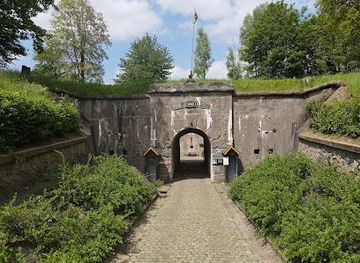
Fort de Lantin: A Bastion of History

4.3 (420)

Explore a remarkably preserved WWI fortress near Liège, offering a glimpse into military life and Belgian history.

Fort de Lantin, constructed in 1888, is a remarkably well-preserved fortress that formed part of Liège's fortified belt. Serving as a silent witness to both World Wars, it offers an immersive journey into the life of a garrison during wartime.

A brief summary to Fort de Lantin

  • Thursday 12:30 pm-5 pm
  • Friday 12:30 pm-5 pm
  • Saturday 12:30 pm-5 pm
  • Sunday 12:30 pm-5 pm

Local tips

  • Wear comfortable shoes, as you'll be doing a lot of walking on uneven surfaces within the fort.
  • Bring a light jacket, as the interior of the fort can be cool and damp.
  • Check the fort's website for special events or temporary exhibitions that may be taking place during your visit.
  • Consider a combined visit to Fort de Loncin, another nearby fortress, for a more comprehensive understanding of the Battle of Liège.
widget icon

Do you manage this location?

Take control to get all the benefits, like improved information, better appearance, and stronger visibility across AI-powered discovery. Learn more

Activate your presence

Unlock the Best of Fort de Lantin

Buy tickets

    No tickets available

Book tours with entry

    No tours available

Book tours without entry

    No tours available

Getting There

  • Public Transport

    From Liège-Guillemins train station, take a train towards Ans station. From there, take bus line 88 to the 'Lantin Route du Fort de Lantin' stop. The fort is a short walk from the bus stop. A bus ticket will cost approximately €2.50.

  • Car

    From the center of Liège, take the N30 road towards Juprelle. Follow the N30 for about 10 km. At the roundabout, take the first exit onto Rue de Villers. Continue on Rue de Villers for about 1 km, and you will find Fort de Lantin on your left. Parking is available near the fort. There may be a small parking fee.

Discover more about Fort de Lantin

Nestled in the Hesbaye countryside, Fort de Lantin stands as a testament to late 19th-century military architecture. Built in 1888, it formed an integral part of the fortified belt of Liège, designed to defend the city. Unlike many contemporary fortifications, Lantin remains largely unchanged since 1914, offering visitors a unique glimpse into the past. During World War I, Fort de Lantin faced heavy bombardment from German forces in August 1914 and ultimately surrendered due to the suffocating conditions within. In May 1940, it served as an ammunition depot and headquarters for the 3rd Infantry Division of the Belgian Army. Today, the fort features a show trail with audio guides that vividly depict the lives of the soldiers stationed here during the bombardments. Visitors can explore the fort's various exhibits, including a collection of military vehicles, some dating back to World War II. The site also hosts cultural events, such as craft markets and equestrian shows. For those seeking a truly unique experience, it is possible to spend a night in the fort, emulating the living conditions of soldiers in 1914 (reservations required for groups).
Mobile App

Your all‑in‑one travel companion app

Explore expert travel guides, compare and book tours, experiences, hotels, and more—all from the palm of your hand. Download now for seamless trip planning wherever your wanderlust takes you.
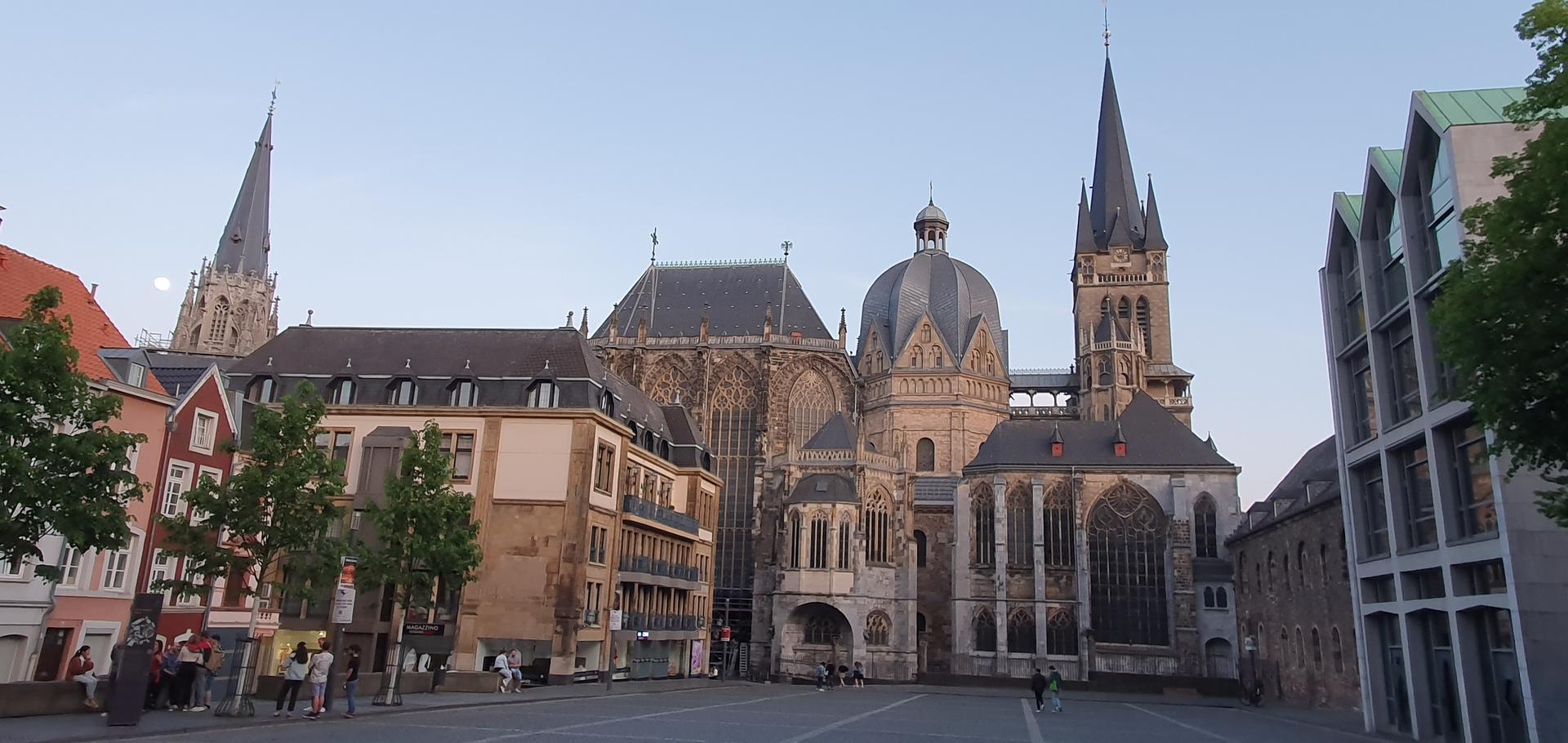


More about Aachen

File:AachenCathedral (Exterior of Aachen Cathedral) und links St. Foillan  (St. Foillan, Aachen) (im Vordergrund der Katschhof) 2022 in Aachen.jpg -  Wikimedia Commons

Discover Aachen: A historic gem in Germany, renowned for its UNESCO-listed cathedral, thermal springs, vibrant student life, and delicious Printen gingerbread.

Tell me more about Aachen
Select Currency
