Maxtor Travel Guide
Free Guide: Discover Maxtor, Munich's youngest city gate, a symbolic passage blending history and architecture in the heart of Altstadt-Lehel, near vibrant Maximiliansplatz.


A brief summary of Maxtor
Discover Maxtor, Munich's youngest city gate, a symbolic passage blending history and architecture in the heart of Altstadt-Lehel, near vibrant Maximiliansplatz.
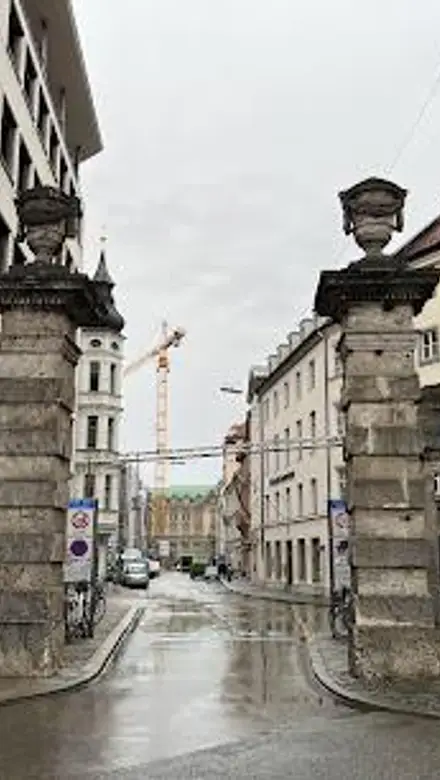
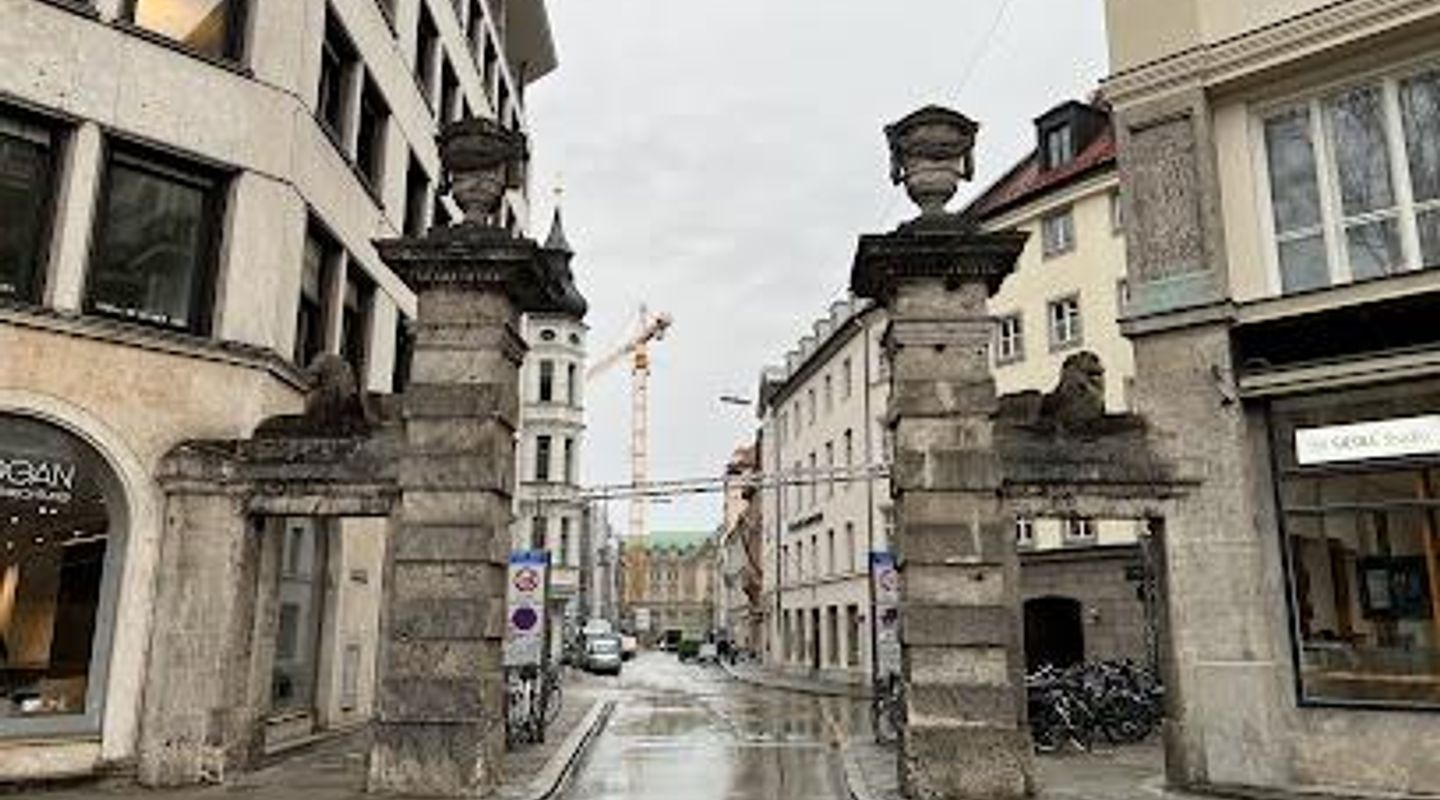
Maxtor, the youngest of Munich's city gates, stands as a symbolic marker between the bustling city center and the open spaces to the west. Erected in 1805, it replaced a demolished section of the city wall, serving more as an aesthetic boundary than a defensive structure. Crowned with stone vases and flanked by smaller pedestrian gates guarded by stone lions, Maxtor, also known as the 'Löwentor' (Lion's Gate), offers a glimpse into Munich's historical evolution. Adjacent to the Grottenbrunnen (Grotto Fountain), it forms a charming architectural ensemble, inviting visitors to reflect on the city's transformation from a fortified town to a modern metropolis. Its location on Prannerstraße, near the vibrant Maximiliansplatz, makes it an easily accessible and worthwhile stop for those exploring Munich's Altstadt-Lehel district.
Opening hours
- Every dayOpen 24 hours
Opening hours as listed on the venue’s Google Business Profile. Hours can change for services and special events, so check with the venue before you go.
- Address
- Prannerstraße, 80333 München
Getting there
Public Transport
Walking
Taxi/Ride-Share
Driving
Discover more about Maxtor
Overview
Maxtor, Munich's youngest city gate, marks a significant point in the city's historical narrative. Constructed in 1805 by Nikolaus Schedel von Greiffenstein, it arose from the demolition of a section of Munich's old city wall. Unlike its older counterparts, such as the Sendlinger Tor, Isartor and Karlstor, Maxtor was never intended for defensive purposes. Instead, it served as a visual termination of Prannerstraße, creating a defined transition from the urban landscape to the open area that once lay beyond the city's fortifications. Originally named 'Prannerstor,' the gate was renamed 'Max-Joseph-Tor' in 1806 to honor King Maximilian I Joseph. By 1809, the name had been shortened to the now familiar 'Maxtor.' The gate's history includes a period of damage during World War II, with the northeastern half being destroyed. Reconstruction efforts, led by Erwin Schleich, were completed in 1985, restoring Maxtor to its former appearance. Located on the western edge of Munich's Altstadt (Old Town), where Prannerstraße meets Maximiliansplatz, Maxtor presents a distinctive architectural style. Two gate pillars, adorned with stone vases, rise on either side of the road. Pedestrians can pass through smaller side gates, each featuring stone lions perched atop the structures, contributing to the gate's alternative name, 'Löwentor' (Lion's Gate). The Grottenbrunnen, a grotto fountain designed in 1886, stands adjacent to the gate, enhancing the area's aesthetic appeal. Maxtor's location within the Altstadt-Lehel district places it amidst a wealth of historical and cultural attractions. The nearby Marienplatz, the city's central square, is a hub of activity, famous for its Glockenspiel performance and the iconic Frauenkirche. The Munich Residenz, a former royal palace, offers insights into Bavarian history and art. The English Garden, one of the world's largest urban parks, provides a green escape within the city. Visiting Maxtor offers a moment to reflect on Munich's transformation over the centuries. From its origins as a fortified medieval town to its current status as a modern, cosmopolitan city, Munich's history is etched into its architecture and public spaces. Maxtor, while not a grand or imposing structure, serves as a reminder of this evolution, inviting visitors to consider the layers of history that shape the city's identity. Exploring the area around Maxtor allows visitors to delve deeper into Munich's cultural fabric. The Kunsthalle München, located nearby, hosts a variety of art exhibitions. The Bavarian National Museum showcases the region's artistic and cultural heritage. The Viktualienmarkt, a vibrant open-air market, offers a taste of local delicacies and a glimpse into daily life in Munich. Maxtor's accessibility makes it an easy addition to any Munich itinerary. Its central location means it is well-served by public transportation, and it can be easily reached on foot from many of the city's main attractions. Whether passing through on the way to Maximiliansplatz or pausing to admire its architectural details, Maxtor offers a subtle yet significant connection to Munich's past.
Evendo Review Centre
 Google
Guest reviews
Explore Maxtor on the map
A handpicked selection of must-see spots near Maxtor, mapped for you.
Get your free copy of our complete guide to Maxtor, delivered straight to you.
Everything on this page, from opening hours and how to get there to Eve’s tips and the best time to go, in one PDF you can read offline, print or share.
Already have an account? Sign in
Your Maxtor guide is ready.
We'll send it to · Not you? Sign out

Getting your guide ready…
We are putting together a fresh copy of the Maxtor guide. This can take up to a minute.
This can take a few moments. If your browser asks, choose Allow so the download can start. You'll find the guide in your Downloads folder.
Nothing happened? Download it again
Sorry, the guide is taking longer than usual. Please try again in a minute, or get it by email instead.
Unlock the best of Maxtor
Skip-the-line tickets, guided tours with entry, and walking tours of the area, booked in a few clicks.

Other nearby places you may find interesting
The closest places of the same kind, if this one is not quite what you had in mind.
-
-
-
-

-


Swipe for more places
More to explore near Maxtor

 Best experiences near Maxtor

 Best hotels near Maxtor

 Best landmarks near Maxtor

 Best attractions near Maxtor

 Best shops near Maxtor

 Best restaurants near Maxtor

 Best bars near Maxtor
Do you manage this location?
Take control to get all the benefits, like improved information, better appearance, and stronger visibility across AI-powered discovery.
Explore more

Explore more of Bavaria
Discover Bavaria: A magical region in Germany with fairy-tale castles, medieval towns, and breathtaking alpine landscapes.
Explore Bavaria
Explore more of Germany
Experience Germany: where history meets innovation, and urban energy blends with natural beauty. Discover diverse cultures, delicious cuisine, and stunning landscapes.
Explore Germany