
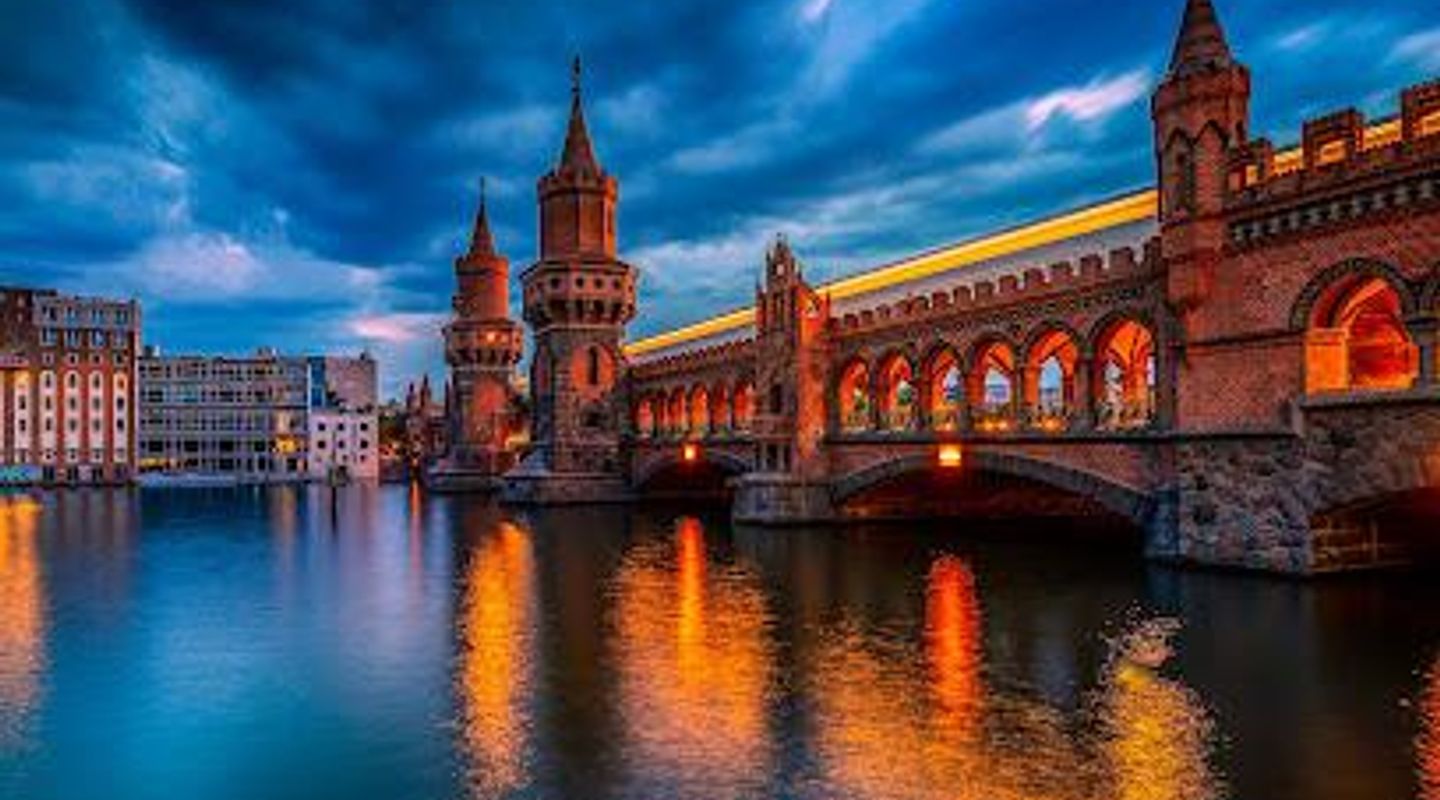
Oberbaum Bridge, Berlin Travel Guide
Spanning history and culture, the Oberbaum Bridge connects Berlin's vibrant districts, offering iconic views and a powerful symbol of unity and resilience.
The Oberbaum Bridge, a Berlin landmark, gracefully spans the River Spree, connecting the vibrant districts of Friedrichshain and Kreuzberg. More than just a crossing, it embodies Berlin's tumultuous history and its triumphant reunification. Originally a wooden drawbridge in 1724, it served as a city gate, controlling trade routes. Rebuilt in the late 19th century in the North German Brick Gothic style, its iconic towers echo medieval fortifications. Severely damaged during WWII and later bisected by the Berlin Wall, the Oberbaum Bridge became a poignant symbol of division during the Cold War. Today, fully restored with a modern central section designed by Santiago Calatrava, it stands as a testament to Berlin's resilience, unity, and artistic spirit, offering stunning views and a tangible link to the city's layered past.
A brief summary to Oberbaum Bridge
- Oberbaumbrücke, Berlin, Friedrichshain-Kreuzberg, 10243, DE
- Click to display

Know before you go
Hi, I'm Eve. Here are a few practical things to know before exploring Oberbaum Bridge.
- Visit at sunset for stunning views of the Spree River and the illuminated city skyline.
- Explore the East Side Gallery, a preserved section of the Berlin Wall, located a short walk from the bridge.
- Take a guided walking tour to learn about the bridge's history and significance during the Cold War.
- Check out the RAW Gelände, a former railway repair yard transformed into a vibrant cultural center with clubs, bars, and art spaces.
- Spot the neon lights along the bridge's tower that depict an ongoing game of Stone, Paper, Scissors.
Do you manage this location?
Take control to get all the benefits, like improved information, better appearance, and stronger visibility across AI-powered discovery. Learn more about listing your business on Evendo
Activate your presenceOther nearby places you may find interesting
The closest places of the same kind, if this one is not quite what you had in mind.

Explore Oberbaum Bridge on the Map
A handpicked selection of must-see spots near Oberbaum Bridge, mapped for you.
Unlock the Best of Oberbaum Bridge
Buy tickets
-
No tickets available
Book tours with entry
-
No tours available


Getting There
-
Public Transport
The Oberbaum Bridge is easily accessible via Berlin's efficient public transport system. From anywhere in the city, take the U1 or U3 U-Bahn lines to either Schlesisches Tor (Kreuzberg side) or Warschauer Straße (Friedrichshain side). From Warschauer Straße station, follow Warschauer Straße south for a short walk (less than 10 minutes) until you reach the bridge. From Schlesisches Tor, walk east on Oberbaumstraße for about 5 minutes. A single public transport ticket (AB zone) costs €2.80.
-
Taxi/Ride-Share
Taxis and ride-sharing services (like Uber or Bolt) are readily available throughout Berlin. A short taxi ride from Alexanderplatz to the Oberbaum Bridge will typically cost between €12-€15 and take approximately 10-15 minutes, depending on traffic.
-
Walking
If you are already in the Kreuzberg or Friedrichshain area, walking to the Oberbaum Bridge is a great option. From the East Side Gallery, walk west along Mühlenstraße, then cross the street to Oberbaumbrücke. From Schlesisches Tor U-Bahn station, walk east on Oberbaumstraße. The bridge is easily visible and well-signposted.
-
Driving
While driving to the Oberbaum Bridge is possible, parking in the immediate vicinity can be challenging and expensive. Limited street parking is available, and parking fees apply in designated zones (€1-2 per hour). Several parking garages are located within a 10-15 minute walk of the bridge, such as the Plaza-Parkhaus and East Side Mall-Parkhaus. Expect to pay around €12-€15 for 24 hours of parking in a garage.
Discover more about Oberbaum Bridge













Your all‑in‑one travel companion app
Explore expert travel guides, compare and book tours, experiences, hotels, and more—all from the palm of your hand. Download now for seamless trip planning wherever your wanderlust takes you.


Explore More of Berlin
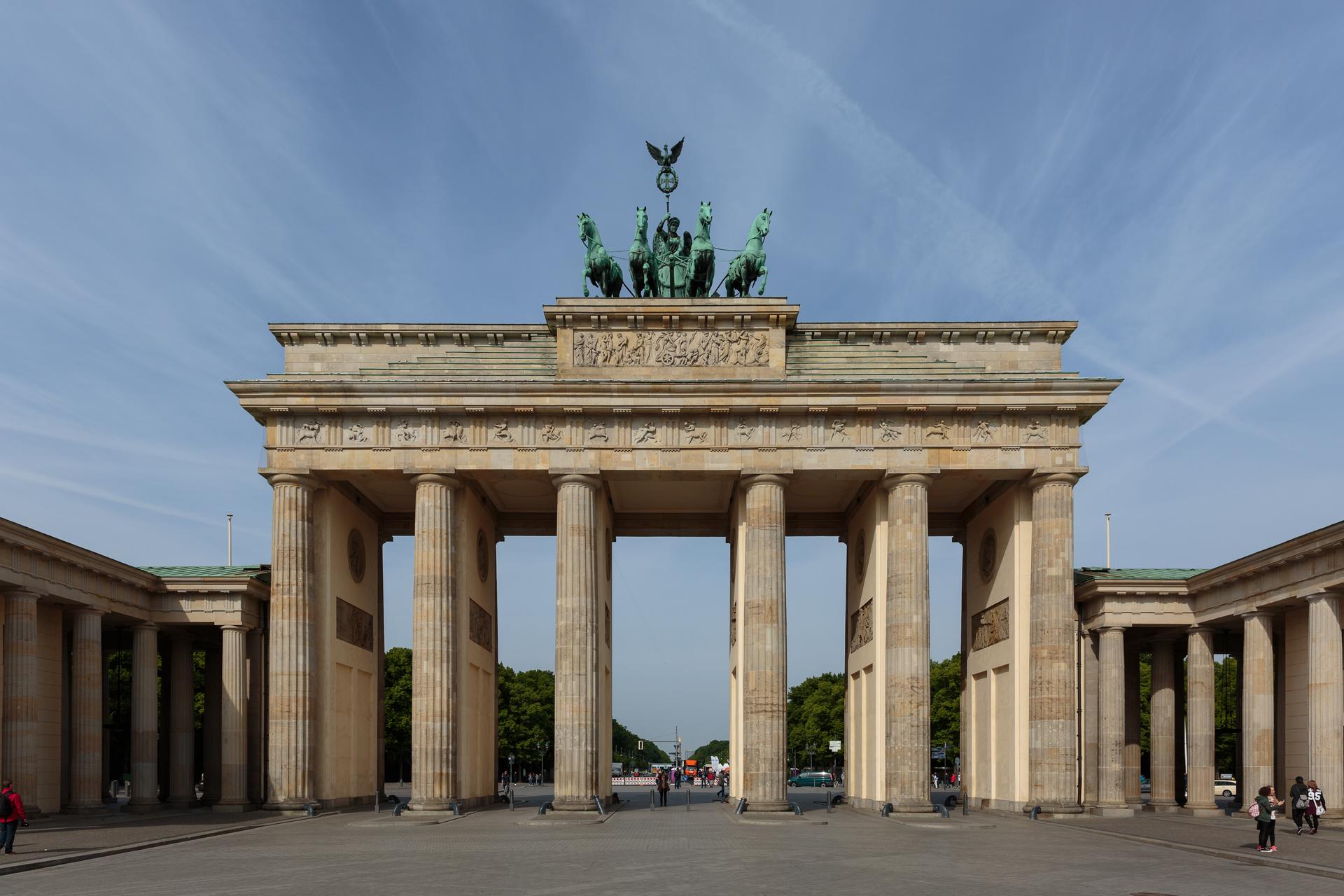
Looking beyond Oberbaum Bridge? Discover Berlin for broader travel guides, local hot-spots, and regional highlights.
Explore Berlin
Discover the architectural beauty and rich history of Mühlenstraße 78 in Berlin's lively Friedrichshain-Kreuzberg borough, a must-visit for tourists.

Explore Oberbaumbrücke, Berlin's iconic bridge connecting Friedrichshain and Kreuzberg, rich in history and vibrant local culture.
