Black Moor Travel Guide
Free Guide: Explore the mystical Schwarzes Moor in the Rhön Biosphere Reserve: a unique raised bog with boardwalk trails, panoramic views, and fascinating ecological insights.


A brief summary of Black Moor
Explore the mystical Schwarzes Moor in the Rhön Biosphere Reserve: a unique raised bog with boardwalk trails, panoramic views, and fascinating ecological insights.
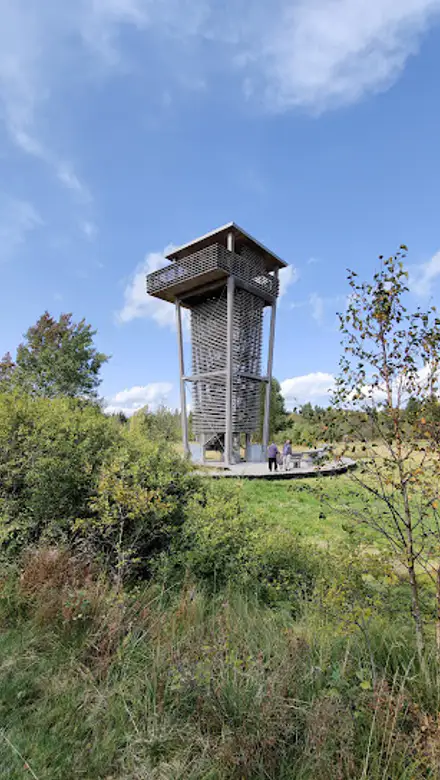
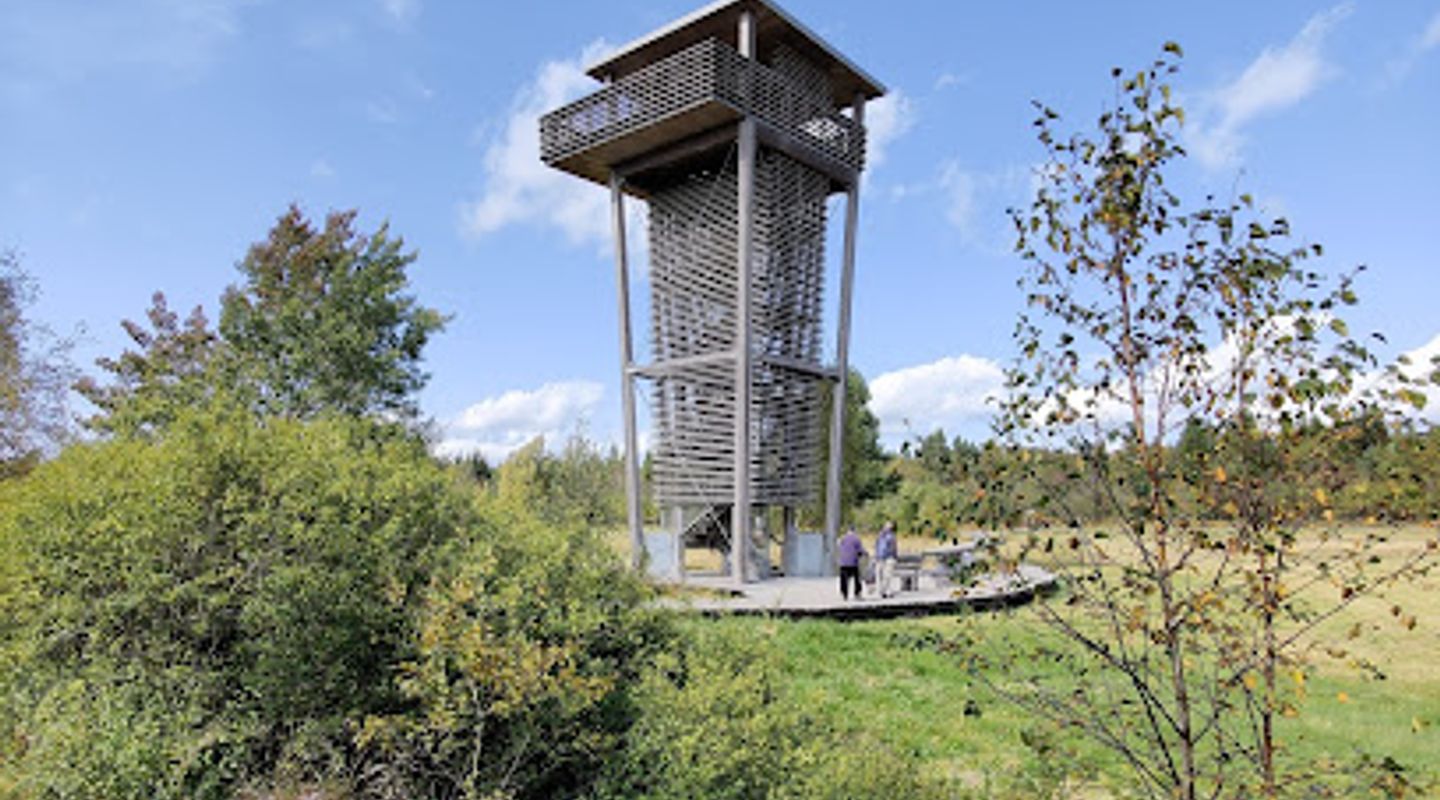
The Schwarzes Moor (Black Moor), a protected raised bog in the Rhön Biosphere Reserve near Fladungen, offers a unique and enchanting experience. A boardwalk trail meanders through this fragile ecosystem, allowing visitors to explore its unique flora and fauna without disturbing the delicate environment. Informative panels provide insights into the moor's ecology, history, and the rare species that call it home. A viewing tower offers panoramic views of the expansive moorland, making it a memorable destination for nature lovers and families seeking a tranquil escape. The adjacent information center provides further details about the moor and the surrounding Rhön region, enhancing the visitor experience.
Opening hours
- Every day6 am–9 pm
Opening hours as listed on the venue’s Google Business Profile. Hours can change for services and special events, so check with the venue before you go.
- Address
- Schwarzes Moor 1, 97650 Fladungen
- Phone
- Website
Getting there
Driving
Public Transport
Taxi/Ride-Share
Discover more about Black Moor
Overview
The Schwarzes Moor, nestled within the UNESCO Rhön Biosphere Reserve, is one of Central Europe's most significant raised bogs, a landscape steeped in history, mystery, and ecological importance. Straddling the border triangle of Bavaria, Hesse, and Thuringia, this natural wonder offers visitors an immersive journey into a unique and fragile environment. The moor's dark, peaty soil and specialized plant life create an otherworldly atmosphere, a stark contrast to the surrounding rolling hills of the Rhön region. Historically, the Schwarzes Moor has been shaped by both natural processes and human intervention. Over thousands of years, the accumulation of sphagnum moss and other bog plants has created a thick layer of peat, transforming the landscape into a waterlogged environment. In centuries past, peat was harvested from the moor as a source of fuel, leaving its mark on the landscape. Today, the Schwarzes Moor is a protected nature reserve, its ecological integrity carefully managed to preserve its unique biodiversity. The heart of the Schwarzes Moor experience is the 2.2-kilometer boardwalk trail that winds its way through the bog. This elevated pathway allows visitors to explore the moor's diverse habitats without disturbing the delicate ecosystem. Along the trail, 23 informative panels provide fascinating insights into the moor's ecology, geology, and history. Learn about the specialized plants that thrive in the acidic, nutrient-poor conditions, such as sundews, cotton grass, and various species of sphagnum moss. Discover the unique adaptations of animals that call the moor home, from rare bird species to specialized insects. The boardwalk trail is designed to be accessible to visitors of all ages and abilities, with gentle gradients and sturdy construction. Families with children will appreciate the interactive exhibits along the trail, including the 'dandelion trail' with ten panels designed to engage young minds. For those who want to experience the moor firsthand, an artificial moor pool offers the opportunity to wade through the cool, peaty water (foot-washing facilities are available, though may be closed in colder months). Approximately halfway along the boardwalk, visitors will encounter the observation tower, a prominent structure that offers panoramic views of the Schwarzes Moor and the surrounding Rhön landscape. From this elevated vantage point, the vastness of the moor unfolds, revealing its intricate patterns of vegetation, pools, and drainage channels. The tower provides a unique perspective on the moor's ecological complexity and its place within the broader landscape. The Schwarzes Moor is not only a haven for nature lovers but also a place of historical significance. The moor has been the site of archaeological discoveries, including well-preserved bog bodies that offer insights into the lives of people who lived in the region centuries ago. These discoveries underscore the moor's role as a repository of history, preserving organic materials that would otherwise have decayed. Beyond the boardwalk trail, the Schwarzes Moor offers opportunities for further exploration and discovery. The adjacent information center provides detailed exhibits about the moor's ecology, history, and the broader Rhön region. Knowledgeable staff are on hand to answer questions and provide guidance. The information center also offers a range of educational programs and guided tours, catering to different interests and age groups. The Schwarzes Moor is a destination that appeals to all senses. The air is fresh and clean, carrying the scent of peat and damp vegetation. The sounds of nature fill the air, from the calls of birds to the rustling of leaves. The textures of the moor are diverse, from the spongy sphagnum moss to the rough bark of the trees. And the views are breathtaking, especially from the observation tower. Visiting the Schwarzes Moor is an experience that will leave a lasting impression. It is a place to connect with nature, to learn about the importance of preserving fragile ecosystems, and to appreciate the beauty of the natural world. Whether you are a seasoned hiker, a nature enthusiast, or simply looking for a peaceful escape, the Schwarzes Moor offers something for everyone. The Schwarzes Moor is easily accessible by car, with ample parking available near the information center. Public transportation options are also available, with bus services connecting Fladungen to nearby towns. The moor is open year-round, but the best time to visit is during the warmer months when the weather is mild and the vegetation is lush. During the winter months, the boardwalk trail may be icy or snow-covered, so appropriate footwear is recommended. The Schwarzes Moor is more than just a tourist attraction; it is a valuable natural resource that plays a vital role in the region's ecology. The moor acts as a sponge, absorbing rainwater and releasing it slowly, helping to regulate water flow and prevent flooding. The moor also sequesters carbon, helping to mitigate climate change. By visiting the Schwarzes Moor, you are supporting the conservation of this important ecosystem and contributing to the sustainable development of the Rhön region. In conclusion, the Schwarzes Moor is a must-see destination for anyone visiting the Rhön region. Its unique landscape, rich history, and ecological importance make it a truly special place. Whether you are exploring the boardwalk trail, climbing the observation tower, or learning about the moor's ecology at the information center, you are sure to have an unforgettable experience.
Evendo Review Centre
 Google
Guest reviews
Explore Black Moor on the map
A handpicked selection of must-see spots near Black Moor, mapped for you.
Get your free copy of our complete guide to Black Moor, delivered straight to you.
Everything on this page, from opening hours and how to get there to Eve’s tips and the best time to go, in one PDF you can read offline, print or share.
Already have an account? Sign in
Your Black Moor guide is ready.
We'll send it to · Not you? Sign out

Getting your guide ready…
We are putting together a fresh copy of the Black Moor guide. This can take up to a minute.
This can take a few moments. If your browser asks, choose Allow so the download can start. You'll find the guide in your Downloads folder.
Nothing happened? Download it again
Sorry, the guide is taking longer than usual. Please try again in a minute, or get it by email instead.
Other nearby places you may find interesting
The closest places of the same kind, if this one is not quite what you had in mind.
-
-
-
-
-


Swipe for more places
More to explore near Black Moor

 Best experiences near Black Moor
 Best hotels near Black Moor
 Best landmarks near Black Moor
 Best attractions near Black Moor
 Best shops near Black Moor
 Best restaurants near Black Moor
 Best bars near Black Moor
Do you manage this location?
Take control to get all the benefits, like improved information, better appearance, and stronger visibility across AI-powered discovery.
Explore more

Explore more of Franconia
Discover Franconia in Germany: A region bursting with medieval charm, natural beauty, and culinary delights, perfect for travelers seeking history, nature, and local flavors.
Explore Franconia
Explore more of Germany
Experience Germany: where history meets innovation, and urban energy blends with natural beauty. Discover diverse cultures, delicious cuisine, and stunning landscapes.
Explore Germany