Linderhof Palace Travel Guide
Free Guide: Discover Linderhof Palace, King Ludwig II's intimate Rococo masterpiece nestled in the Bavarian Alps, featuring opulent interiors and breathtaking gardens inspired by Versailles.


A brief summary of Linderhof Palace
Discover Linderhof Palace, King Ludwig II's intimate Rococo masterpiece nestled in the Bavarian Alps, featuring opulent interiors and breathtaking gardens inspired by Versailles.
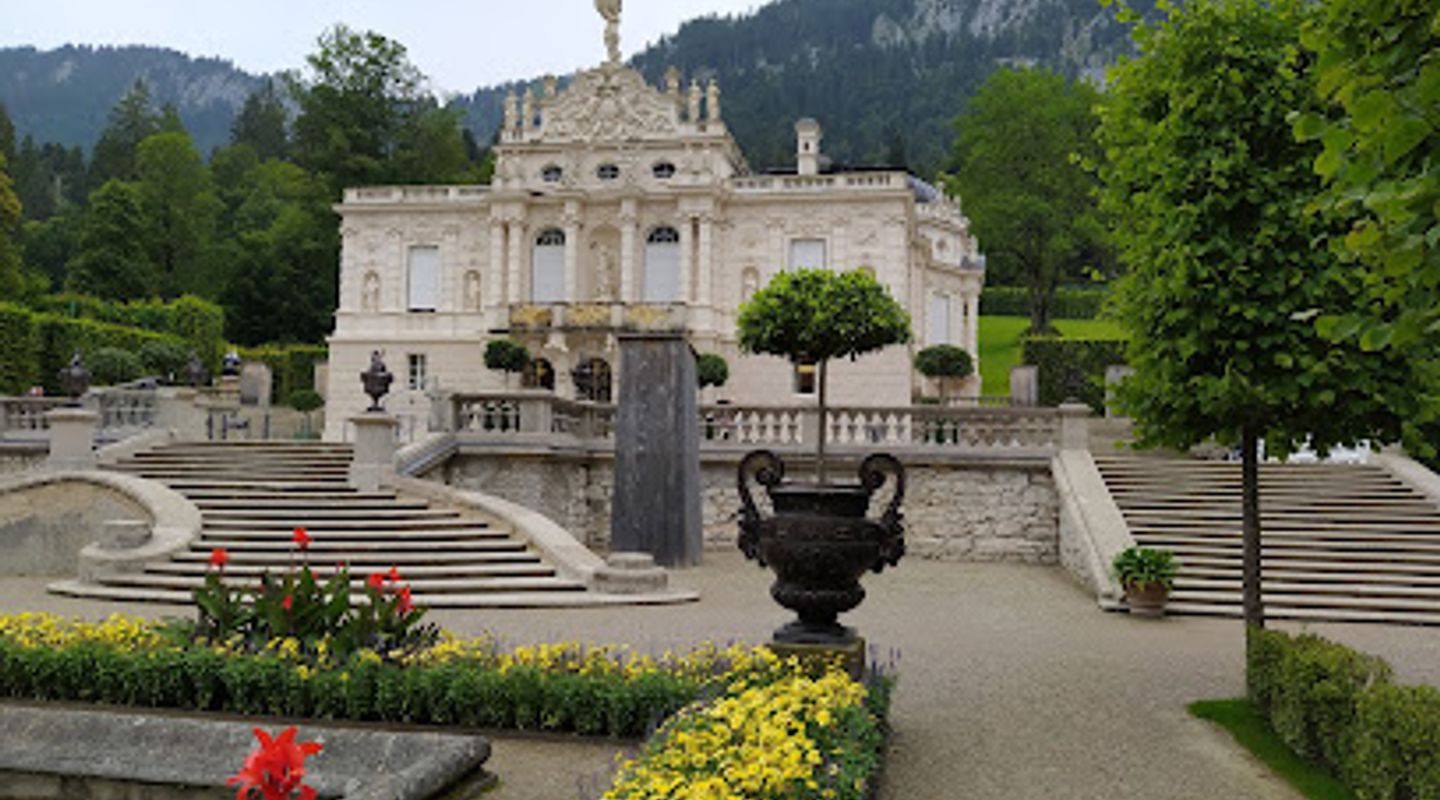
Nestled in the Graswang Valley, Linderhof Palace is the smallest of King Ludwig II's three palaces, but the only one he lived to see completed. Inspired by the Palace of Versailles, this intimate royal villa showcases stunning Rococo architecture and elaborate gardens. Visitors can explore the opulent interiors on a guided tour, marvel at the Hall of Mirrors, and wander through the meticulously designed park, complete with fountains, grottos, and exotic pavilions. Linderhof offers a glimpse into the extravagant world of Bavaria's "Fairytale King" and his fascination with French absolutism, making it a captivating destination for history buffs and garden enthusiasts alike. Don't miss the Venus Grotto, an artificial cave inspired by Wagnerian opera.
- Address
- Linderhof 12, 82488 Ettal
- Phone
- Website
Getting there
Public Transport
Driving
Discover more about Linderhof Palace
Overview
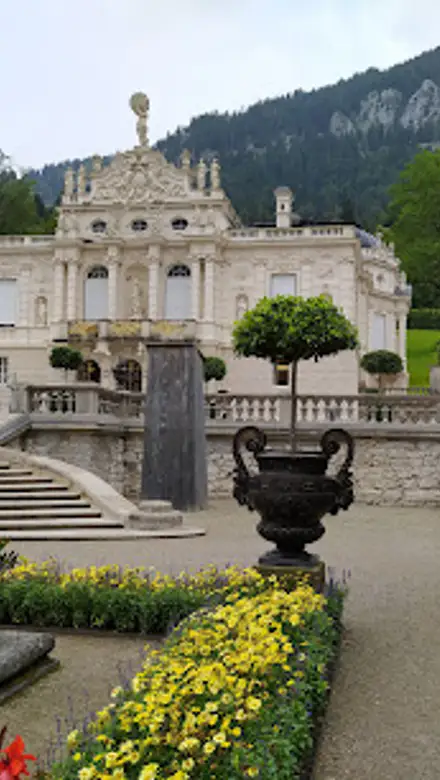
Linderhof Palace, a jewel of Rococo architecture nestled in the Bavarian Alps, offers a captivating glimpse into the opulent world of King Ludwig II. Unlike his more famous, unfinished projects like Neuschwanstein and Herrenchiemsee, Linderhof stands as the only palace Ludwig II fully realized, making it a particularly intimate reflection of his personal tastes and eccentricities. The palace's history began with a humble hunting lodge owned by Ludwig's father, King Maximilian II. The young Ludwig often accompanied his father on hunting trips to the Graswang Valley, developing an early connection to the area. After ascending the throne, Ludwig transformed the lodge into a royal villa, gradually expanding and embellishing it between 1869 and 1878. His initial vision was to create a grand palace akin to Versailles, but the narrowness of the valley prompted a more intimate design, drawing inspiration from the Petit Trianon at Versailles and the Palace of Marly-le-Roi. Linderhof Palace is a testament to Ludwig's admiration for the French monarchy, particularly Louis XIV, the "Sun King." The palace's architecture and interior design are heavily influenced by the Rococo style of the mid-18th century, characterized by elaborate ornamentation, delicate curves, and a sense of playful elegance. The Hall of Mirrors, a dazzling gallery adorned with mirrors and chandeliers, is a prime example of this aesthetic, creating an illusion of endless space and reflecting the king's desire for grandeur. The palace's opulent interiors are filled with symbols of French absolutism, reflecting Ludwig's belief in the divine right of kings. Portraits of French monarchs and courtiers adorn the walls, while the sun motif, a symbol of Louis XIV, appears throughout the palace. Ludwig saw himself as a divinely appointed ruler, a concept increasingly out of step with the political realities of 19th-century Europe. Beyond the palace walls, the meticulously designed gardens are an integral part of the Linderhof experience. Court Garden Director Carl von Effner created a harmonious blend of French Baroque and English landscape garden styles. Formal parterres with geometric flowerbeds and ornate fountains contrast with the naturalistic beauty of the surrounding parkland. The gardens are dotted with various pavilions and structures, each adding to the palace's unique charm. One of the most remarkable features of the Linderhof gardens is the Venus Grotto, an artificial cave inspired by Wagner's opera "Tannhäuser." Ludwig was a fervent admirer of Wagner's music and commissioned the grotto as a private theatrical space. The grotto features a lake, waterfall, and elaborate lighting effects, creating a fantastical and otherworldly atmosphere. The Venus Grotto was even equipped with one of Bavaria's first electricity generators. Other notable structures in the park include the Moorish Kiosk, purchased from the Paris World Exhibition, and the Royal Lodge, which houses exhibits on the palace's construction history. The park also features a cascading fountain, a Temple of Venus, and numerous statues and sculptures. Visiting Linderhof Palace offers a unique opportunity to step back in time and experience the extravagant world of King Ludwig II. The palace's intimate scale, opulent interiors, and stunning gardens create a captivating and unforgettable destination. Whether you are a history buff, an architecture enthusiast, or simply seeking a moment of beauty and tranquility, Linderhof Palace is sure to enchant and inspire. Today, the palace and grounds remain largely unchanged since the 1880s. Visitors can explore the palace through guided tours, offered in both German and English. The surrounding park is open to the public free of charge, allowing visitors to wander through the gardens and discover the various hidden gems. Linderhof Palace is easily accessible by car and public transportation, making it a popular day trip destination from Munich and other nearby cities. The palace is part of a tentative UNESCO World Heritage Site listing, along with Neuschwanstein and Herrenchiemsee, recognizing its cultural and historical significance.
Evendo Review Centre
 Google
Guest reviews
Explore Linderhof Palace on the map
A handpicked selection of must-see spots near Linderhof Palace, mapped for you.
Get your free copy of our complete guide to Linderhof Palace, delivered straight to you.
Everything on this page, from opening hours and how to get there to Eve’s tips and the best time to go, in one PDF you can read offline, print or share.
Already have an account? Sign in
Your Linderhof Palace guide is ready.
We'll send it to · Not you? Sign out

Getting your guide ready…
We are putting together a fresh copy of the Linderhof Palace guide. This can take up to a minute.
This can take a few moments. If your browser asks, choose Allow so the download can start. You'll find the guide in your Downloads folder.
Nothing happened? Download it again
Sorry, the guide is taking longer than usual. Please try again in a minute, or get it by email instead.
Unlock the best of Linderhof Palace
Skip-the-line tickets, guided tours with entry, and walking tours of the area, booked in a few clicks.
 Tour with entry
Neuschwanstein, Linderhof Group or Private Tour from Munich
from $126.85 Tour with entry
Premium Neuschwanstein Castle and Linderhof VIP Tour from Munich
from $207.86 Tour with entry
VIP Daytrip Neuschwanstein, Linderhof and Grotto from Munich
from $207.86 Tour with entry
Neuschwanstein, Linderhof, and Oberammergau from Munich
from $207.86
 Tour
TourNeuschwanstein Castle and Linderhof Palace Day Trip from Munich
from $76.75 Tour
TourFull-day Trip to Neuschwanstein Castle and Linderhof from Munich
from $76.75 Tour
TourNeuschwanstein Castle and Linderhof Day Tour from Munich
from $78.88 Tour
TourNeuschwanstein, Linderhof and panoramic bus tour in Oberammergau
from $84.21
Other nearby places you may find interesting
The closest places of the same kind, if this one is not quite what you had in mind.
-
-
-
-
-


Swipe for more places
More to explore near Linderhof Palace

 Best experiences near Linderhof Palace
 Best hotels near Linderhof Palace
 Best landmarks near Linderhof Palace
 Best attractions near Linderhof Palace
 Best shops near Linderhof Palace
 Best restaurants near Linderhof Palace
 Best bars near Linderhof Palace
Do you manage this location?
Take control to get all the benefits, like improved information, better appearance, and stronger visibility across AI-powered discovery.
Explore more

Explore more of Franconia
Discover Franconia in Germany: A region bursting with medieval charm, natural beauty, and culinary delights, perfect for travelers seeking history, nature, and local flavors.
Explore Franconia
Explore more of Germany
Experience Germany: where history meets innovation, and urban energy blends with natural beauty. Discover diverse cultures, delicious cuisine, and stunning landscapes.
Explore Germany