

Nordend (Frankfurt) Travel Guide - Free
Explore Nordend in Frankfurt with Evendo's free guide. Find the best shops, historic streets, restaurants, and gems on web or mobile.


Nordend Frankfurt combines Gründerzeit architecture, leafy parks, Berger Straße cafés, independent shops and lively dining with a relaxed local atmosphere.
A Northern Extension of the City
North of Frankfurt's compact Innenstadt, Nordend is a largely urban residential district shaped by broad streets, late-nineteenth-century apartment buildings and a steady rhythm of cafés, bakeries and small shops. The name means simply “north end”, reflecting the area's position beyond the historic core. It is commonly understood as two overlapping local areas, Nordend-West and Nordend-Ost, with the busy corridor of Berger Straße continuing north-east towards Bornheim.Read more about Nordend
Streets, Parks and Architecture
Everyday Culture and Evening Life
Best attractions in Nordend
Nordend's attractions are primarily urban and local in scale, beginning with the handsome Gründerzeit streets around Oeder Weg and Berger Straße, where decorated façades, corner buildings and shopfronts reveal the district's nineteenth-century expansion. Holzhausenpark is the principal green setting, with lawns, mature trees and the pale Holzhausen Palace, a former family estate that gives the park its identity. Günthersburgpark provides a broader landscape of paths, open grass and recreational space in the eastern part of the neighbourhood. The Hauptfriedhof offers a different kind of exploration: its avenues, graves and memorials form a substantial historical landscape, while the adjoining Jewish cemetery is an important site of Jewish heritage and remembrance. Small cafés, independent shops and street life along Berger Straße and Oeder Weg complete the experience, showing Nordend as a functioning residential district rather than a cluster of isolated monuments.
-
Tourist attraction
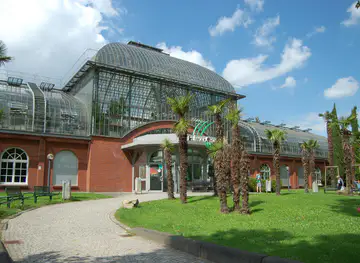
Palmengarten Frankfurt
Discover the breathtaking Palmengarten Frankfurt, a botanical garden oasis featuring diverse plant species and picturesque landscapes for nature enthusiasts.
6 min drive · 1.9 km from neighbourhood centre
-
Tourist attraction
Frankfurter Römer
Discover the Frankfurter Römer, a historical landmark in Frankfurt that captures the essence of the city’s vibrant culture and rich heritage.
15 min walk · 1.2 km from neighbourhood centre
-
Tourist attraction
Rothschildpark
Explore Rothschildpark: A Tranquil Oasis of Nature and Art in the Heart of Frankfurt.
12 min walk · 1.0 km from neighbourhood centre
-
Tourist attraction
Dom-Römer-Quartier
Discover the enchanting Dom-Römer-Quartier, where Frankfurt's historic charm meets modern vibrancy in a beautifully reconstructed neighborhood.
14 min walk · 1.1 km from neighbourhood centre


Best landmarks in Nordend
Holzhausen Palace is Nordend's most distinctive landmark, a small Baroque water castle standing within Holzhausenpark and recalling the importance of the Holzhausen family estate before the surrounding land became densely urbanised. The park itself is part of the landmark's meaning, preserving an open setting amid apartment blocks. Nordend's other major reference point is the Hauptfriedhof, whose extensive grounds, avenues, graves and memorials document Frankfurt's civic, artistic and religious history; the adjacent Jewish cemetery adds a separate and significant layer of communal memory. The district's Gründerzeit housing is also a collective landmark, especially around Oeder Weg and the streets near Holzhausenpark, where façades, entrances and enclosed blocks express the planning culture of nineteenth-century Frankfurt. Eschenheimer Turm stands just beyond Nordend's southern edge in the Innenstadt, so it is a nearby orientation point rather than a neighbourhood landmark.
-
 Historical market square
Römerberg
Discover Römerberg, Frankfurt's historic heart: a captivating blend of medieval architecture, imperial history, and vibrant cultural events in the city's iconic old town square.
15 min walk · 1.2 km from neighbourhood centre
-
State park
Bethmann Park
Discover Frankfurt's hidden gem: Bethmann Park, a historic green space with a serene Chinese Garden, offering a tranquil escape in the heart of the city.
8 min walk · 0.7 km from neighbourhood centre
-
State park
Adolph von Holzhausen Park
Experience the beauty of nature and tranquility at Adolph von Holzhausen Park, an urban oasis in the heart of Frankfurt, perfect for relaxation.
8 min walk · 0.6 km from neighbourhood centre
-
Historical landmark
Holzhausen Palace
Discover Frankfurt's hidden gem: Holzhausen Palace, a moated baroque masterpiece hosting cultural events in a serene park setting, blending history and community.
8 min walk · 0.6 km from neighbourhood centre


Explore Nordend on the map
A handpicked selection of must-see spots in Nordend, mapped for you.
Best hotels in Nordend
Best restaurants in Nordend
Nordend's dining scene is concentrated along Berger Straße, Oeder Weg, Glauburgstraße and the connecting side streets, where everyday cafés and bakeries sit alongside restaurants serving a broad range of cuisines. The area's older urban fabric supports small, independent premises rather than a single formal dining quarter, and meals often spill into pavement seating when weather allows. Visitors can find straightforward German and European cooking, Italian restaurants, Middle Eastern and other international influences, vegetarian options, coffee shops and places suited to a casual evening meal. Berger Straße is particularly useful for comparing different styles in one walk, while Oeder Weg has a more mixed local-retail and café character. The neighbourhood's food culture reflects Frankfurt's diverse inner-city population and its long-standing role as a residential district close to the centre, with the emphasis on repeat local custom rather than destination dining alone.
-
Italian
Ristorante Fontana di Trevi Frankfurt
Indulge in authentic Italian flavors at Ristorante Fontana di Trevi in Frankfurt – where every meal is a celebration of culinary art.
2 min walk · 0.1 km from neighbourhood centre
-
Persian
Schandis
Discover authentic Persian flavors at Schandis in Frankfurt - where every dish tells a story.
14 min walk · 1.1 km from neighbourhood centre
-
Restaurant
Seefeld
Discover Seefeld: A culinary delight in Frankfurt offering modern twists on traditional German dishes amidst a warm and inviting atmosphere.
4 min walk · 0.3 km from neighbourhood centre
-
Italian
Settimo Cielo
Experience authentic Italian cuisine at Settimo Cielo in Frankfurt—where every meal is a celebration of flavors.
6 min walk · 0.5 km from neighbourhood centre


Best bars in Nordend
Nordend is lively after dark but is not primarily a nightclub district. Bars, wine-led venues and informal evening places cluster along Berger Straße, Oeder Weg and nearby side streets, drawing a local crowd that mixes dinner, conversation and late drinks. Some cafés become relaxed evening venues, while smaller bars provide a more intimate alternative to the large entertainment areas elsewhere in Frankfurt. The neighbourhood's atmosphere is social and walkable, with outdoor tables especially noticeable in warmer months, yet apartment buildings remain close to most venues. There is little reason to expect a concentrated strip of major clubs inside Nordend; visitors looking for large-scale dancing generally continue towards the Innenstadt or other parts of the city. On returning late, remember that lively pavements and residential entrances share the same narrow streets, so keeping noise down is part of the local etiquette.
-
Cocktail bar
Antony's Bar - Frankfurt am Main
Experience the vibrant nightlife of Frankfurt at Antony's Bar, known for its exquisite cocktails, stylish atmosphere, and welcoming vibe.
10 min walk · 0.8 km from neighbourhood centre
-
Bar
Logenhaus-Bar
Discover the luxurious ambiance of Logenhaus-Bar in Frankfurt, a perfect blend of modern design and quality drinks for every occasion.
4 min walk · 0.3 km from neighbourhood centre
-
Bar
Feinstaub
Discover Feinstaub, a cozy bar in Frankfurt am Main, perfect for unwinding with friends while enjoying a diverse selection of drinks.
12 min walk · 1.0 km from neighbourhood centre
-
Wine bar
Weinstube im Nordend
Explore the heart of Frankfurt's wine culture at Weinstube im Nordend, where delightful German wines meet hearty local cuisine.
6 min walk · 0.5 km from neighbourhood centre


Best nightclubs in Nordend
Nordend is lively after dark but is not primarily a nightclub district. Bars, wine-led venues and informal evening places cluster along Berger Straße, Oeder Weg and nearby side streets, drawing a local crowd that mixes dinner, conversation and late drinks. Some cafés become relaxed evening venues, while smaller bars provide a more intimate alternative to the large entertainment areas elsewhere in Frankfurt. The neighbourhood's atmosphere is social and walkable, with outdoor tables especially noticeable in warmer months, yet apartment buildings remain close to most venues. There is little reason to expect a concentrated strip of major clubs inside Nordend; visitors looking for large-scale dancing generally continue towards the Innenstadt or other parts of the city. On returning late, remember that lively pavements and residential entrances share the same narrow streets, so keeping noise down is part of the local etiquette.
-
Night club
Gibson
Experience Frankfurt's vibrant nightlife at Gibson, a premier night club with live concerts and delicious dining options in the heart of the city.
10 min walk · 0.8 km from neighbourhood centre
-
Disco club
Silbergold - Frankfurt am Main
Discover Frankfurt's nightlife at Silbergold, a top disco club in the heart of the city, where dancing and great music await every night.
11 min walk · 0.9 km from neighbourhood centre
-
Disco club
FREUD
Discover FREUD, Frankfurt's vibrant disco club, where electrifying beats and a dynamic atmosphere create an unforgettable nightlife experience.
10 min walk · 0.8 km from neighbourhood centre
-
Night club
le PANTHER
Discover the electrifying nightlife at le PANTHER, a premier night club in Frankfurt known for its vibrant atmosphere and unforgettable parties.
9 min walk · 0.7 km from neighbourhood centre


Best shops in Nordend
Shopping in Nordend is local, varied and woven into residential streets rather than organised around a large shopping centre. Berger Straße is the principal commercial spine, with food shops, bakeries, cafés, specialist businesses and independent retailers extending towards Bornheim; only its southern and central stretches should be treated as Nordend, since the street continues beyond the neighbourhood. Oeder Weg offers another useful concentration of everyday shopping, small fashion and lifestyle businesses, cafés and specialist food retailers. Side streets contain additional neighbourhood services and occasional independent shops, while the area's international population is reflected in the range of groceries and casual food businesses. This is a district for browsing shopfronts and combining errands with a walk through Gründerzeit streets, not for a single concentrated market or luxury retail experience. Stock, opening arrangements and the balance of independent businesses naturally change over time.
-
Used clothing store
OLA Vintage & Second Hand Ware
Explore OLA Vintage & Second Hand Ware, Frankfurt's premier destination for sustainable fashion with unique vintage finds.
11 min walk · 0.8 km from neighbourhood centre
-
Gift shop
SPAZIO CONCEPT STORE
Explore the innovative designs and unique gifts at SPAZIO CONCEPT STORE, Frankfurt's premier shopping destination for fashion and accessories.
14 min walk · 1.1 km from neighbourhood centre
-
Clothing store
glore Frankfurt
Explore sustainable fashion at Glore Frankfurt, where style meets eco-consciousness in the heart of the city.
2 min walk · 0.2 km from neighbourhood centre
-
Gift shop
o.t.b.t. off the beaten track
Explore Frankfurt's hidden gem for unique, locally crafted gifts and souvenirs at o.t.b.t. off the beaten track.
9 min walk · 0.8 km from neighbourhood centre


Nordend essentials
Getting There
Getting Around
Safety
Emergency Situations
Do's and Don'ts
Local Tips

From Eve
Local phrases worth knowing
You don't need to get them perfect. A few words go a long way, and locals appreciate the effort.
Basics
| English | Local | Say it |
|---|---|---|
| Hello | Hallo | [hah-loh] |
| Goodbye | Auf Wiedersehen | [owf vee-der-zay-en] |
| Yes | Ja | [yah] |
| No | Nein | [nine] |
| Please/You're welcome | Bitte | [bit-teh] |
| Thank you | Danke | [dahn-keh] |
| Excuse me/Sorry | Entschuldigung | [ent-shool-di-gung] |
| How are you? | Wie geht es dir? | [vee gayt es deer] |
| Fine. And you? | Gut. Und dir? | [goot oont deer] |
| Do you speak English? | Sprechen Sie Englisch? | [shpre-khen zee eng-leesh] |
| I don't understand | Ich verstehe nicht | [ikh fer-shtay-eh nikht] |
Eating & Drinking
| English | Local | Say it |
|---|---|---|
| I'd like to see the menu, please | Ich hätte gerne die Speisekarte, bitte | [ikh hah-teh gehr-neh dee shp-eye-ze-kar-teh, bit-teh] |
| I don't eat meat | Ich esse kein Fleisch | [ikh ess-eh kine flysh] |
| Cheers! | Prost! | [prohst] |
| I would like to pay, please | Ich möchte bitte zahlen | [ikh merkht-eh bit-teh tsah-len] |
Emergencies
| English | Local | Say it |
|---|---|---|
| Help! | Hilfe! | [hill-feh] |
| Go away! | Gehen Sie weg! | [gey-en zee vekh] |
| Call the Police! | Rufen Sie die Polizei! | [roo-fen zee dee poh-lee-tsai] |
| Call a doctor! | Rufen Sie einen Arzt! | [roo-fen zee i-nen arts] |
| I'm lost | Ich habe mich verirrt | [ikh hah-beh meesh feh-rihrt] |
| I'm ill | Ich bin krank | [ikh bin krank] |
Shopping
| English | Local | Say it |
|---|---|---|
| I'd like to buy... | Ich möchte ... kaufen | [ikh merkht-eh ... kow-fen] |
| I'm just looking | Ich schaue nur | [ikh sh-ow-eh noor] |
| How much is it? | Wie viel kostet es? | [vee feel koh-stet es] |
| That's too expensive | Das ist zu teuer | [dahs ist tsoh toy-er] |
| Can you lower the price? | Können Sie den Preis senken? | [kern-en zee den prise zeng-ken] |
Time & Numbers
| English | Local | Say it |
|---|---|---|
| What time is it? | Wie spät ist es? | [vee shpet ist es] |
| It's one o'clock | Es ist ein Uhr | [es ist iyn oor] |
| Half past (10) | Halb (zehn) | [halb (tsayn)] |
| Morning | Morgen | [mor-gen] |
| Afternoon | Nachmittag | [nahkh-mit-tahk] |
| Evening | Abend | [ah-bent] |
| Yesterday | Gestern | [gehs-tern] |
| Today | Heute | [hoy-teh] |
| Tomorrow | Morgen | [mor-gen] |
| 1 | Eins | [eyns] |
| 2 | Zwei | [tsvay] |
| 3 | Drei | [dry] |
| 4 | Vier | [feer] |
| 5 | Fünf | [foonf] |
| 6 | Sechs | [zeks] |
| 7 | Sieben | [zee-ben] |
| 8 | Acht | [ahkt] |
| 9 | Neun | [noyn] |
| 10 | Zehn | [tsayn] |
Transport & Directions
| English | Local | Say it |
|---|---|---|
| Where's a/the...? | Wo ist ein/der...? | [vo ist iyn/dehr] |
| What's the address? | Was ist die Adresse? | [vas ist dee ah-dre-suh] |
| Can you show me (on the map)? | Können Sie mir zeigen (auf der Karte)? | [kern-en zee meer tsai-gen (owf dehr kar-teh)] |
| When's the next (bus)? | Wann kommt der nächste (Bus)? | [vahn kohmt dehr nehk-steh (boos)] |
| A ticket (to ....) | Eine Fahrkarte (nach ....) | [i-nuh fahr-kahr-teh (nahkh ....)] |
History of Nordend
Fields Beyond Frankfurt's Walls
Before Nordend became an urban district, the land north of Frankfurt's fortified core was predominantly open country used for fields, gardens and rural estates. The name describes its geographical relationship to the old city rather than a medieval quarter with clearly defined boundaries. Paths leading out towards the northern villages crossed an area that remained comparatively rural while Frankfurt's historic centre was enclosed. The later neighbourhood therefore grew through outward expansion rather than from a single original settlement, and its present street plan reflects the transformation of agricultural land into planned urban blocks.
The Gründerzeit Expansion
Nordend developed rapidly during Frankfurt's nineteenth-century growth, especially after the removal of restrictions associated with the former fortifications and the wider economic expansion of the Gründerzeit. New streets were laid out with dense perimeter blocks and multi-storey apartments for a growing urban population. Roads such as Oeder Weg and the routes towards Bornheim became important connections, while villas, gardens and institutions occupied larger plots in parts of the district. Much of the architectural character visitors see today—stucco façades, decorated entrances, courtyards and corner buildings—comes from this period of speculative and residential construction.
Parks, Estates and Civic Institutions
The nineteenth and early twentieth centuries also established several of Nordend's defining open spaces and institutions. Holzhausenpark preserved the setting of the Holzhausen family estate, whose surviving palace remains a local landmark, while the Hauptfriedhof opened in 1828 on the northern side of Frankfurt and gradually became a substantial cemetery landscape. The neighbouring Jewish cemetery, established in the nineteenth century, records the long-standing presence and civic importance of Frankfurt's Jewish community. These sites provided Nordend with spaces that contrasted with its increasingly dense housing and commercial streets.
War, Reconstruction and Continuity
Frankfurt suffered extensive aerial destruction during the Second World War, and Nordend lost some buildings while others survived or were repaired. Post-war rebuilding introduced functional apartment blocks and altered individual streets, but the district retained a considerable amount of its pre-war urban fabric. In the decades after 1945, Nordend remained a mixed residential area close to the centre, supported by local shopping streets and public transport rather than a single dominant industry. Its cemeteries, parks and surviving Gründerzeit buildings provide visible links with earlier phases of the neighbourhood's development.
A Changing Inner-City District
From the late twentieth century onwards, Nordend became increasingly associated with inner-city cafés, independent businesses, cultural activity and rising residential demand. Streets such as Berger Straße and Oeder Weg developed a stronger leisure and dining role alongside their everyday retail functions. Renovation of older housing and the arrival of new residents brought investment but also contributed to wider debates about affordability and the changing social composition of Frankfurt's central districts. Today, Nordend combines its established residential identity with a busy local economy, while its historic architecture and parks continue to shape how the area is experienced.
Nordend in Photos
Browse through our photo collection highlighting the charm and character of the destination.
Neighbourhoods near Nordend
The closest neighbourhoods to Nordend, if you have time for more than one stop.
-

-

-


Swipe for more neighbourhoods
Explore more

Explore more of Frankfurt
Frankfurt blends a reconstructed medieval centre, world-class museums, Main River walks, skyline views, markets and lively neighbourhood culture in Germany.
Explore Frankfurt