

Fort Queuleu Travel Guide
Free Guide: Explore Fort Queuleu in Metz: A historical fortress turned poignant memorial, offering insights into military architecture and wartime resistance in Lorraine.


A brief summary of Fort Queuleu
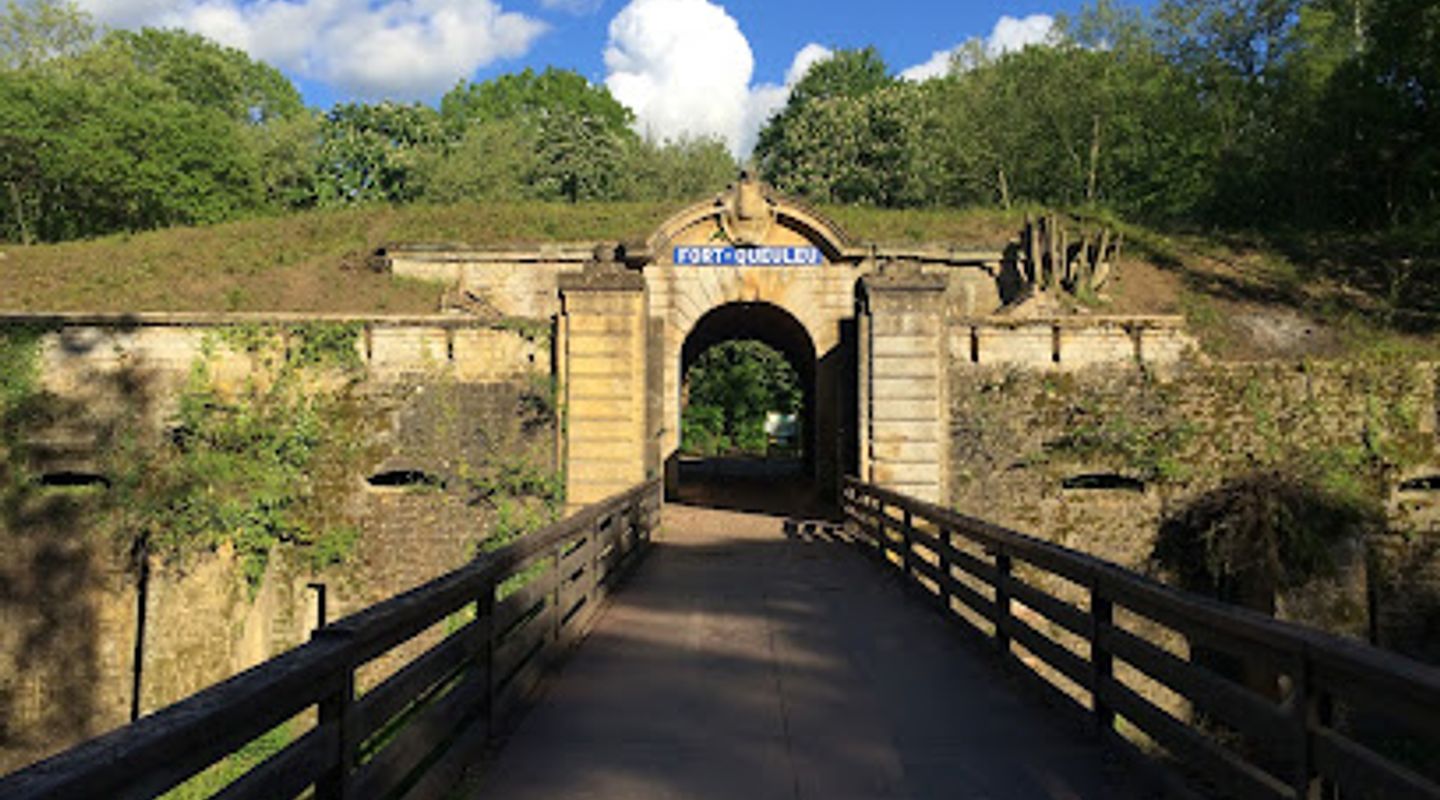
Explore Fort Queuleu in Metz: A historical fortress turned poignant memorial, offering insights into military architecture and wartime resistance in Lorraine.
Fort Queuleu, located near Metz, France, is a historical landmark with a rich and complex past. Originally constructed in the late 19th century as part of Metz's first ring of fortifications, it later served as a Nazi internment camp during World War II, known as the "Hell of Queuleu." Today, it stands as a memorial to the Resistance and Deportation, offering visitors a glimpse into its military architecture and a somber reminder of its role in wartime atrocities. Explore its well-preserved walls, underground passages, and the Departmental Memorial, while also enjoying the surrounding parkland. Guided tours provide deeper insights into the fort's history, making it a compelling destination for history enthusiasts and those seeking to pay their respects. The site is partially accessible to visitors with limited mobility and offers free parking.
Opening hours
- Every day7:30 am–9 pm
Opening hours as listed on the venue’s Google Business Profile. Hours can change for services and special events, so check with the venue before you go.
- Address
- 36V4+V5, All. Jean Burger, 57070 Metz, France
- Phone
- Website
Getting there
Public Transport
Taxi/Ride-Share
Driving
Discover more about Fort Queuleu
Overview
Fort Queuleu, also known as Fort Goeben, is a significant historical site located southeast of Metz, France. Constructed between 1868 and 1870, it formed part of the city's initial defensive fortifications. The fort's history is marked by periods of both French and German control, reflecting the region's complex past. Originally built by the French, construction was interrupted by the Franco-Prussian War. Following the war and the annexation of Alsace-Lorraine, the German Empire took over and enhanced the fort between 1872 and 1875, renaming it Fort Goeben. It became a key component of Metz's defenses, showcasing the Séré de Rivières system of fortification, characterized by a discontinuous enclosure using a series of artillery forts. The fort's design, reminiscent of Vauban's 18th-century bastioned enclosures, featured casemates on two levels and surface-mounted artillery. While Fort Queuleu did not see military action during World War I, it played a dark role in World War II. From 1943 to 1944, the German occupiers used it as a special camp (Sonderlager) run by the Gestapo. This camp served as an internment and interrogation center for members of the French Resistance, saboteurs, smugglers, hostages, and those evading forced labor in Germany. Conditions within the fort were brutal; prisoners endured torture, overcrowding, and were often kept blindfolded with their hands and feet bound. Thirty-six people died within its walls, and though four managed to escape, many were sent to concentration camps or prisons. After the war, from December 1944 to March 1946, the fort served as a "guarded residence center" for German civilians and administrative internees accused of collaboration. Later, it housed German prisoners of war (1946-1947) and Indochinese workers (1948-1950). In 1971, Fort Queuleu was designated a historical monument, and in 1977, it became the property of the city of Metz. Today, it stands as a memorial to the Resistance and Deportation, with a monument designed by architect R. Zonca marking the entrance. The Association du Fort de Metz-Queuleu works to preserve the site and maintain the memory of those who suffered there. Visitors can explore the fort's grounds, including Casemate A, which served as the main internment area during the Nazi occupation. Guided tours, often led by members of the Association, provide detailed narratives of the fort's history and the experiences of its prisoners. The site also features a health trail and wooded areas for leisurely walks. While the fort has undergone periods of closure due to storms and safety concerns, efforts have been made to ensure partial accessibility, with ongoing maintenance and restoration work. Visiting Fort Queuleu offers a unique opportunity to delve into the region's complex history and pay tribute to the resilience of those who resisted oppression. The site serves as a reminder of the atrocities of war and the importance of preserving historical memory. The fort is open to the public at scheduled times, and visitors are encouraged to check the Association's website for the most up-to-date information on opening hours and tour schedules. The site is partially accessible to visitors with limited mobility, and free parking is available on-site.
Evendo Review Centre
 Google
Guest reviews
Explore Fort Queuleu on the map
A handpicked selection of must-see spots near Fort Queuleu, mapped for you.
Get your free copy of our complete guide to Fort Queuleu, delivered straight to you.
Everything on this page, from opening hours and how to get there to Eve’s tips and the best time to go, in one PDF you can read offline, print or share.
Already have an account? Sign in
Your Fort Queuleu guide is ready.
We'll send it to · Not you? Sign out

Getting your guide ready…
We are putting together a fresh copy of the Fort Queuleu guide. This can take up to a minute.
This can take a few moments. If your browser asks, choose Allow so the download can start. You'll find the guide in your Downloads folder.
Nothing happened? Download it again
Sorry, the guide is taking longer than usual. Please try again in a minute, or get it by email instead.
Other nearby places you may find interesting
The closest places of the same kind, if this one is not quite what you had in mind.
-
-
-
-
-


Swipe for more places
More to explore near Fort Queuleu

 Best experiences near Fort Queuleu
 Best hotels near Fort Queuleu
 Best landmarks near Fort Queuleu
 Best attractions near Fort Queuleu
 Best shops near Fort Queuleu
 Best restaurants near Fort Queuleu
 Best bars near Fort Queuleu
Do you manage this location?
Take control to get all the benefits, like improved information, better appearance, and stronger visibility across AI-powered discovery.
Explore more

Explore more of Moselle
Discover the Moselle Valley in Germany: a scenic paradise of vineyards, historic castles, and charming villages nestled along the serene Moselle River.
Explore Moselle
Explore more of Germany
Experience Germany: where history meets innovation, and urban energy blends with natural beauty. Discover diverse cultures, delicious cuisine, and stunning landscapes.
Explore Germany
