

Free Moselle Travel Guide & Mobile App
Explore Moselle with free travel guides. Discover regional history, expert tips, proposed trips, and audio guides on web or mobile app.


Explore Germany’s Moselle through Roman Trier, terraced vineyards, riverside villages, medieval castles, cycling routes and distinctive regional wines.
Read more about Moselle
When is the best time to visit Moselle?
Best: June–August · 22–24°C| Month | High (°C) | Rainfall (mm) |
|---|---|---|
| January | 4 | 55 |
| February | 4 | 50 |
| March | 9 | 55 |
| April | 13 | 50 |
| May | 19 | 55 |
| June (best) | 22 | 60 |
| July (best) | 24 | 65 |
| August (best) | 23 | 65 |
| September | 20 | 55 |
| October | 14 | 50 |
| November | 8 | 55 |
| December | 5 | 60 |
Getting to and around Moselle
How to get there
Transportation
Best attractions in Moselle
The Moselle’s attractions are closely tied to the river’s changing landscape. Trier provides the region’s deepest concentration of Roman heritage, including the Porta Nigra, Roman baths, amphitheatre and cathedral precinct, while the upper valley near Perl and Konz offers a softer transition between river farmland, vineyards and border country. Farther downstream, wine towns such as Bernkastel-Kues, Traben-Trarbach, Zell and Cochem combine historic centres with cellar visits, river cruises and access to vineyard paths. Castles form a recurring theme: Reichsburg overlooks Cochem, while Burg Eltz stands inland in a wooded side valley and requires a separate excursion from the river. Cycling is one of the most coherent ways to experience the region, particularly on the Moselle Cycle Route, while walking routes climb through terraces and forested slopes. Seasonal wine festivals, museums, boat trips and small local heritage collections add cultural depth, although opening arrangements vary outside the main season. The attraction landscape is therefore less about a single large resort than about linking Roman monuments, working vineyards, compact towns, castles and outdoor journeys along successive bends of the river.
-
Castle
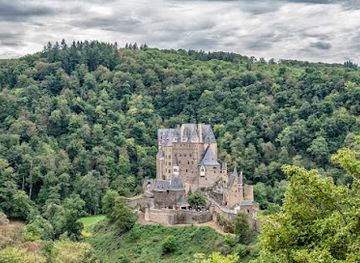
Eltz Castle
Experience the magic of Eltz Castle, a medieval masterpiece nestled in the Moselle Valley, rich in history and breathtaking landscapes.
-
Castle
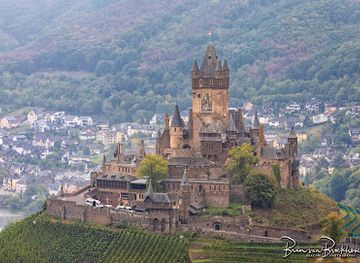
Cochem Castle
Explore the enchanting Cochem Castle, a historical gem overlooking the Moselle River, offering breathtaking views, rich history, and charming gardens.
-
Bridge
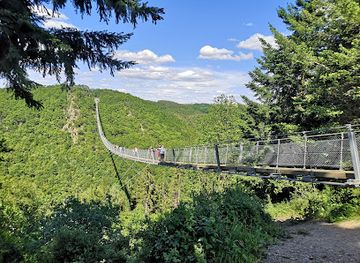
Geierlay Suspension Bridge
Discover the breathtaking Geierlay Suspension Bridge, a stunning feat of engineering nestled in the picturesque Hunsrück region of Germany.
-
Tourist attraction
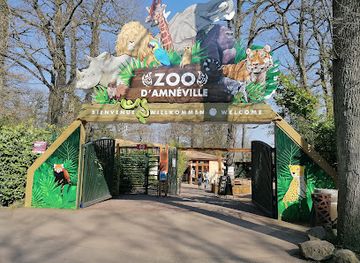
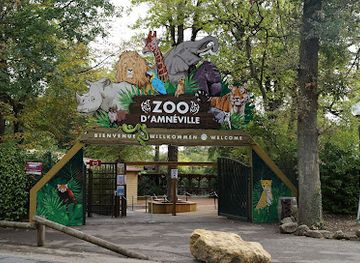
Zoo d'Amnéville
Experience the beauty of wildlife at Zoo d'Amnéville, a top-tier animal park in France offering diverse species and engaging educational experiences.


Best landmarks in Moselle
The Porta Nigra in Trier is the Moselle’s most recognisable historic structure, a monumental Roman city gate whose dark sandstone blocks reveal the scale and importance of Augusta Treverorum. Nearby, the Aula Palatina, Roman bridge and Imperial Baths form an exceptional group of late Roman remains. In the wine country, the medieval market square and half-timbered streets of Bernkastel-Kues express the architectural character of the central valley, while the ruined Grevenburg above Traben-Trarbach recalls the strategic importance of the river’s slopes. Cochem’s Reichsburg, rebuilt in a historicist style on a prominent hill above the town, is one of the valley’s defining silhouettes. Burg Eltz, although inland from the river in a wooded tributary valley, is a major landmark of the wider Moselle landscape. The river itself is also a defining geographical landmark: broad bends, vineyard terraces, locks and wooded ridges create the visual identity that links otherwise different towns from the Luxembourg border to the Rhine.
-
 Historical place
Porta Nigra
Explore the Porta Nigra, Trier's iconic Roman gate: a journey through centuries of history, from Roman empire to medieval church, offering panoramic city views.
-
Castle
Eltz Castle
Discover a fairytale castle untouched by time: Explore the medieval world of Eltz Castle, a family-owned treasure nestled in Germany's enchanting Eltz Forest.
-
Castle
Cochem Castle
Discover Reichsburg Cochem, a majestic Neo-Gothic castle overlooking the Moselle Valley, offering guided tours, panoramic views, and a glimpse into Germany's rich history.
-
Zoo
Zoo d'Amnéville
Discover over 2,000 animals from around the world at Zoo d'Amnéville, a leading zoological park dedicated to wildlife conservation and education in the heart of France's Grand Est region.
Explore Moselle on the map
Plan your trip on one map. See where the top cities, national parks and sights are, and book hotels and experiences in a few clicks.
Best hotels in Moselle
Best restaurants in Moselle
Dining along the Moselle ranges from traditional village inns and wine taverns to contemporary restaurants in Trier, larger wine towns and hotel dining rooms. Regional cooking often features pork, sausages, seasonal vegetables, potato-based dishes and freshwater fish, with menus adapted to the produce and season rather than presenting one single Moselle cuisine. Riesling is the best-known local accompaniment, while Elbling is particularly associated with the upper Moselle; dry, off-dry and sparkling styles are widely encountered. Vineyard estates and cooperatives may offer tastings or simple food pairings, especially during the warmer months, but arrangements differ and advance checking is sensible. In historic towns, riverside restaurants cater to visitors, whereas smaller villages may have limited evening choice and weekly closing days. Farmers’ markets and specialist wine shops are useful for bread, cheese, preserves and bottles to take away. Luxembourgish and French influences are also noticeable near the border, though the region remains firmly part of Germany’s broader Rhineland and Moselle culinary culture.
-
German
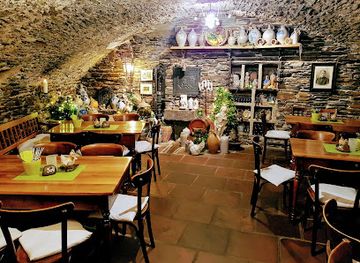
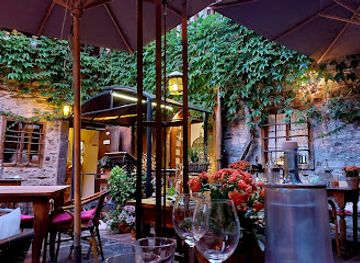
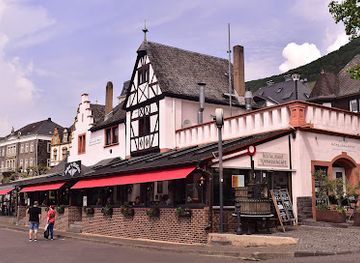
Alte Zunftscheune
Experience the essence of German gastronomy at Alte Zunftscheune in Traben-Trarbach - where tradition meets taste.
-
Restaurant
Alte Mühle Thomas Höreth
Discover culinary delights at Alte Mühle Thomas Höreth—where exquisite dining meets breathtaking vineyard views in Kobern-Gondorf.
-
Restaurant
Alter Moselbahnhof
Experience exquisite dining at Alter Moselbahnhof with stunning views over the Mosel River in Bernkastel-Kues.
-
German
Zom Stüffje
Experience authentic German flavors at Zom Stüffje in Cochem - where tradition meets taste amidst stunning scenery.
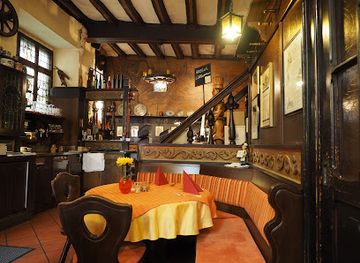
Best bars in Moselle
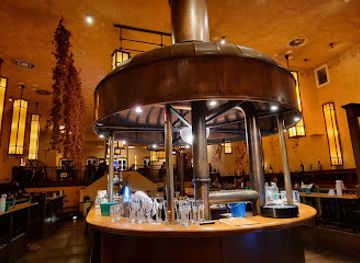
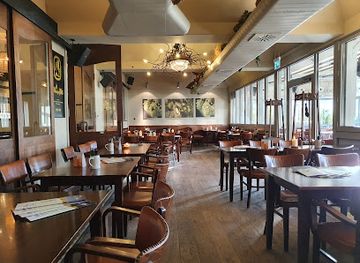
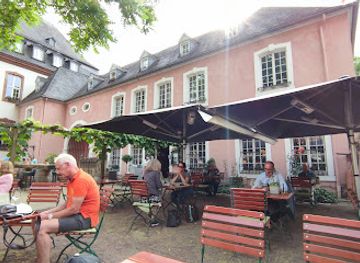
Evening life on the Moselle is generally sociable and unhurried rather than club-focused. Wine taverns, historic inns, brewery-style restaurants and hotel bars provide the main setting in smaller towns, with cellar doors and seasonal wine festivals adding activity during spring, summer and harvest periods. Trier has the broadest choice, including traditional pubs, cafés, wine bars, student-oriented venues and live music, while Bernkastel-Kues, Cochem and Traben-Trarbach offer a more compact evening scene centred on old-town streets and the riverfront. In rural villages, restaurants and wine rooms may close earlier than international visitors expect, and late-night transport can be limited. Nightclubs exist mainly in the larger urban centres rather than throughout the valley. Local wine is central to the region’s hospitality, but visitors can equally experience the evening through food, riverside walks, cultural performances and convivial cafés without making drinking the focus of a stay.
-
Brewpub
Brauhaus Kloster Machern
Experience the finest craft beer and authentic German cuisine at Brauhaus Kloster Machern in the heart of Bernkastel-Kues.
-
German
Bitburger Wirtshaus
Experience authentic German cuisine and local Bitburger beer at the charming Bitburger Wirtshaus in the historical city of Trier.
-
German
Zom Stüffje
Experience authentic German cuisine and exquisite regional wines at Zom Stüffje in Cochem, a culinary gem that delights visitors with its charm.
-
Wine bar
Weinstube Kesselstatt
Discover the essence of German wine culture at Weinstube Kesselstatt in Trier, where exquisite wines and authentic cuisine await.
Best nightclubs in Moselle
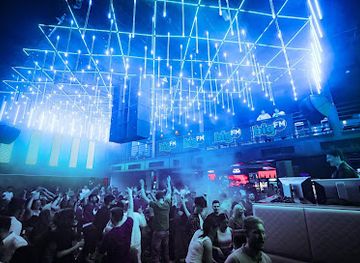
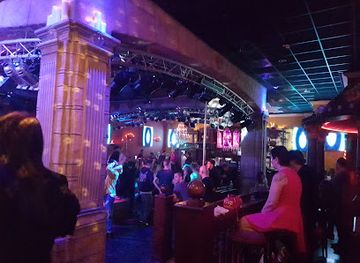
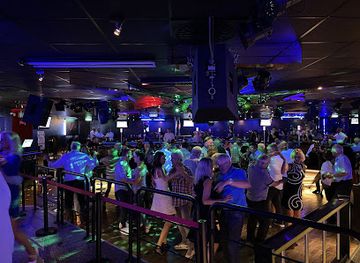
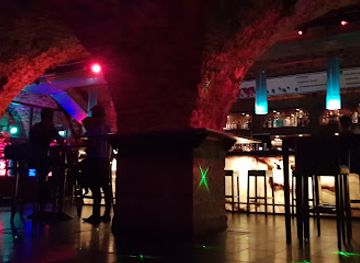
Evening life on the Moselle is generally sociable and unhurried rather than club-focused. Wine taverns, historic inns, brewery-style restaurants and hotel bars provide the main setting in smaller towns, with cellar doors and seasonal wine festivals adding activity during spring, summer and harvest periods. Trier has the broadest choice, including traditional pubs, cafés, wine bars, student-oriented venues and live music, while Bernkastel-Kues, Cochem and Traben-Trarbach offer a more compact evening scene centred on old-town streets and the riverfront. In rural villages, restaurants and wine rooms may close earlier than international visitors expect, and late-night transport can be limited. Nightclubs exist mainly in the larger urban centres rather than throughout the valley. Local wine is central to the region’s hospitality, but visitors can equally experience the evening through food, riverside walks, cultural performances and convivial cafés without making drinking the focus of a stay.
-
Disco club
Forum Club
Discover Trier's nightlife at Forum Club, a vibrant disco club offering pulsating music, energetic crowds, and unforgettable dance experiences.
-
Disco club
Musikpark A1 Trier
Discover the vibrant nightlife at Musikpark A1 in Trier, the essential disco club for unforgettable nights filled with music and dancing.
-
Night club
TENNE - Der Club in Saarburg
Dive into the vibrant nightlife at TENNE, the premier club in Saarburg, where electrifying music and unforgettable experiences await every weekend.
-
Disco club
Club Toni Trier
Dive into the vibrant nightlife of Trier at Club Toni, a premier disco club blending music, drinks, and unforgettable experiences.
Best shops in Moselle
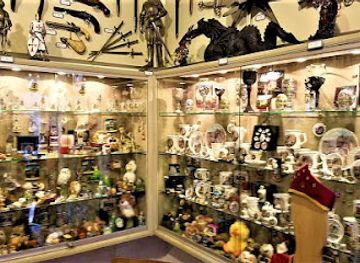
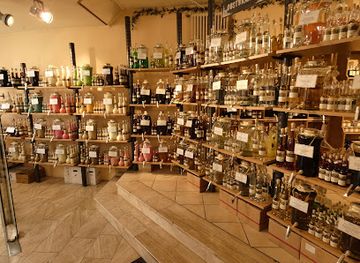
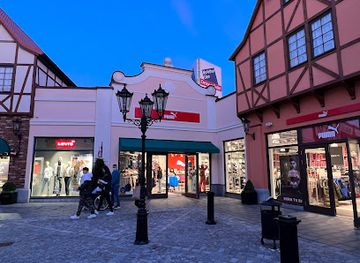
Shopping on the Moselle is oriented towards wine, food, crafts and the independent shops of historic towns rather than large-scale retail. Trier has the broadest range, including a pedestrianised central shopping area, department stores, bookshops, specialist food retailers and regional wine merchants. Smaller centres such as Bernkastel-Kues, Traben-Trarbach and Cochem combine everyday shops with galleries, craft outlets, antiques, confectionery and boutiques aimed at visitors. The most characteristic purchase is locally produced wine, including Riesling and, in the upper valley, Elbling; buy from a reputable estate or merchant and ask about transport options for larger quantities. Farm shops and market stalls can offer honey, preserves, fruit, baked goods and seasonal produce, while ceramics, prints and handmade gifts are more useful souvenirs than generic items. Retail choices become more limited in villages and outside the main season, so larger purchases are best made in Trier or one of the principal wine towns.
-
Castle
Eltz Castle
Discover Eltz Castle, a breathtaking medieval fortress nestled in the Moselle Valley, rich in history and surrounded by stunning natural beauty.
-
Castle
Cochem Castle
Explore the majestic Cochem Castle, a historic gem offering stunning views, rich history, and beautiful hiking trails along the Moselle River.
-
Outlet mall
OUTLETCITY Metzingen
Discover amazing deals at OUTLETCITY Metzingen, Germany's top outlet mall for fashion and lifestyle brands.
-
Outlet mall
Designer Outlet Neumünster
Explore the finest brands at discounted prices in Designer Outlet Neumünster, your ultimate shopping destination in Germany.

Get your free copy of our complete guide to Moselle, delivered straight to you.
Everything on this page, from attractions and restaurants to essentials and local phrases, in one PDF you can read offline, print or share.
Already have an account? Sign in
Your Moselle guide is ready.
We'll send it to · Not you? Sign out

Getting your guide ready…
We are putting together a fresh copy of the Moselle guide. This can take up to a minute.
This can take a few moments. If your browser asks, choose Allow so the download can start. You'll find the guide in your Downloads folder.
Nothing happened? Download it again
Sorry, the guide is taking longer than usual. Please try again in a minute, or get it by email instead.
Moselle essentials
Currency and Payment
Safety
Emergency Situations
Do's and Don'ts
Local Tips
From Eve
Local phrases worth knowing
You don't need to get them perfect. A few words go a long way, and locals appreciate the effort.
Basics
| English | Local | Say it |
|---|---|---|
| Hello | Hallo | [Ha-lo] |
| Goodbye | Auf Wiedersehen | [Owf Veed-er-zey-en] |
| Yes | Ja | [Yah] |
| No | Nein | [Nyn] |
| Please/You're welcome | Bitte | [Bi-te] |
| Thank you | Danke | [Dahn-ke] |
| Excuse me/Sorry | Entschuldigung | [Ent-shool-dee-gung] |
| How are you? | Wie geht's dir? | [Vee gates deer] |
| Fine. And you? | Gut. Und dir? | [Gooot. Oond deer] |
| Do you speak English? | Sprichst du Englisch? | [Spritst doo Eng-lish] |
| I don't understand | Ich verstehe nicht | [Ikh fer-steh-e nikht] |
Eating & Drinking
| English | Local | Say it |
|---|---|---|
| I'd like to see the menu, please | Ich hätte gerne die Speisekarte, bitte | [Ikh het-teh ger-ne dee Shpy-ze-kar-te, bi-te] |
| I don't eat meat | Ich esse kein Fleisch | [Ikh ess-e kyn Flysh] |
| Cheers! | Prost! | [Prohst] |
| I would like to pay, please | Ich möchte zahlen, bitte | [Ikh merkt-e tsah-len, bi-te] |
Emergencies
| English | Local | Say it |
|---|---|---|
| Help! | Hilfe! | [Hil-fe] |
| Go away! | Geh weg! | [Geh vek] |
| Call the Police! | Rufen Sie die Polizei! | [Roo-fen zee dee Po-lee-zie] |
| Call a doctor! | Rufen Sie einen Arzt! | [Roo-fen zee eye-nen Artst] |
| I'm lost | Ich habe mich verlaufen | [Ikh ha-be mikh fer-lau-fen] |
| I'm ill | Ich bin krank | [Ikh bin krank] |
Shopping
| English | Local | Say it |
|---|---|---|
| I'd like to buy... | Ich möchte kaufen... | [Ikh merkt-e kau-fen] |
| I'm just looking | Ich schaue nur | [Ikh shaue nur] |
| How much is it? | Wie viel kostet es? | [Vee feel kost-et es] |
| That's too expensive | Das ist zu teuer | [Das ist tsu toy-er] |
| Can you lower the price? | Können Sie den Preis senken? | [Ker-nen zee den price zen-ken] |
Time & Numbers
| English | Local | Say it |
|---|---|---|
| What time is it? | Wie spät ist es? | [Vee shpet ist es] |
| It's one o'clock | Es ist ein Uhr | [Es ist ayn oor] |
| Half past (10) | Halb elf | [Halb elf] |
| Morning | Morgen | [Mor-gen] |
| Afternoon | Nachmittag | [Nahch-mit-tahg] |
| Evening | Abend | [Ah-bend] |
| Yesterday | Gestern | [Ge-stern] |
| Today | Heute | [Hoy-te] |
| Tomorrow | Morgen | [Mor-gen] |
| 1 | Eins | [Ayns] |
| 2 | Zwei | [Tsvy] |
| 3 | Drei | [Dry] |
| 4 | Vier | [Feer] |
| 5 | Fünf | [Foonf] |
| 6 | Sechs | [Zex] |
| 7 | Sieben | [Zee-ben] |
| 8 | Acht | [Acht] |
| 9 | Neun | [Noyn] |
| 10 | Zehn | [Tsen] |
Transport & Directions
| English | Local | Say it |
|---|---|---|
| Where's a/the...? | Wo ist ein/das...? | [Vo ist ayn/das...?] |
| What's the address? | Was ist die Adresse? | [Vas ist dee A-dres-se?] |
| Can you show me (on the map)? | Können Sie mir (auf der Karte) zeigen? | [Ker-nen zee meer (owf der Kar-te) tsai-gen?] |
| When's the next (bus)? | Wann kommt der nächste (Bus)? | [Vahn komt der next-e (Boos)?] |
| A ticket (to ....) | Ein Ticket (nach ....) | [Ayn Tiket (nahch ....)] |
History of Moselle
Celtic and Roman Foundations
Before Roman rule, the Moselle valley was inhabited by Celtic communities, including the Treveri, whose name survives in Trier. Rome established Augusta Treverorum in the late first century BC, and the settlement grew into one of the empire’s major centres north of the Alps. Roads, bridges, agricultural estates and river transport connected the valley with Gaul and the wider Roman world. The remains of the Porta Nigra, amphitheatre, imperial baths and basilica in Trier provide unusually tangible evidence of this period, while scattered archaeological sites and vineyard landscapes reflect the region’s long pattern of land use.
Late Roman Imperial Trier
During the third and fourth centuries, Trier became an imperial residence and an important administrative centre. Emperors including Constantine were associated with the city, whose monumental buildings expressed the political significance of the western Roman Empire. The basilica now known as the Aula Palatina, the Imperial Baths and the Roman bridge belong to this era or its continuing legacy. Christianity also gained an enduring institutional presence in the city. When Roman authority receded, the urban centre contracted, but its walls, monuments and ecclesiastical institutions helped shape medieval Trier.
Medieval Ecclesiastical and Territorial Power
In the Middle Ages, Trier was governed by powerful archbishops who were also electors of the Holy Roman Empire. Their authority extended across parts of the Moselle valley, where churches, monasteries, castles and market settlements developed along the river and its tributaries. The region was politically divided among ecclesiastical territories, noble families and neighbouring states, a complexity reflected in the variety of fortifications and historic town plans. Wine cultivation expanded under monastic and aristocratic management, helping establish an economic tradition that remains central to the Moselle’s identity.
Trade, Wine and River Transport
For centuries the Moselle served as a commercial artery linking settlements in present-day France, Luxembourg and Germany with the Rhine. Wine, timber, grain and other goods moved by river, while tolls and market rights supported towns such as Bernkastel, Traben-Trarbach and Cochem. The valley’s steep slopes limited large-scale agriculture but favoured vineyards on warm, sheltered exposures. River traffic, ferries and later improvements to navigation encouraged new trading connections, while the growth of wine merchants and shipping brought prosperity to several towns during the early modern period.
French Rule and the Napoleonic Reorganisation
The Moselle lands were profoundly affected by the French Revolutionary and Napoleonic era. French administration dismantled many ecclesiastical territories, secularised church property and introduced legal and administrative changes that altered local power structures. After the Congress of Vienna, much of the German Moselle became part of the Kingdom of Prussia, while Trier was incorporated into the Prussian Rhine Province. The political map changed, but French legal influences, cross-border connections and the secularisation of estates continued to shape settlement and land ownership.
Railways, Tourism and Modern Wine Culture
Railway construction in the nineteenth century connected Trier and the Moselle valley with the Rhine, Luxembourg and the interior of Germany, transforming access for trade and travel. River engineering, including locks and regulated navigation, developed further in the twentieth century and altered the working river without erasing its role in transport. Tourism grew around wine, Roman heritage, castles and river excursions. Today, small family vineyards, cooperatives and wine merchants continue a long agricultural tradition while the valley also supports cycling, walking, heritage tourism and cross-border cultural exchange.
Moselle in Photos
Browse through our photo collection highlighting the charm and character of the destination.
Neighbouring regions of Moselle
The closest regions to Moselle, if you have time for more than one.
-

-

-

-

-


Swipe for more regions
Explore more

Explore more of Germany
Experience Germany: where history meets innovation, and urban energy blends with natural beauty. Discover diverse cultures, delicious cuisine, and stunning landscapes.
Explore Germany