

Friedensengel, Munich Travel Guide
Free Guide: Soaring above Munich, the Friedensengel commemorates peace and offers stunning city views, a radiant landmark embodying history, art, and Bavarian spirit.


A brief summary of Friedensengel
Soaring above Munich, the Friedensengel commemorates peace and offers stunning city views, a radiant landmark embodying history, art, and Bavarian spirit.
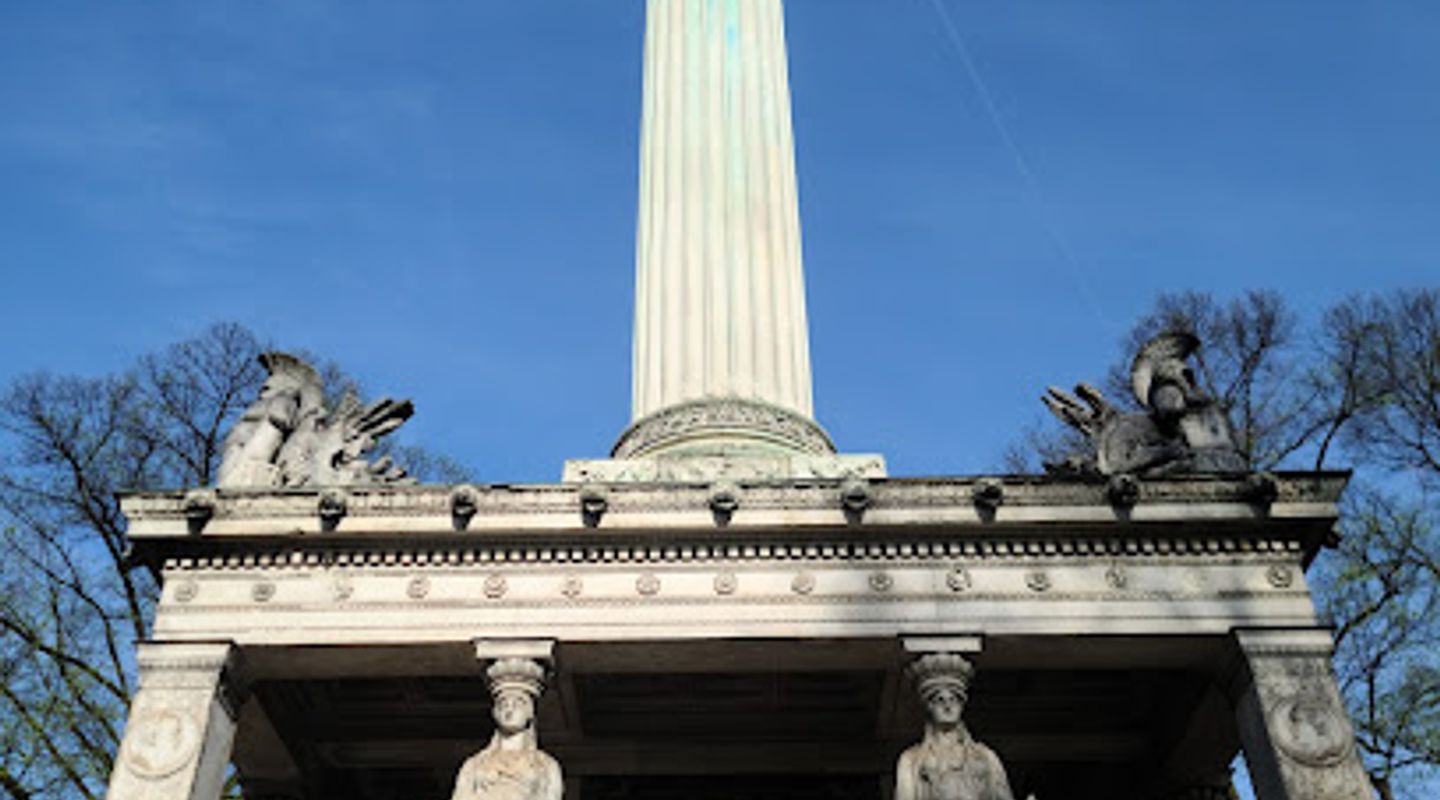
The Friedensengel (Angel of Peace) is a prominent monument in Munich, commemorating 25 years of peace after the Franco-Prussian War. Perched atop a tall Corinthian column in the Maximiliansanlagen park, the gilded statue of Nike, the Greek goddess of victory, offers stunning views of the city. The monument's base features portraits of German and Bavarian rulers and generals, along with golden mosaics depicting war, peace, victory, and culture. A popular spot for locals and tourists alike, the Friedensengel provides a serene escape and a reminder of Munich's history and commitment to peace. Visitors can enjoy panoramic views from the Prinzregent-Luitpold-Terrasse and explore the surrounding park, making it a must-see attraction in Munich.
- Address
- Prinzregentenstraße, 81675 München
- Website
Getting there
Public Transport
Walking
Taxi/Ride-Share
Discover more about Friedensengel
Overview
The Friedensengel, or Angel of Peace, stands as a radiant symbol of Munich, commemorating a quarter-century of peace following the Franco-Prussian War of 1870-71. This iconic monument, unveiled in 1899, is more than just a gilded statue; it's a testament to the city's history, its artistic spirit, and its enduring hope for harmony. Rising 38 meters above the Maximiliansanlagen park in the Bogenhausen district, the Friedensengel is a replica of Paionios' Nike, the Greek goddess of victory. The six-meter-high bronze figure, covered in 24-karat gold leaf, holds an olive branch in her right hand, symbolizing peace, and a Palladion, a protective image of the goddess Athena, in her left, representing wisdom and battle. The statue's wings, renewed in 1983, soar skyward, catching the sunlight and casting a golden glow over the city. The monument's location at the eastern end of Prinzregentenstrasse creates a striking visual axis, drawing the eye from the city center towards the angel's serene presence. The Prinzregent-Luitpold-Terrasse, the viewing terrace surrounding the column, offers panoramic views of Munich, including landmarks like the Haus der Kunst and the Bavarian National Museum. From this vantage point, visitors can appreciate the city's architectural beauty and the lush greenery of the Maximiliansanlagen. The base of the Friedensengel features a square temple adorned with portraits of German Emperors William I, Frederick III, and Wilhelm II, as well as Bavarian rulers Ludwig II, Otto, and Luitpold. Imperial Chancellor Otto von Bismarck and generals Helmuth von Moltke, Albrecht von Roon, Ludwig von der Tann, Jakob von Hartmann, and Siegmund von Pranckh are also depicted, honoring the leaders who shaped the era of peace the monument commemorates. Inside the temple, four golden mosaics depict allegories of war, victory, peace, and the blessing of culture, further emphasizing the monument's message of harmony and prosperity. Two stairways lead down from the Prinzregent-Luitpold-Terrasse to a fountain below, where four putti riding dolphins add a touch of Baroque charm. The fountain's water visually extends the column, creating a sense of continuity between the earthly and the divine. The surrounding Maximiliansanlagen park, with its mighty trees and verdant lawns, provides a tranquil setting for contemplation and relaxation. The Friedensengel has not been without its challenges. In 1981, the gilded figure was removed due to concerns about its stability, revealing severe damage. The goddess of victory could only return to Munich in 1983, with two renewed wings and a stronger pillar. For the monument's centenary in 1999, all parts were cleaned and repaired, and the angel received a new gold leaf dress, ensuring its continued brilliance for generations to come. Today, the Friedensengel is a beloved landmark, attracting visitors from around the world. It's a place to reflect on history, admire art, and enjoy the beauty of Munich. Whether you're strolling through the Maximiliansanlagen, taking in the panoramic views from the terrace, or simply gazing up at the golden angel, the Friedensengel offers a unique and inspiring experience. Beyond its historical and artistic significance, the Friedensengel is also a popular gathering place for locals. In the summer, the Friedensengel Festival takes place around the fountain, creating a lively atmosphere with music, food, and entertainment. The monument is also a favorite spot for picnics and evening strolls, offering a romantic setting as the sun sets behind the city rooftops. The Friedensengel's enduring appeal lies in its ability to connect with visitors on multiple levels. It's a symbol of peace, a work of art, a historical landmark, and a gathering place for the community. Whether you're a history buff, an art lover, or simply looking for a beautiful place to relax, the Friedensengel is a must-see destination in Munich. To fully appreciate the Friedensengel, take the time to explore its surroundings. Visit the nearby Villa Stuck, a stunning example of Jugendstil architecture, or the Bavarian National Museum, which showcases Bavarian art and cultural history. Stroll along Prinzregentenstrasse, admiring the grand buildings and upscale shops. And be sure to spend some time in the Maximiliansanlagen park, enjoying the tranquility and beauty of this urban oasis. The Friedensengel is more than just a monument; it's an integral part of Munich's identity. It's a reminder of the city's past, a celebration of its present, and a beacon of hope for its future. As you stand beneath the golden angel, gazing out at the city, you'll feel a sense of connection to Munich's rich history and its enduring spirit of peace and prosperity.
Evendo Review Centre
 Google
Guest reviews
Explore Friedensengel on the map
A handpicked selection of must-see spots near Friedensengel, mapped for you.
Get your free copy of our complete guide to Friedensengel, delivered straight to you.
Everything on this page, from opening hours and how to get there to Eve’s tips and the best time to go, in one PDF you can read offline, print or share.
Already have an account? Sign in
Your Friedensengel guide is ready.
We'll send it to · Not you? Sign out

Getting your guide ready…
We are putting together a fresh copy of the Friedensengel guide. This can take up to a minute.
This can take a few moments. If your browser asks, choose Allow so the download can start. You'll find the guide in your Downloads folder.
Nothing happened? Download it again
Sorry, the guide is taking longer than usual. Please try again in a minute, or get it by email instead.
Unlock the best of Friedensengel
Skip-the-line tickets, guided tours with entry, and walking tours of the area, booked in a few clicks.
 Tour with entry
Self-Guided Tours In Munich With 100 Captivating Audio Stories
from $3.19 Tour with entry
Munich Classic Bike Tour @ 11.30am with Surfers & beergarden stop
from $45.89 Tour with entry
Best of Munich Electric Bike Tour
from $64.03 Tour with entry
Munich's Highlights 3-hour Segway Tour
from $189.96


Other nearby places you may find interesting
The closest places of the same kind, if this one is not quite what you had in mind.
-
-
-
-
-


Swipe for more places
More to explore near Friedensengel

 Best experiences near Friedensengel
 Best hotels near Friedensengel
 Best landmarks near Friedensengel
 Best attractions near Friedensengel
 Best shops near Friedensengel
 Best restaurants near Friedensengel
 Best bars near Friedensengel
Do you manage this location?
Take control to get all the benefits, like improved information, better appearance, and stronger visibility across AI-powered discovery.
Explore more

Explore more of Haidhausen
Discover Haidhausen: Munich’s picturesque riverside neighborhood, offering a blend of historical charm, cultural richness, and vibrant nightlife along the Isar River.
Explore Haidhausen
Explore more of Munich
Explore Munich: A fusion of historic charm and modern vibrance in the heart of Bavaria, boasting world-class museums, iconic beer gardens, and stunning parks.
Explore Munich
