

Jupiter-Säule, Stuttgart Travel Guide
Free Guide: Discover Stuttgart's Roman past at the Jupiter Column, a reconstructed monument showcasing the fusion of Roman and Germanic cultures in the heart of the city.


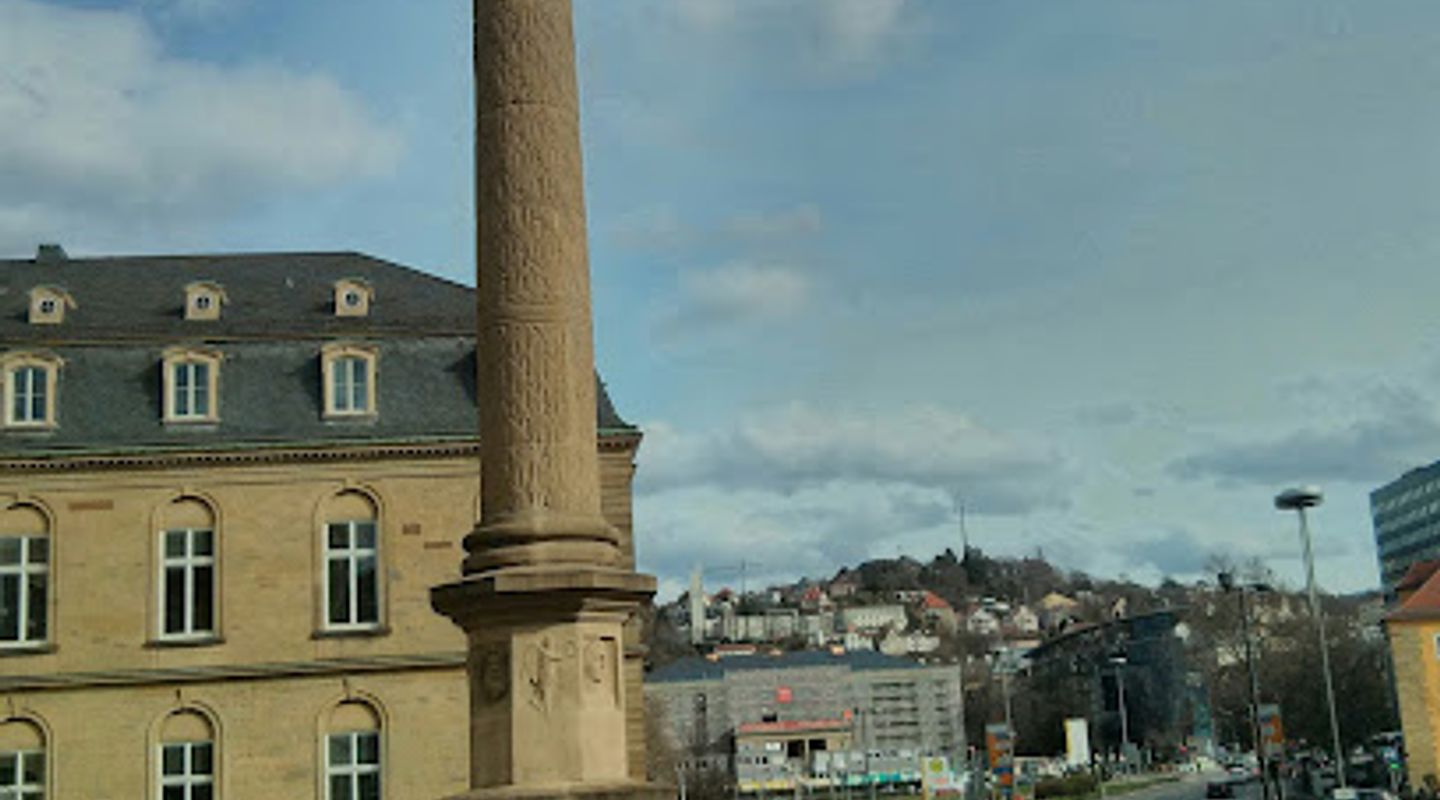
A brief summary of Jupiter-Säule
Discover Stuttgart's Roman past at the Jupiter Column, a reconstructed monument showcasing the fusion of Roman and Germanic cultures in the heart of the city.
The Jupiter Column in Stuttgart is a reconstructed Roman monument that offers a glimpse into the region's ancient past. Originally erected during the 2nd or 3rd century AD, these columns were dedicated to Jupiter, the king of the gods, and often combined Roman religious elements with local Germanic beliefs. The Stuttgart column stands as a testament to the Roman presence in the area and their cultural interactions. Located on Richard-von-Weizsäcker-Planie, it's easily accessible and provides a striking contrast to the modern cityscape. The column serves as a reminder of Stuttgart's long and varied history, from its Roman origins to its present-day status as a major German city. A visit offers a unique opportunity to connect with the past and appreciate the layers of history that have shaped the region. The site is free to visit and open year-round, making it an accessible cultural landmark for all.
Opening hours
- Every dayOpen 24 hours
Opening hours as listed on the venue’s Google Business Profile. Hours can change for services and special events, so check with the venue before you go.
- Address
- Richard-von-Weizsäcker-Planie, 70173 Stuttgart
Getting there
Public Transport
Walking
Taxi/Ride-Share
Discover more about Jupiter-Säule
Overview
The Jupiter Column in Stuttgart is a captivating reconstruction of a Roman monument, offering a tangible link to the city's ancient heritage. These columns, prevalent in Roman settlements during the 2nd and 3rd centuries AD, were dedicated to Jupiter Optimus Maximus, the supreme deity in the Roman pantheon. They represented not only religious devotion but also the assertion of Roman power and cultural influence in the Germanic provinces. Originally, Jupiter Columns were complex structures. The base typically consisted of a Viergötterstein, or four-gods stone, depicting Juno, Minerva, Mercury, and Hercules. Above this sat a Wochengötterstein, portraying the personifications of the seven days of the week. The column itself, often adorned with a scale pattern, rose from this base, culminating in a statue of Jupiter, frequently depicted on horseback, triumphing over a Giant, often represented as a snake-bodied figure. These columns stood as potent symbols of Roman religious beliefs and their integration with local traditions. The Stuttgart Jupiter Column, while a reconstruction, provides a compelling visual representation of these ancient monuments. It allows visitors to imagine the scale and significance of these structures in their original Roman context. The column serves as a focal point on Richard-von-Weizsäcker-Planie, a reminder of the Roman presence that once thrived in this region. The area around Stuttgart, including Bad Cannstatt, was once home to a Roman fort and a bustling civilian settlement, making the presence of a Jupiter Column particularly relevant to the area's history. Recent archaeological discoveries in Stuttgart have further illuminated the significance of Jupiter Columns. In 2024, excavations at the site of the Altenburg School expansion uncovered a stone statue depicting a Roman deity with a snake-like lower body. This statue was identified as a "giant" figure, a common element in Jupiter-Giant columns. The discovery was particularly significant because it could be linked to a fragment stored in the Württemberg State Museum's depot since 1908, a "Four Gods Stone." The alignment of these findings allowed archaeologists to reconstruct a Jupiter-Giant column that once stood near an important road junction in Roman Bad Cannstatt, adding another piece to the puzzle of Stuttgart's Roman past. Visiting the Jupiter Column offers a chance to reflect on the layers of history that have shaped Stuttgart. From its Roman origins to its development as a medieval city and its modern-day status as a major industrial and cultural center, Stuttgart's story is one of continuous evolution. The Jupiter Column stands as a silent witness to these transformations, a tangible link to a distant past that continues to resonate in the present. While the Jupiter Column itself is the main attraction, its location on Richard-von-Weizsäcker-Planie places it within easy reach of other notable Stuttgart landmarks. The Schlossplatz, Stuttgart's central square, is a short walk away, as are the Neues Schloss (New Palace) and the Altes Schloss (Old Palace). The Kunstmuseum Stuttgart, with its impressive collection of modern and contemporary art, is also nearby. A visit to the Jupiter Column can easily be combined with exploration of these other cultural attractions, providing a well-rounded experience of Stuttgart's rich heritage. The Jupiter Column is more than just a historical monument; it is a symbol of cultural exchange and adaptation. It represents the fusion of Roman and Germanic beliefs, the interaction between different cultures, and the enduring power of the past to shape the present. As you stand before this reconstructed column, take a moment to consider the long and complex history of Stuttgart and the many forces that have contributed to its unique identity. The Jupiter Column is a reminder that even in the midst of a modern metropolis, the echoes of the past can still be heard.
Evendo Review Centre
 Google
Guest reviews
Explore Jupiter-Säule on the map
A handpicked selection of must-see spots near Jupiter-Säule, mapped for you.
Get your free copy of our complete guide to Jupiter-Säule, delivered straight to you.
Everything on this page, from opening hours and how to get there to Eve’s tips and the best time to go, in one PDF you can read offline, print or share.
Already have an account? Sign in
Your Jupiter-Säule guide is ready.
We'll send it to · Not you? Sign out

Getting your guide ready…
We are putting together a fresh copy of the Jupiter-Säule guide. This can take up to a minute.
This can take a few moments. If your browser asks, choose Allow so the download can start. You'll find the guide in your Downloads folder.
Nothing happened? Download it again
Sorry, the guide is taking longer than usual. Please try again in a minute, or get it by email instead.
Other nearby places you may find interesting
The closest places of the same kind, if this one is not quite what you had in mind.
-
-
-
-
-


Swipe for more places
More to explore near Jupiter-Säule

 Best experiences near Jupiter-Säule
 Best hotels near Jupiter-Säule
 Best landmarks near Jupiter-Säule
 Best attractions near Jupiter-Säule
 Best shops near Jupiter-Säule
 Best restaurants near Jupiter-Säule
 Best bars near Jupiter-Säule
Do you manage this location?
Take control to get all the benefits, like improved information, better appearance, and stronger visibility across AI-powered discovery.
Explore more

Explore more of Stuttgart
Discover Stuttgart: A perfect blend of automotive history, cultural richness, and natural beauty. Explore museums, palaces, and vineyards in this dynamic German city.
Explore Stuttgart
Explore more of Germany
Experience Germany: where history meets innovation, and urban energy blends with natural beauty. Discover diverse cultures, delicious cuisine, and stunning landscapes.
Explore Germany
