Klosterburg Kastl Travel Guide
Free Guide: Explore Klosterburg Kastl: A historic Bavarian monastery and former castle offering a journey through centuries of religious, political, and cultural heritage.


A brief summary of Klosterburg Kastl
Explore Klosterburg Kastl: A historic Bavarian monastery and former castle offering a journey through centuries of religious, political, and cultural heritage.
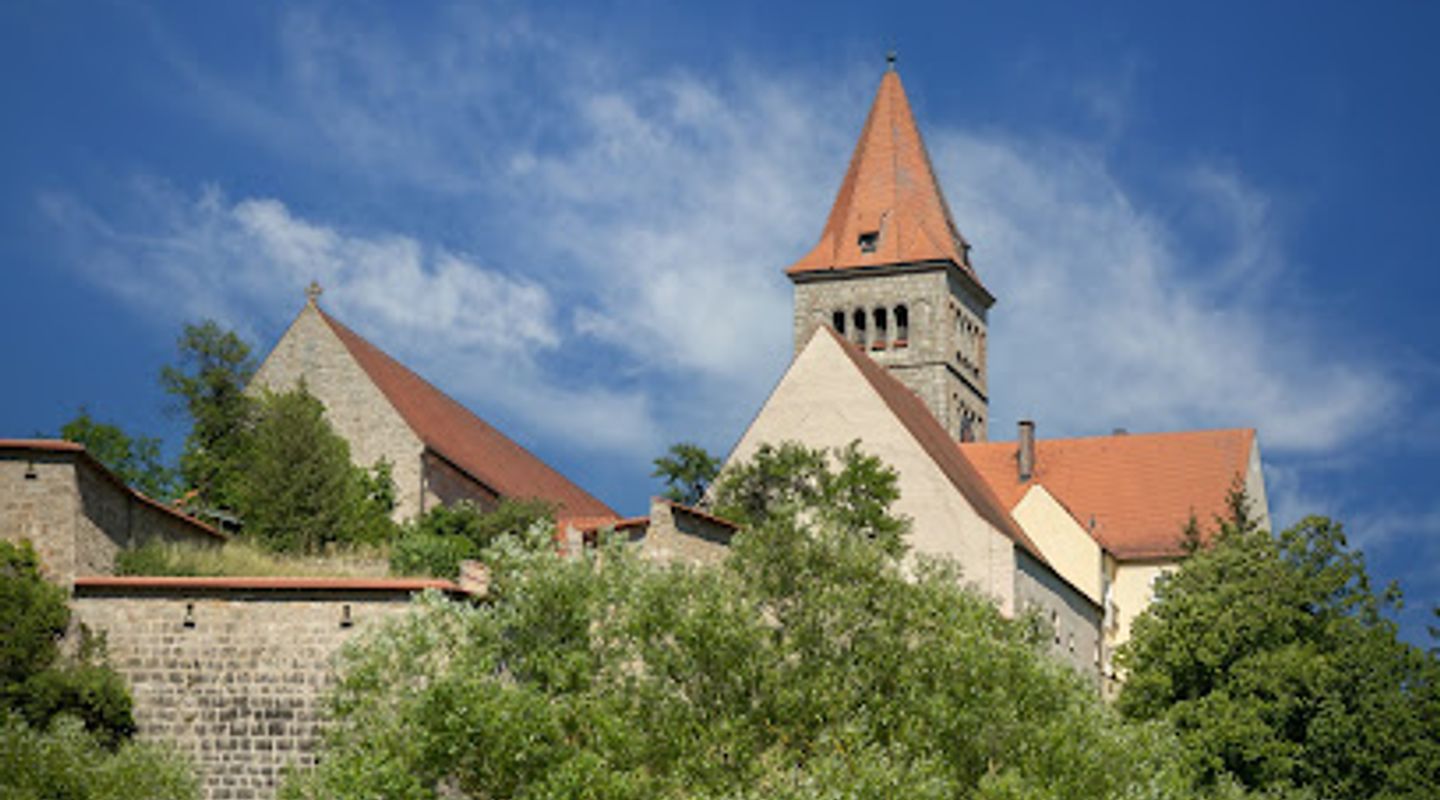
Klosterburg Kastl, a captivating historical site in Bavaria, Germany, began as a medieval castle around 975 AD before transforming into a Benedictine monastery in 1103. Over the centuries, it served various roles, including a Jesuit residence and a Hungarian secondary school. Today, the largely preserved complex showcases Romanesque architecture with later modifications, offering visitors a glimpse into its rich and varied past. Explore the historic Torturm (gate tower), wander through the grounds, and imagine life within its ancient walls. The site provides a fascinating journey through time, enhanced by its scenic location overlooking the Lauteracht Valley.
- Address
- Klosterburg 2, 92280 Kastl
- Phone
Getting there
Public Transport
Driving
Walking
Discover more about Klosterburg Kastl
Overview
Klosterburg Kastl, perched high above the Lauteracht Valley in Bavaria, Germany, is a testament to the region's rich and complex history. Originally established as a castle around 975 AD, the site evolved into a Benedictine monastery in the early 12th century, leaving behind a legacy that spans centuries of religious, political, and cultural change. The story of Klosterburg Kastl begins in the Carolingian era, with the construction of a fortress atop a prominent dolomite peak. In 954, Margrave Luitpold of Austria purportedly received Kastl Castle as a fief. By 1098, the castle was jointly owned by Count Berengar of Sulzbach, Frederick I of Habsberg-Kastl, his son Count Otto of Habsberg-Kastl, and Luitgard of Zähringen, wife of Margrave Diepold II of Vohburg. These families agreed to convert the castle into a Benedictine monastery between 1098 and 1102, a decision ratified by Pope Paschal II in 1102. The monastery, dedicated to Saint Peter, was founded in 1103. The transformation from a military stronghold to a place of worship marked a significant shift in the site's purpose. The abbey flourished for several centuries, becoming a center of religious and intellectual life. The Romanesque church, completed in 1195, stands as a remarkable example of architectural design from that era. Over time, the church underwent numerous renovations and expansions, reflecting changing styles and influences. However, the monastery's prosperity was not to last. In 1556, the Benedictine abbey was dissolved due to disrepair. The monastery was re-established as a Catholic monastery in 1625. From 1636 to 1773, the complex served as a Jesuit residence, further diversifying its historical footprint. Later, from 1773, it was used by the Knights Hospitallers. The monastery was dissolved again in 1803 and became the seat of the Provincial Court until 1862. From 1958 to 2006, the Klosterburg housed a Hungarian secondary boarding school, providing education and refuge for Hungarian students. This chapter in the Klosterburg's history highlights its role as a place of learning and cultural exchange in the 20th century. The school's closure in 2006 marked the end of an era, and the complex underwent extensive renovations and conversions. Today, Klosterburg Kastl stands as a partially preserved monument, offering visitors a tangible connection to the past. The Torturm, or gate tower, remains a prominent feature, showcasing the site's medieval origins. A moat separates the grounds from the mountain, adding to the sense of historical fortification. While some sections of the original castle have been integrated into later buildings, remnants of the medieval structure are still visible throughout the complex. Visitors can explore the grounds, admire the architecture, and learn about the various phases of the Klosterburg's history. The site provides a unique opportunity to step back in time and imagine the lives of the people who inhabited this remarkable place. The views from the Klosterburg are equally impressive, with panoramic vistas of the surrounding Lauteracht Valley. While the mummified remains of Princess Anna, daughter of Emperor Louis IV, were once on display, they have since been returned to their tomb to protect them from light damage. However, a large photo of the princess is on display instead. Since 2023, the Free State of Bavaria has used it as a university for public services for the training area "Police".
Evendo Review Centre
 Google
Guest reviews
Explore Klosterburg Kastl on the map
A handpicked selection of must-see spots near Klosterburg Kastl, mapped for you.
Get your free copy of our complete guide to Klosterburg Kastl, delivered straight to you.
Everything on this page, from opening hours and how to get there to Eve’s tips and the best time to go, in one PDF you can read offline, print or share.
Already have an account? Sign in
Your Klosterburg Kastl guide is ready.
We'll send it to · Not you? Sign out

Getting your guide ready…
We are putting together a fresh copy of the Klosterburg Kastl guide. This can take up to a minute.
This can take a few moments. If your browser asks, choose Allow so the download can start. You'll find the guide in your Downloads folder.
Nothing happened? Download it again
Sorry, the guide is taking longer than usual. Please try again in a minute, or get it by email instead.
Other nearby places you may find interesting
The closest places of the same kind, if this one is not quite what you had in mind.
-
-
-
-
-


Swipe for more places
More to explore near Klosterburg Kastl

 Best experiences near Klosterburg Kastl
 Best hotels near Klosterburg Kastl
 Best landmarks near Klosterburg Kastl
 Best attractions near Klosterburg Kastl
 Best shops near Klosterburg Kastl
 Best restaurants near Klosterburg Kastl
 Best bars near Klosterburg Kastl
Do you manage this location?
Take control to get all the benefits, like improved information, better appearance, and stronger visibility across AI-powered discovery.
Explore more

Explore more of Upper Palatinate
Discover Upper Palatinate: A Bavarian treasure trove of medieval charm, natural beauty, and vibrant cultural festivities.
Explore Upper Palatinate
Explore more of Germany
Experience Germany: where history meets innovation, and urban energy blends with natural beauty. Discover diverse cultures, delicious cuisine, and stunning landscapes.
Explore Germany