

Walhalla Travel Guide
Free Guide: Discover the Walhalla, a neoclassical temple honoring German luminaries, offering breathtaking views of the Danube River and a glimpse into German history and culture.


A brief summary of Walhalla
Discover the Walhalla, a neoclassical temple honoring German luminaries, offering breathtaking views of the Danube River and a glimpse into German history and culture.
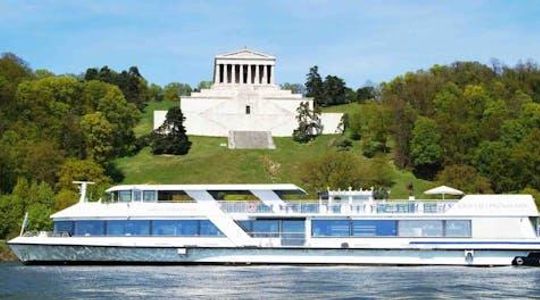
Perched high above the Danube River near Regensburg, the Walhalla is a striking neoclassical monument honoring distinguished figures in German history and culture. Conceived by King Ludwig I of Bavaria and completed in 1842, this temple-like structure, modeled after the Parthenon in Athens, houses over 130 busts and 60+ plaques commemorating individuals who have made significant contributions to the German-speaking world. Visitors can explore the grand hall, admire the intricate sculptures and friezes, and enjoy panoramic views of the surrounding Bavarian landscape. Reached by climbing 358 steps, the Walhalla offers a rewarding blend of history, art, and breathtaking scenery, making it a must-see destination for travelers exploring Bavaria.
Opening hours
- Every day9 am–6 pm
Opening hours as listed on the venue’s Google Business Profile. Hours can change for services and special events, so check with the venue before you go.
- Address
- Walhallastraße 48, 93093 Donaustauf
- Phone
- Website
Getting there
Public Transport
Driving
Boat
Discover more about Walhalla
Overview
Rising majestically above the Danube River, near the charming town of Donaustauf, the Walhalla stands as a testament to German achievement and a captivating landmark in Bavaria. This imposing neoclassical structure, commissioned by King Ludwig I of Bavaria, serves as a hall of fame, honoring individuals who have made significant contributions to German culture, science, and politics. Inspired by the Parthenon in Athens, the Walhalla offers visitors a unique blend of historical significance, architectural grandeur, and stunning natural beauty. Construction of the Walhalla began in 1830 and was completed in 1842, under the direction of architect Leo von Klenze. Ludwig I envisioned a place where the accomplishments of German-speaking people throughout history could be celebrated and remembered. The name "Walhalla" itself is derived from Norse mythology, referring to the hall in Valhalla where fallen warriors were received by Odin. However, the Walhalla near Donaustauf commemorates not only military figures but also scientists, writers, artists, and other individuals who have left an indelible mark on German history. Approaching the Walhalla, visitors are immediately struck by its imposing presence. The temple sits atop a hill overlooking the Danube, its white marble facade gleaming in the sunlight. A grand staircase of 358 steps leads to the entrance, offering breathtaking views of the surrounding countryside. The architecture is a faithful recreation of the Parthenon, with Doric columns, intricate friezes, and a triangular pediment adorned with sculptures. Inside the Walhalla, the main hall is a sight to behold. The walls are lined with busts and plaques, each representing a distinguished figure from German history. The busts are arranged chronologically, starting with Arminius, the chieftain who defeated the Romans at the Battle of the Teutoburg Forest in 9 AD, and continuing to more recent figures such as Albert Einstein, Martin Luther, and Konrad Adenauer. Each bust is a work of art in itself, capturing the likeness and spirit of the individual it represents. The selection of individuals to be honored in the Walhalla was a matter of great importance to King Ludwig I. He consulted with historians and scholars to ensure that only the most deserving figures were included. The criteria for inclusion were based on a person's contribution to German culture, their moral character, and their overall impact on society. While the majority of those honored are men, there are also several women represented in the Walhalla, including Maria Theresa of Austria and Sophie Scholl, a member of the White Rose resistance movement during World War II. In addition to the busts, the Walhalla also features a series of friezes that depict scenes from German history and mythology. These friezes provide a visual narrative of the German people, from their ancient origins to their more recent achievements. The overall effect is one of grandeur, reverence, and national pride. Visiting the Walhalla is an immersive experience that engages the senses and stimulates the mind. The sheer scale of the building is awe-inspiring, and the intricate details of the sculptures and friezes are captivating. As visitors walk through the hall, they are surrounded by the faces of some of the most influential figures in German history, each with their own story to tell. The panoramic views from the Walhalla are equally impressive, offering a sweeping vista of the Danube River and the Bavarian landscape. The Walhalla is open to the public year-round, with varying hours depending on the season. Admission is charged, and guided tours are available for those who wish to learn more about the history and significance of the monument. The site is accessible by car, bus, and boat, making it easy to reach from Regensburg and other nearby towns. Beyond its historical and architectural significance, the Walhalla also serves as a symbol of German identity and cultural heritage. It is a place where Germans can come to celebrate their shared history and to honor those who have contributed to the richness and diversity of their culture. For visitors from other countries, the Walhalla offers a fascinating glimpse into the German psyche and a deeper understanding of the forces that have shaped modern Germany. A visit to the Walhalla is not just a sightseeing trip; it is an opportunity to connect with the past, to appreciate the beauty of art and architecture, and to reflect on the values and ideals that have shaped a nation. Whether you are a history buff, an art lover, or simply someone who appreciates stunning scenery, the Walhalla is sure to leave a lasting impression. Today, the Walhalla continues to be a popular tourist destination, attracting visitors from all over the world. It is a place where history comes alive, where art and architecture blend seamlessly, and where the spirit of German excellence is celebrated for all to see. A trip to Bavaria would not be complete without experiencing the majesty and magnificence of the Walhalla.
Evendo Review Centre
 Google
Guest reviews
Explore Walhalla on the map
A handpicked selection of must-see spots near Walhalla, mapped for you.
Get your free copy of our complete guide to Walhalla, delivered straight to you.
Everything on this page, from opening hours and how to get there to Eve’s tips and the best time to go, in one PDF you can read offline, print or share.
Already have an account? Sign in
Your Walhalla guide is ready.
We'll send it to · Not you? Sign out

Getting your guide ready…
We are putting together a fresh copy of the Walhalla guide. This can take up to a minute.
This can take a few moments. If your browser asks, choose Allow so the download can start. You'll find the guide in your Downloads folder.
Nothing happened? Download it again
Sorry, the guide is taking longer than usual. Please try again in a minute, or get it by email instead.
Unlock the best of Walhalla
Skip-the-line tickets, guided tours with entry, and walking tours of the area, booked in a few clicks.

Other nearby places you may find interesting
The closest places of the same kind, if this one is not quite what you had in mind.
-
-
-
-
-


Swipe for more places
More to explore near Walhalla

 Best experiences near Walhalla

 Best hotels near Walhalla

 Best landmarks near Walhalla

 Best attractions near Walhalla

 Best shops near Walhalla

 Best restaurants near Walhalla

 Best bars near Walhalla
Do you manage this location?
Take control to get all the benefits, like improved information, better appearance, and stronger visibility across AI-powered discovery.
Explore more

Explore more of Upper Palatinate
Discover Upper Palatinate: A Bavarian treasure trove of medieval charm, natural beauty, and vibrant cultural festivities.
Explore Upper Palatinate
Explore more of Germany
Experience Germany: where history meets innovation, and urban energy blends with natural beauty. Discover diverse cultures, delicious cuisine, and stunning landscapes.
Explore Germany
