

Osu Castle Travel Guide
Free Guide: Explore Ghana's captivating history at Osu Castle in Accra, a UNESCO World Heritage Site with centuries of stories etched in its walls, from colonial trade to presidential power.


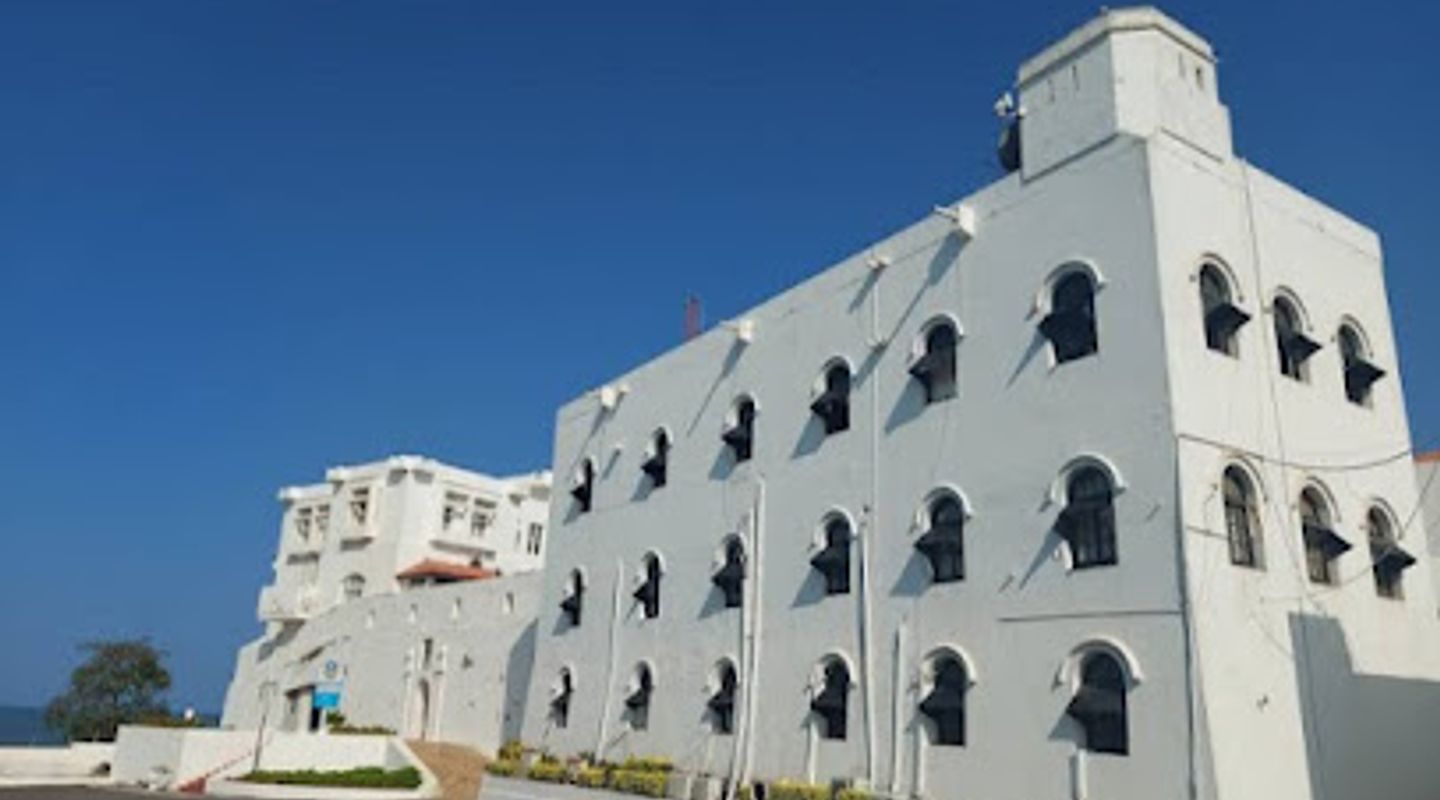
A brief summary of Osu Castle
Explore Ghana's captivating history at Osu Castle in Accra, a UNESCO World Heritage Site with centuries of stories etched in its walls, from colonial trade to presidential power.
Osu Castle, also known as Fort Christiansborg, is a landmark in Accra, Ghana, steeped in centuries of history. Originally built by the Danes in the 17th century, it has served as a trading post, a colonial administrative center, and even a presidential residence. The castle witnessed the transatlantic slave trade and the rise of Ghanaian independence. Today, it stands as a museum, offering guided tours that delve into its complex past. Visitors can explore the dungeons, presidential offices, and historical exhibits, gaining insight into Ghana's colonial legacy and its journey to self-governance. With its stunning coastal views and proximity to Accra's vibrant Osu neighborhood, Osu Castle provides a compelling blend of historical significance and cultural immersion.
- Address
- Accra
- Website
Getting there
Taxi/Ride-Share
Public Transport
Walking
Discover more about Osu Castle
Overview
Osu Castle, also known as Fort Christiansborg, stands proudly on the coast of Osu, Accra, as a powerful reminder of Ghana's layered and often turbulent past. Its stones whisper tales of European traders, colonial governors, enslaved Africans, and Ghanaian presidents, each leaving their mark on this imposing structure. A visit to Osu Castle is more than just a tour; it's an immersive journey through centuries of shifting power dynamics, cultural exchange, and the enduring spirit of a nation. The castle's story begins in the 17th century when Danish traders, seeking to establish a foothold on the Gold Coast, constructed a fortified lodge. This initial outpost, built in 1659, was a modest affair compared to the sprawling complex that exists today. It was named Christiansborg, meaning 'Christian's Fortress,' in honor of the King of Denmark, Christian IV. Over the next two centuries, the castle changed hands multiple times, reflecting the intense competition among European powers for control of the region's lucrative trade in gold, ivory, and unfortunately, human lives. For much of its history, Christiansborg served as the capital of the Danish Gold Coast. The Danes expanded the castle significantly, transforming it into a formidable stronghold with imposing walls, bastions, and a strategic location overlooking the Gulf of Guinea. The castle's primary function was to facilitate trade, and it became a major hub for the transatlantic slave trade. Enslaved Africans were brought to the castle from the interior, held in dungeons, and then shipped across the Atlantic to the Americas and the Caribbean. The castle stands as a chilling reminder of this dark chapter in human history. In 1679, a mutiny led to the assassination of the Danish commander, and the fort was sold to the Portuguese, who renamed it Fort Sao Francis Xavier and added a Roman Catholic chapel. However, their rule was short-lived, and the Danes regained control in 1683. A decade later, the Akwamu people, led by Chief Assameni, seized the castle and held it for a year before selling it back to the Danes. This event is commemorated by a statue of Assameni holding the keys to the castle, a symbol of indigenous resistance against colonial rule. In 1850, the Danes sold Christiansborg to the British, who further expanded and renovated the castle. It became the seat of the British colonial government in the Gold Coast, serving as the residence and office of the Governor. The castle witnessed the gradual transition of the Gold Coast from a colony to an independent nation. In 1957, Ghana became the first sub-Saharan African country to gain independence, and Christiansborg Castle became Government House, the residence of the Governor-General. When Ghana became a republic in 1960, the castle became the residence of Ghana's first president, Kwame Nkrumah. Nkrumah, a visionary leader and Pan-Africanist, used the castle as a symbol of national pride and a base for his efforts to unite the African continent. However, Nkrumah's rule was cut short by a military coup in 1966, and the castle once again became a symbol of political upheaval. For many years, Osu Castle continued to serve as the seat of government in Ghana, housing the offices of the President and other high-ranking officials. However, in 2009, the seat of government was moved to Jubilee House, and Osu Castle was opened to the public as a museum. Today, visitors can explore the castle's historic rooms, dungeons, and courtyards, learning about its complex past and the people who shaped its destiny. The tour of Osu Castle is a moving and educational experience. Knowledgeable guides lead visitors through the castle's various sections, providing insights into its architectural features, historical events, and the lives of those who lived and worked within its walls. The dungeons, where enslaved Africans were held in horrific conditions, are a particularly poignant reminder of the human cost of the transatlantic slave trade. The presidential offices, on the other hand, offer a glimpse into Ghana's post-independence history and the challenges of nation-building. Beyond its historical significance, Osu Castle also offers stunning views of the Atlantic Ocean. The castle's strategic location on a cliff overlooking the sea provided a natural defense against invaders and a vantage point for monitoring maritime traffic. Today, visitors can enjoy the panoramic views and reflect on the castle's role in shaping the region's history. Osu Castle is located in the heart of Osu, a vibrant neighborhood known for its bustling markets, lively nightlife, and diverse culinary scene. After exploring the castle, visitors can immerse themselves in the local culture, sampling traditional Ghanaian dishes, browsing the shops for souvenirs, and interacting with the friendly locals. A visit to Osu Castle is an opportunity to connect with Ghana's past and present, gaining a deeper understanding of its rich heritage and its aspirations for the future. Osu Castle stands as a UNESCO World Heritage Site, a testament to its cultural and historical significance. It is a place of remembrance, reflection, and education, inviting visitors to confront the complexities of the past and to celebrate the resilience and spirit of the Ghanaian people. Whether you are a history enthusiast, a cultural explorer, or simply seeking a unique and meaningful travel experience, Osu Castle is a must-see destination in Accra.
Evendo Review Centre
 Google
Guest reviews
Explore Osu Castle on the map
A handpicked selection of must-see spots near Osu Castle, mapped for you.
Get your free copy of our complete guide to Osu Castle, delivered straight to you.
Everything on this page, from opening hours and how to get there to Eve’s tips and the best time to go, in one PDF you can read offline, print or share.
Already have an account? Sign in
Your Osu Castle guide is ready.
We'll send it to · Not you? Sign out

Getting your guide ready…
We are putting together a fresh copy of the Osu Castle guide. This can take up to a minute.
This can take a few moments. If your browser asks, choose Allow so the download can start. You'll find the guide in your Downloads folder.
Nothing happened? Download it again
Sorry, the guide is taking longer than usual. Please try again in a minute, or get it by email instead.
Unlock the best of Osu Castle
Skip-the-line tickets, guided tours with entry, and walking tours of the area, booked in a few clicks.


Other nearby places you may find interesting
The closest places of the same kind, if this one is not quite what you had in mind.
-
-
-
-
-


Swipe for more places
More to explore near Osu Castle

 Best experiences near Osu Castle
 Best hotels near Osu Castle
 Best landmarks near Osu Castle
 Best attractions near Osu Castle
 Best shops near Osu Castle
 Best restaurants near Osu Castle
 Best bars near Osu Castle
Do you manage this location?
Take control to get all the benefits, like improved information, better appearance, and stronger visibility across AI-powered discovery.
Explore more

Explore more of Ahafo Region
Discover the Ahafo Region in Ghana, a hidden gem offering lush greenery, rich cultural heritage, and warm hospitality for an authentic and serene travel experience.
Explore Ahafo Region
Explore more of Ghana
Discover Ghana: A vibrant blend of rich history, stunning landscapes, and warm hospitality in the heart of West Africa.
Explore Ghana
