Rocca a Mare Fortress, Heraklion Travel Guide
Free Guide: Explore the historic Rocca a Mare Fortress in Heraklion, a Venetian-era guardian offering panoramic views and insights into Crete's rich past.


A brief summary of Rocca a Mare Fortress
Explore the historic Rocca a Mare Fortress in Heraklion, a Venetian-era guardian offering panoramic views and insights into Crete's rich past.
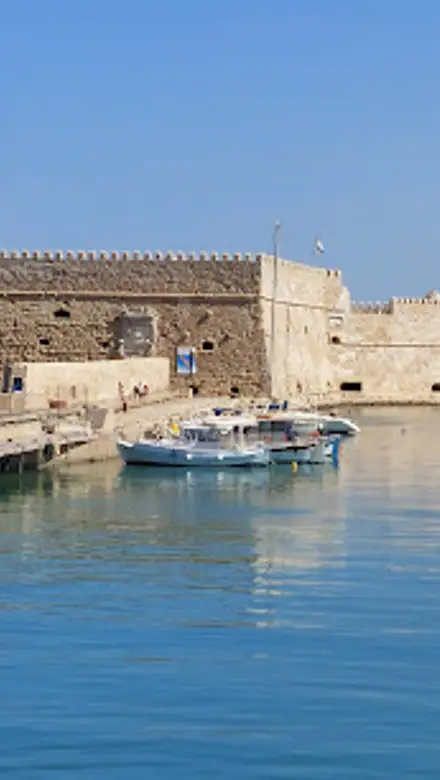
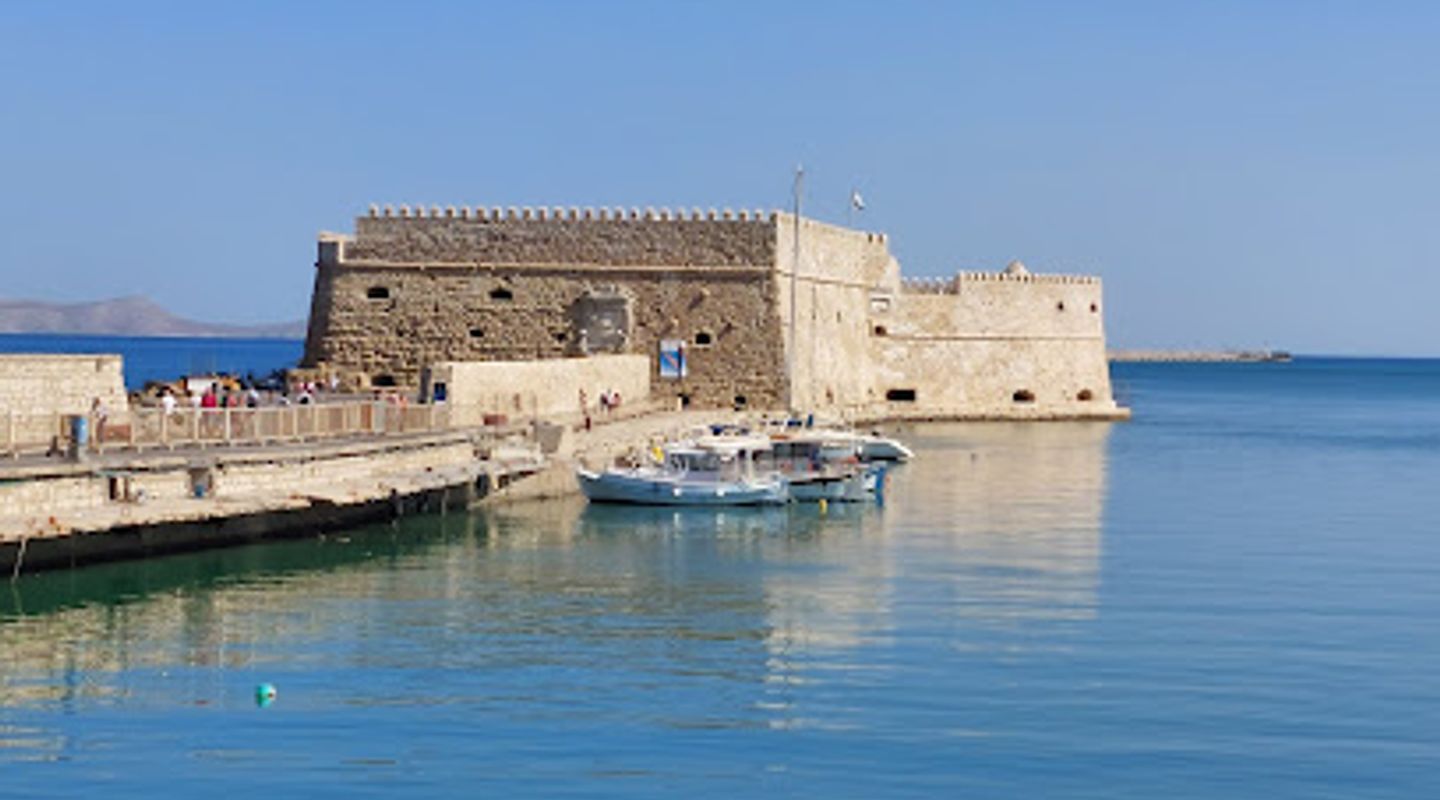
Dominating Heraklion's harbor entrance, the Rocca a Mare Fortress, also known as Koules, is a striking Venetian-era landmark. Built in the 16th century, it has protected the city for centuries and now hosts exhibitions and cultural events. Explore its historic chambers and enjoy panoramic views of the Aegean Sea.
Opening hours
- Mon8 am–8 pm
- TueClosed
- Wed8 am–8 pm
- Thu8 am–8 pm
- Fri8 am–8 pm
- Sat8 am–8 pm
- Sun8 am–8 pm
Opening hours as listed on the venue’s Google Business Profile. Hours can change for services and special events, so check with the venue before you go.
- Address
- Heraklion 712 02
- Phone
- Website
Getting there
Walking
Public Transport
Taxi
Discover more about Rocca a Mare Fortress
Overview
The Rocca a Mare Fortress, or Koules, stands as a proud sentinel at the entrance to Heraklion's old Venetian harbor. This imposing structure, constructed by the Venetians between 1523 and 1540, has safeguarded the city from naval threats for centuries. Its strategic location and robust design made it a vital component of Heraklion's defenses.Originally, a Byzantine tower stood on this site in the 7th or 8th century, guarding against Saracen pirates. However, the Venetians, recognizing the need for a stronger fortification, demolished the old tower and began construction of the Rocca a Mare. The fortress was built atop a natural rocky outcrop, which the Venetians supplemented by sinking old galleons filled with rocks to expand the base. The name Koules is derived from the Turkish name Su Kulesi (fortress of water).The fortress is a two-story structure covering approximately 3,600 square meters. The ground floor, with its vaulted roof, houses 26 rooms that once served as storerooms for food and munitions, a meeting hall, and prison cells. The upper floor features a large courtyard surrounded by crenellations, offering stunning views of the harbor and the city.Inside the fortress, visitors can explore exhibits detailing its history and the role it played in defending Crete. You can also view findings from Jacques-Yves Cousteau's underwater expedition to the Dia islet. The fortress often hosts cultural events and exhibitions, adding to its allure as a vibrant tourist attraction.A prominent feature of the fortress is the winged Lion of Saint Mark, the symbol of Venice, which is displayed in marble compositions on the facades. These symbols served as a reminder of Venetian power and influence. During the Ottoman period, the fortress underwent repairs and modifications, including the addition of battlements, gun ports, and a small mosque. The Ottomans also used the fortress as a prison, holding Cretan revolutionaries within its walls.
Evendo Review Centre
 Google
Guest reviews
Explore Rocca a Mare Fortress on the map
A handpicked selection of must-see spots near Rocca a Mare Fortress, mapped for you.
Get your free copy of our complete guide to Rocca a Mare Fortress, delivered straight to you.
Everything on this page, from opening hours and how to get there to Eve’s tips and the best time to go, in one PDF you can read offline, print or share.
Already have an account? Sign in
Your Rocca a Mare Fortress guide is ready.
We'll send it to · Not you? Sign out

Getting your guide ready…
We are putting together a fresh copy of the Rocca a Mare Fortress guide. This can take up to a minute.
This can take a few moments. If your browser asks, choose Allow so the download can start. You'll find the guide in your Downloads folder.
Nothing happened? Download it again
Sorry, the guide is taking longer than usual. Please try again in a minute, or get it by email instead.
Unlock the best of Rocca a Mare Fortress
Skip-the-line tickets, guided tours with entry, and walking tours of the area, booked in a few clicks.



Other nearby places you may find interesting
The closest places of the same kind, if this one is not quite what you had in mind.
-
Statue of El Greco A monumental tribute to El Greco, celebrating the artistic heritage of Crete in a vibrant square in the heart of Heraklion.
-
Herakleion Unknown Soldier Statue A tribute to Greek valor in Heraklion's central square, the Unknown Soldier Statue stands as a poignant reminder of sacrifice and national pride.
-
 Saint Titus Herakleion Holy Orthodox Cathedral Church
Explore the rich heritage and stunning beauty of Saint Titus Cathedral, a highlight of Heraklion's spiritual and cultural landscape.
Saint Titus Herakleion Holy Orthodox Cathedral Church
Explore the rich heritage and stunning beauty of Saint Titus Cathedral, a highlight of Heraklion's spiritual and cultural landscape.
-
Morosini Fountain A Venetian-era fountain in Heraklion's central square, the Morosini Fountain is a historic landmark and popular meeting spot.
-
Yenicar Aga Fountain Discover the historical Yenicar Aga Fountain in Heraklion, a beautiful Ottoman-era landmark offering a glimpse into Crete's rich cultural heritage.
Swipe for more places
More to explore near Rocca a Mare Fortress

 Best experiences near Rocca a Mare Fortress
 Best hotels near Rocca a Mare Fortress
 Best landmarks near Rocca a Mare Fortress
 Best attractions near Rocca a Mare Fortress
 Best shops near Rocca a Mare Fortress
 Best restaurants near Rocca a Mare Fortress
 Best bars near Rocca a Mare Fortress
Do you manage this location?
Take control to get all the benefits, like improved information, better appearance, and stronger visibility across AI-powered discovery.
Explore more

Explore more of Heraklion
Discover Heraklion, the vibrant capital of Crete, where ancient history meets modern culture. Explore Minoan ruins, savor local cuisine, and enjoy stunning coastal views.
Explore Heraklion
Explore more of Greece
Discover Greece: A land where ancient history meets modern vibrancy, offering stunning islands, crystal-clear seas, and unforgettable cultural experiences.
Explore Greece