San Antonio Bridge: A Stone Testament to Guam's Past
Explore Guam's history at the San Antonio Bridge, a Spanish-era landmark in Hagåtña's Sirena Park. Discover the island's cultural heritage.
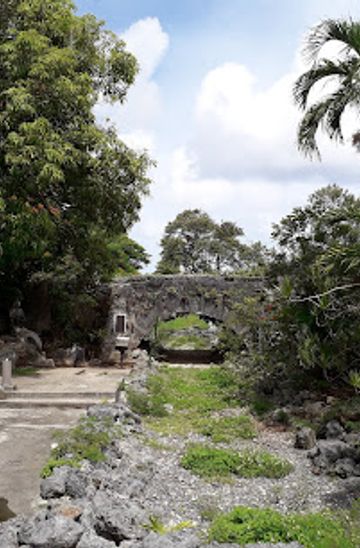
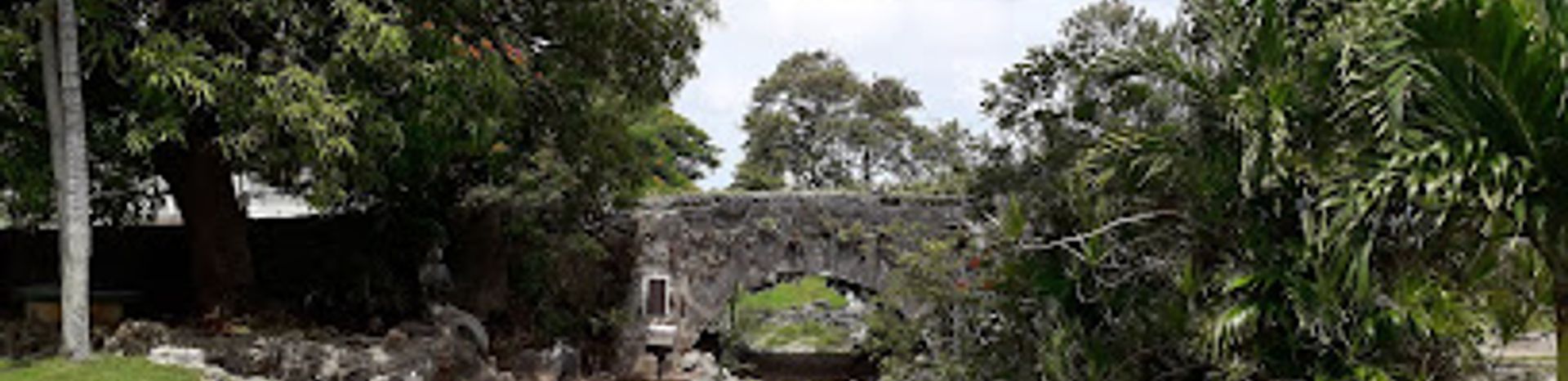
The San Antonio Bridge, also known as Tollai Acho' (stone bridge in Chamoru), stands as the only remaining Spanish-era bridge in Hagåtña, Guam. Built in 1800 by the Spanish Governor Manuel Muro, it's a lasting monument to the island's colonial past.
A brief summary to 샌 안토니오 다리
- FQG2+J3F, Hagåtña, GU

Know before you go
Hi, I'm Eve. Here are a few practical things to know before exploring 샌 안토니오 다리.
- Visit in the late afternoon for pleasant lighting and fewer people.
- Combine your visit with a trip to the nearby Chamorro Village, especially on Wednesday nights for the night market.
- Take a stroll through Sirena Park and enjoy the views of the bridge and the statue of La Sirena.
Do you manage this location?
Take control to get all the benefits, like improved information, better appearance, and stronger visibility across AI-powered discovery. Learn more
Activate your presence
Getting There
-
Walking
From the Guam Museum in Hagåtña, walk south on Marine Corps Drive. Turn left onto Aspinall Street. The San Antonio Bridge will be on your left within Sirena Park. The walk is approximately 5 minutes.
-
Public Transport
Take the Guam Regional Transit Authority (GRTA) bus to the Hagåtña Pool Terminal. From the terminal, walk south on Marine Corps Drive, then turn left onto Aspinall Street. The San Antonio Bridge will be on your left inside Sirena Park. The walk is about 5 minutes. Bus fare is $2 - $5.
-
Taxi
Taxis are available throughout Hagåtña. A taxi ride from the Guam Museum to the San Antonio Bridge is a short trip. Expect to pay around $4.00 for the first mile, and $0.80 every ¼ mile thereafter.
Discover more about 샌 안토니오 다리
Explore the best of what 샌 안토니오 다리 has to offer













More about Central Guam
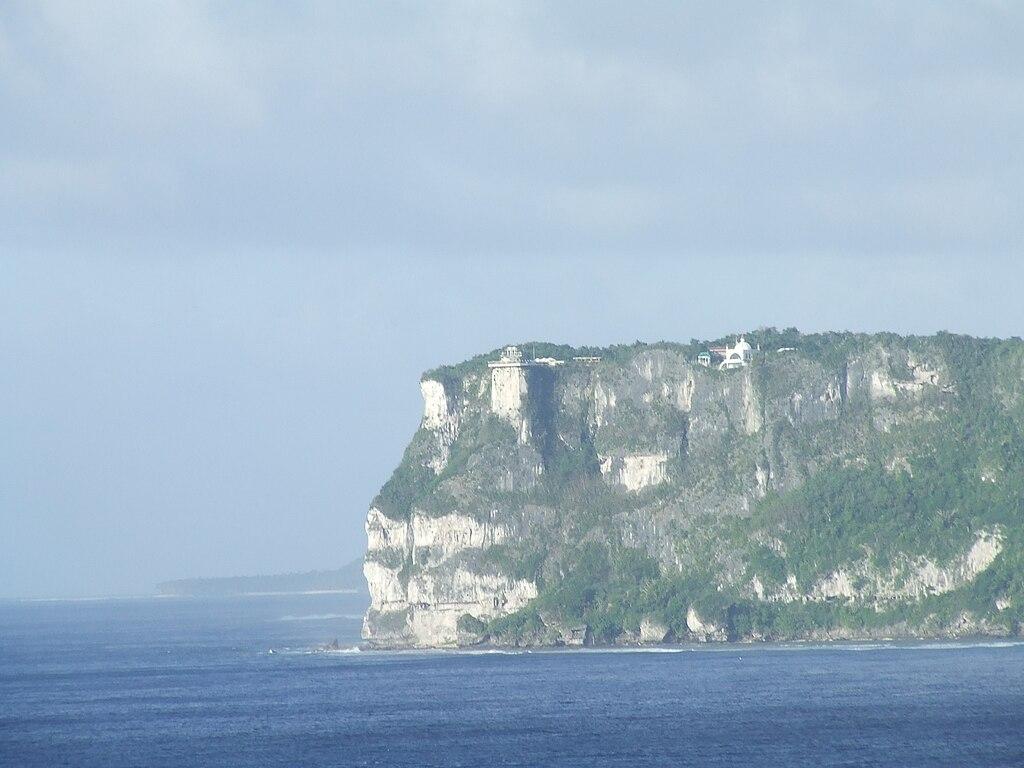
Explore Central Guam: A blend of rich cultural heritage, stunning beaches, and lush landscapes in the heart of the Pacific.
Tell me more about Central Guam