

sikandra tomb, Agra Travel Guide
Free Guide: Explore the magnificent tomb of Emperor Akbar in Agra, a blend of architectural styles amidst serene gardens. A testament to Mughal grandeur.


A brief summary of sikandra tomb
Explore the magnificent tomb of Emperor Akbar in Agra, a blend of architectural styles amidst serene gardens. A testament to Mughal grandeur.
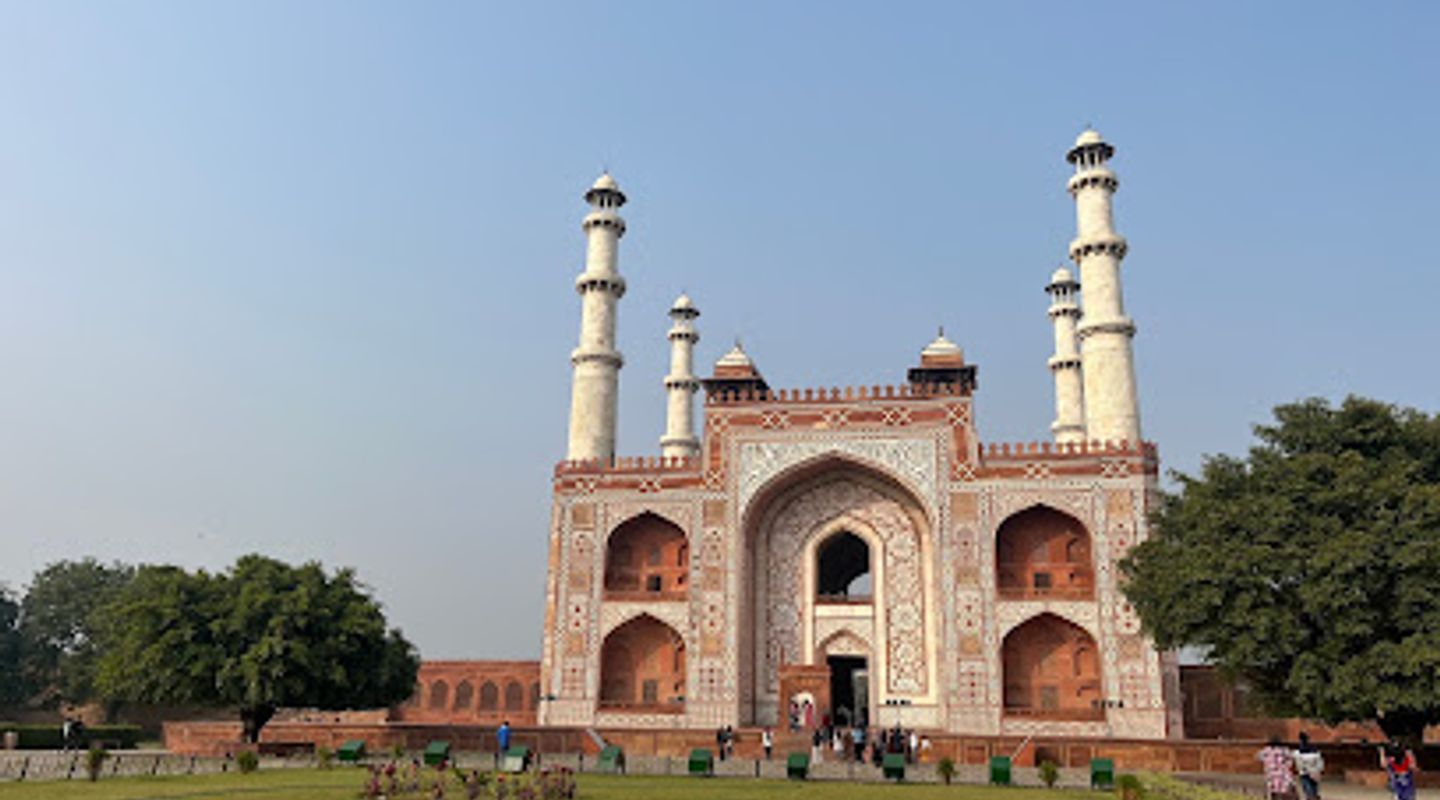
Akbar's Tomb, located in Sikandra, Agra, is the final resting place of the Mughal Emperor Akbar. This architectural marvel blends Islamic, Hindu, Buddhist, Jain, and Christian motifs, reflecting Akbar's philosophy of cultural synthesis. The tomb is set amidst a lush garden, offering a serene escape from the city's bustle.
- Address
- 6X82+Q5C, Tomb of Akbar The Great Area, Sikandra, Agra, Uttar Pradesh 282007
Getting there
Public Transport
Taxi/Ride-share
Walking
Discover more about sikandra tomb
Overview
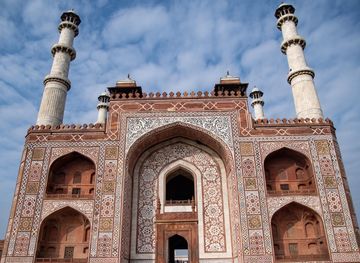
Akbar's Tomb, situated in Sikandra on the outskirts of Agra, is a significant Mughal-era monument. The tomb stands as a testament to the syncretic architectural style of the Mughals, blending Islamic, Hindu, Christian, Jain, and Buddhist design elements, reflecting Akbar's inclusive ideals. The construction of the tomb was started by Akbar himself around 1600, following a Tartary tradition of commencing one's tomb during one's lifetime. Akbar selected the site and planned the structure. However, he died in 1605, and his son Jahangir completed the construction between 1605 and 1613. The expense for the architecture was around 15 lakhs rupees.The mausoleum is built primarily of red sandstone, enriched with white marble features. The south gate is the largest, adorned with four white marble minarets, which pre-date those of the Taj Mahal. The tomb is surrounded by a walled enclosure of 105 m square. The complex is designed in the Charbagh style, with gardens divided into quadrants by watercourses, evoking the rivers of paradise. Within the gardens, you may spot animals like monkeys, peacocks and deers.During the reign of Aurangzeb, the Jats plundered the tomb, looting its valuables. Extensive restoration was carried out by the British under Lord Curzon in 1905. Today, Akbar's Tomb remains one of the best-preserved Mughal structures in India, drawing history enthusiasts from near and far.
Evendo Review Centre
 Google
Guest reviews
Explore sikandra tomb on the map
A handpicked selection of must-see spots near sikandra tomb, mapped for you.
Get your free copy of our complete guide to sikandra tomb, delivered straight to you.
Everything on this page, from opening hours and how to get there to Eve’s tips and the best time to go, in one PDF you can read offline, print or share.
Already have an account? Sign in
Your sikandra tomb guide is ready.
We'll send it to · Not you? Sign out

Getting your guide ready…
We are putting together a fresh copy of the sikandra tomb guide. This can take up to a minute.
This can take a few moments. If your browser asks, choose Allow so the download can start. You'll find the guide in your Downloads folder.
Nothing happened? Download it again
Sorry, the guide is taking longer than usual. Please try again in a minute, or get it by email instead.
Other nearby places you may find interesting
The closest places of the same kind, if this one is not quite what you had in mind.
-
-
-
-
-


Swipe for more places
More to explore near sikandra tomb

 Best experiences near sikandra tomb
 Best hotels near sikandra tomb
 Best landmarks near sikandra tomb
 Best attractions near sikandra tomb
 Best shops near sikandra tomb
 Best restaurants near sikandra tomb
 Best bars near sikandra tomb
Do you manage this location?
Take control to get all the benefits, like improved information, better appearance, and stronger visibility across AI-powered discovery.
Explore more
Explore more of Sikandra
Discover Sikandra: A Blend of Mughal Majesty and Tranquil Gardens in Agra's Historic Heart.
Explore Sikandra
Explore more of Agra
Explore Agra, the city of the iconic Taj Mahal, rich Mughal history, and vibrant culture. Discover its historic forts, bustling markets, and delectable cuisine.
Explore Agra
