

Chaturbhuj Temple, Gwalior Travel Guide
Free Guide: Discover ancient artistry & the earliest zero at Gwalior Fort's Chaturbhuj Temple, a 9th-century rock-cut Vishnu shrine with historical inscriptions.


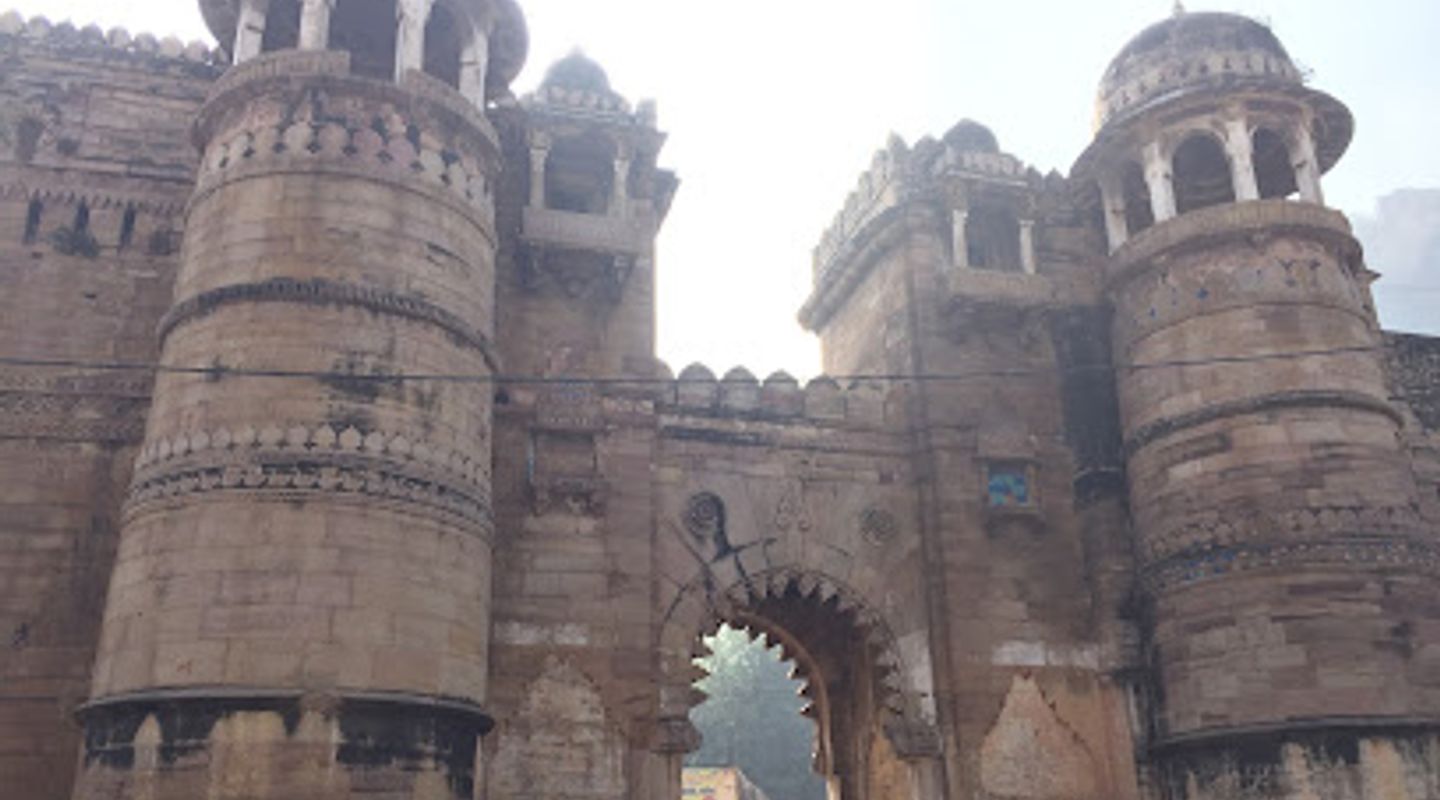
A brief summary of Chaturbhuj Temple
Discover ancient artistry & the earliest zero at Gwalior Fort's Chaturbhuj Temple, a 9th-century rock-cut Vishnu shrine with historical inscriptions.
The Chaturbhuj Temple, nestled within Gwalior Fort, is a 9th-century Hindu shrine dedicated to Lord Vishnu. Carved from a single rock, it's famed for its ancient inscriptions, including one of the earliest recorded uses of zero. Though relatively small, the temple offers a glimpse into the region's rich history and architectural heritage.
Opening hours
- Every dayOpen 24 hours
Opening hours as listed on the venue’s Google Business Profile. Hours can change for services and special events, so check with the venue before you go.
- Address
- 65J9+9W9, Gwalior Ghati, Gwalior Fort, Madhya Pradesh 474008
Getting there
Walking
Public Transport
Driving
Discover more about Chaturbhuj Temple
Overview
The Chaturbhuj Temple, also known as the Temple of Zero, is a significant historical and religious site located within the Gwalior Fort in Madhya Pradesh, India. This ancient Hindu temple, dedicated to Lord Vishnu, dates back to the 9th century, specifically to 876 AD, during the reign of the Gurjara-Pratihara dynasty. The temple was built by Alla, the son of Vaillabhatta, and grandson of Nagarabhatta.The temple is renowned for its architecture, which is carved entirely from a single rock face. The structure features a pyramidal shikara, typical of the Nagara style, and a portico supported by four intricately carved pillars. These pillars showcase reliefs of individuals in yoga postures and amorous couples. The temple's entrance is flanked by sculptures of the goddesses Ganga and Yamuna.Inside the temple, the sanctum houses a four-armed (Chaturbhuj) Vishnu idol, though its face is now defaced. The temple's walls and ceilings are adorned with carvings depicting various deities and mythological scenes, reflecting the religious diversity of the time.One of the temple's most notable features is an inscription containing one of the earliest known uses of the symbol '0' to represent zero. This inscription highlights the mathematical and cultural significance of the temple. The inscription describes the donation of land for the temple's maintenance, including a garden measuring 270 x 187 hastas. The numeral '270' is where the ancient symbol for zero can be found.While the Chaturbhuj Temple may not be the most visually striking monument within Gwalior Fort, its historical importance and unique features make it a must-see for history enthusiasts and those interested in ancient Indian art and culture. The temple provides valuable insights into the religious practices, architectural styles, and mathematical advancements of the 9th century.
Evendo Review Centre
 Google
Guest reviews
Explore Chaturbhuj Temple on the map
A handpicked selection of must-see spots near Chaturbhuj Temple, mapped for you.
Get your free copy of our complete guide to Chaturbhuj Temple, delivered straight to you.
Everything on this page, from opening hours and how to get there to Eve’s tips and the best time to go, in one PDF you can read offline, print or share.
Already have an account? Sign in
Your Chaturbhuj Temple guide is ready.
We'll send it to · Not you? Sign out

Getting your guide ready…
We are putting together a fresh copy of the Chaturbhuj Temple guide. This can take up to a minute.
This can take a few moments. If your browser asks, choose Allow so the download can start. You'll find the guide in your Downloads folder.
Nothing happened? Download it again
Sorry, the guide is taking longer than usual. Please try again in a minute, or get it by email instead.
Other nearby places you may find interesting
The closest places of the same kind, if this one is not quite what you had in mind.
-
-
-
-
-


Swipe for more places
More to explore near Chaturbhuj Temple

 Best experiences near Chaturbhuj Temple
 Best hotels near Chaturbhuj Temple
 Best landmarks near Chaturbhuj Temple
 Best attractions near Chaturbhuj Temple
 Best shops near Chaturbhuj Temple
 Best restaurants near Chaturbhuj Temple
 Best bars near Chaturbhuj Temple
Do you manage this location?
Take control to get all the benefits, like improved information, better appearance, and stronger visibility across AI-powered discovery.
Explore more

Explore more of Gwalior
Discover Gwalior, a city rich in history and culture, renowned for its majestic forts, royal palaces, and vibrant music heritage, nestled in the heart of India.
Explore Gwalior
Explore more of India
Discover the magic of India, where diverse landscapes, rich heritage, and vibrant culture come together to create an unforgettable travel experience.
Explore India
