

Hazratganj (Lucknow) Travel Guide - Free
Explore Hazratganj in Lucknow with Evendo's free guide. Find the best shops, historic streets, restaurants, and gems on web or mobile.


Hazratganj, Lucknow, pairs Awadhi heritage with Ganjing, landmark shops, cafés, theatres, markets and gracious colonial-era streets in the city centre.
A Central Commercial Quarter
Hazratganj is Lucknow’s best-known central shopping and social district, a broad urban quarter where formal avenues, older market lanes and landmark public buildings meet. Its principal thoroughfare, Mahatma Gandhi Marg, is lined with shops, cafés, restaurants, banks, cinemas and government offices, while Janpath Market and adjoining retail streets bring a more concentrated bazaar atmosphere. Lucknow residents often call the leisurely business of browsing, eating and meeting here “Ganjing”, a local expression that captures the area’s role as a civic promenade as much as a commercial centre.Read more about Hazratganj
History in the Streetscape
Shopping, Food and Evening Life
Explore Hazratganj on the map
A handpicked selection of must-see spots in Hazratganj, mapped for you.
Best hotels in Hazratganj
Best shops in Hazratganj
Shopping is central to Hazratganj’s identity, with the main avenue and its side streets offering a mixture of established retailers, department-style stores, bookshops, clothing outlets, jewellers, cafés and everyday services. Janpath Market is the most recognisable market destination, particularly for textiles, garments, accessories, handicraft-style gifts and souvenirs, though visitors should compare quality and prices before buying. Larger contemporary retail spaces provide branded clothing, food and entertainment, while older independent businesses preserve the district’s more traditional commercial rhythm. Hazratganj is a useful place to look for Lucknow-related gifts, including textiles and locally associated craft products, but stock is not uniform and genuine provenance should not be assumed from a label alone. The strongest shopping experience comes from combining Janpath’s compact stalls with the broader, more formal shopfronts along Mahatma Gandhi Marg.
-
Women's clothing store
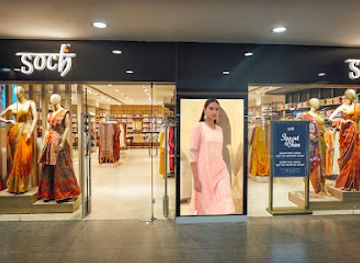
Soch
Discover a blend of tradition and modernity at Soch, Lucknow's premier women's clothing store in Hazratganj, offering exquisite designs and vibrant styles.
2 min walk · 0.1 km from neighbourhood centre
-
Clothing store
Allen Solly - Clothing Store, M.G. Marg, Hazratganj, Lucknow
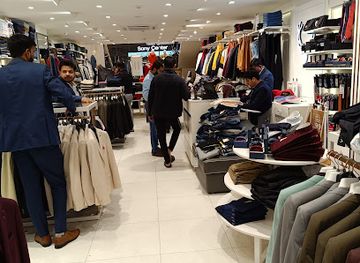
Unleash your style at Allen Solly, the premier clothing store in Hazratganj, Lucknow, featuring a diverse range of fashion for every occasion.
1 min walk · 0.1 km from neighbourhood centre
-
Boutique
Anokhi
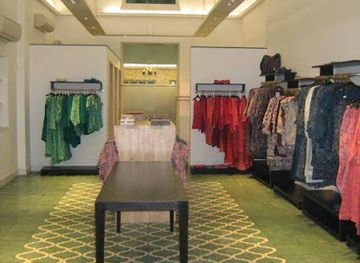
Explore Anokhi in Lucknow for unique handcrafted textiles and traditional attire, a true reflection of Indian artistry and culture.
2 min walk · 0.1 km from neighbourhood centre
Hazratganj essentials
Getting There
Getting Around
Safety
Emergency Situations
Do's and Don'ts
Local Tips

From Eve
Local phrases worth knowing
You don't need to get them perfect. A few words go a long way, and locals appreciate the effort.
Basics
| English | Local | Say it |
|---|---|---|
| Hello | नमस्कार | [Namaskar] |
| Goodbye | अलविदा | [Alvida] |
| Yes | हाँ | [Haan] |
| No | नहीं | [Nahi] |
| Please/You're welcome | कृपया | [Kripya] |
| Thank you | धन्यवाद | [Dhanyavad] |
| Excuse me/Sorry | माफ़ कीजिए | [Maaf kijiye] |
| How are you? | आप कैसे हैं? | [Aap kaise hain?] |
| Fine. And you? | ठीक हूँ। और आप? | [Theek hoon. Aur aap?] |
| Do you speak English? | क्या आप अंग्रेज़ी बोलते हैं? | [Kya aap angrezi bolte hain?] |
| I don't understand | मुझे समझ में नहीं आया | [Mujhe samajh mein nahi aaya] |
Eating & Drinking
| English | Local | Say it |
|---|---|---|
| I'd like to see the menu, please | कृपया मेन्यू दिखाइए | [Kripya menu dikhaiye] |
| I don't eat meat | मैं मांस नहीं खाता | [Main maans nahi khaata] |
| Cheers! | चियर्स! | [Cheers!] |
| I would like to pay, please | कृपया मैं भुगतान करना चाहूँ | [Kripya main bhugtan karna chaahoon] |
Emergencies
| English | Local | Say it |
|---|---|---|
| Help! | मदद! | [Madad!] |
| Go away! | चले जाओ! | [Chale jao!] |
| Call the Police! | पुलिस को बुलाओ! | [Police ko bulaao!] |
| Call a doctor! | एक डॉक्टर को बुलाओ! | [Ek doctor ko bulaao!] |
| I'm lost | मैं खो गया हूँ | [Main kho gaya hoon] |
| I'm ill | मुझे बीमारी है | [Mujhe beemari hai] |
Shopping
| English | Local | Say it |
|---|---|---|
| I'd like to buy... | मैं खरीदना चाहूँगा... | [Main khareedna chaahunga...] |
| I'm just looking | मैं बस देख रहा हूँ | [Main bas dekh raha hoon] |
| How much is it? | यह कितने का है? | [Yeh kitne ka hai?] |
| That's too expensive | यह बहुत महंगा है | [Yeh bahut mehnga hai] |
| Can you lower the price? | क्या आप मूल्य कम कर सकते हैं? | [Kya aap mulya kam kar sakte hain?] |
Time & Numbers
| English | Local | Say it |
|---|---|---|
| What time is it? | कितने बजे हैं? | [Kitne baje hain?] |
| It's one o'clock | एक बजे हैं | [Ek baje hain] |
| Half past (10) | दस बजकर पाँच मिनट हैं | [Das bajkar paanch minute hain] |
| Morning | सुबह | [Subah] |
| Afternoon | दोपहर | [Dopahar] |
| Evening | शाम | [Shaam] |
| Yesterday | कल | [Kal] |
| Today | आज | [Aaj] |
| Tomorrow | कल | [Kal] |
| 1 | एक | [Ek] |
| 2 | दो | [Do] |
| 3 | तीन | [Teen] |
| 4 | चार | [Char] |
| 5 | पाँच | [Paanch] |
| 6 | छह | [Chhah] |
| 7 | सात | [Saath] |
| 8 | आठ | [Aath] |
| 9 | नौ | [Nau] |
| 10 | दस | [Das] |
Transport & Directions
| English | Local | Say it |
|---|---|---|
| Where's a/the...? | ...कहाँ है? | [...kahan hai?] |
| What's the address? | पता क्या है? | [Pata kya hai?] |
| Can you show me (on the map)? | क्या आप मुझे दिखा सकते हैं (नक्शे पर)? | [Kya aap mujhe dikha sakte hain (nakshye par)?] |
| When's the next (bus)? | अगली (बस) कब है? | [Agli (bus) kab hai?] |
| A ticket (to ....) | एक टिकट (... के लिए) | [Ek ticket (... ke liye)] |
History of Hazratganj
A Nawabi-Raaj Commercial District
Hazratganj emerged as a planned commercial area during the nineteenth-century transformation of Lucknow under the later Nawabs and, subsequently, British administration. Its name is generally linked to Hazrat Abbas, an important figure in Shia tradition, though the wider quarter changed significantly in form as roads, shops and public institutions expanded. Rather than functioning as a palace quarter or old residential mohalla, it developed as a central place of trade and public life, positioned between Lucknow’s older eastern core and the newer administrative areas to the south and west.
Reorganisation After 1857
The events of 1857 and the establishment of direct British rule altered Lucknow’s urban geography, administration and commercial hierarchy. Hazratganj grew in importance during this period as roads were widened, public offices and formal buildings were established, and European-style retail and social spaces appeared around the central avenue. The quarter’s architectural character became associated with verandas, arcades, ordered façades and broad streets, even though its shops and customers remained connected to Lucknow’s Indian commercial life. This blend helped make Hazratganj a symbolic centre of the colonial-era city.
The Culture of Ganjing
During the late nineteenth and twentieth centuries, Hazratganj became a recognised destination for shopping, meeting friends, seeing films and eating outside the home. The informal term “Ganjing” came to describe the leisurely habit of strolling through the district, combining errands with conversation and display. Cinemas, cafés, bookshops, clothing stores and public institutions gave the area a social reach beyond its immediate streets. Its importance lay not only in commerce but also in creating one of Lucknow’s most visible shared urban stages.
Modern Retail and a Continuing Civic Role
Post-independence Lucknow brought new offices, banks, department stores, shopping complexes and transport connections to Hazratganj, while older businesses and markets continued to draw local customers. The opening of Hazratganj Metro station strengthened the district’s connection with other parts of the city, and modern developments such as Sahara Ganj added a contemporary retail layer. Despite redevelopment and changing shopping habits, the area remains closely associated with Lucknow’s public identity: a place where formal civic architecture, Awadhi food traditions, everyday retail and the ritual of Ganjing continue to overlap.
Hazratganj in Photos
Browse through our photo collection highlighting the charm and character of the destination.
Neighbourhoods near Hazratganj
The closest neighbourhoods to Hazratganj, if you have time for more than one stop.
-

-

-


Swipe for more neighbourhoods
Explore more

Explore more of Lucknow
Lucknow, India blends Awadhi history, Mughal-inspired architecture, refined cuisine, bustling bazaars and memorable cultural sightseeing in Uttar Pradesh.
Explore Lucknow