

Gomti Nagar (Lucknow) Travel Guide - Free
Explore Gomti Nagar in Lucknow with Evendo's free guide. Find the best shops, historic streets, restaurants, and gems on web or mobile.


Gomti Nagar, Lucknow, pairs planned avenues and riverside parks with museums, memorials, cafés, shopping and easy access to modern Uttar Pradesh.
A Modern Face of Lucknow
Gomti Nagar occupies a broad stretch of eastern Lucknow, extending across planned sectors on both sides of the Gomti River. Unlike the dense lanes of the old city, it is defined by wide avenues, landscaped medians, newer apartment developments, office districts and large public institutions. The area is commonly associated with sectors such as Vibhuti Khand, Vipin Khand and Vishal Khand, although its informal boundaries continue to expand as Lucknow grows eastwards.Read more about Gomti Nagar
Parks, Memorials and Public Architecture
Everyday Life and Evening Activity
Best attractions in Gomti Nagar
Gomti Nagar’s attractions are shaped by scale, landscaping and public architecture rather than by a historic bazaar. Janeshwar Mishra Park is the area’s principal recreational draw, with expansive lawns, lakes, paths and open views that make it suitable for walking and relaxed outdoor time. Dr Ram Manohar Lohia Park offers another landscaped setting, while the Gomti riverfront provides promenades and changing perspectives across the river. The Dr Ambedkar Samajik Parivartan Sthal is a monumental complex whose avenues, stone surfaces and statues present a forceful account of social and political change. Around Vibhuti Khand, the Indira Gandhi Pratishthan hosts cultural and public events when scheduled, and the neighbourhood’s cafés, shopping complexes and broad avenues offer a view of contemporary Lucknow. These places work best as a planned itinerary rather than a compact walking circuit.
-
Archaeological site
The Residency, Lucknow
Discover the historical charm of The Residency in Lucknow, a UNESCO World Heritage Site showcasing India's colonial legacy and the events of the 1857 uprising.
7 min drive · 2.5 km from neighbourhood centre
-
Tourist attraction
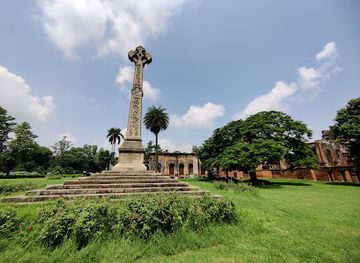
Gomtinagar fort park, Lucknow
Explore the beauty and history of Gomtinagar Fort Park in Lucknow, a serene retreat perfect for relaxation and cultural exploration.
7 min drive · 2.5 km from neighbourhood centre

Best landmarks in Gomti Nagar
Gomti Nagar’s landmarks express the planned, civic character of modern Lucknow. The Dr Ambedkar Samajik Parivartan Sthal is the most imposing, using monumental stone architecture, broad processional spaces and sculptural elements to commemorate figures and ideas associated with social equality and political change. Janeshwar Mishra Park is a landmark of another kind: its extensive landscaped grounds and water features represent the city’s investment in large public recreation. The Indira Gandhi Pratishthan in Vibhuti Khand adds a contemporary institutional presence through its role as a venue for conferences, exhibitions and cultural activity. The Gomti River remains the neighbourhood’s defining geographical feature, with riverfront works and promenades revealing how the city has attempted to turn its water edge into civic space. Together these sites distinguish Gomti Nagar from Lucknow’s older palace, mosque and market quarters.
-
Archaeological site
The Residency, Lucknow
Explore The Residency in Lucknow, a historical site showcasing colonial architecture and the poignant stories of India's past.
7 min drive · 2.5 km from neighbourhood centre
-
Historical landmark
Gomti River, Uttarpradesh
Discover the tranquil beauty and rich history of the Gomti River in Uttar Pradesh, a must-visit destination for nature lovers and cultural enthusiasts.
7 min drive · 2.3 km from neighbourhood centre


Explore Gomti Nagar on the map
A handpicked selection of must-see spots in Gomti Nagar, mapped for you.
Best hotels in Gomti Nagar
Gomti Nagar essentials
Getting There
Getting Around
Safety
Emergency Situations
Do's and Don'ts
Local Tips

From Eve
Local phrases worth knowing
You don't need to get them perfect. A few words go a long way, and locals appreciate the effort.
Basics
| English | Local | Say it |
|---|---|---|
| Hello | नमस्ते | [namaste] |
| Goodbye | अलविदा | [alvida] |
| Yes | हां | [haan] |
| No | नहीं | [nahin] |
| Please/You're welcome | कृपया | [krupaya] |
| Thank you | धन्यवाद | [dhanyavaad] |
| Excuse me/Sorry | माफ़ कीजिए | [maaf kijiye] |
| How are you? | आप कैसे हैं? | [aap kaise hain?] |
| Fine. And you? | ठीक हूँ। और आप? | [thik hoon. aur aap?] |
| Do you speak English? | क्या आप अंग्रेज़ी बोलते हैं? | [kya aap angrezi bolte hain?] |
| I don't understand | मुझे समझ में नहीं आया | [mujhe samajh mein nahin aaya] |
Eating & Drinking
| English | Local | Say it |
|---|---|---|
| I'd like to see the menu, please | कृपया मेन्यू दिखाएं | [krupaya menu dikhaayein] |
| I don't eat meat | मैं मांस नहीं खाता/खाती | [main maans nahin khaata/khaati] |
| Cheers! | चियर्स! | [cheers!] |
| I would like to pay, please | कृपया मुझे भुगतान करने दीजिए | [krupaya mujhe bhugtaan karne deejiye] |
Emergencies
| English | Local | Say it |
|---|---|---|
| Help! | मदद! | [madad!] |
| Go away! | चले जाओ! | [chale jao!] |
| Call the Police! | पुलिस को बुलाओ! | [police ko bulaao!] |
| Call a doctor! | डॉक्टर को बुलाओ! | [doctor ko bulaao!] |
| I'm lost | मैं खो गया/गई हूँ | [main kho gaya/gayi hoon] |
| I'm ill | मुझे बीमारी है | [mujhe bimari hai] |
Shopping
| English | Local | Say it |
|---|---|---|
| I'd like to buy... | मैं ... खरीदना चाहूंगा/चाहूंगी | [main ... khareedna chahunga/chahoongi] |
| I'm just looking | मैं सिर्फ देख रहा/रही हूँ | [main sirf dekh raha/rahi hoon] |
| How much is it? | यह कितने का है? | [yah kitne ka hai?] |
| That's too expensive | यह बहुत महंगा है | [yah bahut mahnga hai] |
| Can you lower the price? | क्या आप कीमत कम कर सकते/सकती हैं? | [kya aap keemat kam kar sakte/sakti hain?] |
Time & Numbers
| English | Local | Say it |
|---|---|---|
| What time is it? | अभी कितने बजे हैं? | [abhi kitne baje hain?] |
| It's one o'clock | एक बजे हैं | [ek baje hain] |
| Half past (10) | दस बजे तक | [das baje tak] |
| Morning | सुबह | [subah] |
| Afternoon | दोपहर | [dopahar] |
| Evening | शाम | [shaam] |
| Yesterday | कल | [kal] |
| Today | आज | [aaj] |
| Tomorrow | कल | [kal] |
| 1 | एक | [ek] |
| 2 | दो | [do] |
| 3 | तीन | [teen] |
| 4 | चार | [chaar] |
| 5 | पाँच | [paanch] |
| 6 | छह | [chhe] |
| 7 | सात | [saat] |
| 8 | आठ | [aath] |
| 9 | नौ | [nau] |
| 10 | दस | [das] |
Transport & Directions
| English | Local | Say it |
|---|---|---|
| Where's a/the...? | ... कहाँ है? | [... kahan hai?] |
| What's the address? | पता क्या है? | [pata kya hai?] |
| Can you show me (on the map)? | क्या आप मुझे दिखा सकते/सकती हैं (नक्शे पर)? | [kya aap mujhe dikha sakte/sakti hain (nakshye par)?] |
| When's the next (bus)? | अगली (बस) कब जाएगी? | [agli (bus) kab jaayegi?] |
| A ticket (to ....) | एक टिकट (.... के लिए) | [ek ticket (.... ke liye)] |
History of Gomti Nagar
From River Plain to Planned Extension
The land now known as Gomti Nagar formed part of Lucknow’s eastern expansion beside the Gomti River. Its name refers directly to the river, which has long shaped the city’s geography. Rather than growing organically from an old bazaar or village core, much of the neighbourhood was laid out through planned urban development in the later twentieth century. Roads, sector-based plots and reserved spaces for institutions created a markedly different urban pattern from the labyrinthine quarters of central Lucknow.
Late-Twentieth-Century Urban Growth
Development agencies, particularly the Lucknow Development Authority, gradually transformed Gomti Nagar into a major residential and commercial extension. Housing, government offices, educational facilities and new roads attracted residents and businesses as Lucknow expanded eastwards. The sector system allowed large plots and broad avenues, while areas such as Vibhuti Khand acquired a strong office and hotel presence. This period established Gomti Nagar as one of the city’s principal modern business districts rather than simply a suburban housing area.
Public Institutions and Political Architecture
The neighbourhood’s identity became more prominent as large civic, cultural and memorial projects were established within or around its planned sectors. The Dr Ambedkar Samajik Parivartan Sthal brought monumental stone architecture and an explicitly political historical narrative to Gomti Nagar, while the Indira Gandhi Pratishthan strengthened its role as a venue for conferences, exhibitions and public events. These projects gave the district a civic and symbolic importance beyond its residential function.
Parks, Riverfronts and Continuing Expansion
In the twenty-first century, investment in large landscaped parks and riverfront improvements added recreational spaces to Gomti Nagar’s office and housing landscape. Janeshwar Mishra Park became a major public open space, while new commercial, residential and institutional construction continued across the wider area. The result is a neighbourhood still in transition: its planned avenues and public projects are established, but its edges and character continue to change as Lucknow’s urban growth moves eastward.
Gomti Nagar in Photos
Browse through our photo collection highlighting the charm and character of the destination.
Neighbourhoods near Gomti Nagar
The closest neighbourhoods to Gomti Nagar, if you have time for more than one stop.
-

-

-


Swipe for more neighbourhoods
Explore more

Explore more of Lucknow
Lucknow, India blends Awadhi history, Mughal-inspired architecture, refined cuisine, bustling bazaars and memorable cultural sightseeing in Uttar Pradesh.
Explore Lucknow