

Free Rishikesh Travel Guide & Mobile App
Plan your Rishikesh trip with Evendo. Get free guides to top attractions, restaurants, hotels, and bars. Web access or download the mobile app.


Rishikesh blends sacred Ganges घाटs, yoga ashrams, Himalayan scenery, river rafting, meditation and lively spiritual culture in northern India.
River, Pilgrimage and Mountain Light
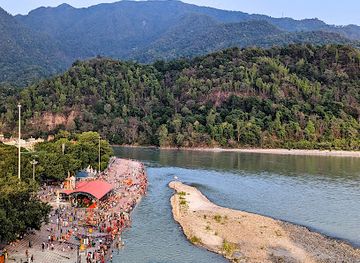
Rishikesh stands where the Ganges leaves the lower Himalayas and begins its long journey across the plains of northern India. The river is the city’s defining presence: broad, swift and edged by forested hills, suspension bridges, bathing ghats and riverside ashrams. For Hindu pilgrims, Rishikesh is a sacred centre associated with meditation, spiritual teachers and temples; for international visitors, it is also one of India’s best-known destinations for yoga, wellness and outdoor adventure.Read more about Rishikesh
A City of Ashrams and Bridges
From Spiritual Retreats to Outdoor Adventure
When is the best time to visit Rishikesh?
Best: December–February · 24–27°C| Month | High (°C) | Rainfall (mm) |
|---|---|---|
| January (best) | 24 | 35 |
| February (best) | 27 | 30 |
| March | 32 | 31 |
| April | 38 | 21 |
| May | 41 | 14 |
| June | 42 | 9 |
| July | 39 | 9 |
| August | 39 | 11 |
| September | 38 | 17 |
| October | 38 | 24 |
| November | 32 | 30 |
| December (best) | 26 | 34 |
Getting to and around Rishikesh
How to get there
Transportation
Best attractions in Rishikesh
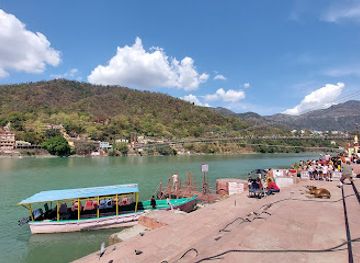
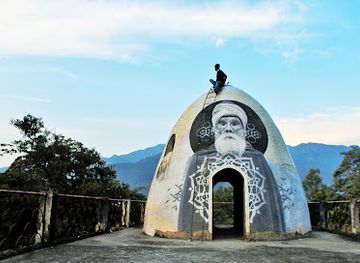
Rishikesh’s attractions follow the course of the Ganges and the city’s long spiritual tradition. Triveni Ghat is the central riverside gathering place, known for evening Ganga Aarti, while nearby temples and river steps offer a close view of pilgrimage life. Across the water, Swarg Ashram brings together ashrams, shrines, small cafés and paths beside the river. The former Maharishi Mahesh Yogi ashram, generally called the Beatles Ashram, combines meditation history with atmospheric abandoned buildings and colourful murals. Ram Jhula provides a memorable crossing and broad river views, though the surrounding lanes can be busy. Visitors interested in nature and activity can arrange rafting, trekking or riverside excursions in the surrounding foothills, while the Neelkanth Mahadev Temple lies beyond the city in a forested mountain setting. Together these places reveal Rishikesh as both a pilgrimage centre and an outdoor gateway.
-
Tourist attraction
Triveni Ghat
Experience the spiritual serenity of Triveni Ghat in Rishikesh, where the sacred Ganges flows and devotion fills the air.
7 min walk · 0.5 km from city centre
-
Tourist attraction
Triveni Ghat Rishikesh
Experience tranquility and spirituality at Triveni Ghat, a beautiful spot along the Ganges River in Rishikesh, perfect for meditation and cultural immersion.
7 min walk · 0.5 km from city centre
-
Hindu temple
Shree Neelkanth Mahadev Temple
Experience the tranquility and spiritual essence of Shree Neelkanth Mahadev Temple, a stunning Hindu temple in the heart of Uttarakhand's natural beauty.
15 min drive · 5.2 km from city centre
-
Ashram
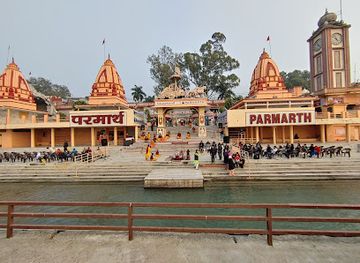
Parmarth Niketan Ashram
Explore the spiritual haven of Parmarth Niketan Ashram in Rishikesh, where yoga, meditation, and tranquility converge along the Ganges River.
6 min drive · 1.9 km from city centre



Best landmarks in Rishikesh
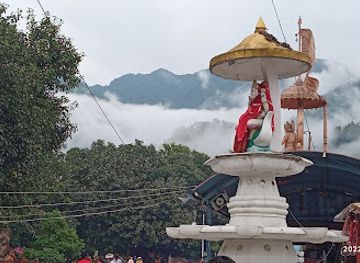
Rishikesh’s landmarks express a relationship between sacred water, pilgrimage and the mountain landscape. Triveni Ghat is the city’s principal ceremonial riverbank, where evening worship honours the Ganges through lamps, music and prayer. Ram Jhula is a well-known suspension bridge and a practical link between river settlements, while Lakshman Jhula has long been associated with the city’s mythology and distinctive views across the gorge; access conditions should be checked locally before visiting. Parmarth Niketan is recognised for its riverside ashram setting and large-scale Ganga Aarti, and the nearby Swarg Ashram area contains numerous temples and religious institutions. The Beatles Ashram is significant for a different reason: its former meditation compound records the international cultural exchange that brought Rishikesh global attention. Farther out, Neelkanth Mahadev Temple is an important Hindu shrine in the surrounding hills.
-
Tourist attraction
Triveni Ghat Rishikesh
Explore Triveni Ghat in Rishikesh, a sacred riverside destination where spirituality meets stunning natural beauty, offering unforgettable experiences for every traveler.
7 min walk · 0.5 km from city centre
-
Ram jhula
Experience the spiritual charm and stunning views of Ram Jhula, the iconic bridge of Rishikesh, India, where adventure meets tranquility.
7 min drive · 2.4 km from city centre
-
Ashram
Parmarth Niketan Ashram
Experience the serene embrace of spirituality, yoga, and community at Parmarth Niketan Ashram in Rishikesh, India.
6 min drive · 1.9 km from city centre
-
Ashram
The Beatles Ashram, Rishikesh
Explore The Beatles Ashram in Rishikesh, a unique blend of music history, spirituality, and stunning natural beauty.
5 min drive · 1.5 km from city centre
Explore Rishikesh on the map
Plan your Rishikesh trip on one map. See where the top attractions, landmarks, restaurants, bars and hotels are, find what's near where you're staying, and book hotels and experiences in a few clicks.
Neighbourhoods in Rishikesh
-

-

-


Swipe for more neighbourhoods
Best hotels in Rishikesh
Best restaurants in Rishikesh
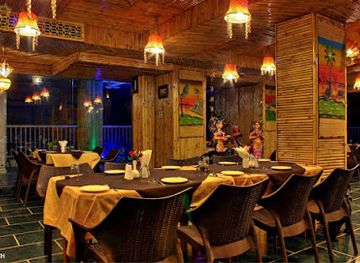
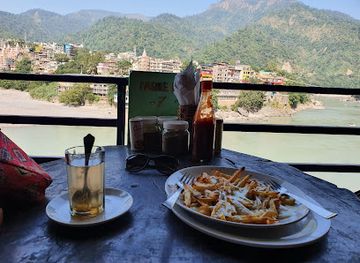
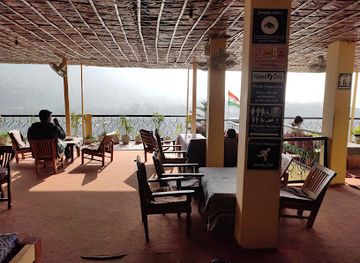
Rishikesh’s food culture is shaped by pilgrimage, yoga and the preferences of visitors from across India and abroad. Much of the city’s established visitor dining is vegetarian, with thalis, dal, seasonal sabzi, roti, rice and North Indian snacks forming the everyday foundation. Around Swarg Ashram and Tapovan, cafés serve fruit, chai, lassi, South Indian breakfasts and international vegetarian dishes alongside food associated with retreat culture. Central markets provide jalebi, samosa, kachori and other casual snacks, although hygiene standards vary and busy stalls deserve sensible judgement. Ashram kitchens may offer simple communal meals to residents or course participants rather than functioning as ordinary restaurants. The Ganges-side setting gives cafés and small eateries their appeal, but local customs and individual establishment rules matter: alcohol and meat are not part of the city’s main pilgrimage-oriented dining scene.
-
Indian
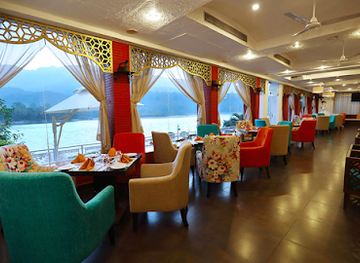
The Sitting Elephant - A Rooftop Restaurant Overlooking River Ganga
Experience exquisite Indian and Chinese cuisine at The Sitting Elephant while enjoying breathtaking views of River Ganga in Rishikesh.
11 min walk · 0.8 km from city centre
-
Vegetarian
Little Buddha Cafe
Experience tranquility and taste at Little Buddha Cafe in Rishikesh – where vegetarian delights meet serene surroundings.
11 min drive · 3.5 km from city centre
-
Restaurant
The 60's Cafe (The Beatles)
Discover The 60's Cafe in Rishikesh – where delicious vegetarian meals meet the timeless charm of The Beatles.
11 min drive · 3.6 km from city centre
-
Restaurant
Bistro Nirvana
Discover flavorful Italian and Mexican cuisine at Bistro Nirvana in Rishikesh - a must-visit destination for food lovers seeking tranquility.
9 min drive · 3.0 km from city centre
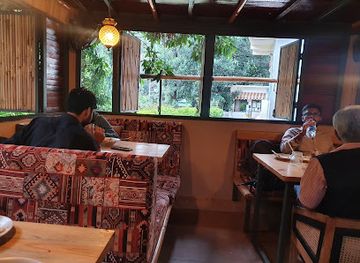
Best bars in Rishikesh
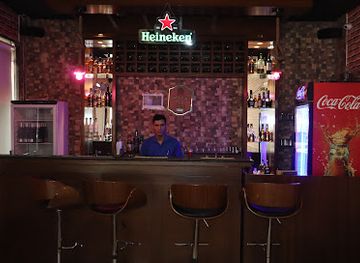
Rishikesh does not have a conventional bar-and-nightclub culture comparable to India’s larger cities. Alcohol is restricted in the main pilgrimage areas, and many ashrams, retreat centres and cafés observe sober, quiet environments. Evenings instead centre on Ganga Aarti at Triveni Ghat or Parmarth Niketan, devotional music, meditation sessions, yoga programmes and relaxed conversation in vegetarian cafés. Tapovan has the broadest concentration of visitor-oriented cafés and informal evening activity, while Swarg Ashram becomes subdued after religious and commercial life winds down. Organised cultural programmes, kirtan, or devotional singing, may take place at ashrams, but schedules and access vary. Visitors seeking a late-night party scene should set expectations accordingly and respect local religious sensibilities, silence within retreat settings and restrictions around the riverfront.
-
Indian
The Sitting Elephant - A Rooftop Restaurant Overlooking River Ganga
Experience exquisite dining with stunning views at The Sitting Elephant, a rooftop gem overlooking the beautiful River Ganga in Rishikesh.
11 min walk · 0.8 km from city centre
-
Bar
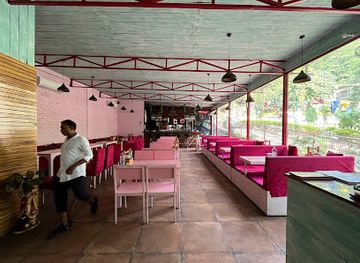
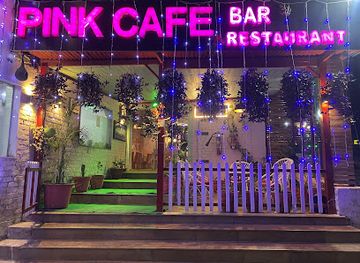
Pink Cafe Bar and Restaurant in Rishikesh
Experience the perfect blend of exquisite cuisine and vibrant atmosphere at Pink Cafe Bar and Restaurant in Rishikesh.
9 min drive · 3.0 km from city centre
-
Bar
Grill to Chill - Best Restaurant in Rishikesh, Best Bar in Rishikesh, Best Banquet Hall in Rishikesh, Hotel Room in Rishikesh
Discover the perfect blend of Indian flavors and modern dining at Grill to Chill, Rishikesh's top restaurant and bar.
5 min drive · 1.6 km from city centre
-
Bar
II
Explore II in Rishikesh: A bar that serves delectable fast food, breakfast delights, and juicy hamburgers amidst breathtaking landscapes.
5 min drive · 1.7 km from city centre
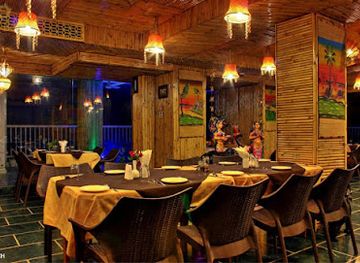
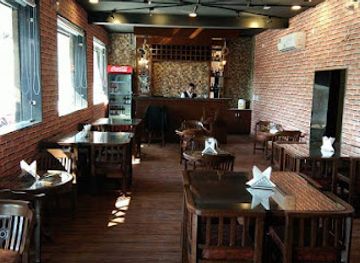

Best nightclubs in Rishikesh
Rishikesh does not have a conventional bar-and-nightclub culture comparable to India’s larger cities. Alcohol is restricted in the main pilgrimage areas, and many ashrams, retreat centres and cafés observe sober, quiet environments. Evenings instead centre on Ganga Aarti at Triveni Ghat or Parmarth Niketan, devotional music, meditation sessions, yoga programmes and relaxed conversation in vegetarian cafés. Tapovan has the broadest concentration of visitor-oriented cafés and informal evening activity, while Swarg Ashram becomes subdued after religious and commercial life winds down. Organised cultural programmes, kirtan, or devotional singing, may take place at ashrams, but schedules and access vary. Visitors seeking a late-night party scene should set expectations accordingly and respect local religious sensibilities, silence within retreat settings and restrictions around the riverfront.
-
Restaurant
Pink Cafe Bar and Restaurant in Rishikesh
Discover the perfect blend of local cuisine and vibrant ambiance at Pink Cafe Bar and Restaurant in Rishikesh.
9 min drive · 3.0 km from city centre
-
Restaurant
JAL & JALEBI
Experience the perfect blend of traditional Indian and international cuisine at JAL & JALEBI, overlooking the serene Ganges in Rishikesh.
6 min drive · 1.9 km from city centre
-
Family-friendly
Oscenox Little Amsterdam
Discover the charm of Oscenox Little Amsterdam in Rishikesh—where family-friendly vibes meet delightful dining in a serene setting.
9 min drive · 2.9 km from city centre
-
Bar
Grill to Chill - Best Restaurant in Rishikesh, Best Bar in Rishikesh, Best Banquet Hall in Rishikesh, Hotel Room in Rishikesh
Experience the vibrant flavors of Rishikesh at Grill to Chill, your go-to restaurant and bar for an unforgettable dining adventure.
5 min drive · 1.6 km from city centre

Best shops in Rishikesh
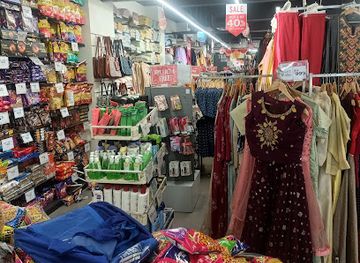
Shopping in Rishikesh is concentrated around the central market areas, the lanes of Swarg Ashram and the visitor-oriented streets of Tapovan. Small shops sell cotton clothing, shawls, prayer beads, rudraksha seeds, incense, brass objects, devotional images, yoga accessories and handmade notebooks, while pharmacies and practical outfitters serve the retreat and outdoor-adventure communities. Food shops offer tea, spices, sweets and packaged regional products, although authenticity and quality vary, so buyers should examine goods carefully rather than relying on broad spiritual claims. The markets are useful for observing the city’s mixture of pilgrimage and international wellness culture: saffron-coloured religious items appear beside meditation cushions, trekking equipment and casual café merchandise. Bargaining may be possible in independent stalls, but it is best conducted politely and with an awareness of modest local prices.
-
Clothing store
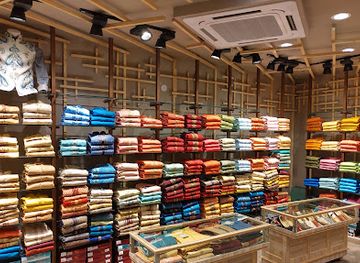
V-Mart - Rishikesh-Haridwar Road
Discover fashion and convenience at V-Mart in Rishikesh, where diverse shopping meets affordable prices in a vibrant atmosphere.
4 min walk · 0.4 km from city centre
-
Baby store
FirstCry.com Store Rishikesh Haridwar Road
Shop at FirstCry Store in Rishikesh for all your baby essentials — a paradise for parents seeking quality products in Uttarakhand.
3 min walk · 0.3 km from city centre
-
Designer Clothing Store
Bombay Stores
Explore the vibrant fashion scene at Bombay Stores in Rishikesh, offering designer and traditional clothing for every style.
6 min walk · 0.5 km from city centre
-
Hypermarket
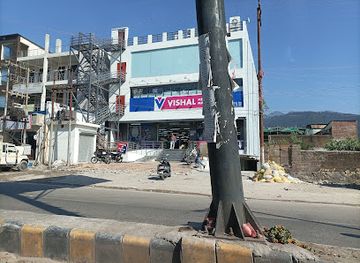
Vishal Mega Mart
Explore the diverse offerings of Vishal Mega Mart in Rishikesh, where local culture meets convenient shopping in a vibrant hypermarket setting.
13 min walk · 1.0 km from city centre

Get your free copy of our complete guide to Rishikesh, delivered straight to you.
Everything on this page, from attractions and restaurants to essentials and local phrases, in one PDF you can read offline, print or share.
Already have an account? Sign in
Your Rishikesh guide is ready.
We'll send it to · Not you? Sign out

Getting your guide ready…
We are putting together a fresh copy of the Rishikesh guide. This can take up to a minute.
This can take a few moments. If your browser asks, choose Allow so the download can start. You'll find the guide in your Downloads folder.
Nothing happened? Download it again
Sorry, the guide is taking longer than usual. Please try again in a minute, or get it by email instead.
Rishikesh essentials
Currency and Payment
Safety
Emergency Situations
Do's and Don'ts
Local Tips
From Eve
Local phrases worth knowing
You don't need to get them perfect. A few words go a long way, and locals appreciate the effort.
Basics
| English | Local | Say it |
|---|---|---|
| Hello | नमस्ते | [namaste] |
| Goodbye | अलविदा | [alvida] |
| Yes | हां | [haan] |
| No | नहीं | [nahin] |
| Please/You're welcome | कृपया | [krupaya] |
| Thank you | धन्यवाद | [dhanyavaad] |
| Excuse me/Sorry | माफ़ कीजिए | [maaf keejiye] |
| How are you? | आप कैसे हैं? | [aap kaise hain?] |
| Fine. And you? | ठीक हूँ। आप? | [theek hoon. aap?] |
| Do you speak English? | क्या आप अंग्रेज़ी बोलते हैं? | [kya aap angrezi bolte hain?] |
| I don't understand | मुझे समझ में नहीं आया | [mujhe samajh mein nahin aaya] |
Eating & Drinking
| English | Local | Say it |
|---|---|---|
| I'd like to see the menu, please | कृपया मेनू देखना चाहूँ | [krupaya menu dekhna chahoon] |
| I don't eat meat | मैं मांस नहीं खाता | [main maans nahin khaata] |
| Cheers! | चियर्स! | [cheers!] |
| I would like to pay, please | कृपया मैं भुगतान करना चाहूँ | [krupaya main bhugtaan karna chahoon] |
Emergencies
| English | Local | Say it |
|---|---|---|
| Help! | बचाओ! | [bachao!] |
| Go away! | चले जाओ! | [chale jao!] |
| Call the Police! | पुलिस को बुलाओ! | [police ko bulaao!] |
| Call a doctor! | डॉक्टर को बुलाओ! | [doctor ko bulaao!] |
| I'm lost | मैं खो गया हूँ | [main kho gaya hoon] |
| I'm ill | मुझे बीमारी है | [mujhe bimari hai] |
Shopping
| English | Local | Say it |
|---|---|---|
| I'd like to buy... | मैं खरीदना चाहूँ... | [main khareedna chahoon...] |
| I'm just looking | मैं सिर्फ देख रहा हूँ | [main sirf dekh raha hoon] |
| How much is it? | यह कितना है? | [yah kitna hai?] |
| That's too expensive | यह बहुत महंगा है | [yah bahut mehnga hai] |
| Can you lower the price? | क्या आप कीमत कम कर सकते हैं? | [kya aap keemat kam kar sakte hain?] |
Time & Numbers
| English | Local | Say it |
|---|---|---|
| What time is it? | अब कितने बजे हैं? | [ab kitne baje hain?] |
| It's one o'clock | एक बजे हैं | [ek baje hain] |
| Half past (10) | (10) बजकर तीन्दाद | [(10) bajkar teendad] |
| Morning | सुबह | [subah] |
| Afternoon | दोपहर | [dopahar] |
| Evening | शाम | [shaam] |
| Yesterday | कल | [kal] |
| Today | आज | [aaj] |
| Tomorrow | कल | [kal] |
| 1 | एक | [ek] |
| 2 | दो | [do] |
| 3 | तीन | [teen] |
| 4 | चार | [chaar] |
| 5 | पाँच | [paanch] |
| 6 | छह | [chhe] |
| 7 | सात | [saat] |
| 8 | आठ | [aath] |
| 9 | नौ | [nau] |
| 10 | दस | [das] |
Transport & Directions
| English | Local | Say it |
|---|---|---|
| Where's a/the...? | ...कहाँ है? | [...kahan hai?] |
| What's the address? | पता क्या है? | [pata kya hai?] |
| Can you show me (on the map)? | क्या आप मुझे दिखा सकते हैं (नक्शे पर)? | [kya aap mujhe dikha sakte hain (naksha par)?] |
| When's the next (bus)? | अगली (बस) कब है? | [agli (bas) kab hai?] |
| A ticket (to ....) | एक टिकट (...के लिए) | [ek ticket (...ke liye)] |
History of Rishikesh
Ancient Sacred Geography
Rishikesh’s religious identity is rooted in the sacred geography of the Ganges and the Himalayan foothills. Hindu tradition associates the area with sages, ascetics and episodes from the epic Ramayana, including the presence of Rama and Lakshmana, although these accounts belong to devotional tradition rather than securely documented urban history. The name is commonly linked to Hrishikesh, a form of Vishnu, and the wider region has long been regarded as suitable for austerity, meditation and pilgrimage. Before modern roads and bridges, access was shaped by the river and mountain routes leading towards the principal Himalayan pilgrimage sites. This enduring association with spiritual practice explains the concentration of temples, shrines and monastic institutions that still characterises the riverfront.
Pilgrimage and the Ganges
Rishikesh developed as an important staging point for pilgrims travelling towards Garhwal’s Himalayan temples, particularly during the annual pilgrimage seasons. Religious settlements grew around the river, with bathing places, shrines, dharamshalas and ashrams serving visitors who came to perform rituals or seek instruction. The Ganges gave the town both spiritual authority and practical importance, while the surrounding forests and hills supported the retreat tradition associated with Hindu renouncers. Haridwar, farther downstream, remained the larger pilgrimage centre, but Rishikesh acquired its own distinctive reputation as a place for study and meditation. This combination of transit point, sacred landscape and residential spiritual community shaped the urban pattern visible in the older parts of the city.
Modern Roads and Religious Institutions
During the nineteenth and twentieth centuries, improved administration, roads and rail connections through the wider region made Rishikesh more accessible to pilgrims and teachers. Ashrams and religious institutions expanded, offering accommodation, Sanskrit learning, devotional practice and forms of yoga instruction. The town’s relationship with nearby Haridwar also became closer as transport networks connected the two centres, while bridges across the Ganges helped link settlements on opposite banks. Modern development did not replace the pilgrimage economy; instead, it added hotels, markets, schools and transport services to a landscape already organised around bathing ghats and religious compounds. The resulting city combines an old sacred geography with the infrastructure of a growing regional centre.
Yoga and International Attention
Rishikesh gained major international attention in 1968, when the Beatles visited the ashram of Maharishi Mahesh Yogi, accompanied by other musicians and public figures. Their stay brought worldwide publicity to the town’s meditation culture and helped make Rishikesh a reference point in the expanding Western interest in transcendental meditation and Indian spiritual traditions. The former ashram, now widely known as the Beatles Ashram, preserves buildings and walls covered with later murals, while the broader legacy is visible in the many yoga schools and retreat centres established in subsequent decades. International interest added a new layer to Rishikesh’s older role as a destination for Indian pilgrims and Hindu religious education.
Adventure and Contemporary Growth
From the late twentieth century onwards, the Ganges and the Himalayan landscape also drew visitors interested in white-water rafting, trekking, camping and other outdoor activities. Rishikesh consequently developed a mixed visitor economy combining pilgrimage, yoga courses, wellness retreats, budget travel and organised adventure. Rapid construction has altered parts of the river corridor and surrounding hills, bringing employment and services but also pressure on waste management, traffic, water resources and the fragile river environment. Contemporary Rishikesh is therefore not simply an ancient religious town or a modern adventure base: its identity has been formed by the continuing interaction between sacred traditions, international cultural exchange, tourism and the ecological realities of a Himalayan river city.
Travel experiences inspired by this city


Swipe for more travel diaries
Rishikesh in Photos
Browse through our photo collection highlighting the charm and character of the destination.
Cities near Rishikesh
The closest cities to Rishikesh, if you have time for more than one stop.
-

-

-

-

-


Swipe for more cities
Explore more

Explore more of India
Discover the magic of India, where diverse landscapes, rich heritage, and vibrant culture come together to create an unforgettable travel experience.
Explore India